My first week in Bali looked like everyone else's. I had a villa near the Monkey Forest in Ubud, the kind with its own little plunge pool, and I spent my days doing the greatest hits. Temples. The jungle swing where you pay to dangle over a valley and pretend you are not terrified. Coffee that may or may not have been processed by a civet. It was beautiful, and by day four I was also slightly templed-out.
Then a local I got chatting with asked what I had done to actually relax. I said I had a pool at the villa. He looked at me the way you look at someone who has missed the point entirely, and told me that if I wanted to truly unwind I should get out of town to a natural hot spring. About an hour from Ubud, he said. Place called Angseri. I had no idea Bali even had hot springs.
Angseri: the hot spring nobody tells you about
Angseri is up in the highlands near Bedugul, in the Tabanan rice country. The drive out is half the reward, all terraced green hills and roadside warungs. When you arrive there is no grand entrance. You park, you pay a small fee, and then you walk down a long flight of concrete steps into a canyon.
That walk down is where it gets good. The valley closes in, it gets cooler and greener, and at the bottom there is a natural waterfall pouring down a mossy cliff into pools of warm sulfur water. After a week of crowded tourist stops, having a steaming pool in a quiet jungle gorge felt almost unfair.
You can soak in the open communal pool facing the waterfall, or rent one of the small private bamboo cabins. A fair warning from personal experience: those cabins have a time limit, usually thirty minutes, and the climb back up those steps afterward is a workout. I told myself it counted as the day's exercise. It did not, but I told myself that.
Bring your own towel, soap, and a plastic bag, because the place is rustic and provides almost nothing. Bring mosquito spray too. The valley is humid and shaded, and the mosquitoes there have clearly also heard it is a relaxing spot.
Toya Bungkah: soaking in front of a volcano
The second spring came as part of a tour, and it is the one that genuinely stopped me in my tracks. The package started with a pre-dawn pickup and a sunrise hike up Mount Batur, an active volcano. You climb in the dark, you watch the sun come up over the caldera, and your legs quietly file a formal complaint.
Then, instead of driving you straight home to collapse, the tour takes you down to the shore of Lake Batur to a hot spring resort called Toya Devasya at Toya Bungkah. After a cold, hard hike, lowering yourself into a warm infinity pool that looks straight across the lake at the volcano you just climbed is one of those travel moments that feels staged, except it is real.
The pools here are clear and odorless, kept comfortably hot, and they line the lakeshore so the water seems to spill toward the caldera. It is the polar opposite of Angseri. Angseri is hidden and rough and quiet. Toya Bungkah is developed, lake-facing, and built for exactly this picture. Admission is higher than most Bali springs, but a premium ticket usually folds in a towel and a locker, and after the trek I was not in a bargaining mood. By early afternoon we were back in Ubud, and I slept like a stone.
Getting there is half the adventure
Neither of these springs is around the corner from the beach clubs, and that is rather the point. From Ubud, Angseri is about an hour northwest into the Tabanan highlands near Bedugul. The road is mostly good, winding gently up through rice terraces and small villages, and a scooter is fine if you are confident, though the last stretch and the walk down into the canyon mean a car is the more relaxed choice. There is no big bus route here, so you are looking at a scooter, a hired car with driver, or a Grab that may grumble about coming back to collect you.
Toya Bungkah sits in the Kintamani caldera, also roughly an hour and a half north of Ubud but in a completely different direction, climbing up to the crater rim before dropping down to the lakeshore. Almost everyone reaches it the way I did, bundled into a tour van as part of a Mount Batur sunrise package, which is genuinely the easiest option because it handles the pre-dawn logistics for you. If you skip the hike, a private driver for the day is the simplest way to pair it with the Kintamani viewpoints.
A practical note that took me one wasted morning to learn: leave Ubud early for both. The Angseri canyon is most peaceful before the late-morning local crowd, and the Batur roads get hot, busy, and hazy by midday.


SpringsAtlas may earn a commission, at no extra cost to you.
What it costs and what to pack
Both springs are cheap by Western standards, but they want cash in rupiah and they want it in small notes. Angseri is the budget option, a small entry fee plus a modest extra charge if you rent one of the private bamboo cabins by the half hour. Toya Bungkah, specifically the Toya Devasya resort where my tour stopped, is the priciest soak I had in Bali, but the ticket is resort-grade and usually bundles a towel, a locker, and sometimes a welcome drink, so it stings less than the number suggests.
After fumbling my first visit, here is the kit I would not arrive without.
Wear your swimwear under your clothes so you are not hunting for a changing cubicle when you arrive. Pack a plastic bag for the wet swimwear afterward. Bring a full change of dry clothes and underwear, because the ride back in a damp waistband is genuinely miserable. Carry sunscreen and sunglasses, since the open-air pools at Toya Bungkah catch the full sun by mid-morning. And keep cash in rupiah on hand for lockers, towel deposits, and cabana rentals, none of which take a card. One Bali-specific tip: at sulfur springs, a dark swimsuit is your friend, because the minerals can dull a bright white one.
The meal after the soak
I cannot write about anywhere without talking about the food, and the post-soak meal is half the ritual for me. After Angseri, the move is a roadside warung on the drive back, where a plate of nasi campur, rice with a little of everything, costs almost nothing and tastes incredible when you are pleasantly waterlogged and your legs are jelly from the stairs. At Toya Bungkah, the lakeside restaurants look straight out over the water to the volcano, and a bowl of hot soto or mie goreng with that view, after a freezing sunrise hike, is one of those meals you remember longer than you expect. Eat slowly. You earned it.
Angseri or Toya Bungkah: which one for you
If you only have time for one, here is the honest comparison.
| Angseri | Toya Bungkah |
|---|
| Vibe | Hidden, rustic, quiet | Developed, scenic, busy |
| Setting | Jungle canyon and waterfall | Lakeshore facing Mount Batur |
| Effort | A real stairway down and back | Drive right up to it |
| Cost | Budget | The priciest soak in Bali |
| Best for | Adventure and peace | The view and an easy soak after the trek |
My take: if you are the kind of traveler who likes finding the place nobody mentioned, go to Angseri. If you are doing the Mount Batur sunrise hike anyway, Toya Bungkah is the obvious and rewarding finish, no decision required. If you can manage both on different days, do that, because the contrast is the whole story.
What I learned about Bali hot springs
Two springs, two completely different moods, and both of them better than another temple I would have forgotten by dinner. If you are coming to Bali, build in at least one. Angseri if you want quiet and a bit of adventure. Toya Bungkah if you want the volcano-and-lake photo and a soak that earns its price.
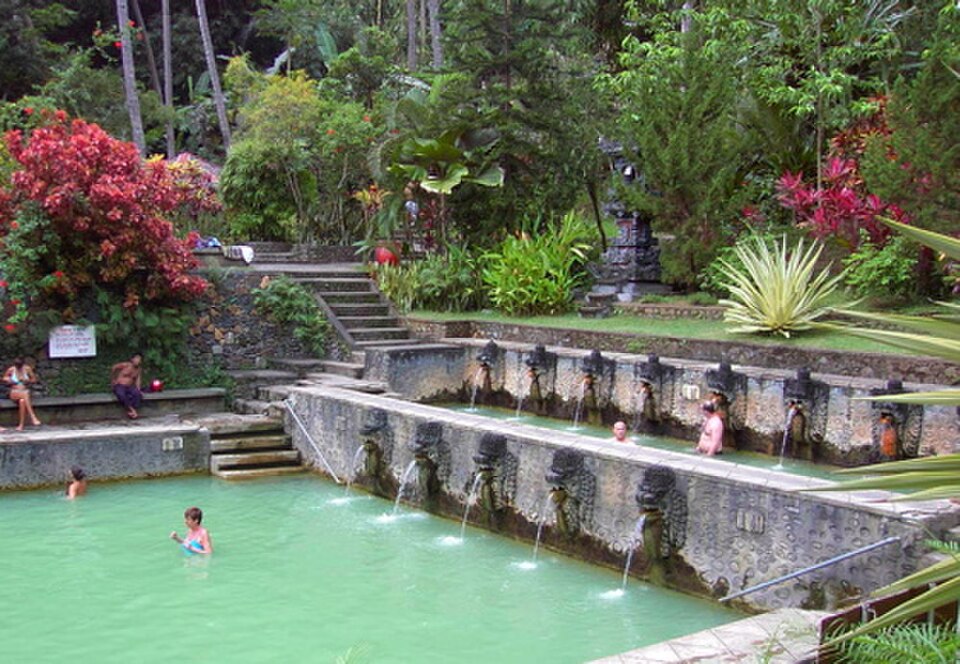
There is more across the island and the rest of Indonesia too, from the dragon-spout pools of Banjar in the north to the sulfur resorts of Java. But these two were my introduction, and they are the reason I now go looking for hot springs everywhere I travel.
Quick questions before you go
Can you visit both in a single day? Technically yes, but I would not. They are in opposite directions from Ubud and each deserves an unhurried half day, so spreading them across two days is far better.
Are they family friendly? Both welcome families, and you will see plenty of local kids in the water. Angseri involves a steep stair climb that is hard with very young children or anyone with mobility limits, while Toya Bungkah is flat and easy to reach.
Do I need a tour? For Toya Bungkah, a Mount Batur sunrise tour is the simplest way and bundles the logistics. For Angseri, no, a scooter or a driver for a few hours is all you need.
What should I wear in the water? Modest swimwear is the norm at both, and a dark suit is smart at the sulfur pools. Carry a sarong, which is useful all over Bali anyway.