Hot springs in Japan
122
Springs listed
8
Regions
63°C
Avg temperature
9
Free entry
Home to thousands of hot springs (onsen) embedded in culture and tradition for over a millennium. From remote mountain ryokan to busy city bathhouses, Japan offers the world's most diverse onsen experience.
Browse by region
Regions in Japan
34 springs
Yuzawa · Nakatsugawa · Senami
Greater Tokyo6 springs
Hakone · Tokigawa · Tsurumaki
Hokkaido13 springs
Noboribetsu · Yunokawa · Toyako
Kansai20 springs
Shirahama · Nachikatsuura · Yubara
Kanto8 springs
Nikko · Shiobara · Shima
Kyushu15 springs
Beppu · Unzen · Tara
Shikoku2 springs
Naoshima · Matsuyama
Tohoku24 springs
Nyuto Onsen · Iizaka · Zao
Editor's picks
Top picks in Japan
 FREE
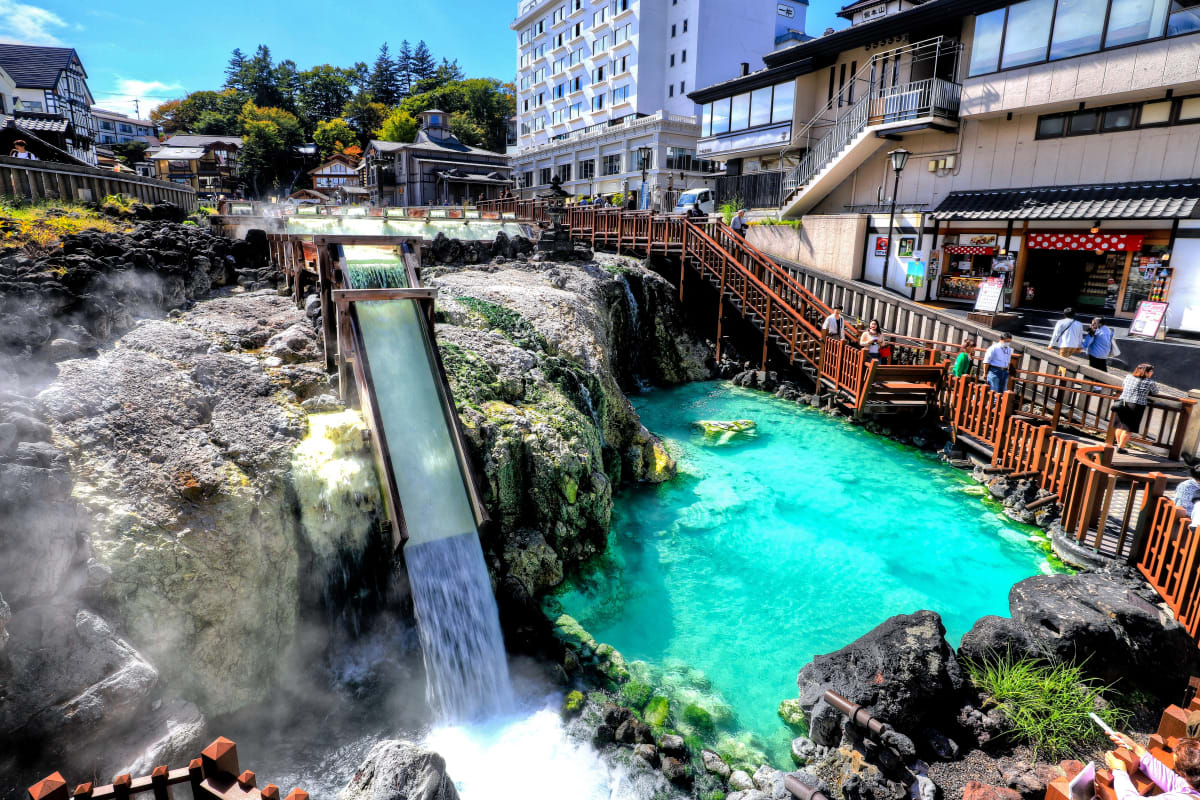
FREEKusatsu Onsen sits at 1,200 meters in the mountains of Gunma Prefecture and ranks among the most celebrated hot spring towns in Japan. The springs here produce more than 32,000 liters of water per minute, a volume unmatched anywhere else in the country. The water is strongly acidic and sulfurous, and its skin-healing properties have long made it legendary among visitors. Twice each day in the central town square, workers cool the scalding water by pulling long wooden paddles through it in unison while singing traditional songs. This practice is called yumomi.
Common questions
What is an onsen, and how is it different from a regular hot spring?▾
An onsen (温泉) is a Japanese hot spring that meets government standards: water must emerge naturally at 25°C or higher, or contain specific minerals like sodium or bicarbonate. Regular hot springs worldwide have no such legal definition. Many onsen are also bathing facilities (onsen ryokan or day-use sento) built around a natural source.
Do I need to be fully undressed to use an onsen in Japan?▾
Traditional onsen require bathing naked, and tattoos are often prohibited at public facilities. However, mixed-gender rotenburo (outdoor baths) sometimes allow bathing suits, and private baths (kashikiri-buro) can be reserved for couples or families. Always check the specific facility's rules before visiting.
What is the best time of year to visit hot springs in Japan?▾
Autumn (October–November) and winter (December–February) are the most popular seasons. Soaking in an outdoor rotenburo while snow falls, called yuki-no-yu, is considered one of Japan's quintessential experiences. Summer is quieter and more affordable, though the contrast with the surrounding air is less dramatic.
Which region in Japan has the most hot springs?▾
Kyushu leads in volume: Beppu alone claims eight distinct spring types (the Beppu Hachito) and thousands of individual sources. Tohoku (Tōhoku), the Japanese Alps, and Hokkaido also have exceptionally dense onsen cultures with centuries of bathing tradition.
About
Hot springs in Japan
Home to thousands of hot springs (onsen) embedded in culture and tradition for over a millennium. From remote mountain ryokan to busy city bathhouses, Japan offers the world's most diverse onsen experience.