
New zealand
New Zealand's Best Free Hot Springs: Kerosene Creek, Otumuheke and Hot Water Beach
Three of New Zealand's best hot springs cost absolutely nothing to visit. Here's how to find them and what to expect.
6 min readNew zealand
Before I can finalise a New Zealand itinerary, before I can settle on accommodation or figure out the rental car situation or even start a proper packing list, I have to answer the question that seems to divide every New Zealand traveller at the planning stage: North Island or South Island first?
I have been sitting with this question for weeks now. Both options are genuinely good. From a hot spring perspective specifically, the two islands offer such different experiences that choosing between them is less about which is better and more about what kind of trip you want to have. Here is how I have been thinking about it.
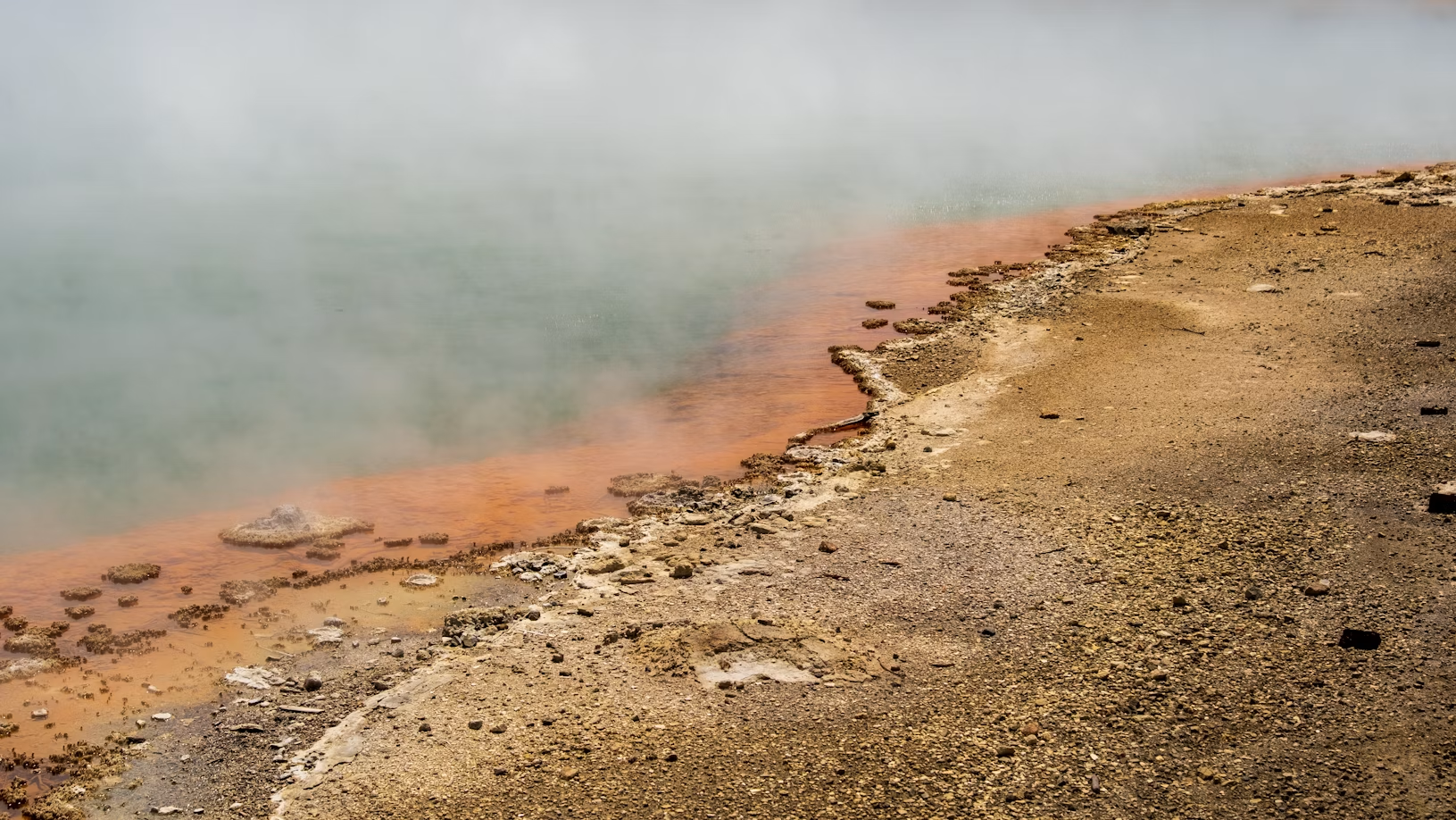
If you want to arrive in New Zealand and get into a hot spring as quickly as possible, the North Island is where the geothermal action is concentrated. Rotorua in particular is the kind of place where the volcanic activity is not something you visit: it is something you walk around in. The earth steams in public parks. The smell of sulfur greets you when you step outside in the morning. It is dramatic in the most elemental way.
Polynesian Spa sits right on the edge of Lake Rotorua and is probably the most well-known thermal resort in the country. The pools are fed directly by geothermal springs, the lake views are beautiful, and the range of temperatures means you can move between pools at your own pace over a long afternoon. It is not free, but the setting earns the price. A few kilometres further south, Waikite Valley Thermal Pools runs on water from Te Manaroa Spring, one of the largest single sources of 100-degree water in the country. The pools are quieter, the surrounding farmland gives the whole place an unhurried feeling, and there is none of the resort-scale crowd management that comes with the bigger names.
Whakarewarewa Geothermal Village is the one that interests me most from a cultural perspective. The Tuhourangi Ngati Wahiao people have lived on this volcanic field for over seven centuries, using the thermal features for cooking, bathing, and daily life in a way that is still active today. Visiting feels less like a tour and more like being a respectful guest in a living community.
Further from Rotorua, Otumuheke Stream in Taupo gives you a free geothermal soak right in town, where hot spring water meets the Waikato River and you find your temperature by moving between the two. And on the Coromandel Peninsula, Hot Water Beach lets you dig your own pool in the sand at low tide, which remains the most unusual hot spring experience I have come across in all my research.
I need to address this because it has become a significant factor in my planning. Hobbiton is on the North Island, about 90 minutes from Auckland, and it is one of the things I am most excited about. But Lord of the Rings filming locations are spread across both islands. The South Island provided most of the dramatic mountain scenery: Rohan, the slopes of Mount Doom, the approach to Minas Tirith. This is actually a useful argument for visiting both islands rather than choosing one, since the film essentially created a two-island itinerary for anyone who cares about where those landscapes actually exist.
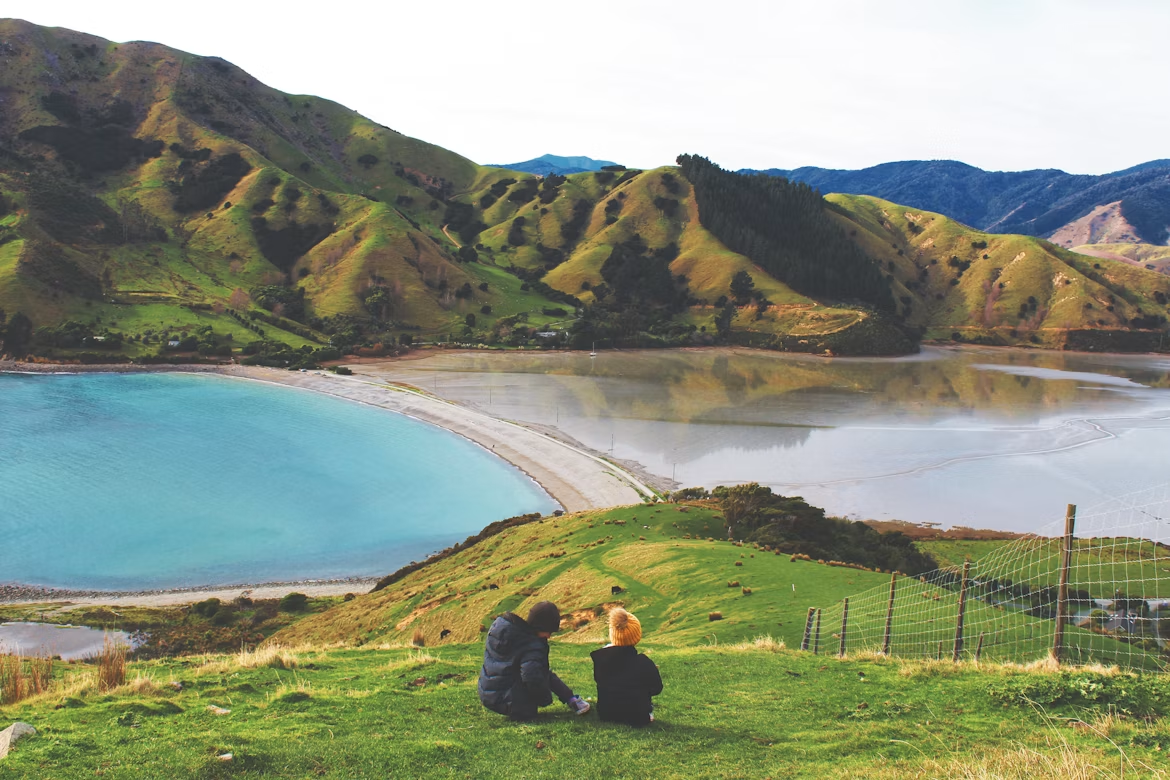
The South Island is a different kind of beauty. The mountains are higher, the landscapes are more theatrical, and the hot springs require more effort to reach. I have come to think of that effort as part of the experience rather than an inconvenience.
Hanmer Springs is the most accessible entry point for South Island thermal bathing, a resort town about 90 minutes north of Christchurch with a proper thermal complex and mountains on every side. It works well as a first taste without requiring any serious planning beyond showing up. It is the kind of place I would stop at on a road trip heading toward the West Coast.
Lake Tekapo is where I expect to spend a long time just looking at things. The lake is a dark sky reserve, meaning artificial light is restricted across the whole area to protect the night sky, and the thermal pools sit right on the lakeshore. The water of the lake itself is a turquoise colour caused by glacial flour suspended in it, and the Two Thumb Range sits on the horizon across the water. Soaking in a heated pool while looking at that landscape under a star-filled southern sky is the kind of thing I have seen described and still do not think I am fully prepared for.
Welcome Flat is the most serious commitment on this list: a 17-kilometre tramp along the Copland Track in Westland, with a DOC hut at the end and natural hot spring pools just outside. You walk through rainforest and across river flats and arrive at the Southern Alps rising directly above you. I have been genuinely going back and forth on whether to include this in a first trip or save it for a dedicated tramping visit. The springs are extraordinary. The walk is long. Both things are true.
New Zealand public transport will get you between major cities, but it will not get you to any of the springs on this list. You need a rental car, and on the South Island particularly, you need to be comfortable driving on rural roads that occasionally head into territory that looks more remote than it actually is.

SpringsAtlas may earn a commission, at no extra cost to you.
A campervan solves several problems at once: transport, accommodation, and the ability to arrive at places like Kerosene Creek on the North Island without worrying about check-in times. Many of the free springs are perfectly suited to a campervan itinerary.
After all this research, my honest conclusion is that a first-time visitor to New Zealand who wants to prioritise hot springs should start on the North Island. The geothermal activity is more concentrated, the springs are more varied and numerous, the Maori cultural context in Rotorua adds something that goes beyond the soak itself, and the free options like Otumuheke and Kerosene Creek are genuinely excellent without requiring a multi-day commitment.
The South Island wins on scenery and on the specific romance of an alpine soak, and Welcome Flat and Tekapo are both on my list. But those feel like experiences that deserve their own dedicated trip, or at minimum a longer first visit than I am planning.
| Spring | Island | Type | Cost | Effort Level |
|---|---|---|---|---|
| Polynesian Spa, Rotorua | North | Resort pools, lake views | Paid | Easy |
| Waikite Valley, Rotorua | North | Thermal pools, rural setting | Paid | Easy |
| Whakarewarewa Village | North | Cultural, footbath access | Paid entry | Easy |
| Otumuheke Stream, Taupo | North | Natural river confluence | Free | Easy |
| Kerosene Creek, Rotorua | North | Wild forest stream | Free | Easy (short walk) |
| Hot Water Beach, Coromandel | North | Dig-your-own sand pool | Free (spade rental) | Easy (timing critical) |
| Hanmer Springs | South | Alpine resort complex | Paid | Easy |
| Lake Tekapo Pools | South | Lakefront pools, dark sky | Paid | Easy |
| Welcome Flat, Westland | South | Backcountry natural pools | Free (hut fee) | Hard (17km tramp) |
The answer to North Island or South Island is eventually both. New Zealand is clearly the kind of place that gives you reasons to come back, and I have already started thinking about what the second trip looks like before the first one has happened.
Three of New Zealand's best hot springs cost absolutely nothing to visit. Here's how to find them and what to expect.
6 min read