There is a specific pose that goes with the specific drink, and every regular onsen-goer in Japan knows it without being taught. You step out of the changing room still flushed from the bath, walk to a lit-up vending machine stocked with small glass bottles, and drink whatever you have chosen standing up, one hand on your hip. It looks almost ceremonial the first time you see a stranger do it. It is, in its own quiet way, exactly that.
Why milk, and why standing up
The tradition traces back to a very practical problem. In the postwar years, home refrigerators were rare in Japan, but public bathhouses had them, since keeping water and towels cold and clean required the equipment. Dairy companies noticed and started supplying bottled milk to sento and onsen changing rooms, because it was one of the only places in a neighborhood guaranteed to have a working fridge. Coffee milk followed soon after, sweeter and more indulgent, and the pairing of a hot soak with an ice-cold bottle became its own small ritual rather than just a convenient drink stop.
The standing pose is part of it too. A cold glass bottle, one hand free to rest on your hip, the drink finished in one unhurried go before you get dressed. Nobody enforces this. Everybody who grew up going to the bath does it anyway, because that is simply how the drink is meant to be had.
Why it actually tastes that good
The history explains how the ritual started. It does not quite explain why the drink itself seems to taste better in that changing room than it would anywhere else, and that part comes down to what a long hot soak does to your body. Sitting in water that hot works your circulation the way light exercise does, and you sweat far more than you notice while you are still in the bath. By the time you step out, you are genuinely dehydrated and short on the electrolytes, sodium, potassium, and calcium, that sweat carries away.
Milk happens to be almost exactly what that state calls for. It is roughly 87 percent water, so it rehydrates you directly, and it carries a real dose of the same minerals you just sweated out, so it replenishes rather than just wets your mouth. Add the sharp contrast of a cold bottle straight from the fridge against skin that is still flushed and warm, and you get a drink that would taste pleasant on any ordinary day and tastes genuinely remarkable in that specific fifteen minutes after a bath. It is not just nostalgia or habit talking. Your body is thirstier and more mineral-depleted than you realize, and the drink is answering a real physical need, which is a large part of why the ritual stuck so firmly in the first place.
Calpis: the original, and still everywhere
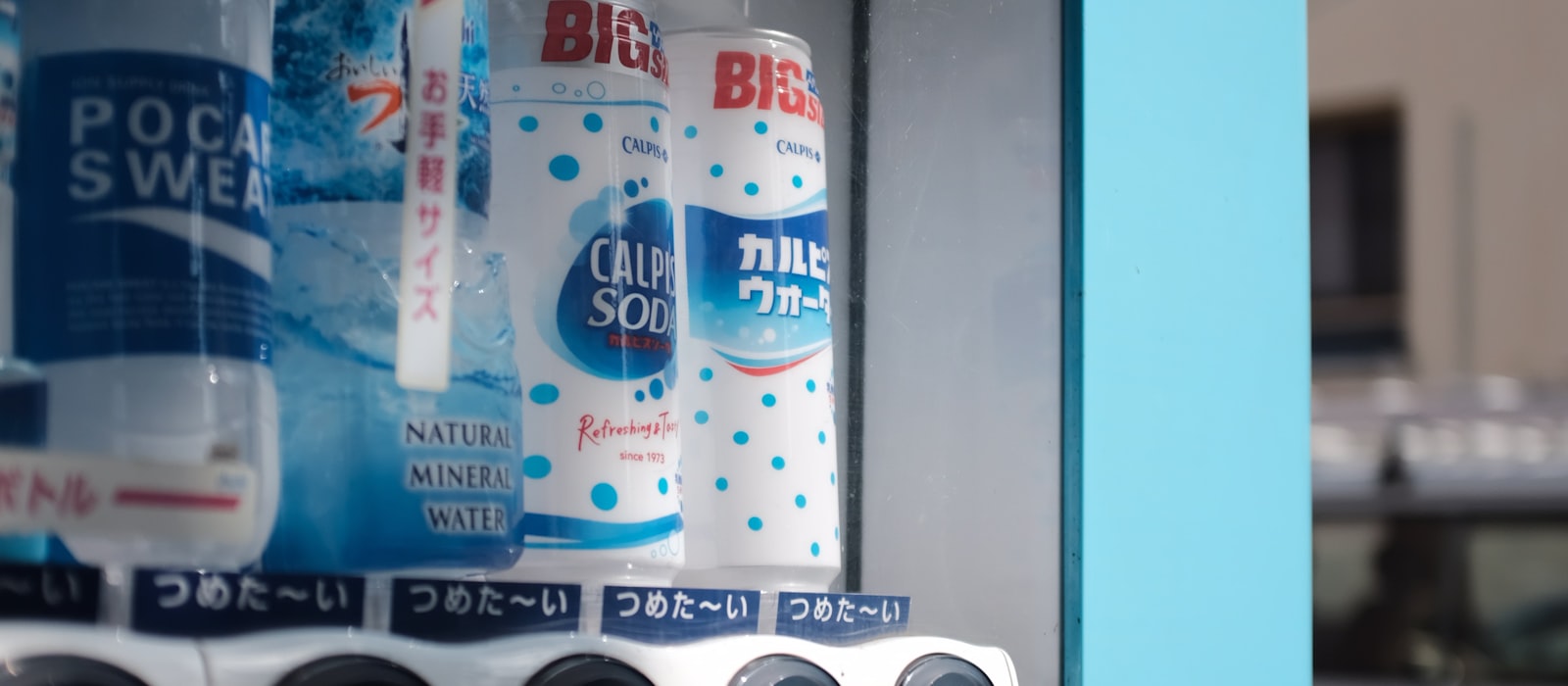
Calpis is the drink that started Japan's entire lactic acid beverage category, first sold in 1919 by what is now Calpis Co., a subsidiary of Asahi Breweries. The original is a concentrate, meant to be diluted with water or milk, which is part of why it kept so well in an era before universal refrigeration and why it spread so widely once it did. Today the pre-diluted Calpis Water and the carbonated Calpis Soda are what you will actually find in an onsen vending machine, both instantly recognizable by the pale, milky color and the faintly sweet, tangy flavor that reads as something between yogurt and lemonade.
If you only try one bathhouse drink in Japan, this is the one with the longest pedigree. Every other lactic drink on this list exists in some sense because Calpis proved the category could work.
Bikkle: Suntory's yogurt drink, built for the machine
Bikkle is Suntory's entry in the same category, a yogurt-based drink typically sold for around 100 to 120 yen from the same vending machines, convenience stores, and supermarkets that stock Calpis. It reads slightly thicker and more distinctly yogurt-forward than Calpis Water, and regulars tend to have a clear preference between the two. There is no wrong answer. Trying both on different visits is part of the fun of working out which one you actually prefer.
Katsugen: Hokkaido's own soul drink
This is the one worth knowing specifically if your onsen trip takes you to Hokkaido, because Soft Katsugen is a regional specialty rather than a nationwide staple. Snow Brand (now Snow Brand Megmilk) launched it in 1956, naming it by combining characters from the Japanese phrase for "source of vitality." It has been a fixture of Hokkaido bathhouse culture for the better part of seven decades, with a yogurt-like sour-sweetness that locals treat as a genuine point of regional pride rather than just another vending machine option.
If you find yourself soaking in Hokkaido after a day in the snow, a cold bottle of Katsugen from the changing room machine is as much a part of the regional experience as the onsen itself. Look for it specifically. It does not travel the way Calpis does, and that is exactly why it is worth seeking out where it is actually from.
And sometimes, it is beer
Milk and lactic drinks are the traditional choice, but they are not the only one. A number of onsen and ryokan, particularly larger resort-style facilities, sell beer or Japanese wine either at the bath itself or immediately outside it, for guests who want to extend the relaxation rather than reset with something cold and simple. It is a smaller, more facility-specific tradition than the milk ritual, closer to a hotel amenity than a bathhouse custom, but it exists at enough well-known onsen towns that it is worth knowing it is an option rather than assuming milk is the only choice on offer.
Either way, the underlying logic is the same one that built the whole ritual in the first place: after a long, hot soak, something cold tastes better than it has any right to, and someone nearby has always made sure you can get it standing right there in the changing room.
Trying it yourself
You do not need to seek out anything special to take part in this. Nearly every onsen and sento in Japan, from a small neighborhood bathhouse to a destination ryokan, will have a drink vending machine somewhere between the bath and the changing room, and the etiquette could not be simpler: pick a bottle, stand, drink, enjoy the five minutes before you have to put real clothes back on. It is one of the smallest rituals in Japanese bathing culture and, for a lot of regulars, one of the best parts of the whole visit.
Sources and further reading
- Calpis Co. (Asahi Breweries), company and product history
- Suntory, Bikkle product information
- Snow Brand Megmilk, Soft Katsugen brand history
- General hydration and electrolyte-loss physiology as it relates to heat exposure and sweating
- SpringsAtlas Japan directory, including the Hokkaido region