I have a confession. My skincare shelf takes up more space than my wardrobe.
I am not exaggerating. Every trip to Japan ends the same way: I leave extra room in my suitcase on the way in because I know I will need it on the way back. The shotengai near our hotel in Tokyo always has a ranking posted outside the drugstore. Number one this week. Best seller for the third month running. My husband Ryan knows by now that these rankings are not decorative. They are instructions.
The thing is, I have learned to trust Japanese skincare completely. The formulations are different. The philosophy is different. It is not about covering up. It is about the condition of the skin itself. And that philosophy is exactly what led me, eventually, to start thinking seriously about what I put my skin into, not just what I put on it.
That is when I started paying attention to the number on the onsen sign.
What pH actually means
pH stands for potential of hydrogen. It measures how acidic or alkaline a liquid is, on a scale from 0 to 14. Seven is neutral. Below seven is acidic. Above seven is alkaline.
Your skin sits naturally at around pH 4.5 to 5.5. Slightly acidic. There is a reason for this. That acidic surface, called the acid mantle, is a thin protective barrier that keeps moisture in and bacteria out. When it gets disrupted, your skin tells you. It feels tight. Or oily. Or it breaks out. Or it just looks dull in a way that no serum seems to fix.
Natural hot spring water has its own pH. And depending on where you bathe, you can land anywhere from frighteningly acidic to deeply alkaline. These are not small differences. A change of one point on the pH scale represents a tenfold change in hydrogen concentration. The difference between a spring at pH 2 and a spring at pH 4 is not two steps. It is a hundred times more acidic.
A quick reference: where Japanese springs fall on the scale
pH Range
Type
Common Minerals
Feel on Skin
Example Springs
1.0 to 2.0
Strongly acidic
Sulfuric acid, hydrogen sulfide
Sharp tingle, raw after soaking
Ofuka Onsen (pH 1.2), Sukayu Onsen (pH 1.7)
2.0 to 4.0
Acidic
Sulfur, alum
Cleansing, astringent
Kusatsu Onsen (pH 2.1), Zao Onsen (pH 2.0)
4.5 to 5.5
Matches skin's acid mantle
Varies
Minimal disruption
Ikaho Onsen (approx pH 5)
6.0 to 8.0
Near neutral
Sodium chloride, sulfate
Smooth, warming
Hakone Onsen (pH 7.2), Yufuin Onsen (pH 7.8)
8.0 to 9.5
Mildly alkaline
Simple alkaline, sodium bicarbonate
Very soft, silky
Gero Onsen (pH 9.2), Miyanoshita Onsen (pH 8.4)
9.5 to 11.0
Strongly alkaline
Simple alkaline
Intensely smooth, bijin-no-yu
Tsubaki Onsen (pH 9.9), Ryujin Onsen (pH 9.9)
Above 11.0
Highly alkaline
Simple alkaline
Slippery, very softening
Iiyama Onsen (pH 11.3)
Your skin naturally sits at pH 4.5 to 5.5. Springs far above or below that range will interact with it more noticeably. Which direction you prefer depends entirely on your skin type.
The acidic end: sulfuric springs
Some of Japan's most famous hot springs are highly acidic. Kusatsu Onsen in Gunma sits at around pH 2.1. Zao Onsen in Yamagata is similar. Sukayu in Aomori, which I visited on a particularly cold November morning, measures around pH 1.7.
Bathing in water that acidic sounds alarming. It is not, as long as you follow the rules. The water has strong antibacterial properties. It is used traditionally to treat skin conditions including eczema and fungal infections, and dermatologists in Japan have studied its effects for decades.
But here is the thing about highly acidic water and skin like mine, skin that I have spent years coaxing into balance with the right toner and the right moisturiser and the correct layering order: the experience is intense. You feel it. There is a slight tingle that is hard to describe as either pleasant or unpleasant. After soaking, my skin felt scrubbed, almost raw. I reached for my travel moisturiser immediately. For someone with more resilient or oily skin, the effect might feel clarifying. For me it was too much. I appreciated the experience, but I would not go back to a strongly acidic spring every day.
Ofuka Onsen in the Nyuto Onsen area carries a pH of 1.2, which is among the lowest I have encountered in our data. That is closer to the acidity of lemon juice than anything I would normally apply to my face. The properties are real. The experience demands respect.
The alkaline end: bijin-no-yu
On the opposite end of the scale, Iiyama Onsen in Nagano reaches pH 11.3. Tsubaki Onsen in Shirahama measures 9.9. Ryujin Onsen in Wakayama, which is listed among Japan's three great hot springs, sits at 9.9 as well.
These are simple alkaline springs, known in Japanese as tansan-sen or sometimes classified as simple-alkaline. They have a different quality to them entirely. The water is often clear and colourless. The effect on skin is the opposite of the acidic springs. Alkaline water softens the protein bonds at the surface of the skin, which sounds alarming but produces something wonderful in practice. It makes your skin feel impossibly smooth.
Japanese bathing culture has a specific name for this: bijin-no-yu, which translates to beautiful-skin water. I encountered this phrase for the first time in a ryokan brochure and assumed it was marketing language. Then I soaked at Gero Onsen in Gifu, which sits at pH 9.2, and understood. The difference was immediate. My skin on the bus ride back felt like a different texture to my skin that morning.
For someone as particular about her skin as I am, alkaline springs have become my preference. Not because I have researched every chemical mechanism. But because my skin tells me very clearly which water it likes.
The middle ground: what neutral pH means for skin
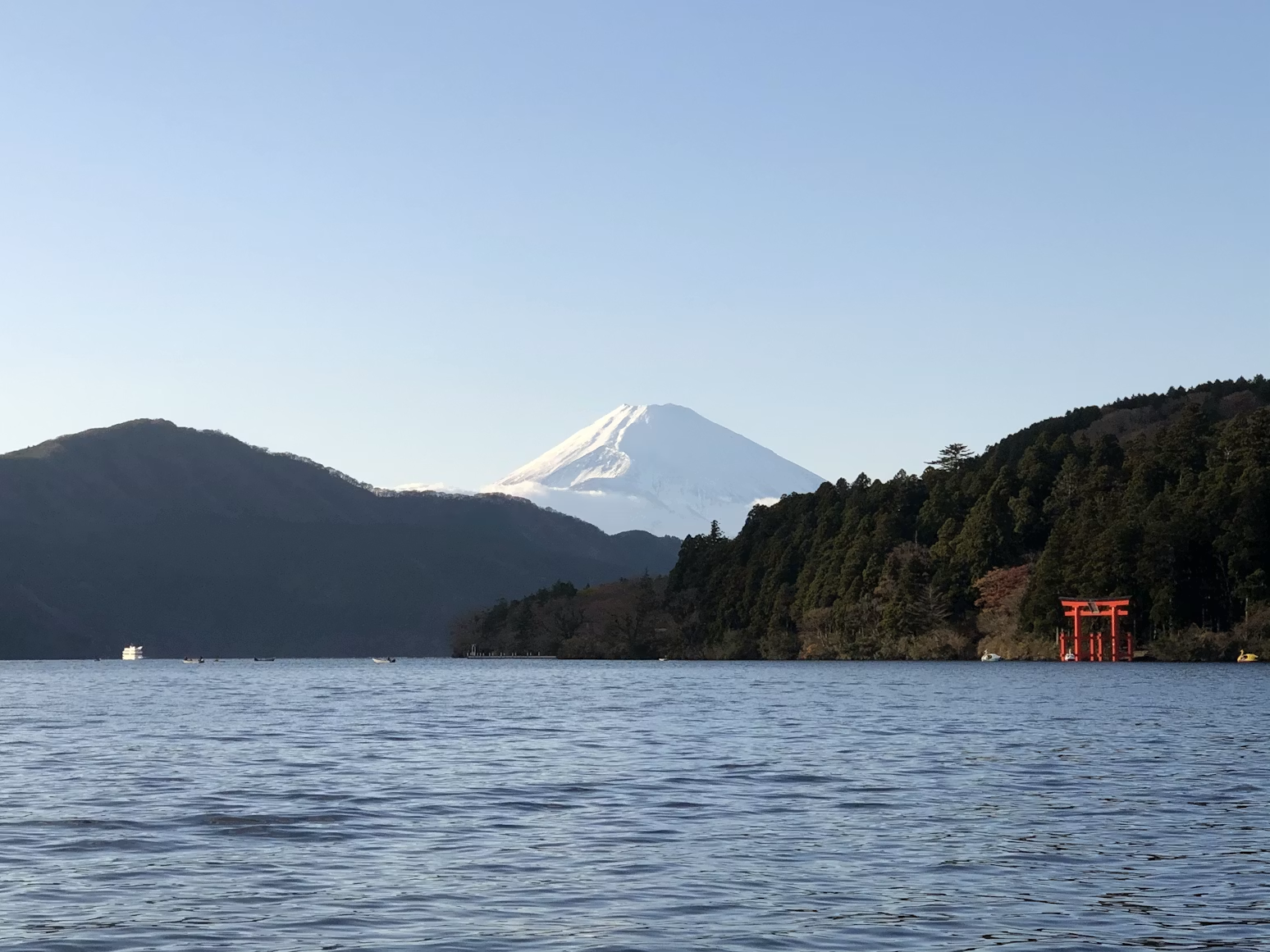
Most of Japan's well-known onsen towns sit closer to neutral. Hakone Onsen, which we have visited more times than I can count, sits at pH 7.2. Miyanoshita Onsen in the same area is 8.4. These are comfortable waters. They do not challenge the skin in either direction. The benefit here comes more from the mineral content and the heat than from the pH itself.
Sodium chloride springs are common at neutral pH. They leave a thin mineral film on the skin after bathing that acts as a kind of natural moisturiser. You will notice you do not need to apply body lotion immediately the way you do after a highly acidic soak. The water does some of that work for you.
Does pH affect everyone the same way?
No. And this is the part I find genuinely interesting.
Skin type matters significantly. Someone with dry or sensitive skin will experience the extremes more acutely. The skin barrier is already compromised at the edges, and strongly acidic or alkaline water will interact with it more visibly. Someone with oily skin, which already overproduces sebum to compensate for imbalance, may find that an acidic spring actually helps regulate things.
Age matters too. Older skin produces less natural oil and has a thinner barrier. What felt fine at thirty may feel drying at fifty. I have watched this shift in my own skin over the years and adjusted accordingly.
Skin conditions change the equation entirely. People with atopic dermatitis often find relief in mildly acidic springs. People with psoriasis may respond better to alkaline ones. These are not rules. They are tendencies that require personal experimentation.
Frequency of exposure also plays a role. A single long soak in a highly acidic spring feels different to five days of daily bathing in the same water. Many onsen towns that built their reputation around therapeutic stays traditionally involved shorter soaks two or three times a day, not long immersions. The recommendation exists for a reason.
A few practical things I have learned
Always rinse before entering. This is not just courtesy. Your skin's natural oils and any products you are wearing will interact with the spring water in ways that are difficult to predict.
Do not over-soak in strongly acidic or strongly alkaline water. Twenty minutes is usually enough. Longer sessions can disrupt your skin barrier more than you intend, and you will feel it the next morning.
Moisturise afterward. Especially after acidic springs, and especially in winter. The mineral content that makes these baths so beneficial also draws moisture from the surface if you do not seal it back in.
Pay attention to the signage. Many onsen facilities list the spring's pH and mineral analysis near the entrance. I have started reading these the way I read ingredient lists on skincare products. The information is there. It takes a few minutes and changes the way you approach the bath entirely.
Choose based on how your skin is feeling that day, not just which spring has the longest history or the best view. Some days my skin needs the gentle smoothing of an alkaline spring. Some days I want the heat and minerals of a neutral chloride spring without the pH drama. The decision used to feel arbitrary. Now it does not.
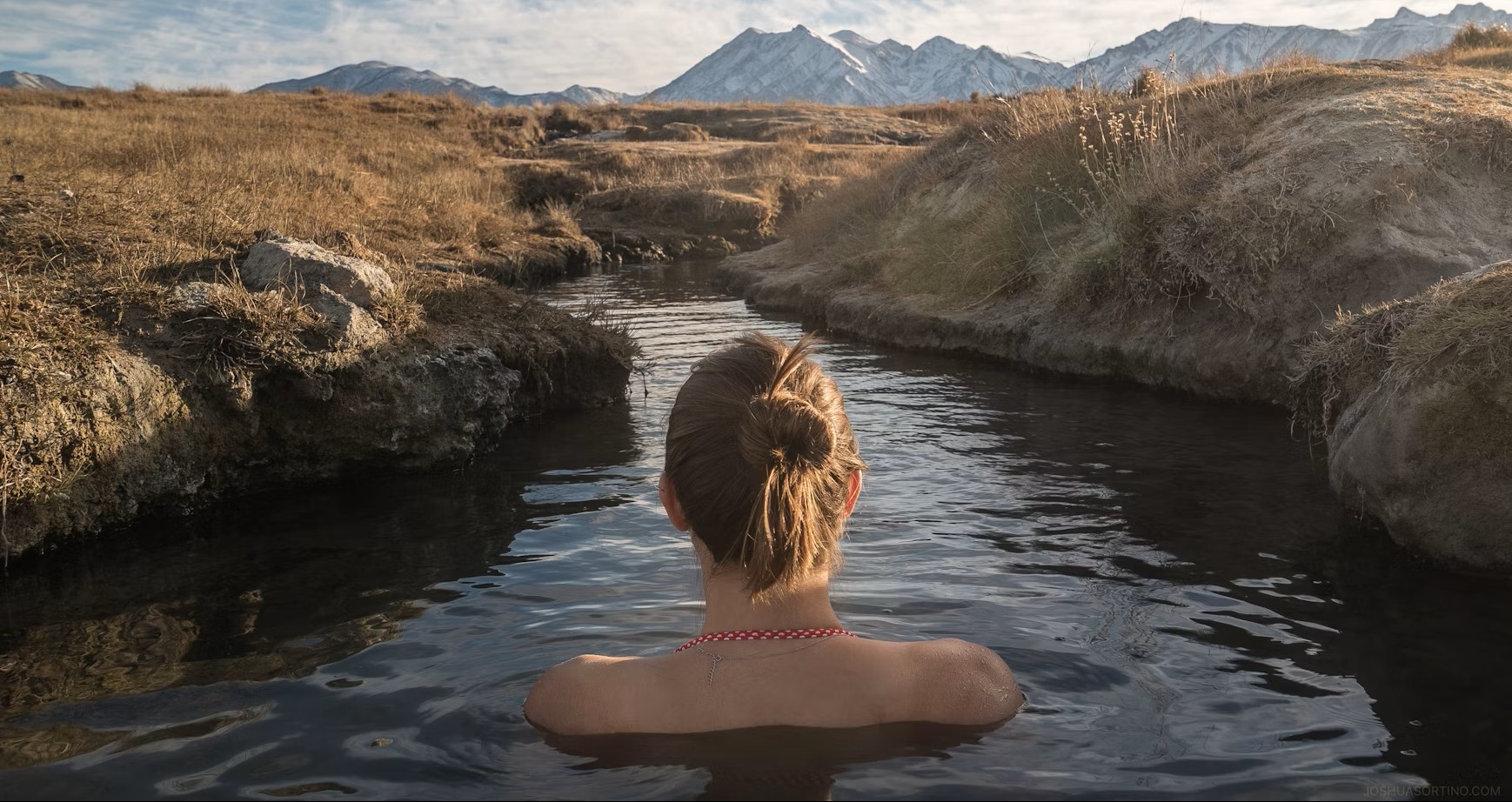
I started caring about natural hot springs long before I understood the chemistry. I preferred them the same way I prefer the ocean to a pool, or a spring mountain stream to a resort waterpark. Something in the natural water felt different. It turns out that something has a number. And once you start reading that number, you cannot stop.
Ria Flores is an interior designer, Chief Design Officer, and frequent Japan traveller who has soaked in hot springs across Hokkaido, Tohoku, Kyushu, and Kansai. She writes about onsen culture from a traveller's perspective — practical, personal, and grounded in first-hand experience. She is the wife of SpringsAtlas founder Ryan Flores.
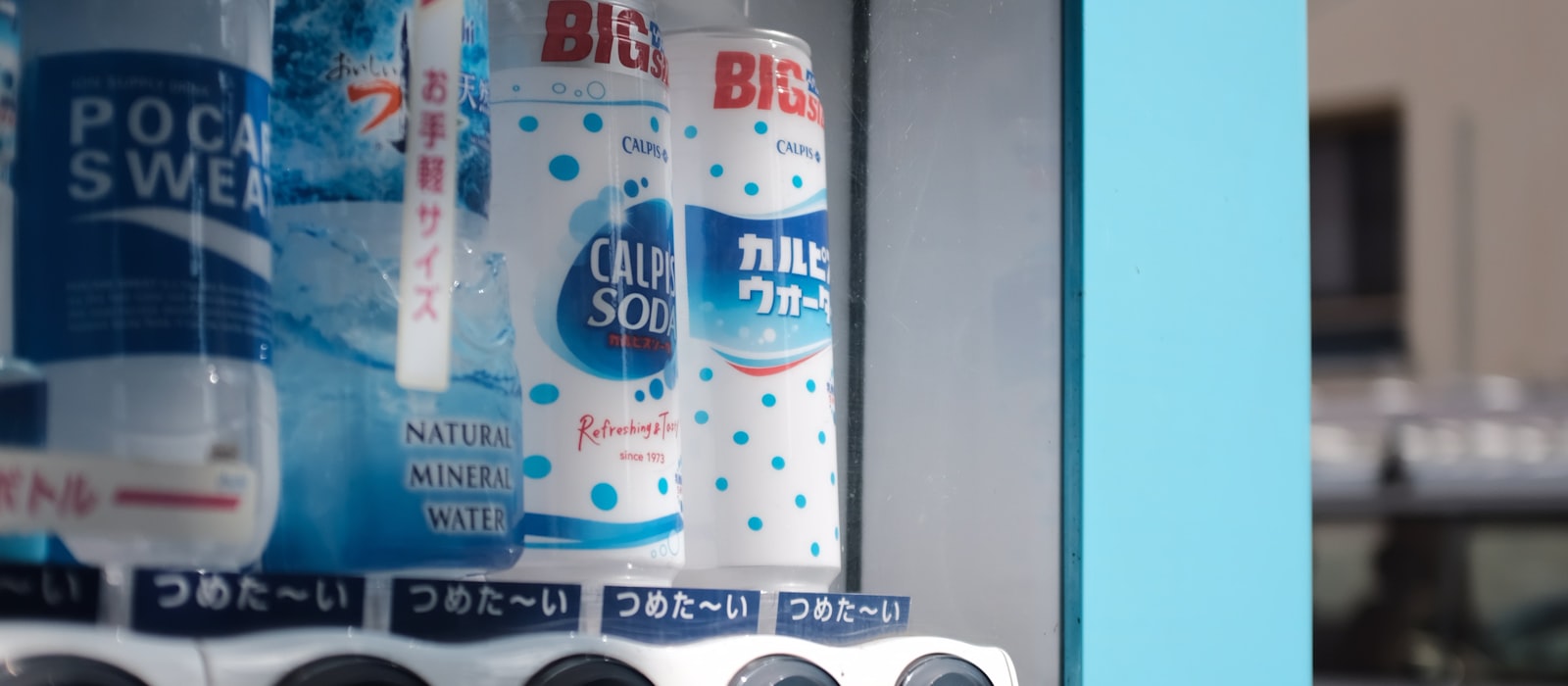
Cold milk, Calpis, Hokkaido's own Soft Katsugen, and the occasional beer: Japan built an entire post-bath ritual around the vending machine by the changing room. Here is where it came from, and why it tastes so good.
The first time I walked into a public onsen in Japan, I did almost everything wrong. Nobody said anything. But the looks through the steam were unmistakable. Here is what I wish someone had told me before I went in.
Tokyo is extraordinary and completely relentless. Within two hours in almost any direction, there are onsen towns that have been receiving tired visitors for centuries. These are the ones worth the train ride.