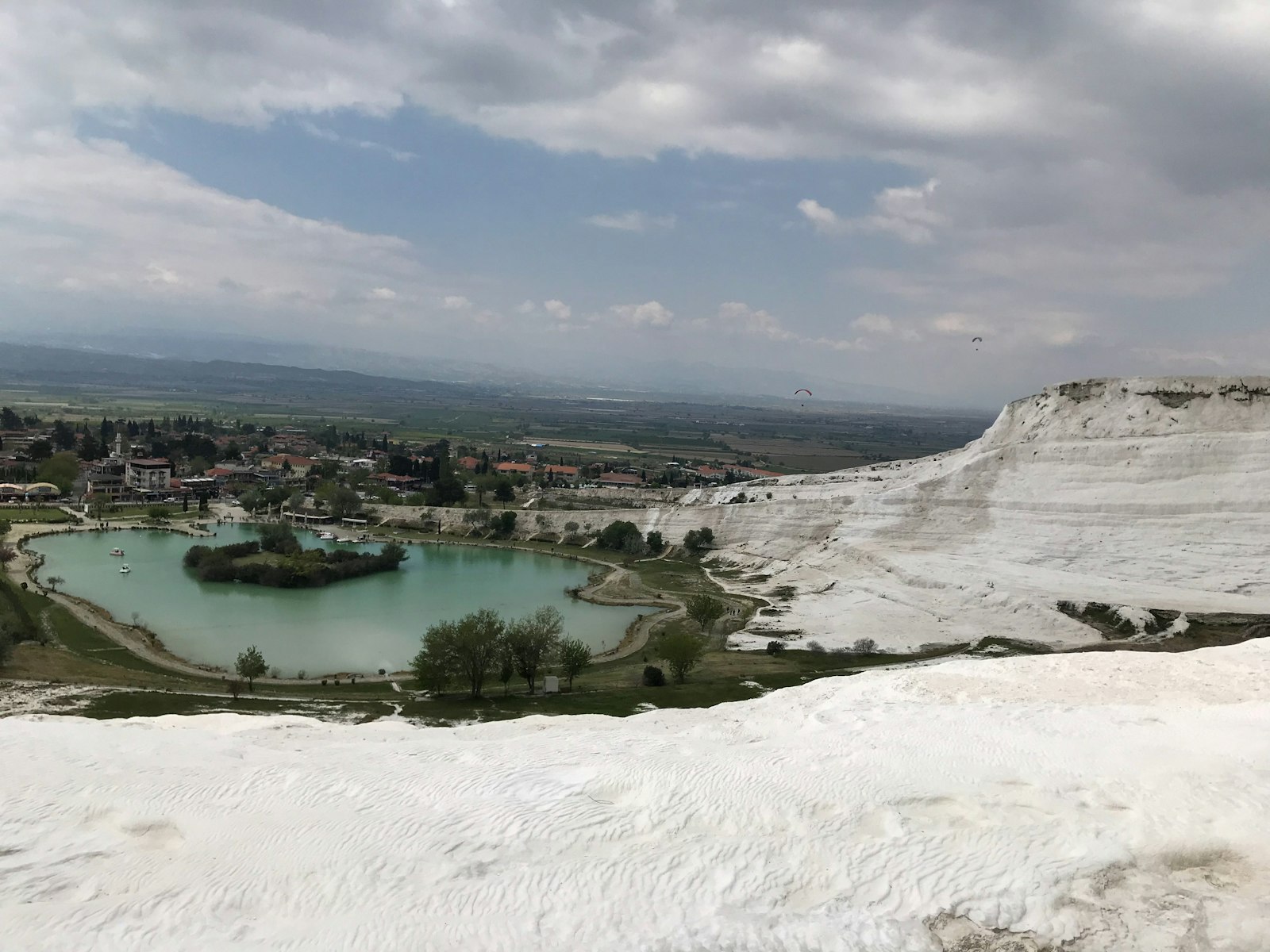
I still remember the photo that started it. A friend sent me a picture of white terraced pools cascading down a hillside like frozen snow, and my first thought was that someone had run it through a filter. It was Pamukkale, unedited. My second thought, a week later, was a photo from the same region entirely, of water the color of rust pooling around bare feet. Same corner of Turkey. Completely different mineral story.
Pamukkale and Karahayit sit less than fifteen minutes apart by road, drawing from thermal water that rises through the same limestone plateau in Turkey's Denizli province. One comes out white. One comes out red. If you are planning a single day around this region, understanding why is the difference between seeing two attractions and understanding one landscape.
Pamukkale: where calcium builds a mountain of white
Pamukkale means "cotton castle" in Turkish, and the name undersells it if anything. Thermal water rich in calcium and hydrogen carbonate has been flowing down this hillside for tens of thousands of years, and every time it hits open air, dissolved calcium carbonate precipitates out and hardens into travertine. Layer by layer, the terraces built themselves.
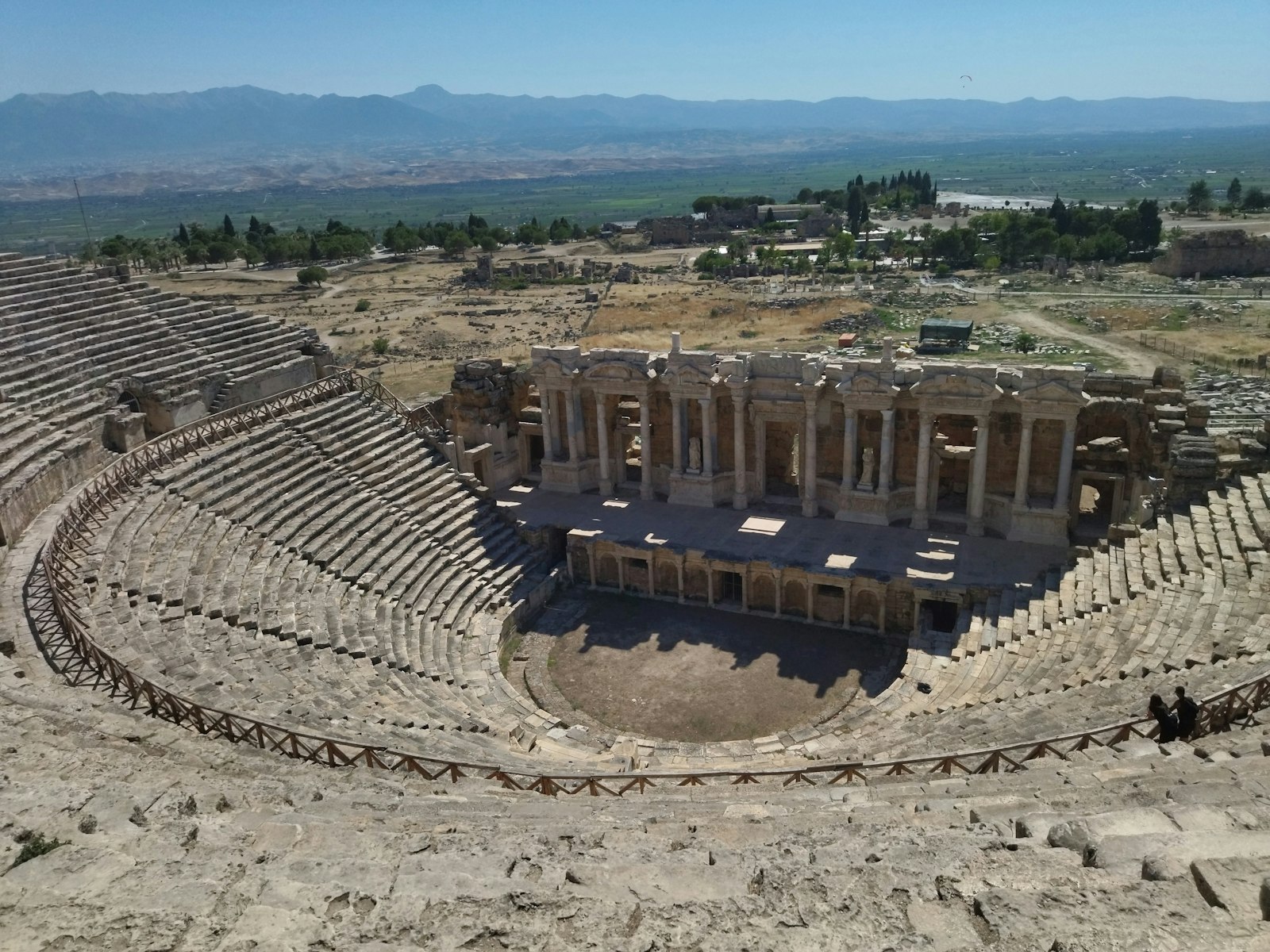
The site sits directly beneath Hierapolis, the Roman-era spa city built specifically because ancient visitors already understood the water was valuable. Walking the terraces today means walking barefoot along a UNESCO World Heritage boundary, since the white travertine itself is protected and general wading across it is restricted to designated paths.
The part almost nobody expects: you can actually swim in it. The Cleopatra Antique Pool sits inside the Hierapolis archaeological site, a separate paid pool where the same carbonated, mineral-rich water bubbles up around submerged Roman columns that toppled in a seventh-century earthquake. The water runs 35 to 36 degrees Celsius, gently effervescent, and swimming past two-thousand-year-old marble drums is not a metaphor. They are right there under the surface.
Bring a separate bag for your wet clothes, because this pool has its own entrance fee on top of the main Hierapolis-Pamukkale ticket, and the two are not combined. Go at opening time if you want the ruins to yourself before the tour buses from Denizli and Izmir arrive by midmorning.
Karahayit: the same water, a different mineral entirely
Drive a few minutes north and the ground itself changes character. Karahayit's springs run through iron oxide deposits instead of pure calcium, and the result is travertine in shades of rust, ochre, and deep red rather than white. Locals have called it Kirmizi Su, red water, for longer than anyone has bothered to date.
The Karahayit Red Spring is a free, open-air public park with shallow wading pools where you walk barefoot through warm, iron-rich mud. People have used this water for skin and joint complaints for thousands of years, and the tradition continues in the simplest possible form: you walk in, the mud coats your feet and ankles almost immediately, and you let it sit before rinsing off. There are no changing cabins at the public park, so wear shoes you can slip off easily, and accept that the iron will stain light-colored clothing. Old, dark clothes are the local's approach, not a suggestion.
If you want a more developed facility, several thermal hotels in Karahayit village sell day passes to their own indoor and outdoor pools, complete with showers and lockers. But the free public wading pools are the more honest version of the experience, and they cost nothing.
Why the colors are different, and why it matters for your visit
Both springs draw from the same broad Denizli thermal system, but the water picks up different minerals depending on the rock it travels through before reaching the surface. Pamukkale's water is calcium and hydrogen-carbonate heavy, and calcium carbonate crystallizes white when it meets air. Karahayit's water carries a much higher iron oxide content, and iron oxidizes into the same rust color you would recognize from an old nail left in the rain.
This is not just a photography detail. It changes what you should wear. Pamukkale's calcium deposits will not stain, so any swimwear works at the Cleopatra pool. Karahayit's iron mud absolutely will stain, so treat your visit there as a mud-bath day, not a whites-only day.
It also changes the pace of each stop. Pamukkale rewards arriving early and lingering, since the terraces are extensive and the antique pool experience is worth taking slowly among the ruins. Karahayit is a shorter, more localized stop, best timed for late afternoon when the low sun deepens the red and orange tones for photos, and easily paired with a meal in the village afterward. Karahayit's main street has simple cafes serving Turkish coffee and gozleme, a good way to close out the day before heading back toward Pamukkale or Denizli.
Planning the day
Both sites sit within Turkey's Denizli Region, roughly 70 to 75 kilometers from Denizli Cardak Airport, and are connected by frequent dolmus minibuses running between Denizli Otogar, Pamukkale town, and Karahayit village. Most visitors base themselves in Pamukkale town and treat Karahayit as a half-day add-on, which is the order I would recommend: white terraces and the antique pool in the morning while the site is cool and quiet, red springs in the late afternoon for the light.
Neither site requires advance booking, though the Cleopatra Antique Pool does require its own ticket at the gate. Bring cash for Karahayit's cafes, comfortable water shoes for both stops, and, if I am being honest about the two, the willingness to ruin one outfit for the sake of a genuinely unusual souvenir. The iron stains fade. The photos do not.
What ties them together
Standing on the white terraces and then walking through the red mud an hour later, what struck me most was not the contrast but the continuity. This is one thermal system, one plateau, expressing itself two different ways depending on which minerals the water happened to pick up on its way to the surface. Hierapolis was built where it was for a reason, and Karahayit's ancient reputation for skin cures did not appear from nothing either. People have been reading this landscape's colors correctly for thousands of years. We just get to see both chapters in a single afternoon.


SpringsAtlas may earn a commission, at no extra cost to you.
Sources and further reading
- UNESCO World Heritage Centre, Hierapolis-Pamukkale site documentation
- Denizli Provincial Directorate of Culture and Tourism, regional thermal water mineral profiles
- SpringsAtlas Turkey directory and individual spring listings for Pamukkale, Karahayit, and the Denizli Region