There is a particular kind of quiet that happens underwater, and it is different again when the thing you are swimming past used to be a column holding up a temple roof. I have felt that quiet twice now while researching Turkey's hot springs for this site, in two places three hundred kilometers apart, and both times the ruins were not a museum exhibit behind glass. They were simply there, in the water, doing nothing but waiting.
Turkey's western coast sits on a stretch of geology the Romans and the Hellenistic Greeks before them understood better than most modern travelers do: hot mineral water and human settlement have always gone together here. Two sites make that history impossible to ignore, because in both, the past has literally sunk into the present.
Cleopatra's pool, Pamukkale
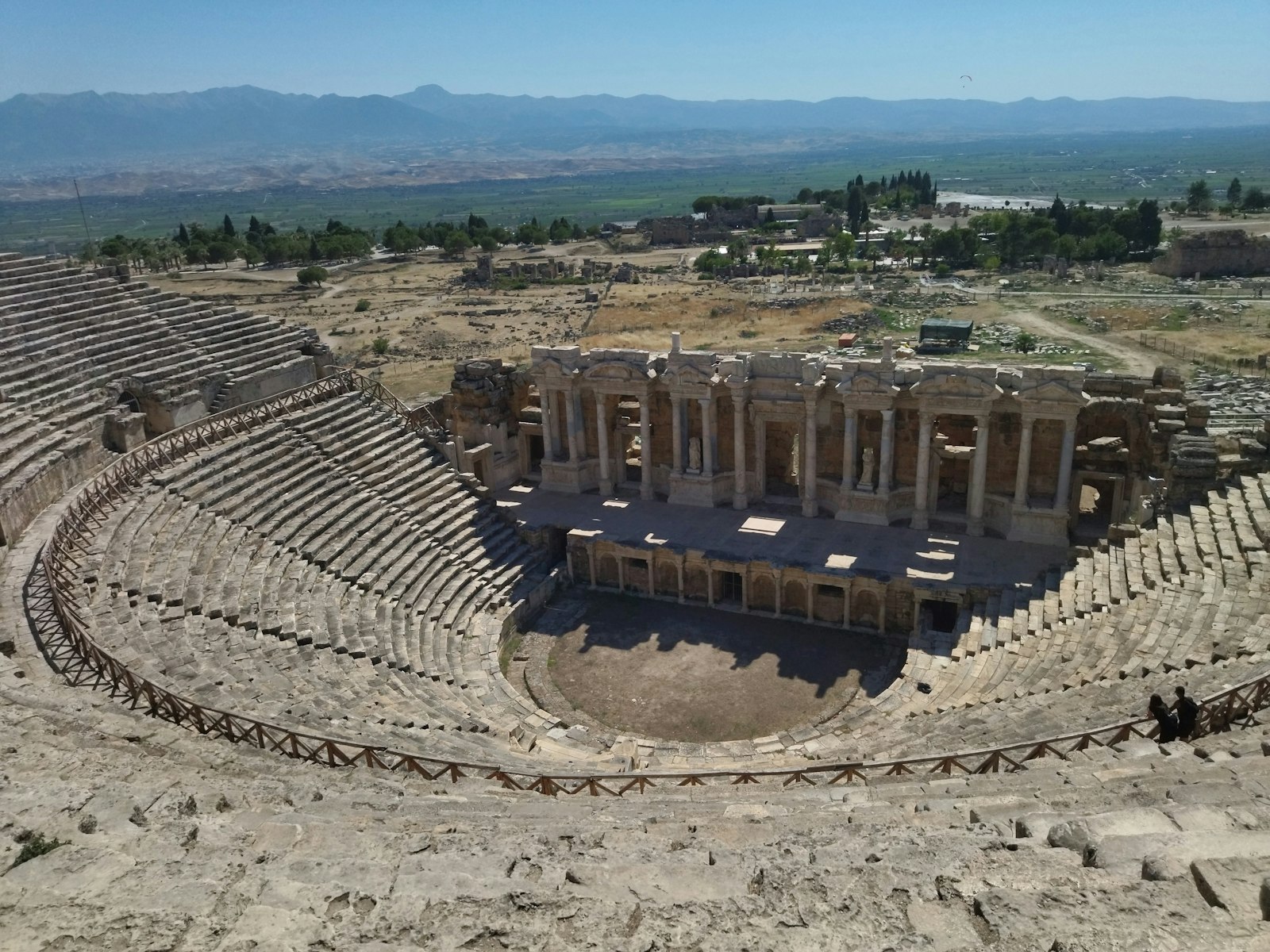
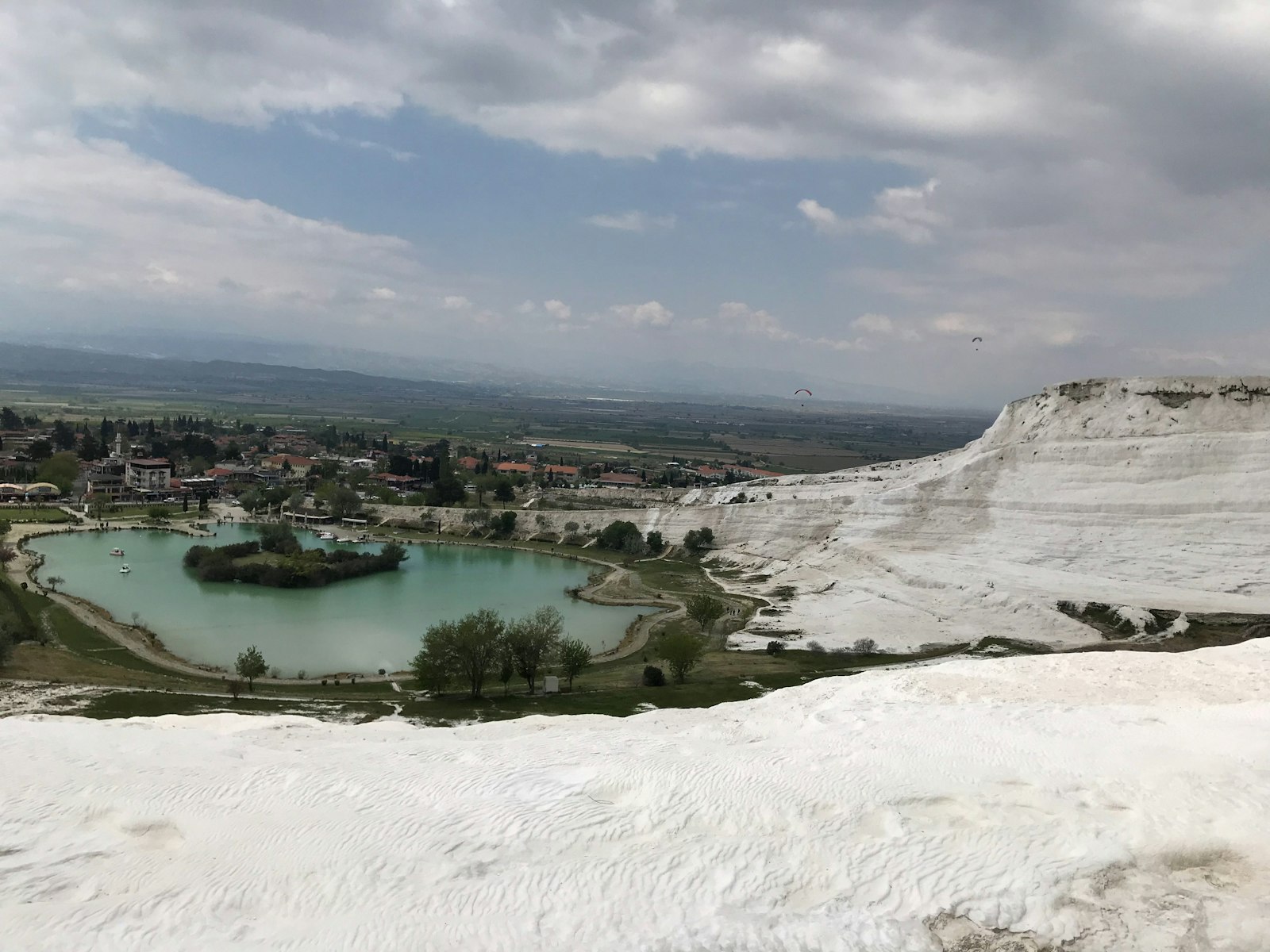
The Cleopatra Antique Pool sits inside the Hierapolis archaeological site, above Pamukkale's famous white travertine terraces, and it looks at first like an ordinary resort pool until you notice what is under the surface. Pale marble column drums, fallen and scattered across the pool floor, close enough to swim past and, in the shallower sections, close enough to touch.
The pool formed after a seventh-century earthquake toppled columns from a nearby temple directly into the thermal spring that fed the ancient spa city of Hierapolis. The Romans had already been drawn to this water for its curative properties, following in the footsteps of the Hellenistic city that came before them, and the earthquake simply added two thousand years of architecture to what was already a working thermal bath. The Cleopatra name is legend rather than confirmed history. Whether or not she ever visited, the association has stuck for centuries, and Hierapolis remains protected today as part of a UNESCO World Heritage site.
The water itself is warm and gently carbonated, sitting around 35 to 36 degrees Celsius, with a constant fizz of bubbles rising from the pool floor. It requires its own ticket separate from the main Hierapolis-Pamukkale entrance, and it draws a steady crowd once tour buses arrive from Denizli and Izmir by midmorning. Arrive at opening time and you get something closer to what the site actually offers: a quiet swim among genuinely ancient stone, before the rest of the day's visitors show up.
Sultaniye, where the temple went under the lake
Three hundred kilometers south and east, near the town of Koycegiz, a different kind of ruin sits beneath a different kind of water. Sultaniye Hot Springs traces back to the Roman and Hellenistic eras as well, when a substantial temple of health was built at the site specifically to treat skin and joint ailments using the local sulfur-rich water. Over the centuries, the surrounding land subsided and the lake rose, and the temple's ruins now lie fully submerged beneath Lake Koycegiz, reachable only by the same boat crossing that visitors use to reach the modern springs today.
Getting to Sultaniye is part of the experience. There is no road access. You take a scenic passenger ferry from the town dock in Dalyan, crossing the river and lake before arriving at a rustic complex of outdoor thermal pools, open-air mud pits, and one simple domed indoor pool. The sulfur smell announces itself before you disembark, and most visitors head straight for the mud pits, coating themselves in the mineral-rich sediment before rinsing off in the adjoining pool.
Sultaniye has never been rebuilt into anything resembling a resort, and that is precisely its appeal. Wear old, dark swimwear you do not mind staining, since the sulfur mud leaves marks that do not wash out easily, and confirm your return boat schedule with your captain before wandering off, since departures from the springs run less frequently than from Dalyan itself. There is nowhere to eat at the springs, so plan to have your meal in Dalyan before or after the crossing, where riverside restaurants serve fresh grilled fish pulled from the same waters that carried you out.
Two thousand years, two different endings
What connects these two places is not proximity, since they sit on opposite sides of the country's southwestern coastline, but a shared pattern: ancient civilizations identified the exact spots where thermal water met a site worth building on, and built accordingly. Time did the rest, unevenly. An earthquake dropped Hierapolis's columns directly into the pool that made it famous, preserving them in plain view. A slower geological shift buried Sultaniye's temple entirely, leaving only the water's reputation and a boat ride as evidence of what stood there.
Neither history is fully documented. Cleopatra's connection to the Pamukkale pool is folklore more than record, and Sultaniye's submerged temple is described more than it has been formally excavated. But standing in both pools, the ruins under you are not folklore. They are simply the oldest thing you will touch on either trip.
Planning both stops
These are not sites you casually combine in a single day. Pamukkale sits in Turkey's Denizli Region, roughly 70 kilometers from Denizli Cardak Airport, and pairs naturally with a visit to the nearby Karahayit red springs. Sultaniye sits near Koycegiz on the Aegean coast, closer to Dalaman Airport, and is usually visited as a half-day trip out of Dalyan alongside its mud-bath boat tours and the town's riverside restaurants. If you are building a longer Turkey itinerary, treat them as two separate legs of a coastal history trip rather than a single day, and budget the boat crossing time for Sultaniye accordingly.


SpringsAtlas may earn a commission, at no extra cost to you.
Sources and further reading
- UNESCO World Heritage Centre, Hierapolis-Pamukkale site documentation
- Mugla Provincial Directorate of Culture and Tourism, Koycegiz and Sultaniye historical records
- SpringsAtlas Turkey directory and individual spring listings for Pamukkale and Koycegiz