
Eger Thermal Bath
Egri Termálfürdő
4.3 · 3100 reviews · via Google
Eger Thermal Bath
calcium-magnesium · Northern Hungary
Hotter than 6% of Hungary springs (n=18).
More acidic than 50% of Hungary springs (n=18).
Mineral profile
Bar width reflects listing order, not measured concentration.
Suitability
At a glance
Getting there
Moderate — a short ride from a station
Cost
Low
Crowd level
Quiet
About this spring
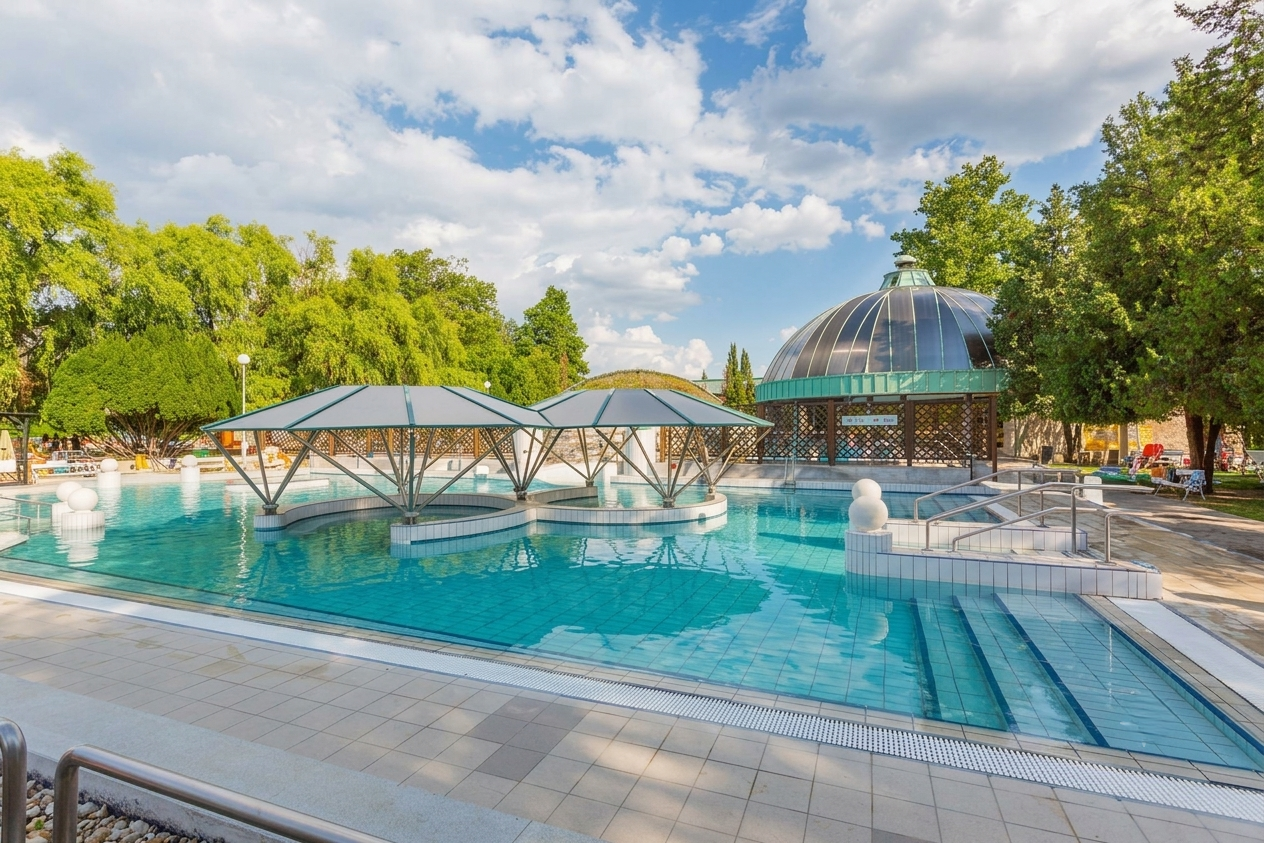
The facility features two distinct types of water, including a unique radioactive radon water that relieves inflammation and a traditional sulfurous medicinal spring. The complex sits inside a large park adjacent to the Eger Archbishop's Garden, offering seven pools, an absolute beach area, and a direct internal corridor connection to the historic Turkish Bath. It suits families and elderly travelers who want to combine recreational swimming with classic therapeutic soaking. Visitors should note that the water in the main radon pool is naturally hazy due to the organic minerals. Flip-flops are highly recommended for navigating the extensive outdoor lawn pathways safely.
Highlights
History
Established in 1932, this sprawling parkland facility was built around active radon-rich and sulfurous springs next to the Archbishop's Garden.
The modern Olympic swimming pool opened in 1962, turning the complex into an elite training hub for Hungarian water polo teams. A total park connection project in 2002 integrated the open-air pools with the neighboring historic Turkish bath.
Local guide
Set inside the Archbishop's Garden, Eger Thermal Bath has the feel of a public park that happens to have pools in it, with mature trees shading the walkways between the different pool areas. The setting is unusually green for a Hungarian bath complex, and it shows in how families use the space, spreading out on the grass between swims rather than sticking close to the water.
The complex runs both a radon-rich pool, unusual among Hungarian baths, and a more traditional sulfurous medicinal pool, and the radon water in particular has a faint natural haze that first-time visitors sometimes ask staff about. A direct internal corridor connects the modern complex to the historic Turkish bath next door, making it easy to experience both in a single visit.
Wear sandals for the outdoor walkways, since the extensive lawns and paths between pools mean more walking barefoot than at more compact bath complexes. The radon pool's slightly hazy water is completely normal and not a sign of poor maintenance, worth knowing before you second-guess getting in.
Weekday mornings are quietest, while the gardens fill with families on weekend afternoons. Eger itself, a short walk away, is a wine town with plenty of restaurants and cellar bars worth exploring after your soak.
Mineral chemistry
Water character inferred from mineral type — verify on site.
Calcium chloride springs share the heat-retaining property of sodium chloride springs but with a stronger warming effect. Prized for muscle and joint relief.
The strong warming effect means those with cardiovascular conditions, high blood pressure, or pregnancy should limit soak duration and consult a doctor if in doubt.
Bicarbonate springs cleanse and soften the skin surface, removing excess sebum without stripping the skin's acid mantle. Traditionally recommended for acne-prone skin and sensitive skin types.
Bicarbonate springs are generally among the most gentle and well-tolerated onsen types.
Radium or radon springs are a recognised therapeutic category in several countries. At the low concentrations found in natural springs, exposure is associated with hormesis, a mild beneficial stress response.
Radon concentrations in natural hot springs are far below levels associated with health risk. Those who are pregnant should consult a doctor before bathing.
Similar springs
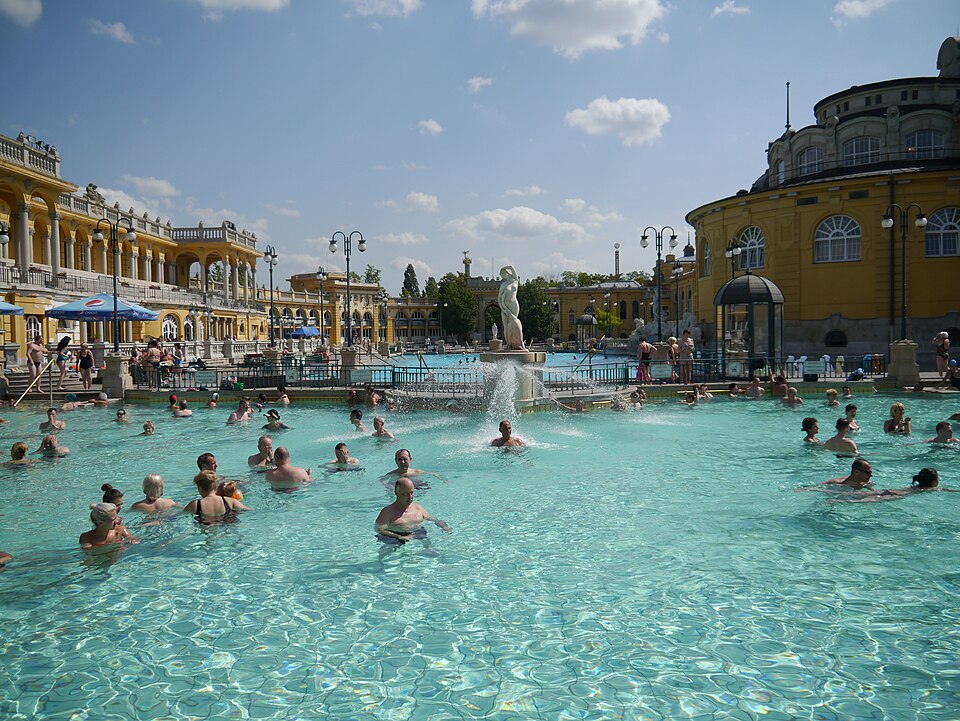
The water is rich in calcium, magnesium, and hydrogen carbonate, surfacing at high temperatures to fill eighteen distinct indoor and outdoor pools. The facility features a spectacular Neo-Baroque yellow palace structure with large outdoor swimming areas where locals famously play chess in the steaming water. It suits travelers looking for a grand architectural experience and extensive thermal facilities. Rental towels can have long lines so bringing your own towel and flip-flops is highly recommended. Swim caps are strictly mandatory only in the outdoor fitness lap pool while the thermal pools do not require them. Expect large tourist crowds during peak afternoon hours.
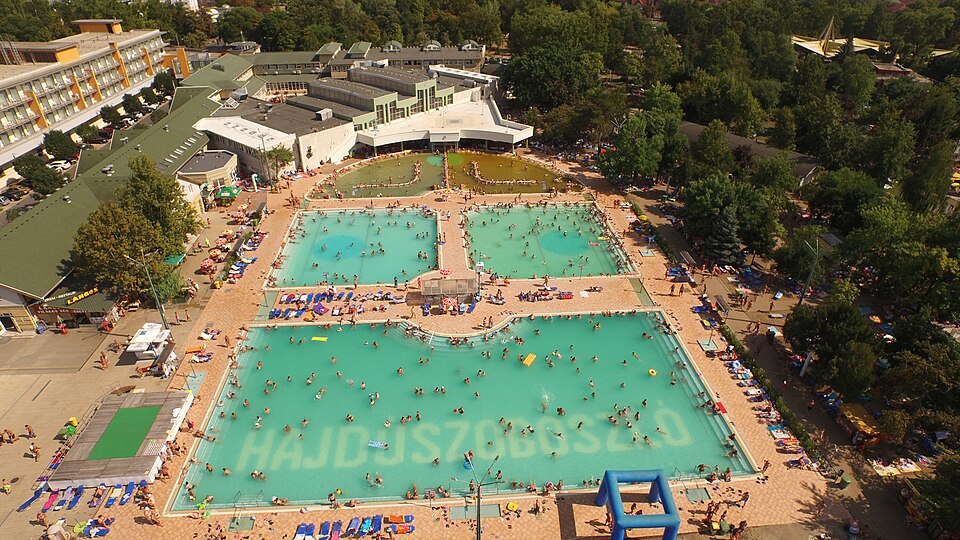
The famous iodine and bromine-rich thermal water has a distinct dark brown tint and a strong salt aroma, flowing into a massive array of pools. The facility is the largest spa complex in Europe, featuring a covered Aqua-Palace adventure spa, a massive traditional open-air medicinal bath, and a giant summer water park with a Mediterranean beach layout. It suits everyone from senior citizens looking for medical mud wraps to teenagers seeking extreme water slides. Because the complex is completely massive, buying a combined ticket that covers the specific zones you want to visit is highly recommended. Expect significant walking distances between the indoor halls and outdoor pools.
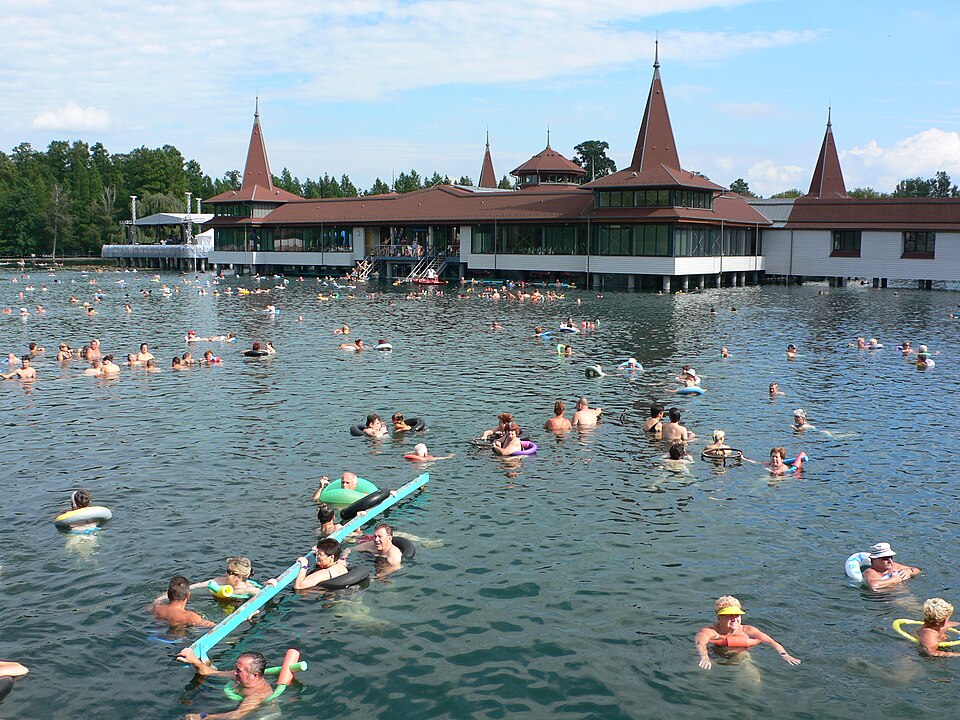
The lake water is a unique biological mix of sulfur, calcium, magnesium, and mild radon minerals, constantly replenished by deep subterranean cave springs that completely refresh the lake every seventy-two hours. The facility is the largest swimmable natural thermal lake on earth, featuring a central timber bathhouse from which swimmers float out among blooming pink water lilies. It suits couples and wellness travelers looking for a unique open-air natural environment. Because the lake is exceptionally deep, renting or bringing a foam pool noodle is highly recommended for effortless floating. Children under twelve are restricted from the therapeutic water due to its powerful mineral composition.
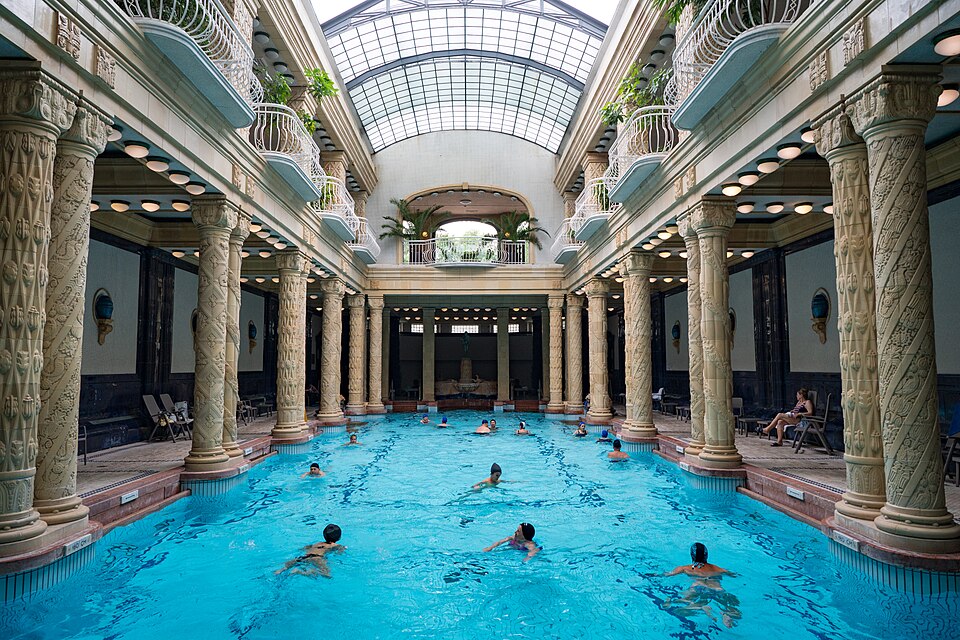
The healing springs are loaded with calcium, magnesium, and hydrocarbonate minerals, keeping a series of ornate indoor pools beautifully heated. The facility showcases magnificent Art Nouveau architecture with intricate Zsolnay porcelain mosaics, towering marble columns, and colorful stained-glass windows overhead. It heavily suits art lovers and travelers seeking a visually striking, historical soaking environment. Visitors should note that the historic indoor pools can echo significantly and feel crowded during weekend afternoons. Bringing a personal towel and sandals is highly recommended. Swim caps are required only if you decide to enter the indoor wave and swimming pool areas.
Amenities
Getting there
From Budapest
Gateway: Eger Railway Station (110 min)
Walk through the park or take a short taxi to Hadnagy utca
Total journey: 125 min
- From Eger central railway station to Hadnagy utca (Taxi) · 1.2km · 3 min
- Walk south through the Ersekkert public park pathways (Walk) · 1.1km · 14 min
Take a direct InterCity train from Budapest Keleti station to Eger, then walk ten minutes north through the park.
Location & nearby
Eger, Érsekkert, Hadnagy u. 2, 3300
Make a day of it
Pair your soak with these nearby spots.
Attraction
Termál- és élményfürdő
0.1km away
Park
Érsekkert
0.1km away
Park
Archbishop garden fountain
0.2km away
Park
Cinema Agria és Uránia Mozi
0.3km away
Attraction
EGRI Látványtár - Különleges Régiségek Múzeuma
0.3km away
Attraction
Kispréposti Palota Eger
0.5km away
More springs in Northern Hungary
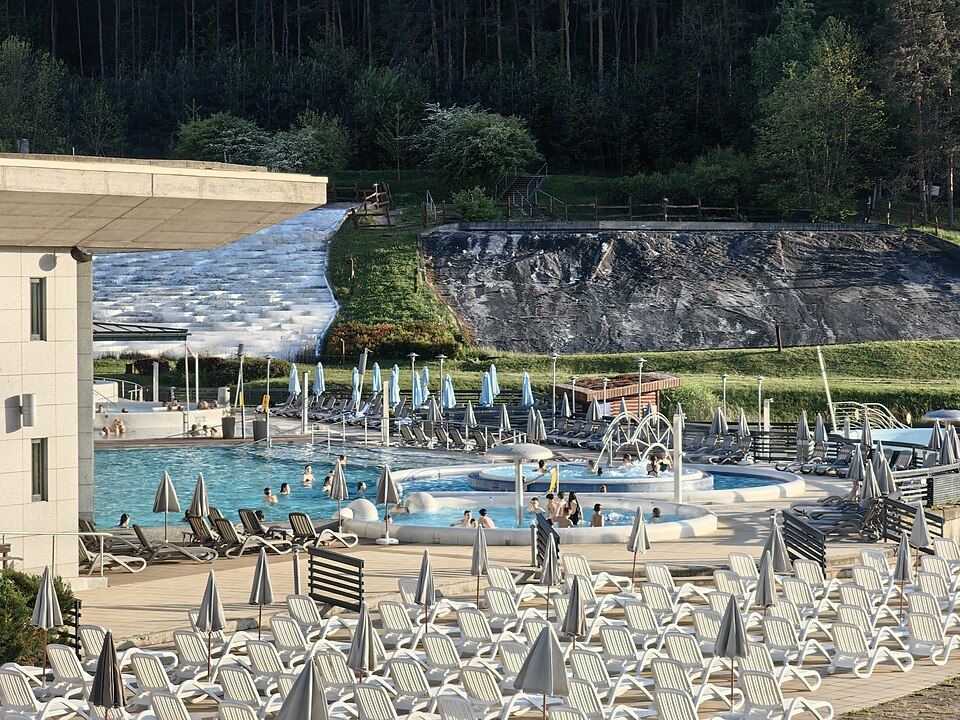
The water is incredibly rich in sulfur, calcium, and sodium minerals, flowing down a massive white travertine salt mound that creates a spectacular natural terrace formation. The facility is a massive, premium resort spa complex featuring seventeen indoor and outdoor pools, cascading thermal streams, and advanced panoramic sauna cabins. It perfectly suits couples and luxury wellness travelers seeking a scenic, photogenic destination. Visitors should be aware that the strong sulfur aroma is highly noticeable across the entire valley. The white salt hill itself is protected and cannot be stepped on, but the outdoor soaking pools sit directly adjacent to it for exceptional views.
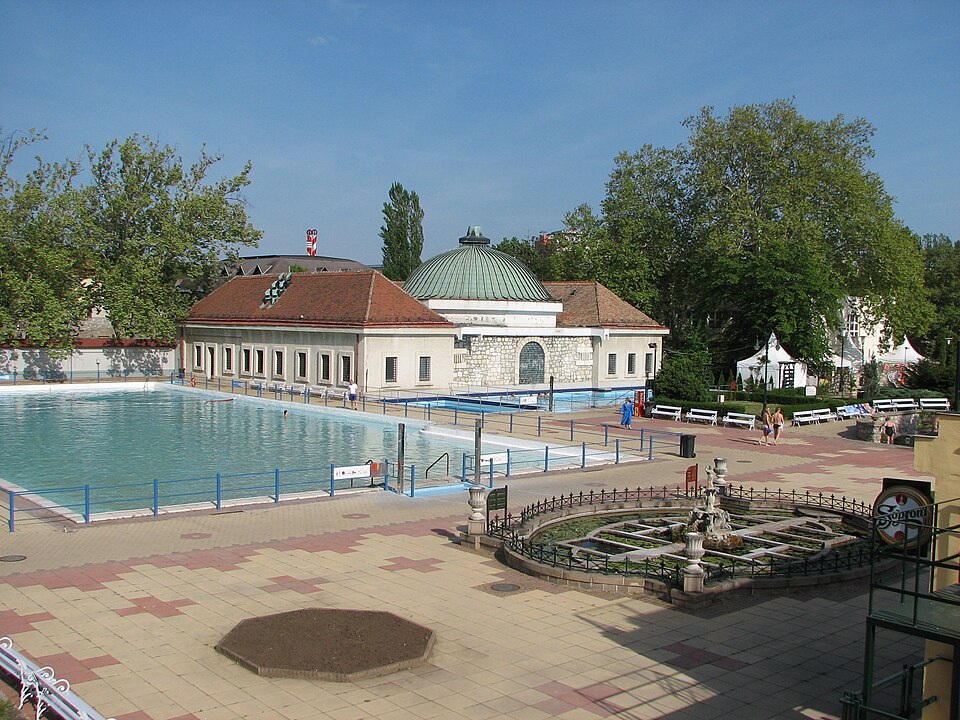
The unique thermal water contains low levels of radon gas, filtering directly up through the pool floors from a natural gravel bed to reduce bodily inflammation. The facility is an exquisitely preserved seventeenth-century Ottoman bathhouse featuring a central pool under a golden dome adorned with thousands of individual mosaic tiles. It suits history buffs and couples looking for an intimate, deeply atmospheric indoor spa experience away from massive water parks. Bathers should note that entry tickets are typically sold for fixed two-hour sessions to prevent overcrowding inside the small historic halls. Swimsuits are strictly mandatory for all sessions.
Common questions
What is the water temperature at Eger Thermal Bath?▾
The water temperature at Eger Thermal Bath ranges up to 38°C (minimum around 28°C).
Is Eger Thermal Bath free to visit?▾
Eger Thermal Bath charges an entrance fee in HUF.
Is Eger Thermal Bath a public or private bath?▾
Eger Thermal Bath is a public bathing spring.
Are tattoos allowed at Eger Thermal Bath?▾
Yes, Eger Thermal Bath welcomes visitors with tattoos.
What is the nearest station to Eger Thermal Bath?▾
The nearest station to Eger Thermal Bath is Eger Railway Station, about 1.2km away.