
Kusatsu Onsen
草津温泉
4.5 · 4500 reviews · via Google
Kusatsu Onsen
sulfur · Kanto
Hotter than 90% of Japan springs (n=122).
More acidic than 6% of Japan springs (n=121).
Mineral profile
Bar width reflects listing order, not measured concentration.
Suitability
At a glance
Getting there
Easy — under 1km from a station
Cost
Low
Crowd level
Popular
About this spring
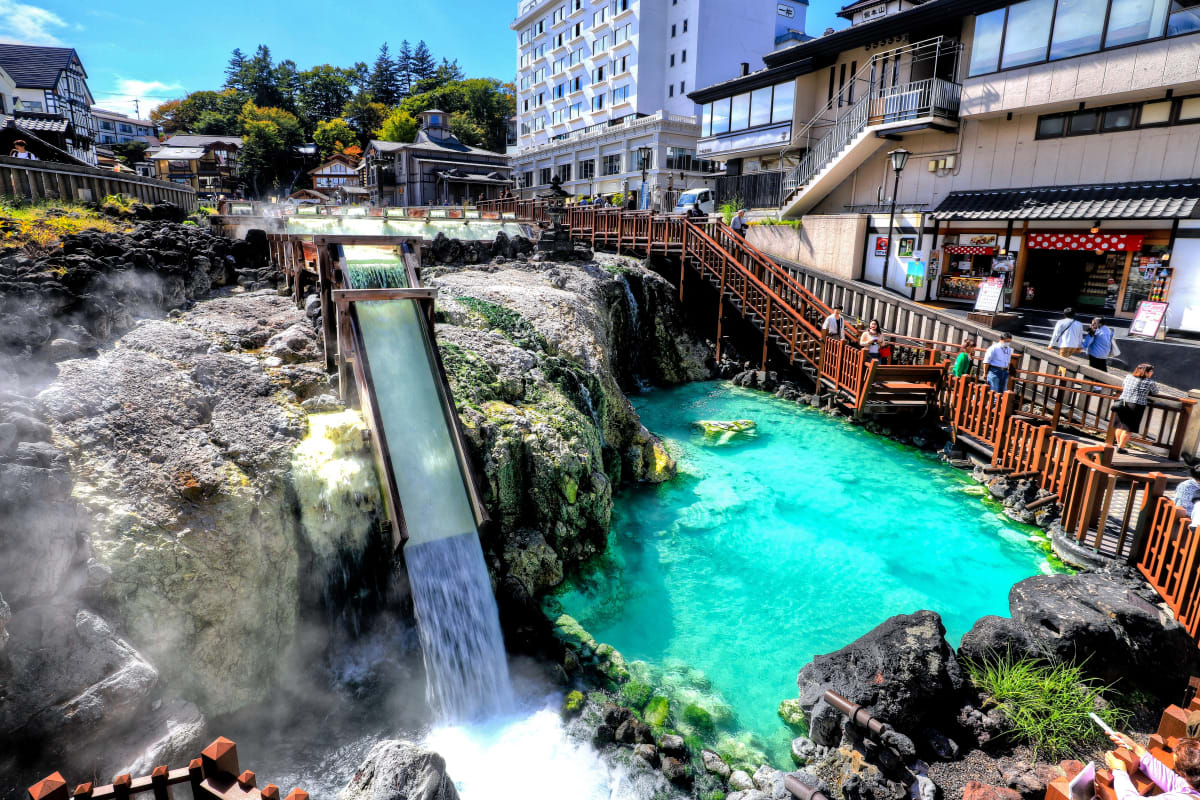
Kusatsu Onsen sits at 1,200 meters in the mountains of Gunma Prefecture and ranks among the most celebrated hot spring towns in Japan. The springs here produce more than 32,000 liters of water per minute, a volume unmatched anywhere else in the country. The water is strongly acidic and sulfurous, and its skin-healing properties have long made it legendary among visitors. Twice each day in the central town square, workers cool the scalding water by pulling long wooden paddles through it in unison while singing traditional songs. This practice is called yumomi.
Highlights
History
In a letter dated 1595, Toyotomi Hideyoshi wrote to Tokugawa Ieyasu recommending the waters at Kusatsu.
The eighth Tokugawa shogun, Yoshimune, valued the springs enough to have the water sealed in containers and carried all the way to Edo Castle. Throughout the Edo period, formal hot spring rankings consistently placed Kusatsu first among the springs of eastern Japan. The German physician Dr. Erwin von Baelz made his first visit in 1878 and returned repeatedly over the following decades to study the chemical properties of the springs. He published his findings in German academic journals and brought Kusatsu to the attention of Western medical science. A memorial hall in town continues to honor his advocacy. In national surveys, Kusatsu has held the top ranking among Japanese hot spring destinations for more than twenty consecutive years.
Local guide
From Naganohara-Kusatsuguchi Station at the end of the JR Agatsuma Line, a bus climbs for twenty-five minutes through spruce forest and then crests a rise and drops into a wide volcanic plateau. Kusatsu sits in a bowl of its own steam. The Yubatake, the hot spring field at the center of town, covers an area roughly the size of a city block and produces water from over thirty separate vents simultaneously, the combined output exceeding 32,300 liters per minute. That figure makes it the highest natural hot spring output in Japan, and standing at the railing above the Yubatake with the steam rolling across the wooden channeling boards in front of you, the number becomes physically comprehensible.
The water temperature at the Yubatake vents runs between 50 and 94 degrees, which is too hot to bathe in without cooling. The traditional method for lowering it is called yumomi, and it involves a group of people standing in a line and stirring the water with wooden boards about 180 centimeters long in a coordinated motion, working the heat out by surface contact rather than diluting the spring with cold water. Cold water is not used because it would reduce the mineral concentration, and the minerals are the entire point. A performance of the yumomi ritual runs daily at the Netsu-no-Yu bathhouse in the town center, complete with traditional songs and the option for visitors to try the boards themselves.
The chemistry at Kusatsu is extreme. The pH sits between 1.7 and 2.1, making it one of the most acidic naturally occurring bathing waters in Japan, roughly equivalent to vinegar. The sulfur, aluminum sulfate, and chloride compounds dissolved in that water are present in such concentration that an iron nail placed in the bath would rust through in nine days. On skin, the effect is sharply antiseptic. There is a distinct tingle, like a mild exfoliant working, and the smell is sulfur without apology, thick and volcanic. After twenty minutes in a Kusatsu bath you step out with skin that looks slightly flushed and feels scrubbed clean from the inside.
The free public bathhouses, the most famous being Otaki-no-yu, Gozanoyu, and Sainokawara outdoor rotenburo, are open to all visitors with no reservation required. Sainokawara is the largest, a wide outdoor pool fed by water from the same fields, surrounded by stone walls and open sky. At night in winter, with snow on the surrounding rocks and the sulfur smell rising through freezing air, the heat of the water at pH 2 becomes something close to necessary. Kusatsu has been voted Japan's top onsen repeatedly in public surveys for years, and standing in that acid bath at midnight while it snows, the ranking does not feel like a surprise.
Mineral chemistry
Sulfuric hot springs are among the most studied in balneology worldwide. The sulfur compounds, primarily hydrogen sulfide and thiosulfate, have documented antimicrobial and anti-inflammatory properties. Regular bathing is associated with relief from chronic skin conditions including eczema and psoriasis, as well as joint inflammation and muscle soreness. Sulfuric waters have been used therapeutically across Asia and Europe for centuries.
The distinctive rotten-egg smell dissipates quickly after leaving the bath. Avoid if you have a sulfur allergy, very sensitive skin, or respiratory conditions. Remove silver jewellery before entering — sulfur will blacken it permanently.
Acidic springs (pH below 6) have natural exfoliating properties. The low pH gently dissolves dead skin cells, leaving skin noticeably smoother after a soak. Strongly acidic springs (pH below 3) also carry antimicrobial effects potent enough that they have historically been used to treat skin infections.
Limit initial soaks to 3–5 minutes until you know how your skin responds. Rinse thoroughly with fresh water afterwards to neutralise the acid. Not recommended for broken skin, active eczema flare-ups, fresh tattoos, or children under 10.
Calcium chloride springs share the heat-retaining property of sodium chloride springs but with a stronger warming effect. Prized for muscle and joint relief.
The strong warming effect means those with cardiovascular conditions, high blood pressure, or pregnancy should limit soak duration and consult a doctor if in doubt.
Similar springs
 FREE
FREEThe valley occupies the center of Noboribetsu Onsen in Hokkaido. Jigokudani translates as Hell Valley. The crater covers 11 hectares and releases roughly 10,000 tonnes of hot spring water each day. Fumaroles vent steam across the floor of the valley, boiling pools bubble at the surface, and the surrounding cliffs carry heavy mineral staining. A walking path winds through the area in about 20 minutes and is open to all visitors at no cost. It ranks among the most striking landscapes accessible on foot anywhere in Japan.

Set deep in the Hakkoda Mountains of Aomori Prefecture, Sukayu Onsen is a historic bathhouse best known for its cavernous mixed-bathing hall, the Sen-nin-buro, which translates as the Bath of a Thousand Bathers. The waters are strongly acidic, the setting is rustic and unhurried, and winter brings extraordinary snowfall to the surrounding mountains.

Beppu is the most geothermally active city in Japan, with more than 2,900 hot spring vents located within the city limits and eight distinct thermal spring zones collectively known as the Beppu Hatto. The variety on offer is wide, ranging from grand hotel bathhouses to modest neighborhood public facilities to the celebrated Hells, a collection of brilliantly colored boiling pools scattered across the city. The Hells run far too hot for bathing, but they draw visitors who come to walk among them and take in the spectacle.

Tsuru-no-yu is the oldest of the seven inns at Nyuto, set deep in a beech forest in Akita Prefecture. The main draw is a large outdoor mixed-bathing pool fed by opaque, milky-white sulfurous water. Many regard it as the most beautiful onsen setting in Japan. People come here to put some distance between themselves and the rest of the world for a while.
Amenities
Getting there
From Tokyo: Hokuriku Shinkansen + Agatsuma Line
Gateway: Naganohara-Kusatsuguchi (100 min)
Bus to Kusatsu (~25 min)
Total journey: 130 min
Take the JR Agatsuma Line to Naganohara-Kusatsuguchi Station, then the bus to Kusatsu. The bus ride takes about 25 minutes.
Location & nearby
Kusatsu-machi, Agatsuma-gun, Gunma 377-1711
Make a day of it
Pair your soak with these nearby spots.
Attraction
Kusatsu Onsen Ko Shunno Inn Nagara
0.1km away
Attraction
Kankyo Taikenamyu Zumento
0.2km away
Attraction
Chojunoyu (Yubatake Spring)
0.2km away
Attraction
Cho Einoyu(Higashitonozukaku)
0.3km away
Attraction
Kusatsunettaiken
0.3km away
Attraction
Ichi Kusatsu Onsen
0.5km away
More springs in Kanto
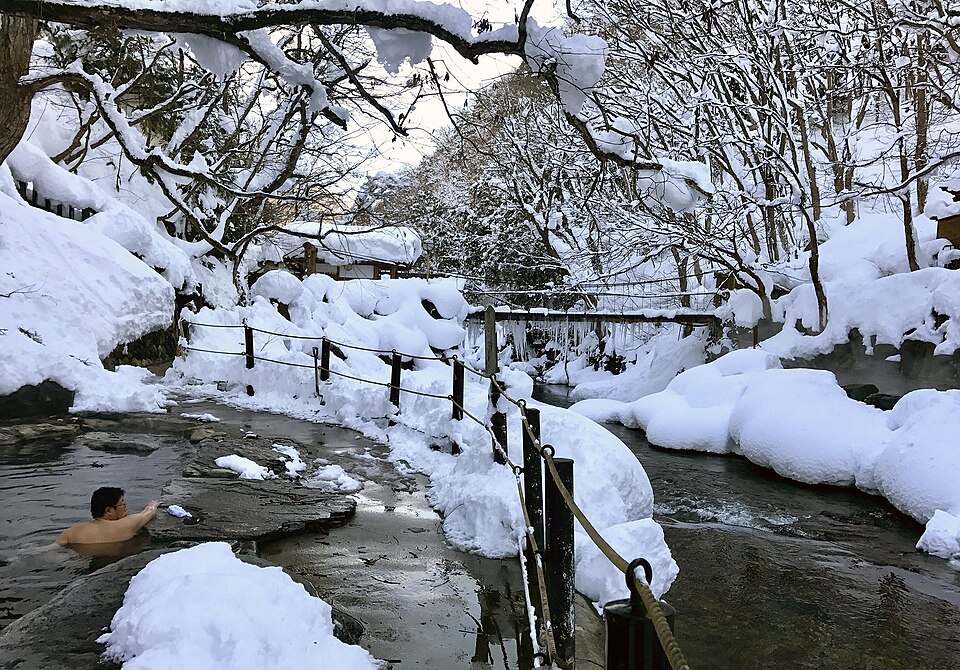
A mountain hot spring resort in Gunma Prefecture, positioned along the Takara River roughly 100 kilometers outside Tokyo. The centerpiece is a large outdoor bath built right at the river's edge, with dense forest climbing the slopes on either side. One portion of the bathing area accommodates mixed-gender soaking. The draw here is the pairing of untamed river scenery with open-air thermal pools.
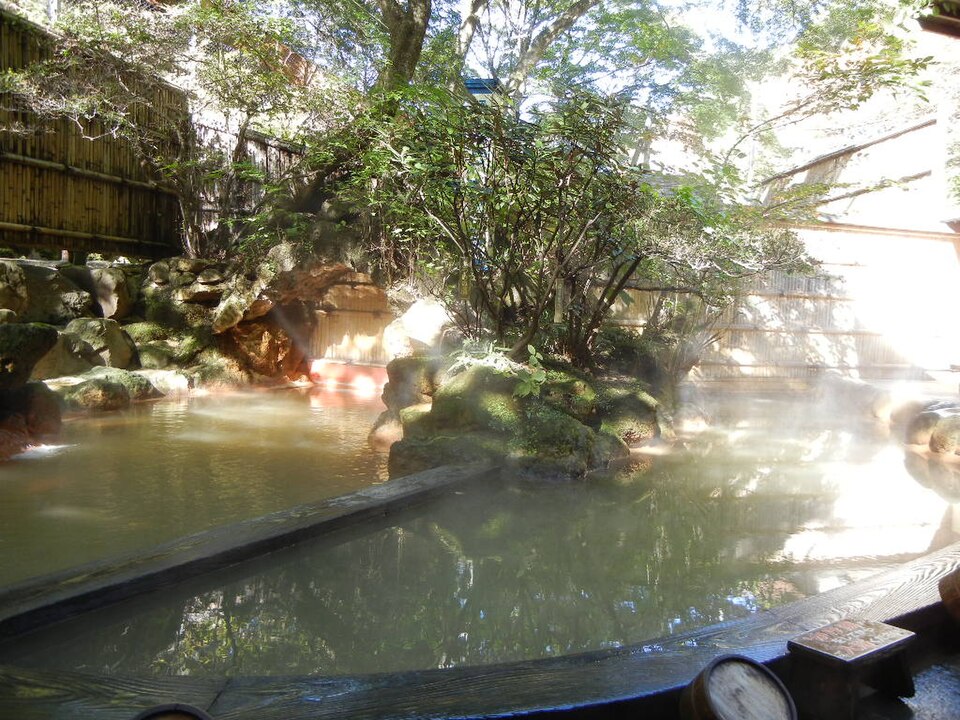
Ikaho Onsen sits on a hillside in Gunma Prefecture, its layout defined by 365 stone steps that rise through a narrow valley flanked by ryokan and traditional shops. The waters are iron-rich and run a characteristic golden-brown, a color reflecting the mineral content that has drawn visitors since the Nara period. The staircase serves as the town's central axis, with nearly all activity concentrated along its length or on the side streets branching from it.
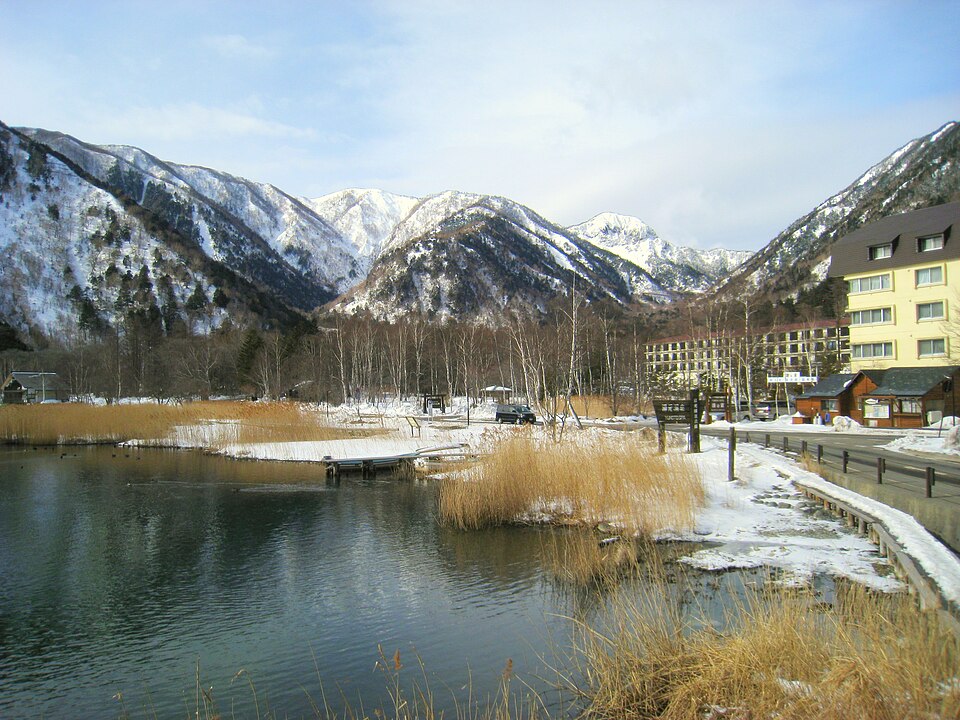
Nikko Yumoto Onsen sits at the edge of Lake Yunoko inside Nikko National Park, high in the mountains. The waters are milky and sulfurous, and travelers have been coming here for hundreds of years. The park surrounds the onsen with sacred forests and waterfalls, making a long day of hiking through them a natural prelude to a long soak.
Common questions
What is the water temperature at Kusatsu Onsen?▾
The water temperature at Kusatsu Onsen ranges up to 95°C (minimum around 45°C).
Is Kusatsu Onsen free to visit?▾
Yes, Kusatsu Onsen is free to visit.
Is Kusatsu Onsen a public or private bath?▾
Kusatsu Onsen is a public bathing spring.
Are tattoos allowed at Kusatsu Onsen?▾
Yes, Kusatsu Onsen welcomes visitors with tattoos.
What is the nearest station to Kusatsu Onsen?▾
The nearest station to Kusatsu Onsen is Kusatsu onsen, about 0km away.