
Dogo Onsen
道後温泉
4.5 · 5200 reviews · via Google
Dogo Onsen
simple-thermal · Shikoku
Hotter than 42% of Japan springs (n=122).
More acidic than 82% of Japan springs (n=121).
Mineral profile
Bar width reflects listing order, not measured concentration.
Suitability
At a glance
Getting there
Easy — under 1km from a station
Cost
Low
Crowd level
Popular
About this spring
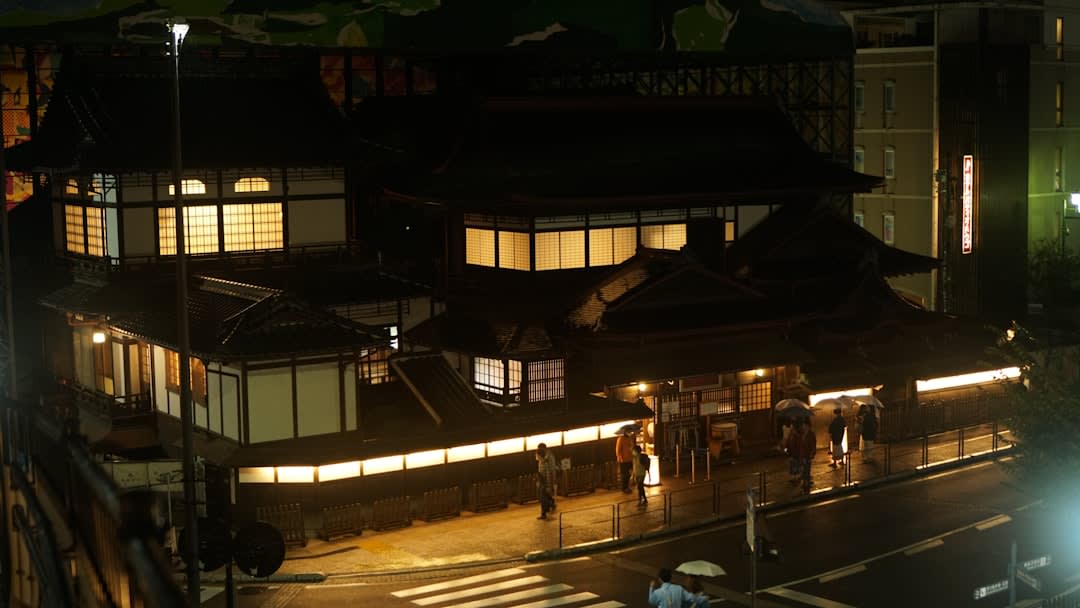
Dogo Onsen ranks among the oldest hot springs in Japan, with written records documenting its use for more than 1,300 years and oral traditions pointing back considerably further. The landmark Dogo Onsen Honkan is a three-storey wooden bathhouse finished in 1894, widely credited as the inspiration for the bathhouse depicted in Studio Ghibli's Spirited Away. The spring water is mildly alkaline and has long been valued for its ability to soften and smooth the skin.
Highlights
History
The springs are mentioned in the Nihon Shoki, the chronicle compiled in 720 AD, and also appear in the Man'yoshu poetry anthology from the eighth century.
Local legend holds that a white egret discovered the waters while healing a wound in its leg at a place where warm water surfaced through coastal rock, and that humans soon followed. Prince Shotoku, who died in 622, is believed to have bathed here and left a carved inscription honoring the curative waters. The present Honkan structure was finished in 1894. The author Natsume Soseki arrived in Matsuyama in 1895 as an English teacher and traveled to the baths aboard Matsuyama's first electric tram. Those visits to Dogo fed into his comic novel Botchan, which came out in 1906. The Honkan is today designated a National Important Cultural Property and holds the distinction of being the first public bathhouse in Japan to earn a listing in the Michelin Guide.
Local guide
From Matsuyama Station, the orange Iyotetsu tram runs on a single track through the city center for twenty minutes before pulling into the terminus at Dogo Onsen Station. The tram is a real tram, not a tourist replica, and the station building beside it is a late Victorian wooden structure that the city has kept in its original condition. When you step off and turn to face the main bathhouse at the top of the shopping arcade, the three-tiered wooden tower of Dogo Onsen Honkan rises above the street in a way that immediately explains why Hayao Miyazaki used it as a reference for the bathhouse in Spirited Away. The resemblance is not a rumor. It is obvious from fifty meters away.
The Honkan was built in 1894 and is an Important Cultural Property, which meant that the five-year renovation that began in 2019 had to be carried out with exceptional care around a still-operating building. The full reopening in July 2024 returned access to all sections, including the Yushinden, the private imperial bath constructed in 1899 for the exclusive use of the Emperor's family. No emperor has bathed there since 1952, but for 500 yen you can take a guided tour through the lacquered rooms and understand why it was considered the finest bathing chamber in the country.
The water at Dogo is simple thermal alkaline, a pH of 8.5 and a temperature range of 42 to 55 degrees Celsius. It comes out clear and odorless, which is unusual for a spring with this much cultural weight behind it. The alkalinity makes it smooth and slightly slippery on the skin, and bathing here repeatedly has an unmistakable softening effect. Inside the Honkan the main communal stone bath, Kami-no-Yu, is the busier of the two gender-separated pools, while Tama-no-Yu, the Bath of the Spirits, is smaller and quieter. You bring your own towel or buy one at the front desk, and the attendants in traditional dress direct you upstairs to a tatami rest room between soaks.
Dogo has been operating for over three thousand years according to the oldest references, which appear in the eighth-century Nihon Shoki. In that time the town around it has accumulated a density of history that is unusual even by Japanese standards. Matsuyama Castle, one of the few original feudal castles still standing in Japan with all its towers intact, sits on a hilltop fifteen minutes away by tram and ropeway. The poet Masaoka Shiki and the novelist Natsume Soseki both spent time in this city, and their presence in the cultural memory of the place is still visible in the museums and the street names. Coming to Dogo Onsen is not just coming to a bath. It is coming to a place that has been the center of Matsuyama's identity for longer than the city itself has existed.
Mineral chemistry
Water character inferred from mineral type — verify on site.
Simple thermal springs have lower dissolved mineral content but are valued for the pure therapeutic effect of heat immersion itself — easing muscle tension and improving circulation. Considered the gentlest introduction to hot spring bathing.
Standard precautions apply: avoid bathing within 30 minutes of eating, keep soaks to 10–15 minutes for first-timers, and hydrate before and after.
Alkaline springs (pH above 8) are known for their skin-softening effect, sometimes called "beauty water" in bathing cultures across Asia. The high pH saponifies skin oils, producing a characteristic silky feel on the skin surface.
The slippery feeling underfoot in highly alkaline springs is normal — take care when standing and walking in the bath. Avoid prolonged soaking if you have dry or sensitive skin.
Similar springs

Beppu is the most geothermally active city in Japan, with more than 2,900 hot spring vents located within the city limits and eight distinct thermal spring zones collectively known as the Beppu Hatto. The variety on offer is wide, ranging from grand hotel bathhouses to modest neighborhood public facilities to the celebrated Hells, a collection of brilliantly colored boiling pools scattered across the city. The Hells run far too hot for bathing, but they draw visitors who come to walk among them and take in the spectacle.
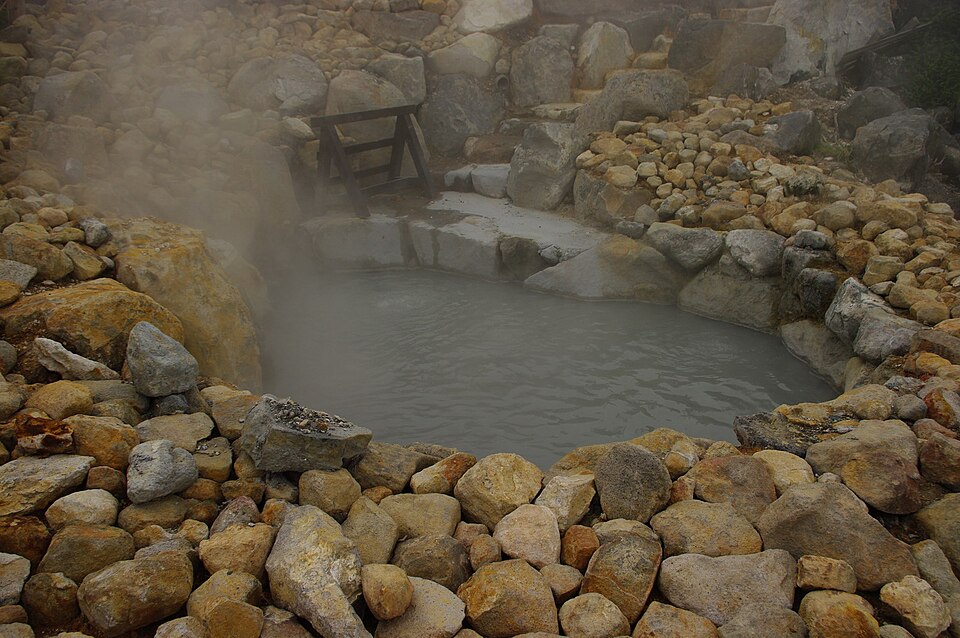
Hakone is a sizable onsen district spread across a caldera, roughly 90 minutes from Tokyo by rail. Seventeen distinct spring sources supply the area's bathhouses, which range from large hotel rotenburo with views of Mt. Fuji and Lake Ashi to small, family-operated facilities tucked along the Old Tokaido road. Because the mineral makeup differs from one source to the next, visiting multiple bathhouses yields a genuinely different soaking experience each time.
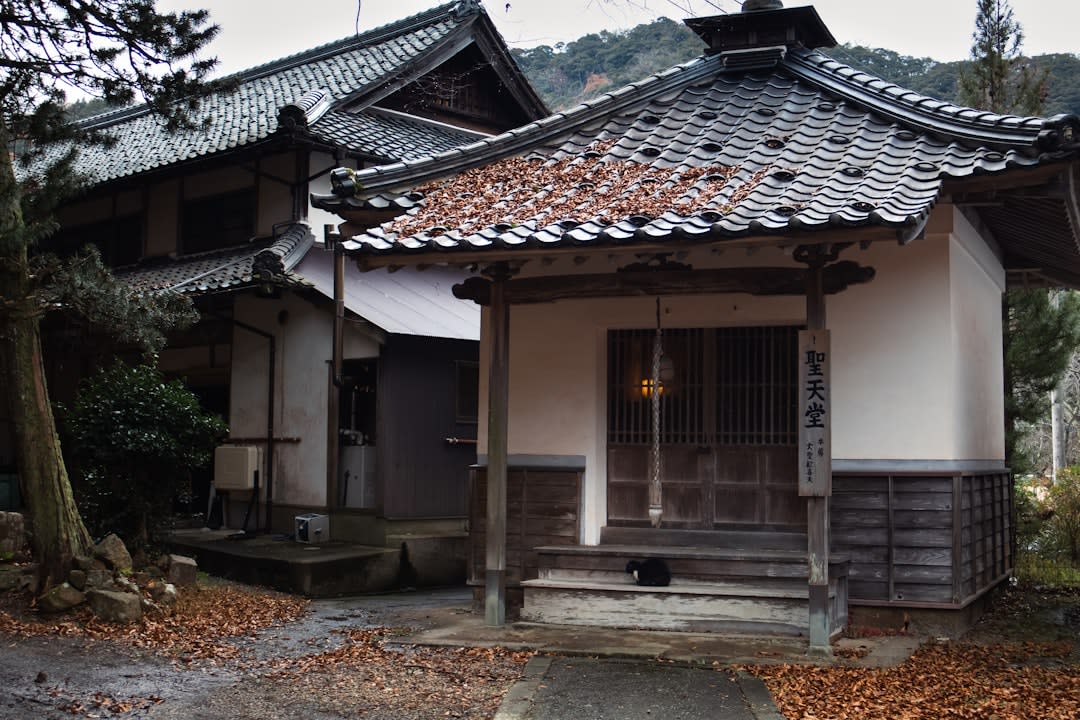
One of Japan's most beloved onsen towns. Visitors put on a yukata and wooden sandals and stroll between seven public bathhouses along a willow-lined canal. The wooden bridges, stone walkways, and traditional inn facades have barely changed in a century. The town is built for wandering.
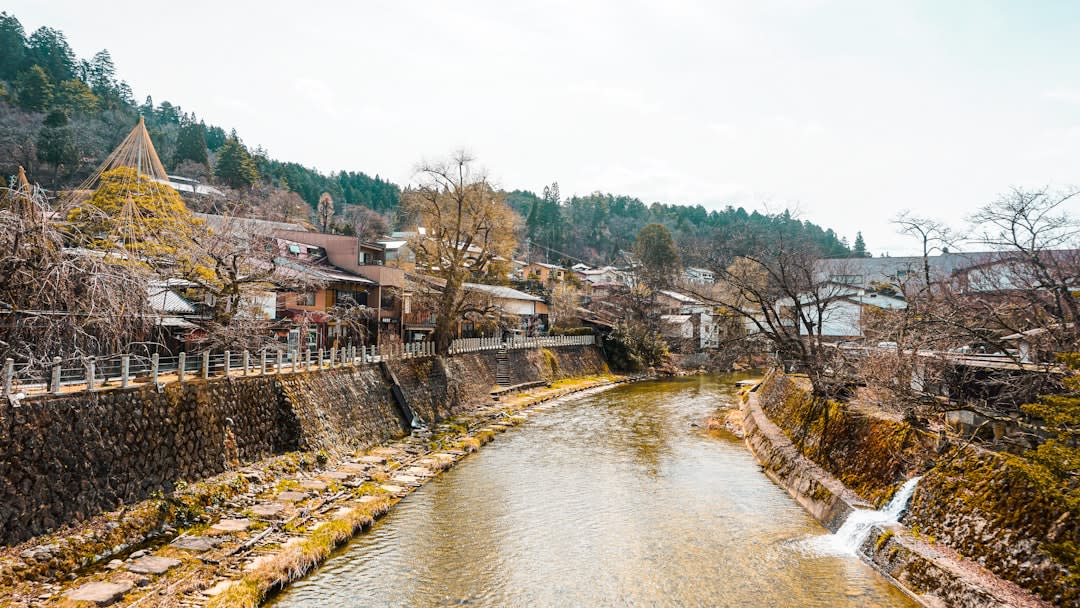
A peaceful artsy onsen town at the foot of Mt. Yufu in Oita Prefecture. The town is known for boutique galleries, craft shops, and ryokan with private outdoor baths. Lake Kinrin sits at the heart of it all. On quiet mornings, steam rises off the lake's surface in a way that seems almost designed to make you stop and stand still.
Amenities
Getting there
From Osaka: Shikoku Ferry + Iyotetsu
Gateway: Matsuyama (180 min)
Iyotetsu tram to Dogo Onsen (~20 min)
Total journey: 210 min
From Matsuyama Airport, take the Iyotetsu limousine bus to Dogo Onsen Station. The ride takes about 40 minutes. Alternatively, take the Iyotetsu tram Line 5 from JR Matsuyama Station to Dogo Onsen Station, about 20 minutes. Dogo Onsen Honkan is a 2-minute walk from the tram terminus.
Location & nearby
Dogo Yunomachi, Matsuyama City, Ehime 790-0842
Make a day of it
Pair your soak with these nearby spots.
Attraction
Tamanoishi
0.0km away
Park
Shotengai
0.1km away
Attraction
Furusatogaen
0.2km away
Park
Matsuyamashido Go Onsen Iwaidanihigashimachichu Shajo
0.3km away
Park
Do Go Park (Yuchikujo Ato)
0.4km away
Attraction
Chikarashahon Branch
0.5km away
More springs in Shikoku
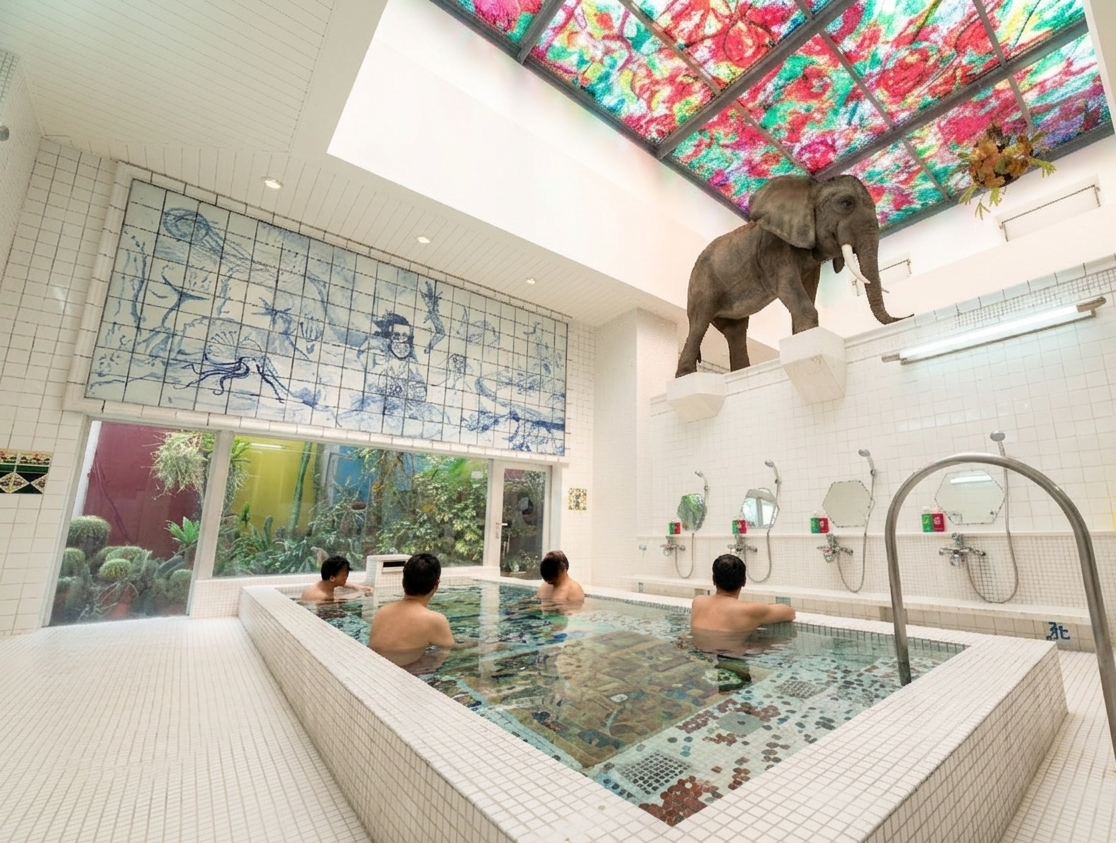
A working public bathhouse on Naoshima Island in Kagawa Prefecture that also operates as a major contemporary art installation. Artist Shinro Ohtake designed every surface as original artwork, covering the space with mosaic tile murals, painted glass ceilings, ceramic fixtures, and a collage-style exterior. An elephant sculpture named Sadako occupies the center of the main hall. The facility is open to local island residents and to international visitors who come to the island for its art.
Common questions
What is the water temperature at Dogo Onsen?▾
The water temperature at Dogo Onsen ranges up to 55°C (minimum around 42°C).
Is Dogo Onsen free to visit?▾
Dogo Onsen charges an entrance fee in JPY.
Is Dogo Onsen a public or private bath?▾
Dogo Onsen is a public bathing spring.
Are tattoos allowed at Dogo Onsen?▾
Yes, Dogo Onsen welcomes visitors with tattoos.
What is the nearest station to Dogo Onsen?▾
The nearest station to Dogo Onsen is Dogo Onsen Eki mae, about 0.2km away.