
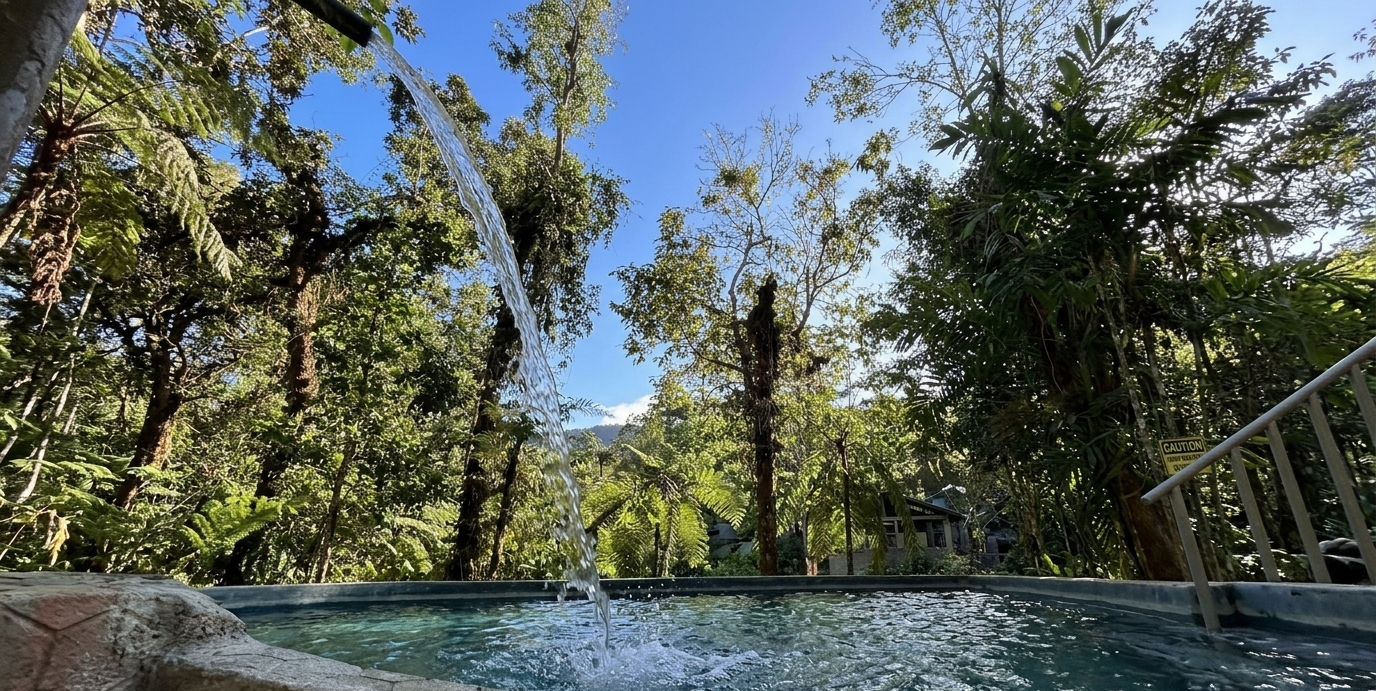
Lake Agco Hot Springs
Lake Agco
Lake Agco Hot Springs
sulfur · SOCCSKSARGEN
Hotter than 89% of Philippines springs (n=19).
More acidic than 0% of Philippines springs (n=14).
Mineral profile
Bar width reflects listing order, not measured concentration.
Suitability
At a glance
Getting there
Remote — over 5km from the nearest station
About this spring
A dramatic thermal area located high on the slopes of Mount Apo, centered around a steaming, mud-rimmed volcanic lake covered in thick fog. The bubbling sulfuric lake feeds multiple surrounding mud baths and hot spring pools managed by the local community. The high altitude keeps the ambient air brisk and cool, accentuating the intense heat of the thermal pools.
Highlights
History
Perched on the misty slopes of Mount Apo, the highest mountain in the Philippines, this steaming lake has been a sacred sanctuary for millennia.
The ancestral Manobo and Bagobo-Tagabawa tribes name the peak Apo, which translates to grandfather or revered ancestor, viewing it as the spiritual cradle of their culture. While a foreign climber officially recorded the first successful summit in 1880, indigenous hunters had navigated these boiling mud vents for thousands of years. The hot pools represent a living cultural landscape where tribal elders still perform traditional rituals to honor the mountain spirits.
Local guide
Located high on the misty slopes of Mount Apo, this destination welcomes you with a cool mountain breeze and a mysterious, fog-covered landscape. The center of the site is a bubbling, mud-rimmed volcanic lake that constantly steams. The local community channels this intense thermal energy into nearby pools and mud baths.
The bathing experience is unique because you can coat your skin in warm, therapeutic volcanic mud before rinsing off in the hot pools. Bring warm clothes for after your bath because the mountain air gets very chilly quickly. Pack a towel and basic toiletries.
The high altitude means it rarely feels uncomfortably hot, making a midday soak surprisingly pleasant. Small tribal cooperative shops nearby sell hot local coffee and native delicacies. The sight of thick white fog rolling over the dark, bubbling lake is deeply mysterious.
Mineral chemistry
Sulfuric hot springs are among the most studied in balneology worldwide. The sulfur compounds, primarily hydrogen sulfide and thiosulfate, have documented antimicrobial and anti-inflammatory properties. Regular bathing is associated with relief from chronic skin conditions including eczema and psoriasis, as well as joint inflammation and muscle soreness. Sulfuric waters have been used therapeutically across Asia and Europe for centuries.
The distinctive rotten-egg smell dissipates quickly after leaving the bath. Avoid if you have a sulfur allergy, very sensitive skin, or respiratory conditions. Remove silver jewellery before entering — sulfur will blacken it permanently.
Acidic springs (pH below 6) have natural exfoliating properties. The low pH gently dissolves dead skin cells, leaving skin noticeably smoother after a soak. Strongly acidic springs (pH below 3) also carry antimicrobial effects potent enough that they have historically been used to treat skin infections.
Limit initial soaks to 3–5 minutes until you know how your skin responds. Rinse thoroughly with fresh water afterwards to neutralise the acid. Not recommended for broken skin, active eczema flare-ups, fresh tattoos, or children under 10.
Similar springs
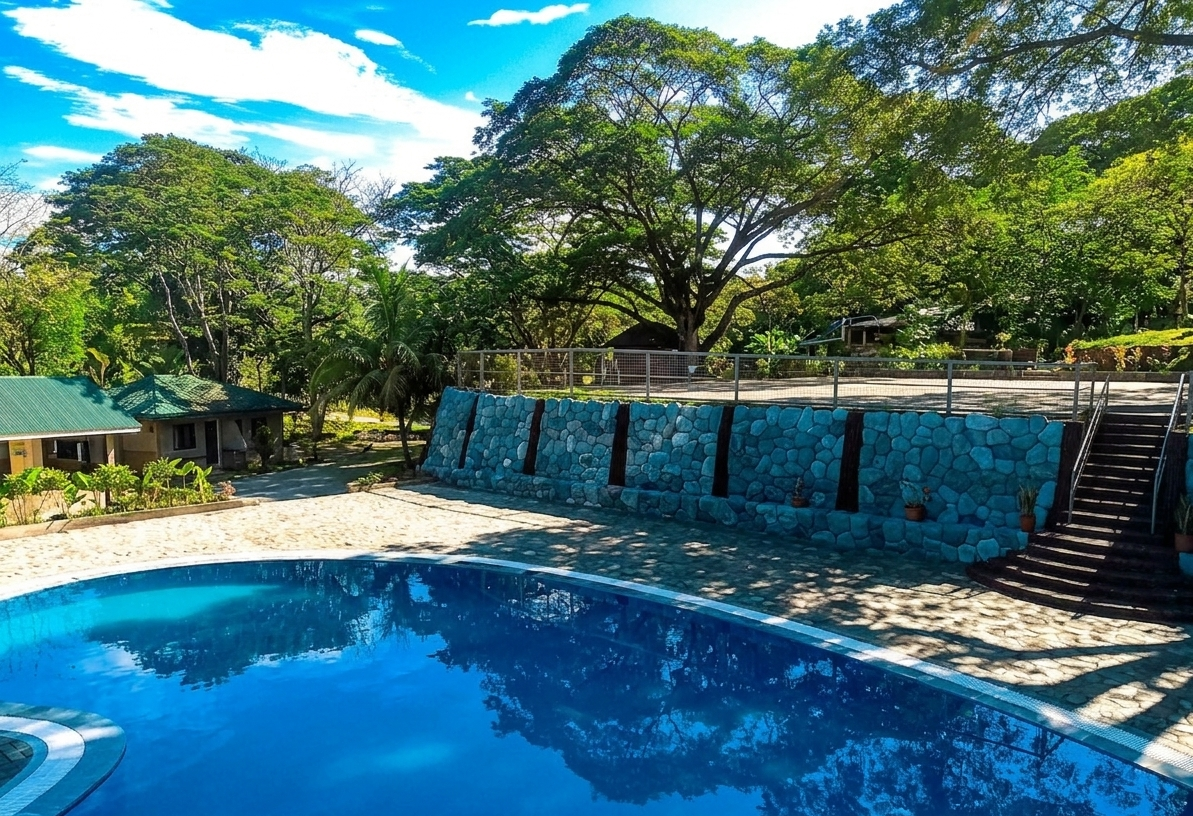
Situated at the base of Mount Balungao, an extinct volcano, this site offers natural hot spring pools within an adventure park complex. The mineral-rich volcanic water is channeled into tiered concrete swimming areas of varying temperatures. Visitors can combine therapeutic thermal soaking with adventure activities like zip-lining across the volcanic landscape.
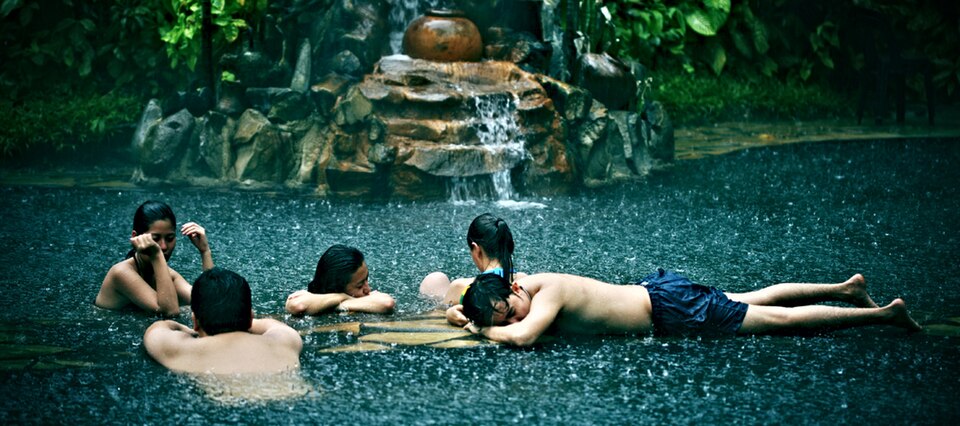
A government-managed natural eco-reserve nestled high on the scenic, forested slopes of the active Mount Kanlaon volcano. The park features dedicated stone-lined sulfur dipping pools fed by natural hot water channels originating deep within the volcano. The thermal pools are beautifully integrated into an expansive mountain forest filled with waterfalls and a massive bat sanctuary.
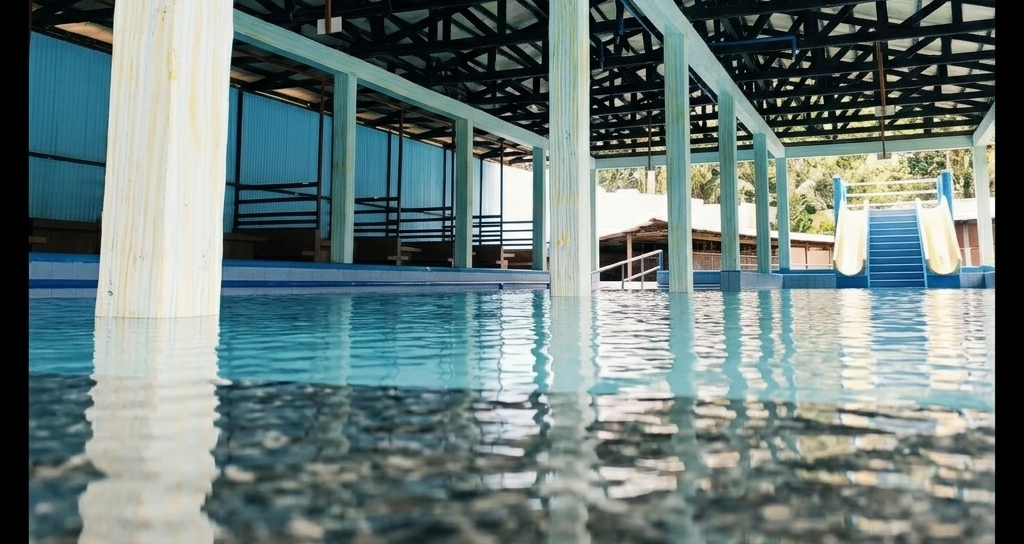
A rustic, lesser-known hot spring site situated at the base of Mount Banahaw where therapeutic sulfuric water surfaces near a natural mountain riverbed. The area is basic and local, featuring straightforward public dipping pools built to catch the thermal overflow. It is heavily favored by locals who seek the healing benefits of Banahaw's volcanic activity without large crowds.
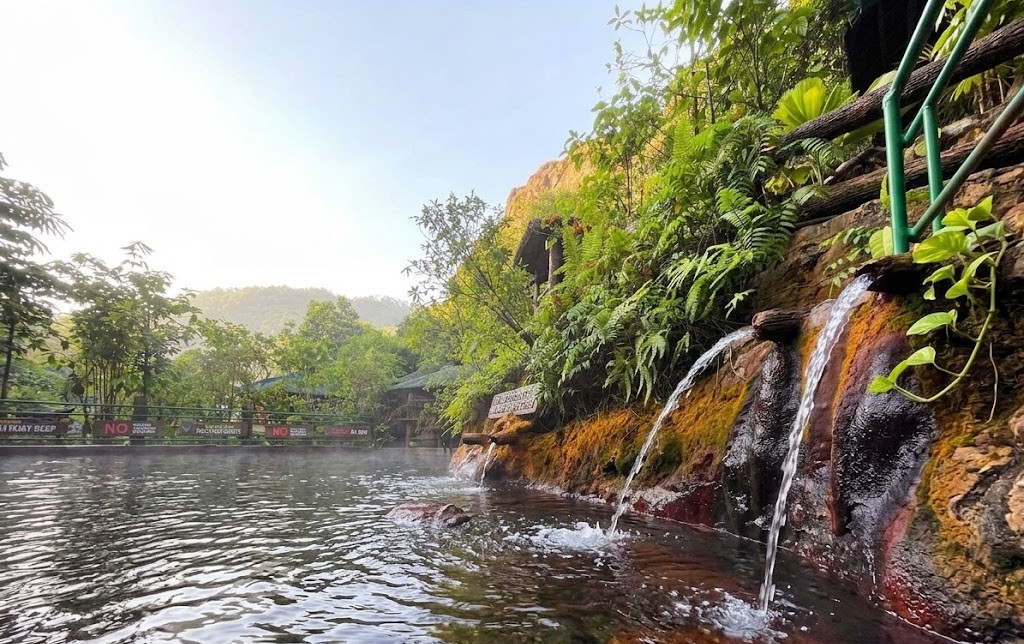
This popular mountain escape features a tiled outdoor pool filled with circulating thermal waters. It sits nestled in a deeply forested river valley characterized by distinct rust-colored geological formations. The refreshing mountain air provides a stark and welcome contrast to the steaming therapeutic waters of the spring.
Amenities
Getting there
Take a public van or bus to Kidapawan City, then hire a powerful habal-habal motorcycle from the city center up to Barangay Ilomavis.
Location & nearby
Barangay Ilomavis, Kidapawan, Cotabato
Common questions
What is the water temperature at Lake Agco Hot Springs?▾
The water temperature at Lake Agco Hot Springs ranges up to 45°C (minimum around 38°C).
Is Lake Agco Hot Springs free to visit?▾
Lake Agco Hot Springs charges an entrance fee in PHP.
Is Lake Agco Hot Springs a public or private bath?▾
Lake Agco Hot Springs is a public bathing spring.
Are tattoos allowed at Lake Agco Hot Springs?▾
Yes, Lake Agco Hot Springs welcomes visitors with tattoos.
What is the nearest station to Lake Agco Hot Springs?▾
The nearest station to Lake Agco Hot Springs is Kidapawan Bus Terminal, about 22km away.