
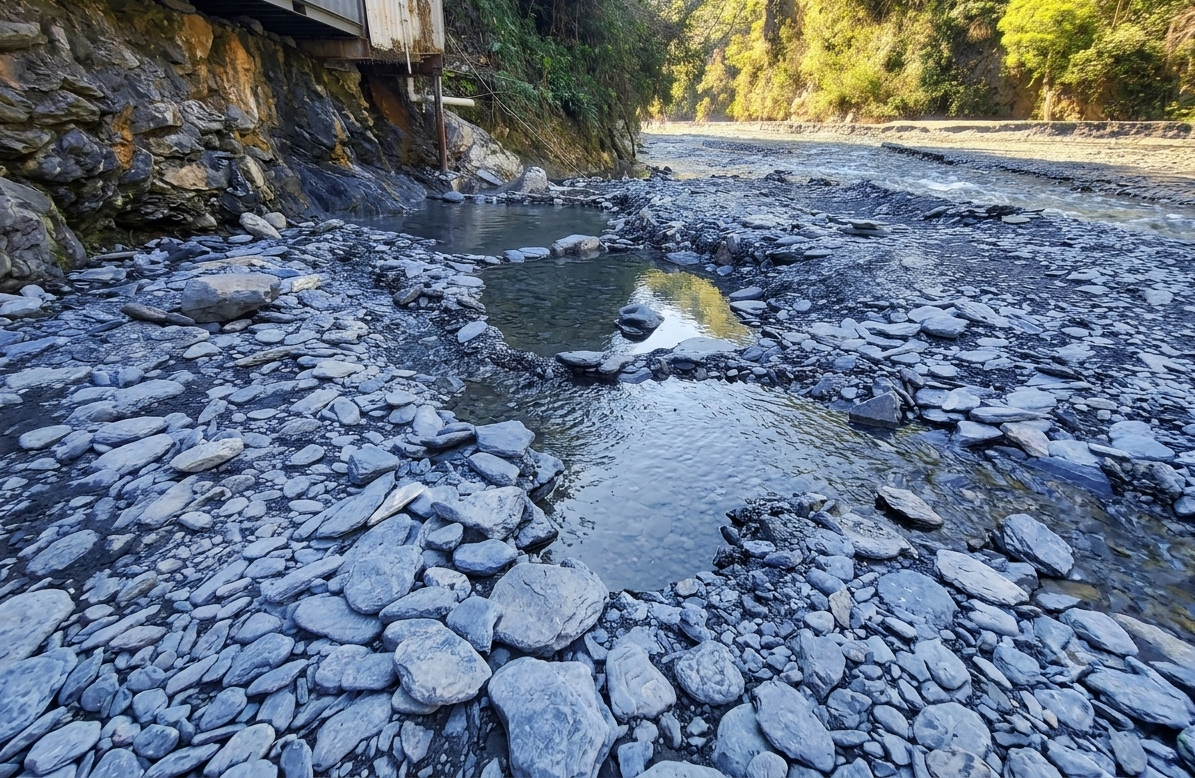
Lushan Hot Spring Area
廬山溫泉
4.0 · 273 reviews · via Google
Lushan Hot Spring Area
sodium-bicarbonate · Nantou
Hotter than 96% of Taiwan springs (n=25).
More acidic than 92% of Taiwan springs (n=25).
Mineral profile
Bar width reflects listing order, not measured concentration.
Suitability
At a glance
Getting there
Remote — over 5km from the nearest station
Cost
Moderate
Crowd level
Quiet
About this spring
Tucked away in a high-altitude alpine valley, Lushan boasts remarkably pure sodium bicarbonate water that is colorless and clear. The surrounding mountains are famous for producing premium high-mountain oolong tea and are beautiful when cherry blossoms bloom in spring. Visitors can cross a historic suspension bridge to access quiet riverside bathhouses.
Highlights
History
Lushan was originally an important hunting ground and settlement for the indigenous Seediq people.
During the colonial era, the Japanese authorities discovered the exceptional quality of the clear springs and developed it under the name Fuji Hot Spring, building upscale pavilions for administrative staff. In the post war era, Chiang Kai-shek visited the area and renamed it Lushan because the surrounding misty peaks reminded him of the famous Mount Lu in China. Despite severe damage from Typhoon Morakot in 2009, it remains a legendary name in Taiwan's spring history.
Local guide
The journey to Lushan takes you high up into the misty mountains of Nantou County, driving past the alpine farmlands of Cingjing and descending via narrow, precipitous roads into the deep canyon of the Tuluowan River. The approach feels like stepping into a dramatic, weathered mountain outpost, with steep valleys prone to the raw forces of nature. Upon arrival, you will see a village that bears the scars of historic typhoons, with some abandoned structures standing alongside resilient local bathhouses and inns. The atmosphere is quiet, melancholic, and deeply evocative of Taiwan's rugged geography. Lushan is famous for its sodium bicarbonate water, which is so clear and pure that it can theoretically be drunk when properly filtered. It is entirely odorless and feels remarkably gentle on the skin, with natural temperatures at the source reaching a scalding eighty-five degrees Celsius, though the soaking pools are cooled to a relaxing forty-one degrees. You can access the hot springs by purchasing a day pass at a local inn for around two hundred to three hundred TWD. Most remaining facilities are indoor or covered private rooms where nudity rules vary, though public pools require swimsuits. Tattoos are well tolerated in these private and semi private settings. You must bring your own towel and water bottle. Given the delicate infrastructure of the valley, it is vital to check the weather forecast before visiting, avoiding any days with heavy rain. Visiting on a quiet weekday afternoon allows you to support the local operators in peace. A classic local tradition here is purchasing fresh eggs from a riverside stall and boiling them in the designated public geothermal wells near the iconic Lushan Suspension Bridge.
Mineral chemistry
Bicarbonate springs cleanse and soften the skin surface, removing excess sebum without stripping the skin's acid mantle. Traditionally recommended for acne-prone skin and sensitive skin types.
Bicarbonate springs are generally among the most gentle and well-tolerated onsen types.
Similar springs
 FREE
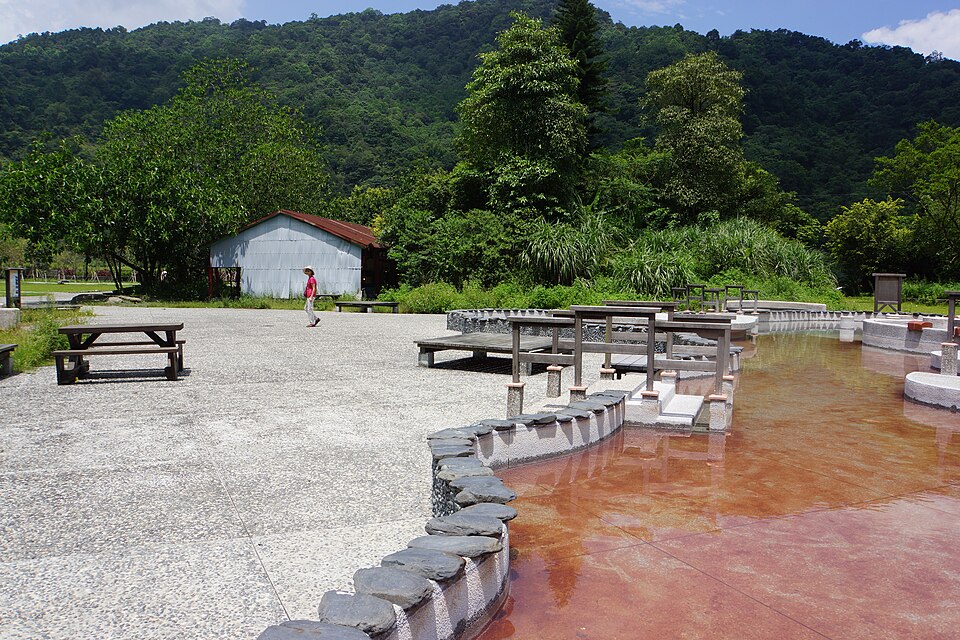
Set within a wide, rocky mountain river valley, this popular park features massive boiling stone troughs designed for cooking food in active geothermal water. Visitors rent bamboo baskets to boil fresh corn, sweet potatoes, and local eggs in the steaming mineral currents. A beautifully constructed timber pavilion offers shallow foot-soaking streams nearby, while the source vents reach near boiling.
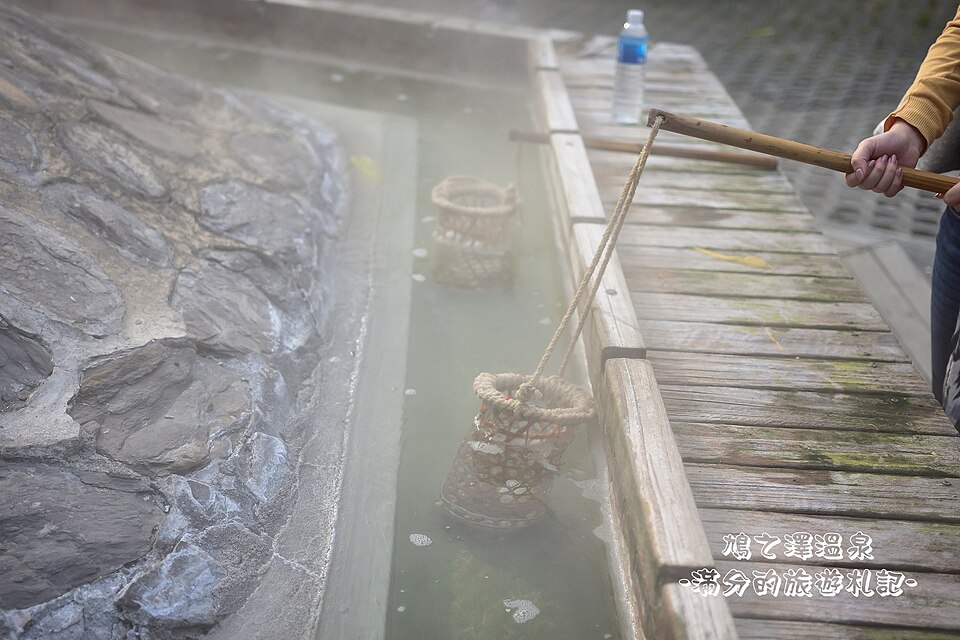
Located deep inside the Taipingshan National Forest, this alpine hot spring features an outdoor family pool made from massive natural boulders. The alkaline bicarbonate water boasts a beautiful iridescent blue hue and leaves a smooth feel on the skin. The source water emerges near boiling, so the complex also features geothermal cooking cones where visitors can boil eggs and corn.
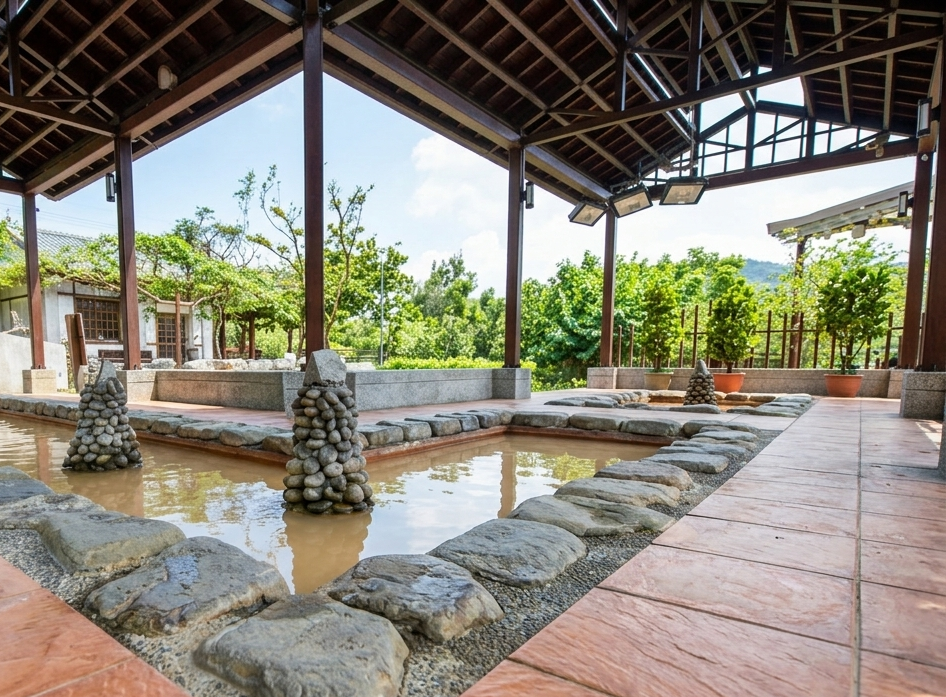
Located in Taiwan's sunny far south, this beautifully restored park features free public foot-soaking streams decorated with Japanese torii gates and lantern pavilions. The sodium bicarbonate water is crystal clear, odorless, and soothing for tired traveler joints. Every winter, the park is illuminated by a colorful light festival that attracts visitors from across the island.
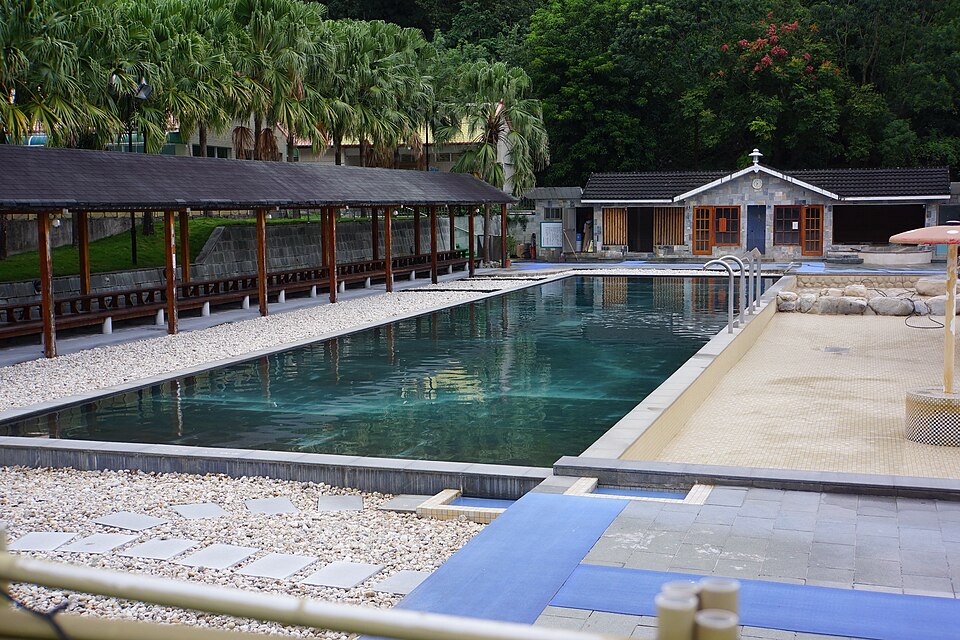
Operated by the Taitung County Farmers Association, this extensive resort complex features multiple indoor medicated pools infused with traditional herbs alongside spacious outdoor spas. Families gather at the geothermal cooking stations to boil fresh eggs and sweet corn in the naturally scalding thermal water. The property sits among dense forest greenery just outside the main Zhiben corridor.
Amenities
Getting there
From Taichung
Gateway: Puli Bus Terminal
Nantou Bus from Taichung to Puli Terminal, then the mountain local route to Lushan
Total journey: 120 min
Take a bus from Taichung to Puli Terminal, then transfer to the Nantou Bus route heading directly up to Lushan.
Location & nearby
Lushan, Ren'ai Township, Nantou County
Make a day of it
Pair your soak with these nearby spots.
Attraction
Mona Rudao Monument
0.2km away
Attraction
Mahebo Village Last Battlefield
0.8km away
Viewpoint
Mu'an Mountain
1.4km away
More springs in Nantou
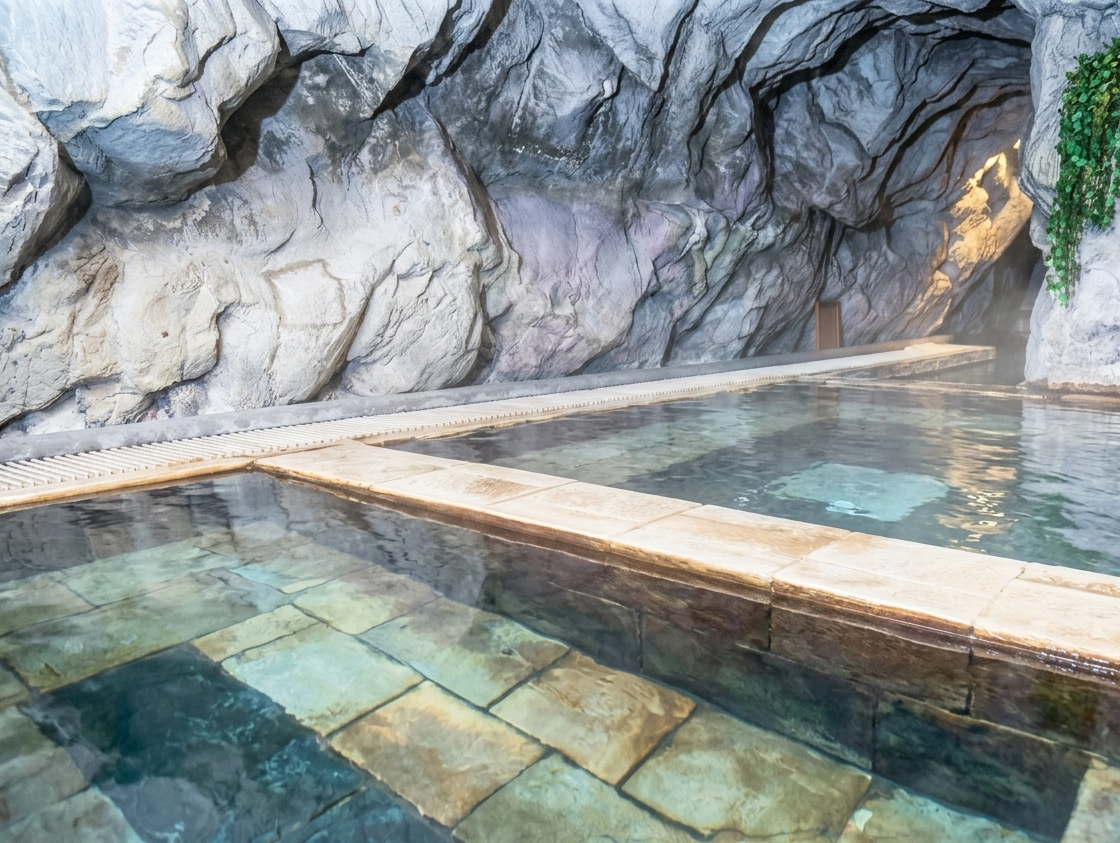
Perched on a high mountain slope near the entrance of the Yushan National Park trail system, Dongpu features pristine, clear carbonic acid springs. The village is surrounded by steep mountain peaks and serves as a major agricultural hub for the indigenous Bunun tribe. The water flows from mountain crevices and is completely free of any strong chemical odors.
Common questions
What is the water temperature at Lushan Hot Spring Area?▾
The water temperature at Lushan Hot Spring Area ranges up to 85°C (minimum around 58°C).
Is Lushan Hot Spring Area free to visit?▾
Lushan Hot Spring Area charges an entrance fee in TWD.
Is Lushan Hot Spring Area a public or private bath?▾
Lushan Hot Spring Area is a private bathing spring.
Are tattoos allowed at Lushan Hot Spring Area?▾
Yes, Lushan Hot Spring Area welcomes visitors with tattoos.
What is the nearest station to Lushan Hot Spring Area?▾
The nearest station to Lushan Hot Spring Area is Taichung HSR Station, about 88km away.