Iceland
Beyond the Blue Lagoon: Iceland's Lesser-Known Hot Springs and How to Reach Them
Iceland's most extraordinary hot springs are not the famous blue one. Here's where to find the wild, free, and unforgettable alternatives.
7 min readIceland
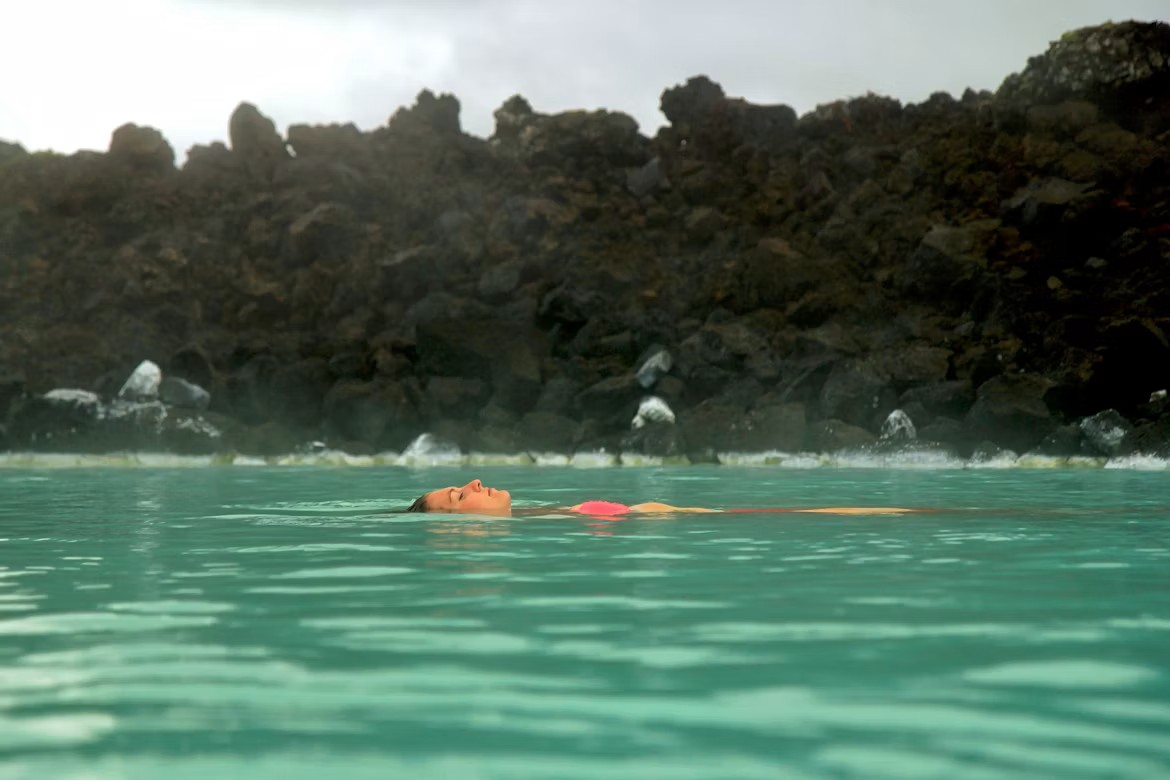
Iceland is one of the most expensive countries on earth to visit. A coffee costs what a meal costs in Manila. A hotel room will make you wince. The famous Blue Lagoon charges around ISK 11,990 (approximately $92 USD) just to get through the door.
And yet Iceland has seven completely free hot springs. No entrance gate. No ticketing system. No queue. Just geothermal water rising from the earth, waiting for anyone willing to walk to it.

SpringsAtlas may earn a commission, at no extra cost to you.
This guide is not written from personal experience of Iceland. Ryan and I have not been yet. Iceland is the trip we are building toward, the one we keep researching late at night after the kids are asleep. But SpringsAtlas exists precisely to document this kind of thing properly, so when we finally do arrive, we will know exactly where to go. And in the meantime, the data is real, the springs are verified, and the walk-in instructions are accurate.
Here are the seven free hot springs in Iceland that require nothing but your swimsuit and a willingness to get there.
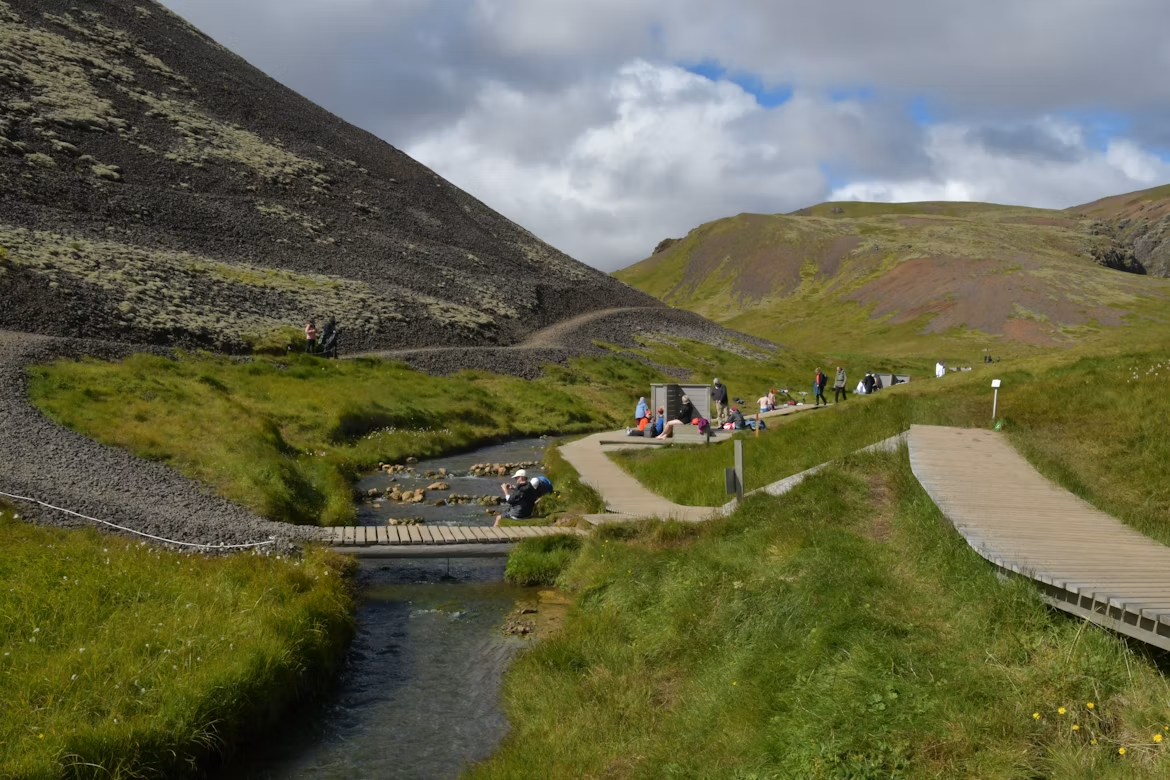
The most accessible free soak in the country sits three kilometers from the town of Hveragerði, which is itself only thirty-five minutes from Reykjavík by car. You park at the trailhead, walk uphill through a valley of bubbling mud pots and steaming vents, and eventually reach a geothermal river flowing at around 36 to 40 degrees Celsius.
The river is the pool. You pick a spot along the wooden boardwalk, find a temperature you like, and sit in the flowing water. Warmer upstream, cooler as you move down. No concrete. No chemicals. Just moving volcanic water in an open valley.
Ryan pulled up the coordinates late one evening and we spent twenty minutes just reading about the 2008 earthquake that shifted the underground rock here and dramatically increased the flow. The science of it is extraordinary. This river runs hotter today than it did in 2007 because of seismic activity. You are sitting in the direct result of a geological event.
No fee. No booking. Open every day.
This one requires a 4x4 vehicle and a summer visit, but it is probably the most photographed free spring in the world.
Landmannalaugar sits at 600 meters in the southern highlands, surrounded by multicolored rhyolite mountains that glow in hues of orange, yellow, and deep green. The thermal river runs along the edge of a lava field. You wade in at a point where hot volcanic water mixes with cool mountain streams and choose your temperature accordingly.
It is the starting point of the Laugavegur trail, one of the most celebrated hikes in Europe. In summer the area fills with backpackers beginning or ending the trek. The spring is their reward.
Getting there requires driving the F-roads, which are unpaved highland tracks only open from roughly mid-June to September. A high-clearance 4x4 is not optional.
The altitude here gives the air a quality that I understand intellectually even if I have not yet felt it. At 600 meters, with volcanic hot water and open sky, the cold-air-hot-water contrast that we experienced first in Japan should feel similar but wilder. No structure around you. No walls. Just the landscape.
This is Iceland's oldest surviving swimming pool. Built by local volunteers in 1923, it sits hidden inside a narrow mountain valley near Skógar. A twenty-minute walk from the road brings you to a long concrete pool tucked against a steep rock face, fed by a natural hot spring.
The water is on the cooler side for a hot spring, sitting around 35 to 38 degrees Celsius. It is more of a warm swim than a deep soak. The pool itself has algae on the walls and a weathered changing shack at the edge. No electricity. No staff.
What makes it remarkable is what happened in 2010. The Eyjafjallajökull volcano erupted three kilometers away and buried the pool entirely in volcanic ash. Local volunteers cleared it by hand and reopened it. The pool has been in continuous use for over a century because people kept choosing to maintain it.
Walk in for free, any time of day.
Between the Langjökull and Hofsjökull glaciers, in the absolute middle of Iceland's highland interior, there is a geothermal oasis called Hveravellir.
The site is known for its fumaroles, colored sinter deposits, and boiling pools. But there is also a bathable pool fed by natural hot water at around 38 to 40 degrees Celsius with a pH of 7.8. The pool has simple stone edges and sits next to a historic mountain lodge that has sheltered travelers and outlaws for centuries.
The outlaw connection is real. An eighteenth-century fugitive named Fjalla-Eyvindur lived here for years with his wife, using the boiling springs to cook and survive brutal winters. He is one of Iceland's most celebrated folklore figures. You soak in the same water he relied on.
Access is via the F35 road, summer only, 4x4 required.
Northwest Iceland, near the town of Varmahlíð, a gravel path leads from a farm road to a small stone pool on the bank of the Svartá river. The pool sits just meters from the Reykjafoss waterfall. You can hear the falls while you soak.
No facilities. No staff. No fee. Just a stone pool at 39 to 41 degrees, a waterfall, and the rolling hills of Skagafjörður.
On the shoreline of Vatnsfjörður in the Westfjords, a natural rock basin cut directly into the coastal cliffs holds a warm spring that stays open year-round. The view from the water is straight across a remote fjord toward the Westfjords horizon.
Hellulaug is associated with early Norse settlement. Hrafna-Flóki, the Viking explorer who first named Iceland, is believed to have landed near here. The spring may have been used as far back as the earliest settlement of the island.
No entry fee. No changing room. Open to the sky.
Above the fishing village of Tálknafjörður in the Westfjords, three simple concrete pools sit on a hillside overlooking the fjord. The local municipality built them to capture geothermal water that surfaced during drilling. Local volunteers maintain them.
This is what community bathing looks like in one of the most remote parts of Europe. No tourism infrastructure. Just locals who decided their geothermal resource should be shared.
Free to enter. Open continuously.
Every spring listed above is on SpringsAtlas with exact GPS coordinates, altitude, water temperature, and step-by-step directions. The data has been verified against OpenStreetMap, Visit Iceland, and confirmed visitor reports.
Ryan and I have not stood in any of these pools yet. But we have mapped every one of them, checked the access conditions, and verified the temperatures. When we finally make the trip, this is where we are going first.
The access conditions and temperatures in this guide were verified against the following sources:
Visit Iceland (visiticeland.com) maintains an official directory of geothermal bathing sites including seasonal road access conditions for highland F-roads. The Icelandic Road Administration (road.is) publishes real-time F-road status each spring.
The 2008 earthquake and its effect on Reykjadalur's thermal river is documented in research by the Iceland GeoSurvey (ISOR), which has monitored geothermal activity in the Hengill volcanic system since the 1990s.
The history of Fjalla-Eyvindur at Hveravellir is drawn from Icelandic folk records and is described in detail by the Hveravellir mountain hut association, which maintains the site and its historical documentation.
Seljavallalaug's 1923 construction date and the 2010 volcanic ashfall are documented by the Association of Chartered Architects in Iceland and local historical records from Skógar.
Blue Lagoon entry pricing is published directly at bluelagoon.com. ISK to USD conversions in this article use an approximate rate of 130 ISK per USD, which should be verified against current rates before travel.
SpringsAtlas Editorial covers hot spring destinations worldwide through verified data, original research, and first-hand travel experience. This guide was researched and written in preparation for our planned Iceland trip.
Iceland's most extraordinary hot springs are not the famous blue one. Here's where to find the wild, free, and unforgettable alternatives.
7 min read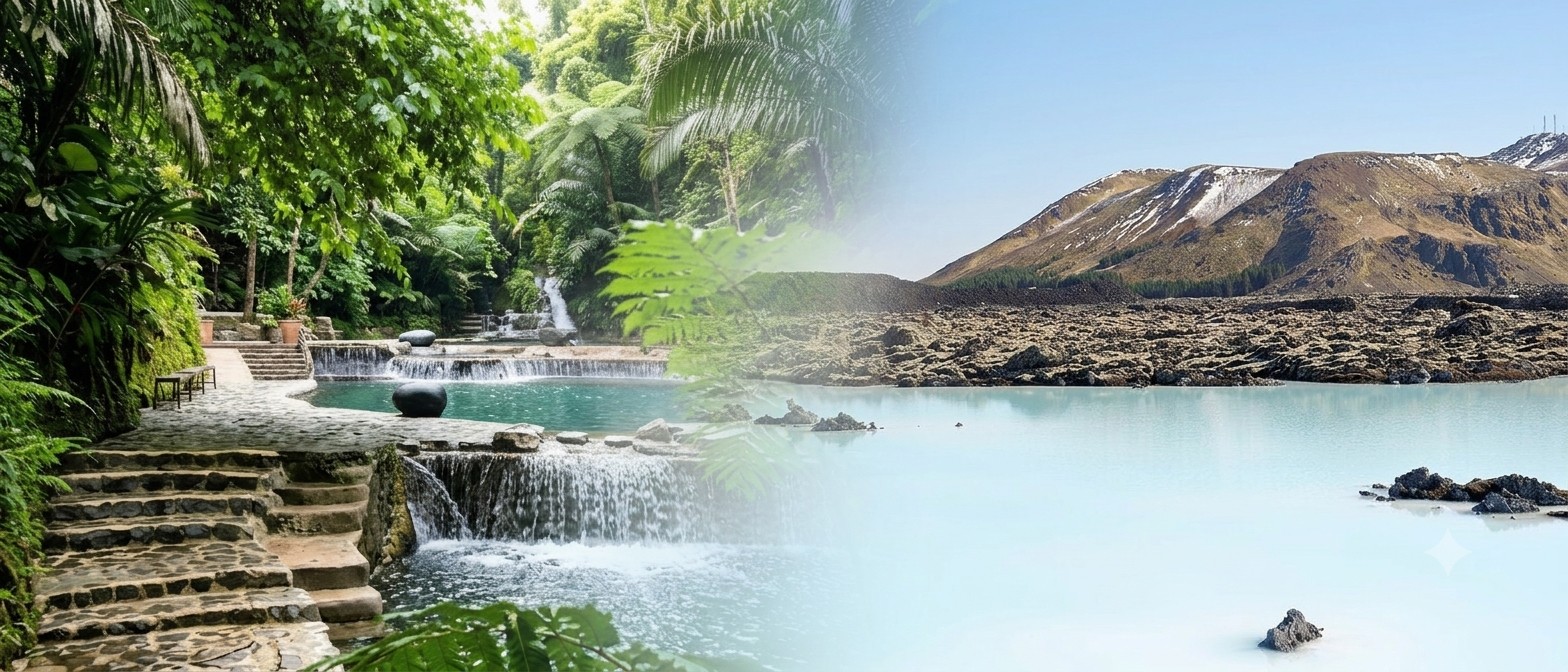
Both countries sit on fire. Both have free wild springs, high-altitude pools, and communities for whom geothermal water carries meaning older than any resort. But the air temperature changes everything.
7 min read