Iceland
Beyond the Blue Lagoon: Iceland's Lesser-Known Hot Springs and How to Reach Them
Iceland's most extraordinary hot springs are not the famous blue one. Here's where to find the wild, free, and unforgettable alternatives.
7 min read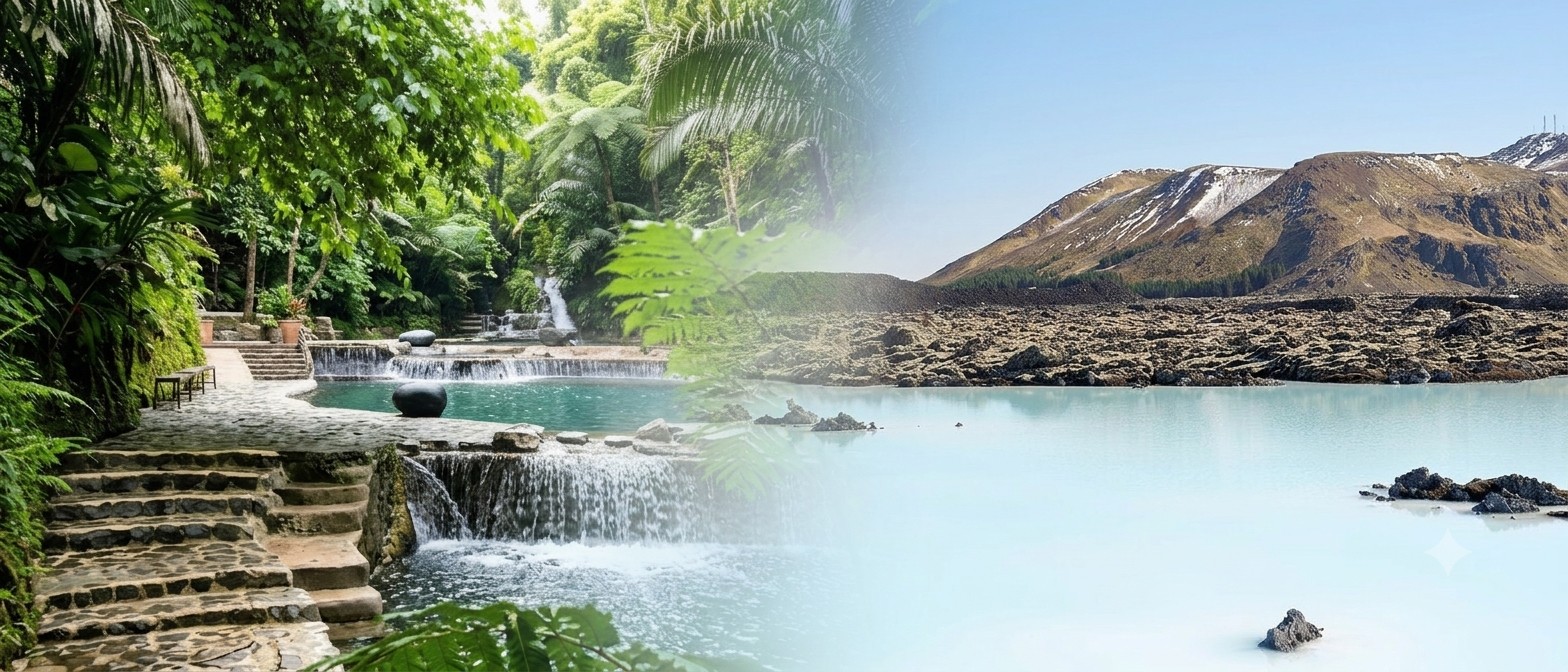
Both countries sit on fire.
The Philippines is part of the Pacific Ring of Fire, a belt of volcanic activity that circles the entire Pacific Ocean. Iceland sits directly on the Mid-Atlantic Ridge, where two tectonic plates pull apart from each other at about two centimeters per year and the earth bleeds heat as they separate. Both countries have active volcanoes, geothermal fields, and natural hot springs that rise from the same fundamental cause: magma close to the surface and groundwater that passes through it.

SpringsAtlas may earn a commission, at no extra cost to you.
I have soaked in the Philippine springs. I know the sulfur smell of Manito, the altitude chill of Asin, the jungle heat of Ardent on Camiguin Island. I have not yet been to Iceland. But Ryan and I have spent considerable time mapping it, and the closer I look at both countries side by side, the more the similarities surprise me, and the more the differences feel like they matter.
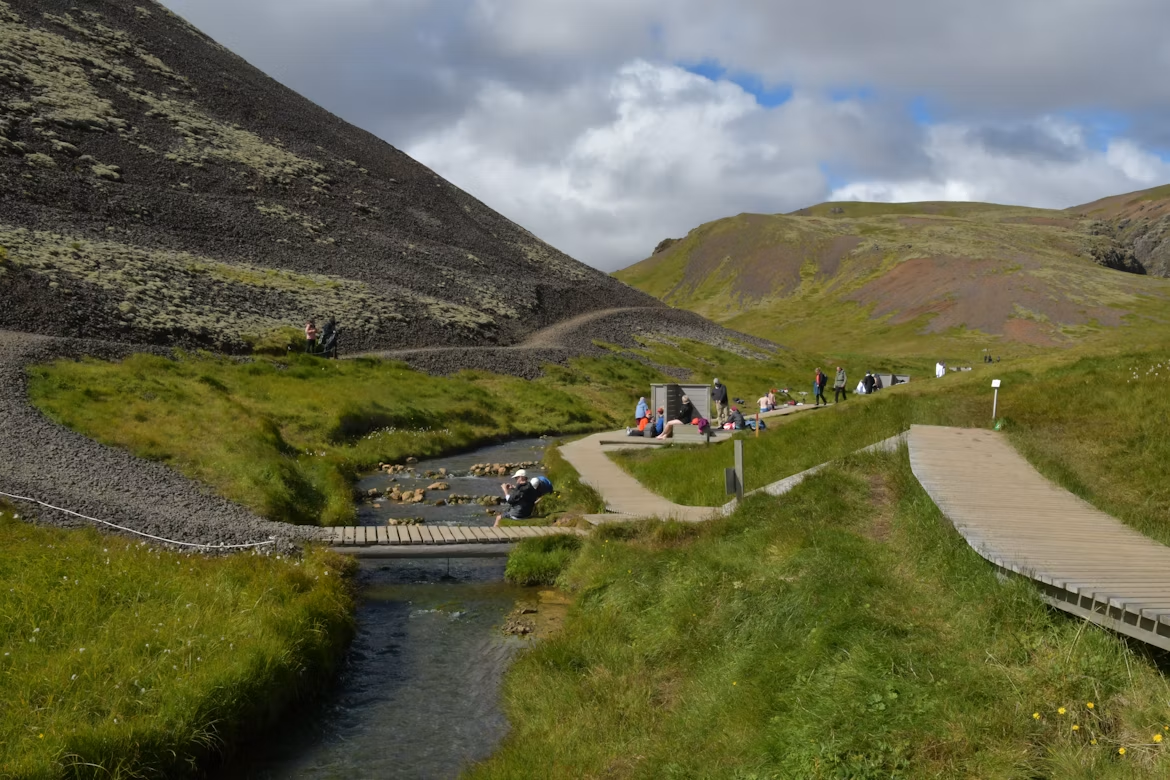
Both countries have springs that are completely free and require nothing but willingness to reach them. In the Philippines, Mapaso in Surigao is a wild thermal creek in a forest that you simply walk into. In Iceland, Reykjadalur is a geothermal river that flows through an open valley three kilometers from a highway.
Both countries have springs at altitude, where the cold air above the water creates the contrast that makes outdoor hot spring bathing genuinely extraordinary. Iceland's Landmannalaugar sits at 600 meters. Lake Agco on Mount Apo sits at 1,250 meters. Both are surrounded by volcanic geology. Both require some effort to reach.
Both countries have commercial resort springs that are polished, well-managed, and worth paying for. The Blue Lagoon in Iceland charges around ISK 12,000 (approximately $92 USD). Pansol in Laguna charges around PHP 100 to 150 for a day bath (under $3 USD). The price difference is enormous. The fundamental experience is structurally the same: hot volcanic water, managed facilities, accessible by road.
Both have springs shaped by eruptions within living memory. Eyjafjallajökull buried Seljavallalaug in 2010 and locals dug it out by hand. Pinatubo created Puning Hot Spring in 1991 and the Aeta community turned it into a livelihood. Volcanic disaster becomes, over time, a destination.
Both countries have indigenous communities for whom these waters carry cultural and spiritual meaning that predates any resort development. The Manobo people consider Mount Apo sacred. The Norse settlers of the Westfjords used Hellulaug in the ninth century. The water was never just a recreational amenity for the people who knew it first.
The temperature of the air is the biggest difference, and it changes everything.
In the Philippines, even at altitude, the ambient temperature rarely drops below 18 degrees Celsius. Even on a cold morning in Baguio, you are not stepping out of 40-degree volcanic water into air that bites. The contrast exists. It is pleasant. But it is not dramatic.
In Iceland, outdoor bathing in the winter means cold air at minus five or colder. The contrast between the hot water and the surrounding temperature is not a pleasure gradient. It is a physical shock that the body processes as something close to euphoria. The Japanese call this experience in their rotenburo the soul-settling quality of cold air and hot water. Iceland delivers it at full intensity.
The second difference is remoteness. In the Philippines, every spring we have mapped is accessible by jeepney, tricycle, or habal-habal from a town. None require four-wheel drive. None close seasonally. Iceland's most interesting free springs, Landmannalaugar, Hveravellir, require 4x4 vehicles and are only open in summer when the highland F-roads clear of snow. The Philippine highlands are accessible year-round. Iceland's interior is not.
The third difference is familiarity. For Filipinos, hot springs have been part of ordinary leisure since before most of us were born. Company outings in the 90s went to Pansol. Families in Baguio go to Asin on a Sunday. The hot spring is not exotic. It is familiar and comfortable and close. Iceland's bathing culture, the communal pool, the silence, the etiquette, is more codified and more self-conscious as a tradition.
The fourth difference is the water itself. Iceland's most famous springs are silica-rich, producing the distinctive milky blue color of the Blue Lagoon and the smooth, silky feeling on the skin afterward. Philippine springs tend toward sulfur, sodium chloride, and calcium sulfate. The skin effects are different. The mineral character is different. Iceland's water feels like it has been filtered. Philippine volcanic water smells like the earth is still working.
The Philippine springs taught me that hot water in any vessel, even a concrete pool in a Laguna garden, is better than a chlorinated swimming pool. That natural mineral water does something to the body that treated water does not. That you do not need to go far or spend much to find it.
Japan taught me what cold air does to the experience. The rotenburo is not just a hot spring. It is a hot spring in a specific thermal relationship with the surrounding climate. Without the cold, it is warm water. With the cold, it is something else entirely.
The Philippine highlands taught me that we had that combination at home all along. Asin at 640 meters. Lake Agco at 1,250 meters. Cold mountain air. Hot volcanic water.
Iceland, which I have not yet experienced but which I have studied closely, teaches something different. It teaches that the entire country is one large geothermal system and that you can access it for free if you are willing to walk or drive to it. That the most meaningful bathing experiences are not necessarily the most designed ones. That a river in a highland valley with no ticket gate and no changing room can be better than a luxury spa if the water is right and the air is cold enough.
Ryan and I are going to Iceland. We know which springs we want to reach and in what order. The research is done. The only thing missing is the feeling of the water itself.
When that happens, I will write about it properly.
Until then, this is what I know from the data, and from every other volcanic country I have sat in hot water and looked up at cold sky.
The geology is the same. The experience is different every time.
Philippine volcanism and the geothermal belt are documented by PHIVOLCS (Philippine Institute of Volcanology and Seismology), which maps active geothermal fields including those near Mount Apo, Mount Kanlaon, and the Bicol Volcanic Chain.
Iceland's position on the Mid-Atlantic Ridge and the rate of tectonic plate separation are described in publications by the Icelandic Meteorological Office (vedur.is) and the Nordic Volcanological Center.
The Pinatubo 1991 eruption and its impact on the Aeta community is documented by the National Disaster Risk Reduction and Management Council of the Philippines. The Puning Hot Spring eco-tourism project was developed by the local Aeta community with support from the Angeles City government.
The Eyjafjallajökull eruption and its impact on Seljavallalaug is recorded in Icelandic Civil Protection reports from 2010.
The Manobo people's relationship to Mount Apo is documented by the National Commission on Indigenous Peoples (NCIP) of the Philippines and in academic research by the Ateneo de Davao University.
Blue Lagoon and Pansol pricing used in this article reflects published rates at the time of writing. Currency conversions (130 ISK per USD, 56 PHP per USD) should be verified before travel.
Ria Flores is an interior designer, Chief Design Officer, and frequent Japan traveller who has soaked in hot springs across Hokkaido, Tohoku, Kyushu, and Kansai. She writes about hot spring culture from a traveller's perspective, practical, personal, and grounded in first-hand experience. She is the wife of SpringsAtlas founder Ryan Flores.
Iceland's most extraordinary hot springs are not the famous blue one. Here's where to find the wild, free, and unforgettable alternatives.
7 min read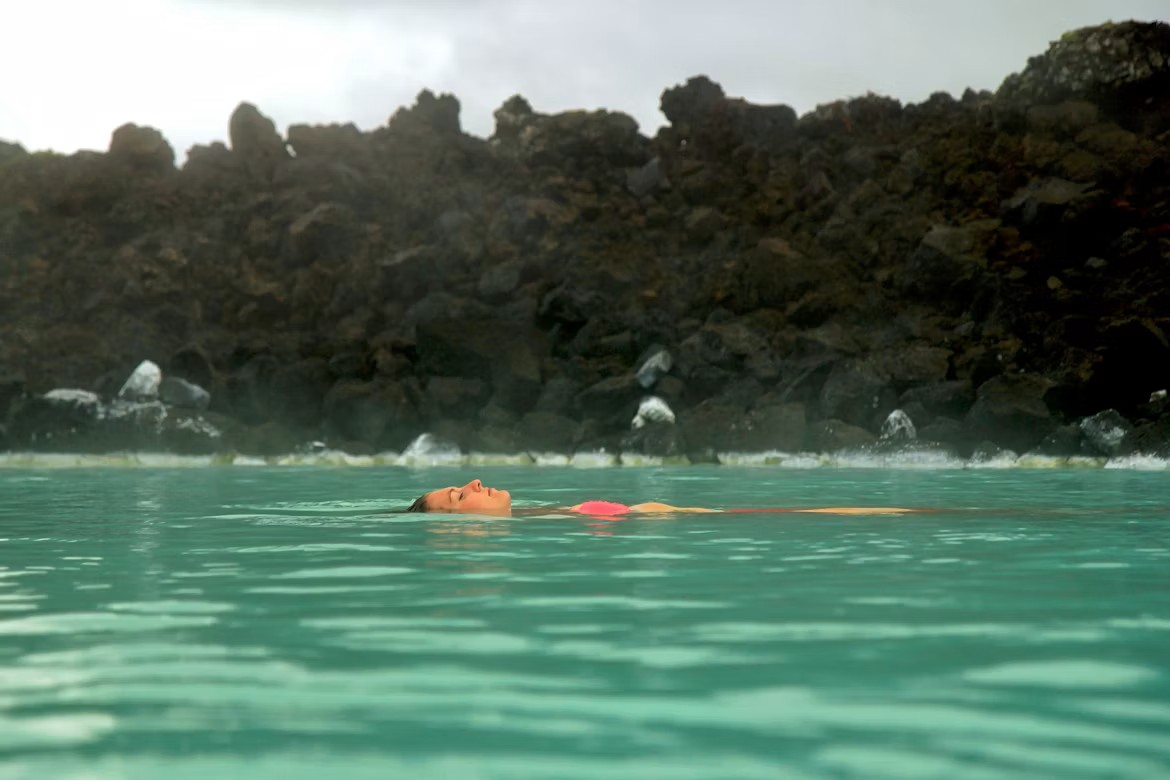
Iceland is one of the most expensive countries on earth. But it has seven completely free hot springs. No entrance gate. No queue. Just geothermal water rising from the earth, waiting for anyone willing to walk to it.
7 min read