
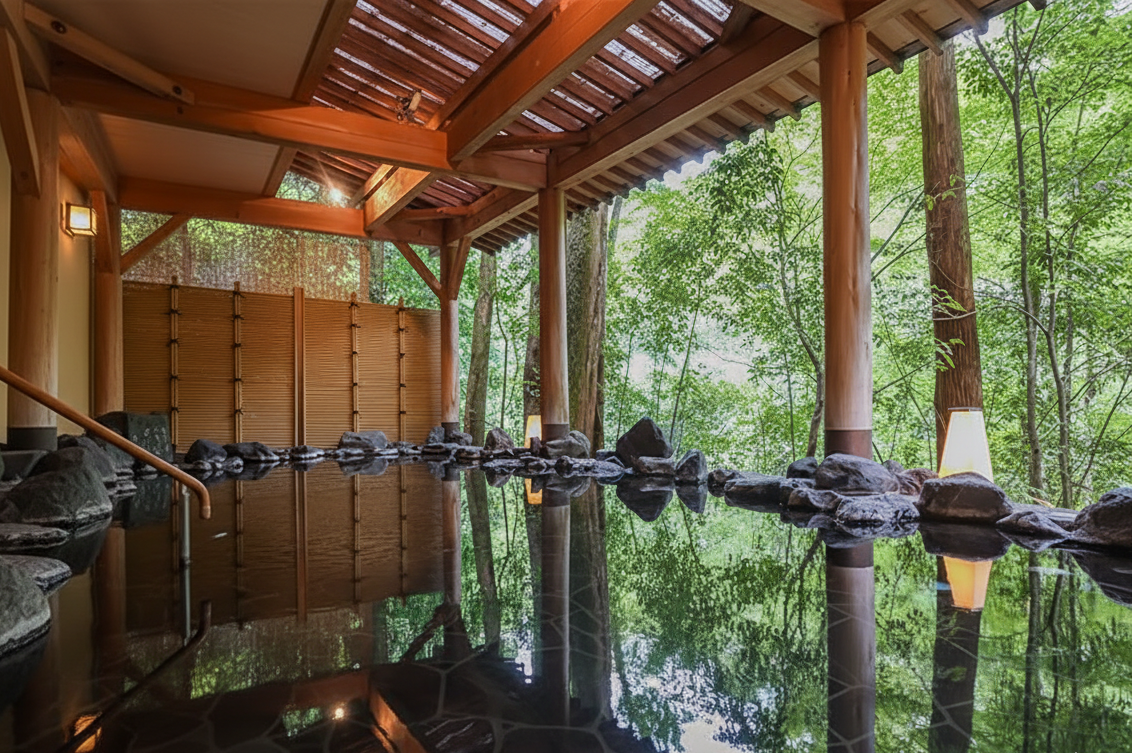
Yamanaka Onsen
山中温泉
Yamanaka Onsen
sodium-bicarbonate · Chubu
Hotter than 23% of Japan springs (n=122).
More acidic than 67% of Japan springs (n=121).
Mineral profile
Bar width reflects listing order, not measured concentration.
Suitability
At a glance
Getting there
Easy — under 1km from a station
Cost
Moderate
About this spring
Yamanaka Onsen occupies a mountain setting in Kaga, Ishikawa Prefecture, positioned along a gorge that the Daishoji River has carved through the terrain. Canyon walls rise steeply on both sides, and footpaths run beside the water, giving the town a character that distinguishes it from the other resorts in the Kaga Onsen group. The poet Matsuo Basho passed through in 1689 and recorded his praise for the baths in the travel diary Oku no Hosomichi.
Highlights
History
The springs appear in records from the Muromachi period and developed into a resort town during the Edo era, first under the influence of the Ikkyo-ikki religious movement and later with the backing of the Maeda clan.
Matsuo Basho arrived in 1689 while making the journey he would describe in Oku no Hosomichi, and his assertion that the waters of Yamanaka ranked alongside even Arima and Kusatsu has secured the town a lasting position in Japanese literary history. During World War II, Yamanaka was designated a hospital area serving the Imperial Japanese Navy.
Local guide
Arriving by bus from Kaga Onsen Station, the road follows the Daishoji River into the mountains and the valley tightens into the Kakusenkei Gorge just before the town begins. The gorge is narrow and dramatic, with mossy basalt walls dropping forty meters to the river below, and a walking path follows both banks between Korogi Bridge and Kurotani Bridge for just over a kilometer. The haiku poet Matsuo Basho walked this gorge in 1689 and wrote that he found the waters here more beautiful than Arima and Kinosaki, the two most celebrated springs of his era. The poem he left behind, about not needing to pick chrysanthemums when the waters already carry their fragrance, is carved into a stone at the gorge entrance.
The spring water at Yamanaka is a sodium bicarbonate type that emerges at around 48 degrees Celsius. In the bath it is colorless and completely clear, with a smooth, faintly alkaline feel that the locals describe as bijin-no-yu, beauty water, because of the way it leaves skin soft. It has almost no distinctive smell, which makes it accessible even to people who find the sulfur-heavy springs in other parts of Japan overpowering. The absence of drama in the water itself means the experience is defined entirely by the setting and the quality of the soak, both of which hold up well.
Kiku-no-yu, the public bathhouse at the center of town, is named after the chrysanthemum in Basho's poem. The building itself is modern but sits on the plaza where the original communal bath has stood for centuries, and the atmosphere inside is functional and honest, local people and travelers in the same water together. Going early in the morning, before the ryokan guests have woken up, gives you a quiet version of the place. The gorge walk works well either before or after a bath, and in any season the combination of moving water, old stone, and tall forest is exactly the kind of thing that justifies a long journey.
Yamanaka is one of three Kaga onsen towns, along with Yamashiro and Katayamazu. Traveling between them by bus is easy enough for a full day, but Yamanaka has the gorge, which the others do not, and that single geographical feature gives it a quality the neighboring towns cannot match.
Mineral chemistry
Water character inferred from mineral type — verify on site.
Bicarbonate springs cleanse and soften the skin surface, removing excess sebum without stripping the skin's acid mantle. Traditionally recommended for acne-prone skin and sensitive skin types.
Bicarbonate springs are generally among the most gentle and well-tolerated onsen types.
Similar springs
 FREE
FREEThe valley occupies the center of Noboribetsu Onsen in Hokkaido. Jigokudani translates as Hell Valley. The crater covers 11 hectares and releases roughly 10,000 tonnes of hot spring water each day. Fumaroles vent steam across the floor of the valley, boiling pools bubble at the surface, and the surrounding cliffs carry heavy mineral staining. A walking path winds through the area in about 20 minutes and is open to all visitors at no cost. It ranks among the most striking landscapes accessible on foot anywhere in Japan.

Tsuru-no-yu is the oldest of the seven inns at Nyuto, set deep in a beech forest in Akita Prefecture. The main draw is a large outdoor mixed-bathing pool fed by opaque, milky-white sulfurous water. Many regard it as the most beautiful onsen setting in Japan. People come here to put some distance between themselves and the rest of the world for a while.
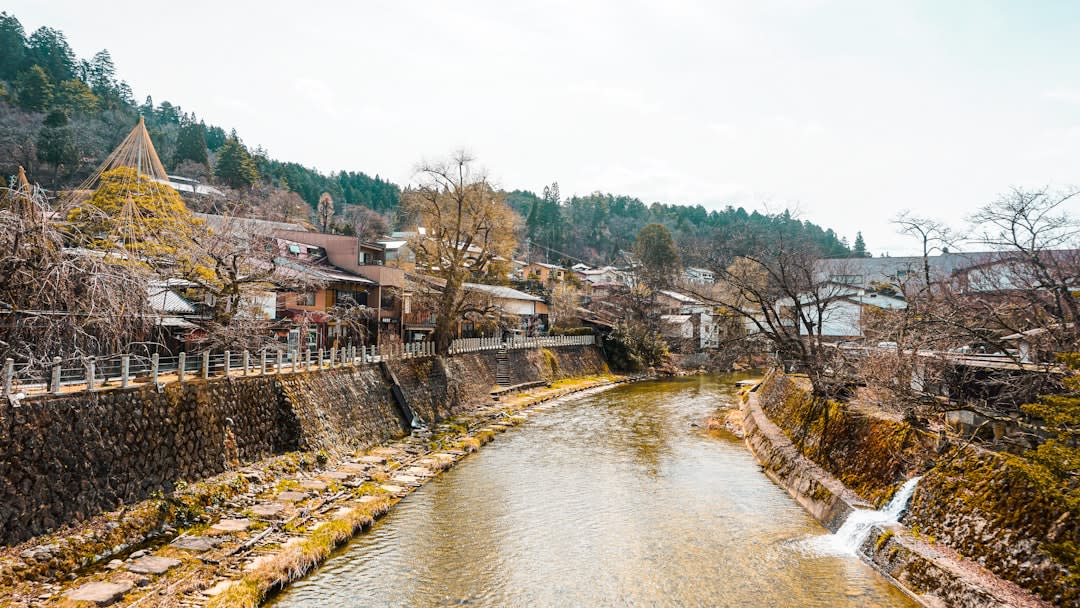
A peaceful artsy onsen town at the foot of Mt. Yufu in Oita Prefecture. The town is known for boutique galleries, craft shops, and ryokan with private outdoor baths. Lake Kinrin sits at the heart of it all. On quiet mornings, steam rises off the lake's surface in a way that seems almost designed to make you stop and stand still.
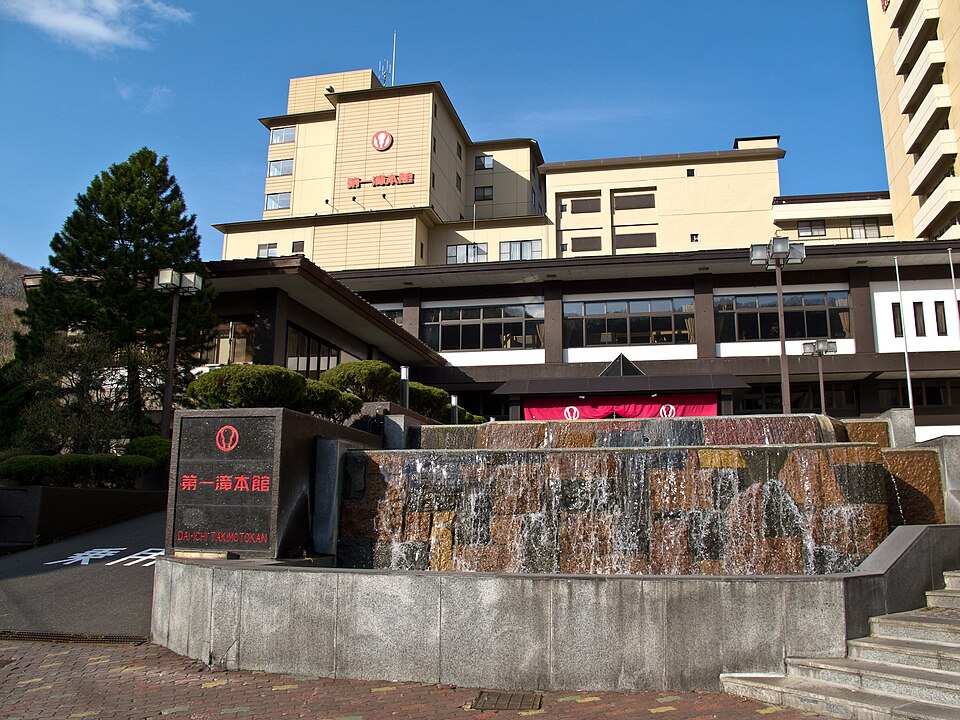
One of Hokkaido's most celebrated bathhouses. Dai-ichi Takimotokan channels water from seven distinct mineral springs into 35 pools spread across multiple floors. Indoor halls open onto outdoor rotenburo overlooking the steam-filled valley below. Day visitors are welcome without an overnight stay.
Amenities
Getting there
Take the Hokuriku Shinkansen to Kanazawa Station, then the JR Hakutaka line to Kaga-Onsen Station. From there, a local bus runs to Yamanaka Onsen in about 20 minutes.
Location & nearby
Yamanaka Onsen, Kaga, Ishikawa
Make a day of it
Pair your soak with these nearby spots.
Attraction
Sanchu Onsen Kanko Kyo Kai/Nipponnobito,Keikokuno Onsen To.
0.1km away
Attraction
Sanchu Onsen Ashiyukasanoro
0.1km away
Park
Katsurajido Park
0.3km away
Attraction
Sanchu Onsen Tsurusenan
0.3km away
Attraction
Higashiyama Shrine
0.5km away
Attraction
Basho Nokan
0.6km away
More springs in Chubu
 FREE
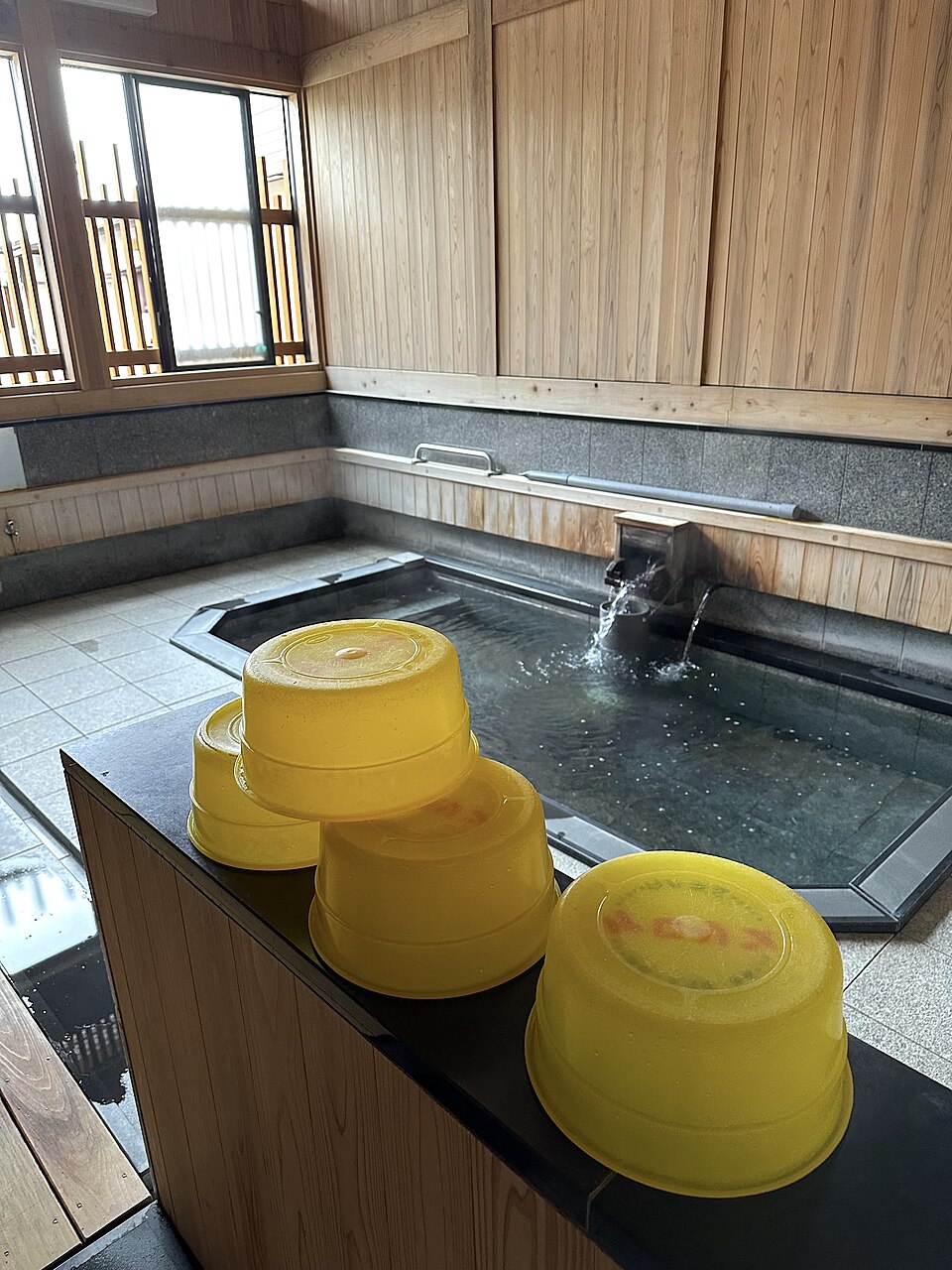
FREENozawa Onsen is a traditional village in Nagano Prefecture that maintains 13 free public bathhouses open to visitors and residents alike. These bathhouses, known as soto-yu, have been overseen by neighborhood cooperatives called yunakama for close to four centuries. The village also contains world-class ski slopes, a pairing that is genuinely uncommon anywhere in the world.
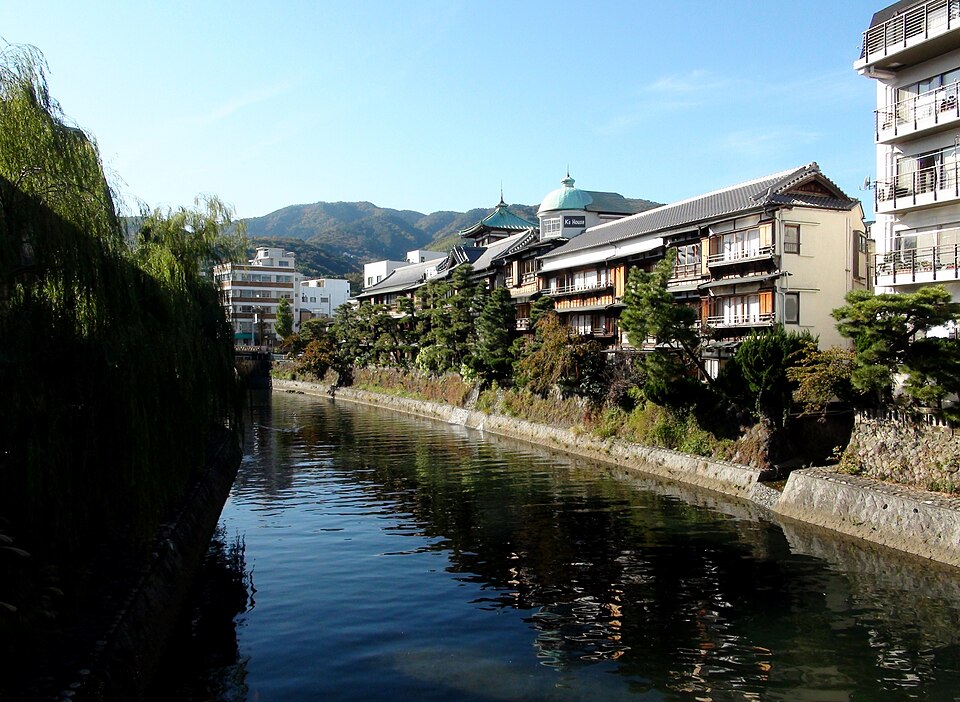
Ito sits along the eastern shore of the Izu Peninsula, facing the ocean and ranking among Japan's most productive hot spring districts by volume. More than 1,500 individual springs feed the town's supply, together pushing out around 30,000 kiloliters of water each day. Palm-lined avenues, tropical parks, and botanical gardens set the tone here, giving Ito a resort atmosphere that reads as distinctly its own compared to inland onsen destinations.
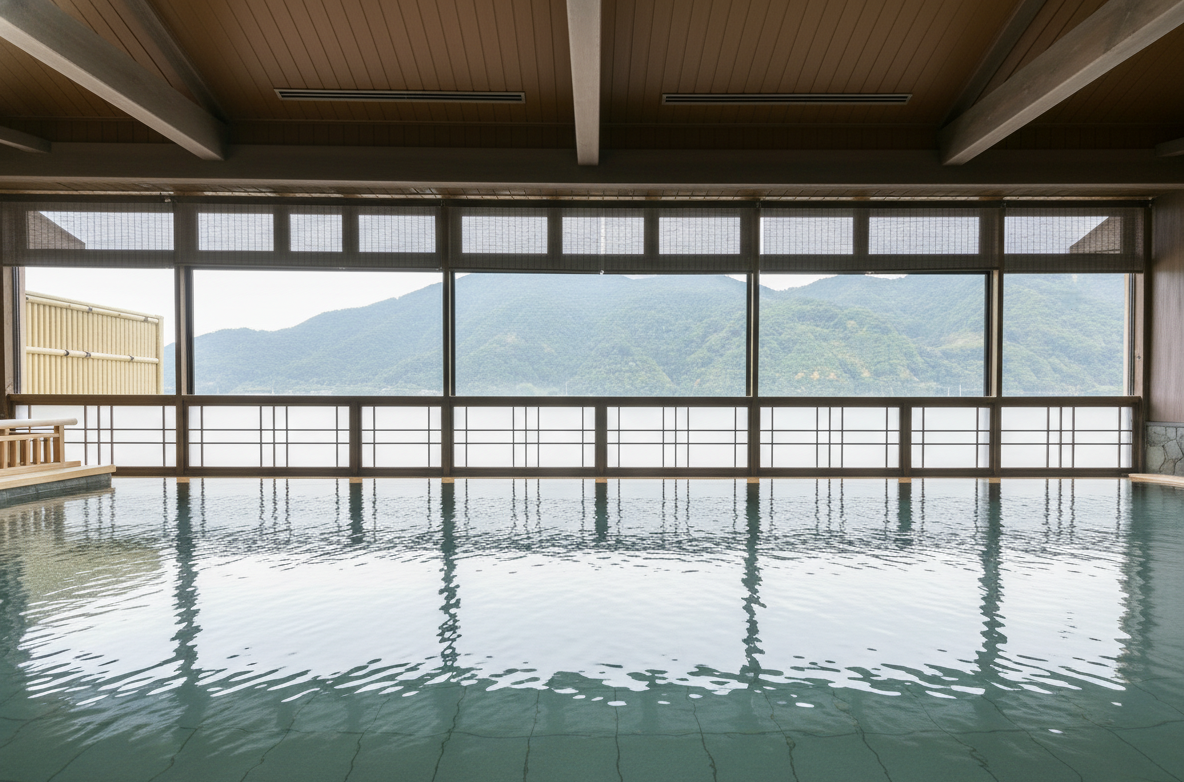
A mountain town in Niigata Prefecture famous for heavy snowfall and a unique sake-infused bath. After a day on the ski slopes, visitors soak in outdoor baths while snow falls silently around them. The town is also the setting of one of Japan's greatest novels.
Common questions
What is the water temperature at Yamanaka Onsen?▾
The water temperature at Yamanaka Onsen ranges up to 48.3°C (minimum around 48°C).
Is Yamanaka Onsen free to visit?▾
Yamanaka Onsen charges an entrance fee in JPY.
Is Yamanaka Onsen a public or private bath?▾
Yamanaka Onsen is a mixed bathing spring.
Are tattoos allowed at Yamanaka Onsen?▾
No, Yamanaka Onsen does not permit visible tattoos.
What is the nearest station to Yamanaka Onsen?▾
The nearest station to Yamanaka Onsen is Nishikatsuragicho Bus Stop, about 0km away.