Tsuru-no-yu Onsen
鶴の湯温泉
4.7 · 3214 reviews · via Google
Tsuru-no-yu Onsen
sodium-chloride · Tohoku
Hotter than 54% of Japan springs (n=122).
More acidic than 25% of Japan springs (n=121).
Mineral profile
Bar width reflects listing order, not measured concentration.
Suitability
At a glance
Getting there
Moderate — a short ride from a station
Cost
High
Crowd level
Popular
About this spring
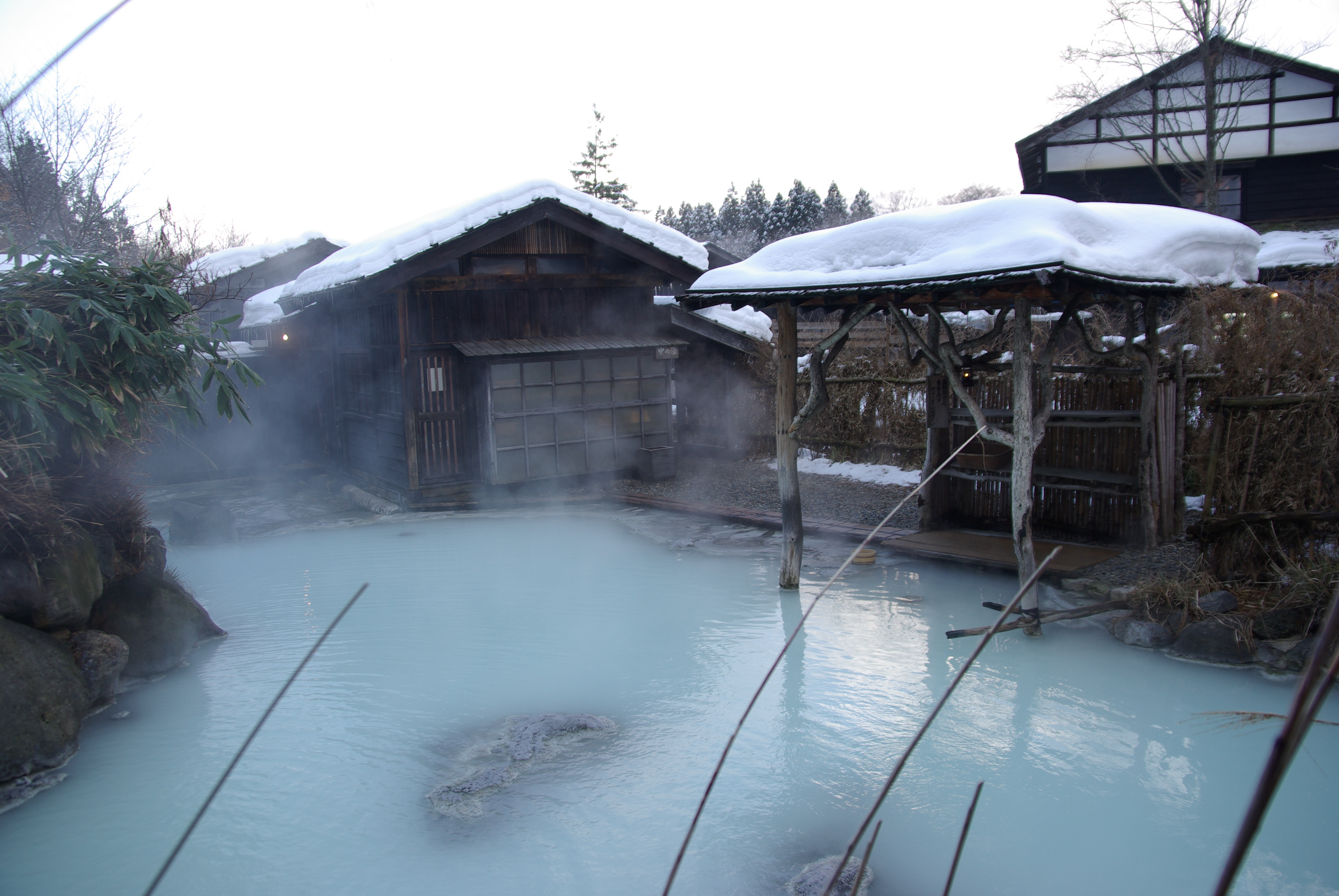
Tsuru-no-yu is the oldest of the seven inns at Nyuto, set deep in a beech forest in Akita Prefecture. The main draw is a large outdoor mixed-bathing pool fed by opaque, milky-white sulfurous water. Many regard it as the most beautiful onsen setting in Japan. People come here to put some distance between themselves and the rest of the world for a while.
Highlights
History
The baths have been in operation since 1638, when the site functioned as a private retreat for the lords of the Kubota Domain.
Satake Yoshitaka is among the historical figures documented as having visited. The name came later, in 1708, when a mountain hunter named Kansuke watched an injured crane lower itself into the milky water and gradually recover from its wounds. He called the place Tsuru-no-yu, meaning the crane's hot water. The thatched main lodge that stands today dates from that same Edo period. In 2010 the property was formally registered as a Nationally Recognised Tangible Cultural Property of Japan. Four distinct types of spring water flow at the site: white water, black water, middle water, and waterfall water, each with its own mineral composition. Bathing here has continued without interruption for nearly four centuries.
Local guide
From Tazawako Station you board the Ugo Kotsu bus and ride for about fifty minutes as the road climbs deeper into the Akita mountains, leaving mobile phone signal and convenience stores behind you at roughly the same point. The bus drops you at Tsuru-no-yu Iriguchi and you walk a forest path for fifteen minutes through a stand of silver birch trees until the thatched roofs of the inn appear between the trunks. The word that most people reach for is old. Not charming-old or restored-old, but genuinely old, in the way that the dark timber and low eaves and smell of woodsmoke communicate something about time that no renovation can fake. These buildings have been in continuous use for over 350 years and are registered as nationally important tangible cultural properties.
The water here is the reason people travel from every part of Japan to stand at the end of a forest path in Akita Prefecture. Tsuru-no-yu runs four different spring types, including sulfur, sodium chloride, calcium chloride, and sodium bicarbonate, but what you see in the famous outdoor bath is a pale, opaque milky blue-white that looks like diluted chalk. The sulfur gives it a clean, slightly sharp smell that sharpens when the wind crosses the surface. The temperature in the large outdoor mixed-bathing pool runs around 39 to 40 degrees, cool enough to sit in for a long time, and the water has a softness that stays on your skin after you get out.
The outdoor rotenburo here is the most photographed onsen scene in Japan for a reason. It is large enough to hold many people without feeling crowded, it faces directly into the birch forest, and the combination of the white water surface and the pale tree trunks gives the whole scene a monochromatic quietness that is especially powerful in early morning fog or in deep winter snow. The mixed bathing, konyoku, is preserved in its original form. The opacity of the water handles the privacy question more effectively than any screen or divider could.
Staying overnight is almost mandatory because the last return bus leaves in the late afternoon. The thatched-roof log cabins used for accommodation are the same buildings that once housed samurai guards centuries ago. Dinner is served communally and the menu is local. After dark, with no artificial light from outside and the forest completely silent, this place feels as far from a city as anywhere in Japan that a train can still reach you from.
Mineral chemistry
Sodium chloride springs, essentially natural saltwater baths, are celebrated for their warming and moisturising effects. The salt forms a thin film on the skin that slows moisture evaporation, keeping skin hydrated longer than a freshwater bath.
Those with high blood pressure or heart conditions should consult a doctor before bathing, as the warming effect increases circulation. Avoid immersing open wounds.
Calcium chloride springs share the heat-retaining property of sodium chloride springs but with a stronger warming effect. Prized for muscle and joint relief.
The strong warming effect means those with cardiovascular conditions, high blood pressure, or pregnancy should limit soak duration and consult a doctor if in doubt.
Sulfuric hot springs are among the most studied in balneology worldwide. The sulfur compounds, primarily hydrogen sulfide and thiosulfate, have documented antimicrobial and anti-inflammatory properties. Regular bathing is associated with relief from chronic skin conditions including eczema and psoriasis, as well as joint inflammation and muscle soreness. Sulfuric waters have been used therapeutically across Asia and Europe for centuries.
The distinctive rotten-egg smell dissipates quickly after leaving the bath. Avoid if you have a sulfur allergy, very sensitive skin, or respiratory conditions. Remove silver jewellery before entering — sulfur will blacken it permanently.
Bicarbonate springs cleanse and soften the skin surface, removing excess sebum without stripping the skin's acid mantle. Traditionally recommended for acne-prone skin and sensitive skin types.
Bicarbonate springs are generally among the most gentle and well-tolerated onsen types.
Similar springs
 FREE
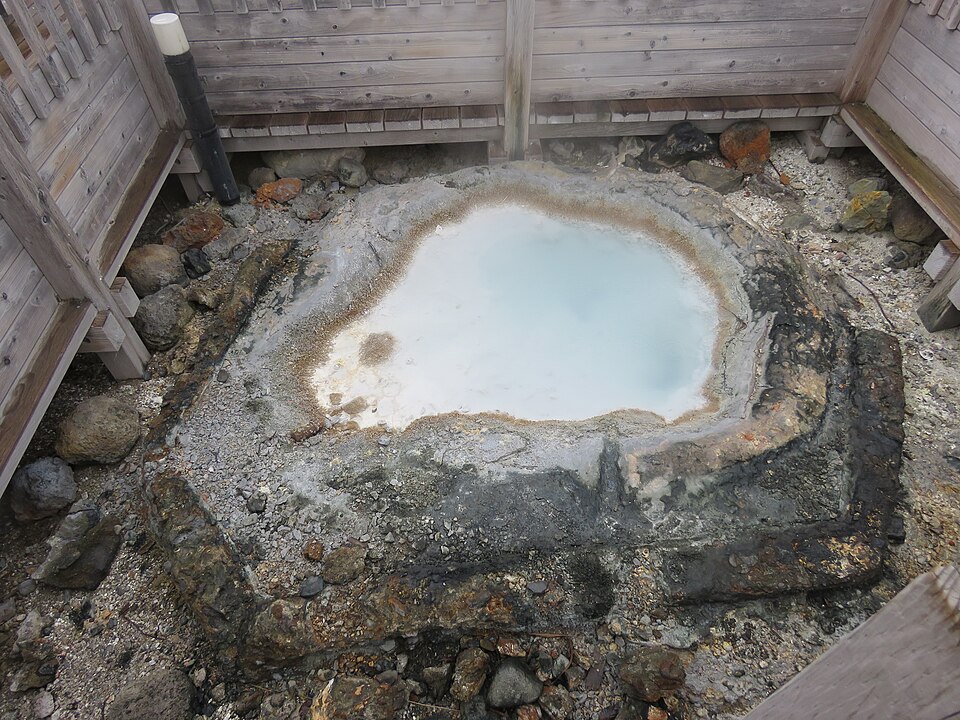
FREEThe valley occupies the center of Noboribetsu Onsen in Hokkaido. Jigokudani translates as Hell Valley. The crater covers 11 hectares and releases roughly 10,000 tonnes of hot spring water each day. Fumaroles vent steam across the floor of the valley, boiling pools bubble at the surface, and the surrounding cliffs carry heavy mineral staining. A walking path winds through the area in about 20 minutes and is open to all visitors at no cost. It ranks among the most striking landscapes accessible on foot anywhere in Japan.
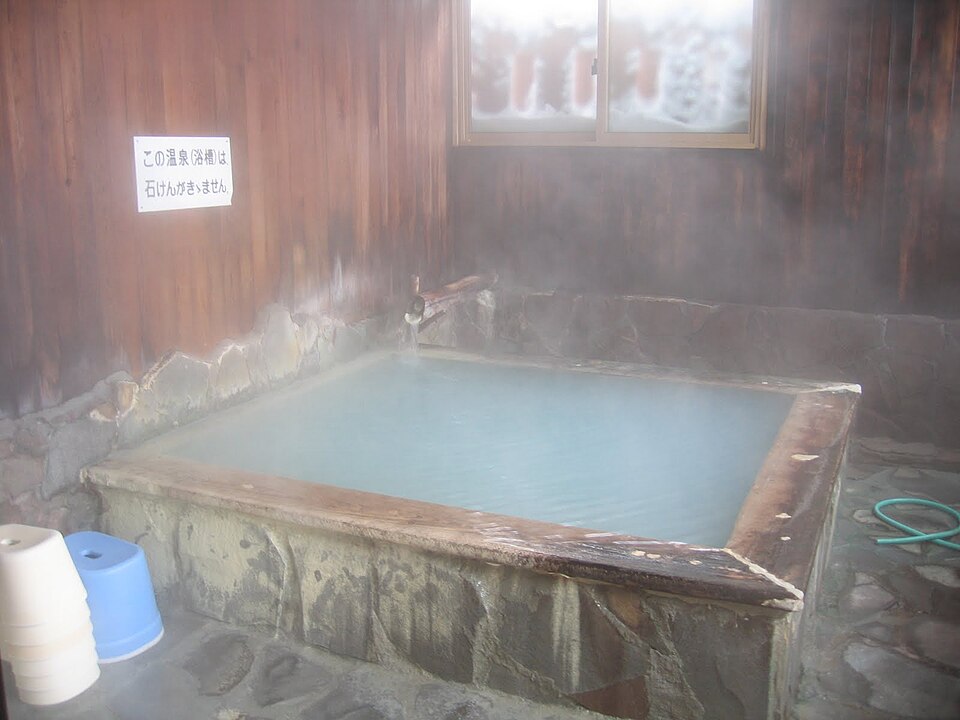
Set deep in the Hakkoda Mountains of Aomori Prefecture, Sukayu Onsen is a historic bathhouse best known for its cavernous mixed-bathing hall, the Sen-nin-buro, which translates as the Bath of a Thousand Bathers. The waters are strongly acidic, the setting is rustic and unhurried, and winter brings extraordinary snowfall to the surrounding mountains.
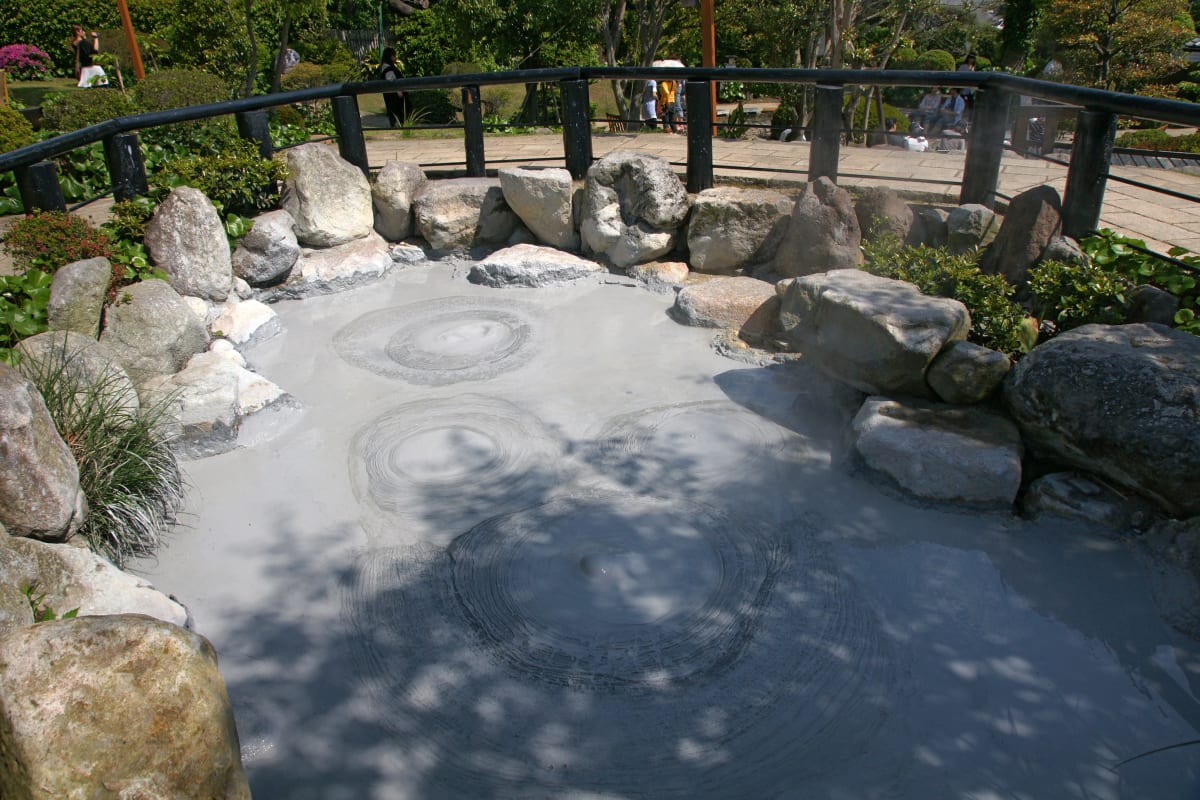
Beppu is the most geothermally active city in Japan, with more than 2,900 hot spring vents located within the city limits and eight distinct thermal spring zones collectively known as the Beppu Hatto. The variety on offer is wide, ranging from grand hotel bathhouses to modest neighborhood public facilities to the celebrated Hells, a collection of brilliantly colored boiling pools scattered across the city. The Hells run far too hot for bathing, but they draw visitors who come to walk among them and take in the spectacle.
 FREE
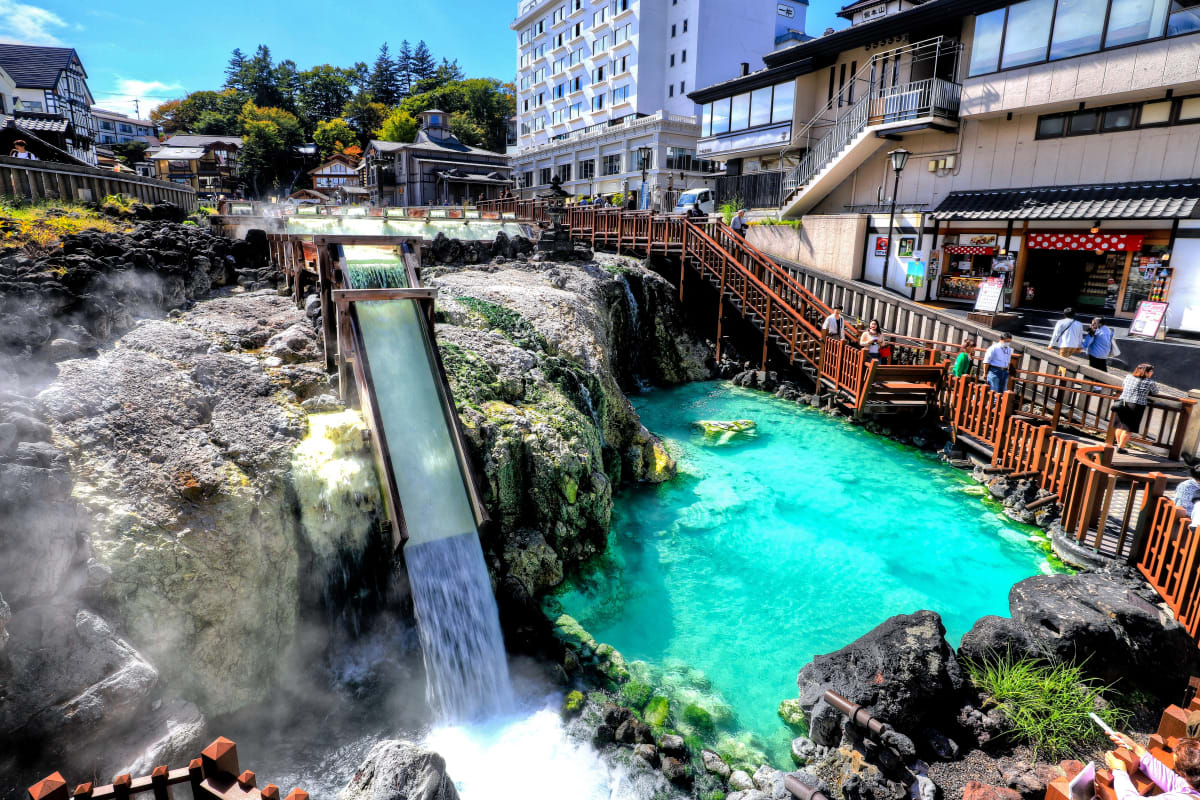
FREEKusatsu Onsen sits at 1,200 meters in the mountains of Gunma Prefecture and ranks among the most celebrated hot spring towns in Japan. The springs here produce more than 32,000 liters of water per minute, a volume unmatched anywhere else in the country. The water is strongly acidic and sulfurous, and its skin-healing properties have long made it legendary among visitors. Twice each day in the central town square, workers cool the scalding water by pulling long wooden paddles through it in unison while singing traditional songs. This practice is called yumomi.
Amenities
Getting there
From Tokyo: Akita Shinkansen (Komachi)
Gateway: Tazawako (155 min)
Ugo Kotsu bus to Nyuto Onsen (~50 min), then 15 min walk
Total journey: 225 min
From Tokyo: Akita Shinkansen (Komachi)
Gateway: Tazawako (155 min)
Ugo Kotsu bus to Nyuto Onsen, then 15 min walk
Total journey: 225 min
From Tazawako Station, take the Ugo Kotsu bus toward Nyuto Onsen. The journey takes about 50 minutes. Get off at the Tsuru-no-yu-iriguchi stop, then walk 15 minutes along a forest path. The last return bus leaves around 17:00. An overnight stay is strongly recommended.
Location & nearby
Tazawako Kogen 50, Senboku, Akita 014-1201
More springs in Tohoku
Set deep in the Hakkoda Mountains of Aomori Prefecture, Sukayu Onsen is a historic bathhouse best known for its cavernous mixed-bathing hall, the Sen-nin-buro, which translates as the Bath of a Thousand Bathers. The waters are strongly acidic, the setting is rustic and unhurried, and winter brings extraordinary snowfall to the surrounding mountains.
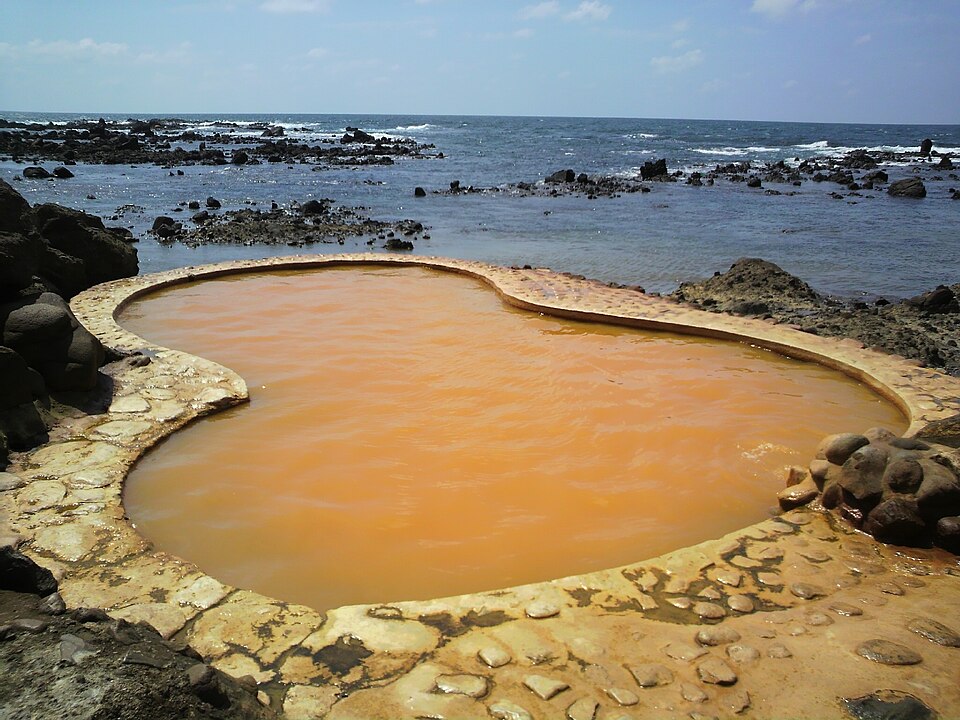
Furofushi Onsen occupies a rocky cape in Fukaura, Aomori Prefecture, with outdoor bathing pools positioned at the edge of the Sea of Japan cliffs. The spring water runs a deep reddish-brown from its high iron and sodium chloride content. The main open-air bath and a dedicated women's pool both use fully undiluted water drawn straight from the source. Sunsets over the water are a particular draw. Once day visitors depart in the late afternoon, overnight guests have the pools to themselves.
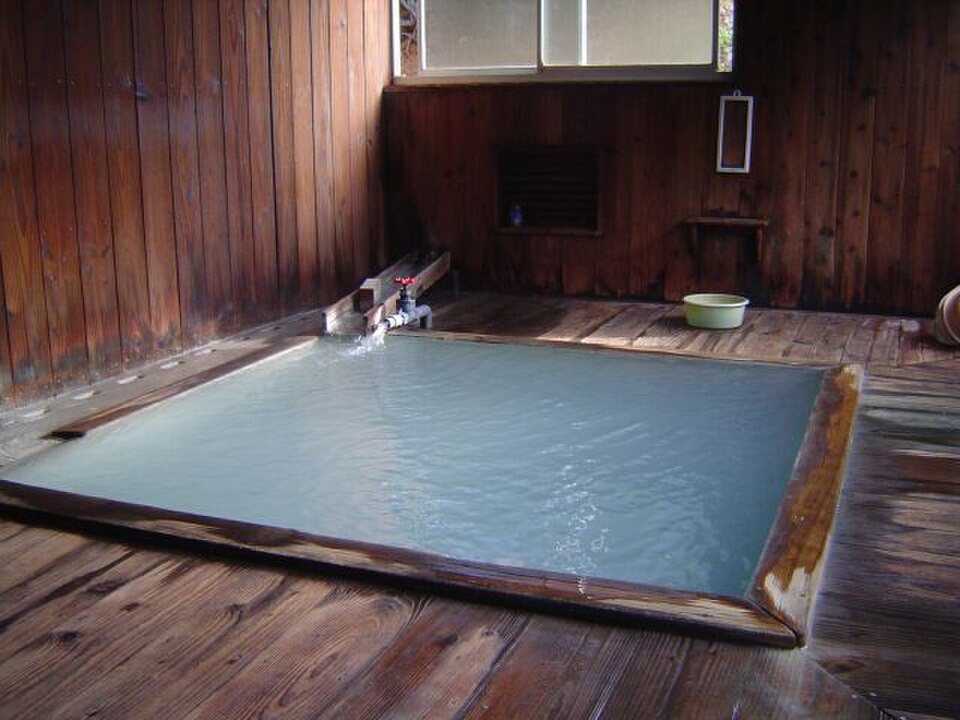
Ofuka Onsen sits at roughly 1,100 meters in the Hachimantai highland of Akita Prefecture, a compact and out-of-the-way spring that opens each year from early May through mid-October. The water is a straightforward sulfur type and flows in generous volume. What draws most visitors is the ondol, platforms warmed from below by geothermal steam rising through the ground. This form of heat therapy has deep roots in northeast Asia but is uncommon in Japan.
Common questions
What is the water temperature at Tsuru-no-yu Onsen?▾
The water temperature at Tsuru-no-yu Onsen ranges up to 62°C (minimum around 39°C).
Is Tsuru-no-yu Onsen free to visit?▾
Tsuru-no-yu Onsen charges an entrance fee in JPY.
Is Tsuru-no-yu Onsen a public or private bath?▾
Tsuru-no-yu Onsen is a mixed bathing spring.
Are tattoos allowed at Tsuru-no-yu Onsen?▾
Yes, Tsuru-no-yu Onsen welcomes visitors with tattoos.
What is the nearest station to Tsuru-no-yu Onsen?▾
The nearest station to Tsuru-no-yu Onsen is Sendatsu, about 1.6km away.