Yunogo Onsen
湯郷温泉
Yunogo Onsen
sodium chloride · Kansai
Hotter than 7% of Japan springs (n=122).
More acidic than 56% of Japan springs (n=121).
Mineral profile
Bar width reflects listing order, not measured concentration.
Suitability
At a glance
Getting there
Easy — under 1km from a station
Cost
High
About this spring
Yunogo Onsen is a compact hot spring town in Mimasaka, Okayama Prefecture, with a recorded history spanning roughly 1,200 years. The spring produces sodium chloride and calcium chloride water at a rate of 540 liters per minute. Local tradition ties the town's founding to a Buddhist priest named En-nin-houshi, who came across an injured heron bathing in the warm water and recovering from its wounds. A statue near the main bathhouse marks that founding story.
Highlights
History
The discovery of Yunogo's spring is attributed to En-nin-houshi, a Buddhist priest who lived approximately 1,200 years ago.
He reportedly witnessed an injured heron wading in the warm water and healing, an account that gave the onsen its traditional name, Sagi no Yu, meaning hot water of the heron. The town grew steadily through the Edo period and remains today a small, unpretentious onsen community that sits well outside the main tourist circuit.
Local guide
Yunogo Onsen sits in a shallow mountain bowl in Mimasaka City, about forty minutes by bus from Tsuyama in Okayama Prefecture. The road follows a river called the Yoshii upstream through rice paddies and persimmon groves, and the onsen town announces itself with a cluster of old wooden inns pressed together along both banks. A stone statue near the main public bathhouse marks the founding legend: the monk Ennin, traveling through in the 9th century, found an injured white heron standing in a warm spring and healing its wounds. The heron legend turns up in many Japanese onsen towns, but in Yunogo the statue is everywhere, the white bird has become the logo of the whole place, and the bathhouse nearest the original spring site is still called the Sagi-no-yu, or Heron's Bath.
The water chemistry here is the reason Yunogo Onsen is known as the home of Yunogo Bijin, a phrase that means roughly the beautiful-skin water of Yunogo. The spring is a chloride type with traces of radium, colorless and completely transparent when it fills the bath. The temperature holds around 40 to 43 degrees, warm enough to soak thoroughly without forcing you out in fifteen minutes. When you sit in the water for half an hour and then stand up, your skin has a finished, smooth quality, as if the outer layer has been lightly polished. There is no sharp smell, no visual drama, no color change. The beauty spring effect is real but quiet, which fits the town.
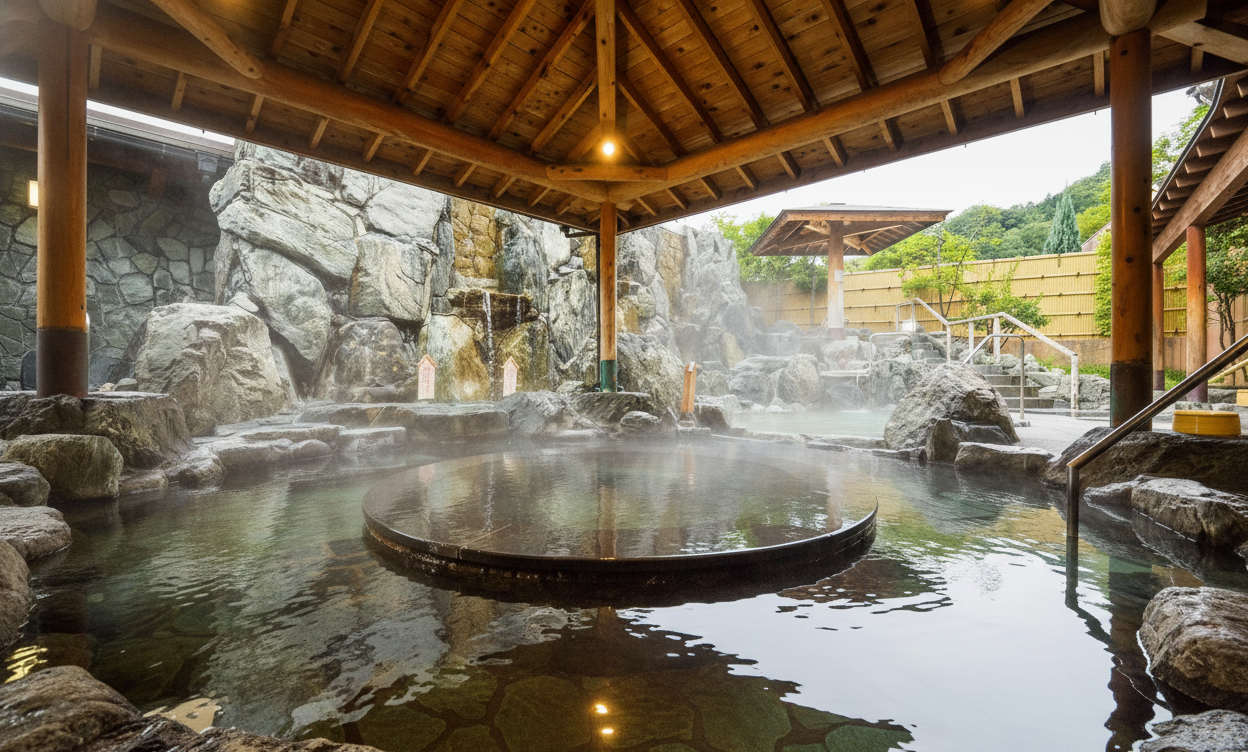
The public bathhouse at the original spring site has a wooden exterior that has aged to a dark grey, and the bath inside is simple stone with a single wide window looking out toward the trees on the hillside. At 540 liters per minute output the flow is generous, and in the older bath halls the water is always moving slightly, fresh and replaced constantly. In the late afternoon, when the autumn light comes sideways through that window and the steam hangs still in the air, the bath takes on a quality you would not find in a new facility. It is a working, unrestored bathhouse that has been doing the same job for over a thousand years.
Yunogo is one of the three famous hot springs of Mimasaka along with Okutsu and Yubara, and the local tourism materials treat them as a circuit. If you have a car, you can visit all three valleys in a day. But Yunogo has a slightly more lived-in, less polished feeling than its neighbors. The covered arcade along the main street has a few restaurants, a sake shop, and an okonomiyaki place with handwritten menus taped to the wall. In the evenings, the lights from the inn windows reflect in the Yoshii River, and if you walk the stone path along the bank after your bath, still warm from the water, the quiet is substantial.
Mineral chemistry
Water character inferred from mineral type — verify on site.
Sodium chloride springs, essentially natural saltwater baths, are celebrated for their warming and moisturising effects. The salt forms a thin film on the skin that slows moisture evaporation, keeping skin hydrated longer than a freshwater bath.
Those with high blood pressure or heart conditions should consult a doctor before bathing, as the warming effect increases circulation. Avoid immersing open wounds.
Calcium chloride springs share the heat-retaining property of sodium chloride springs but with a stronger warming effect. Prized for muscle and joint relief.
The strong warming effect means those with cardiovascular conditions, high blood pressure, or pregnancy should limit soak duration and consult a doctor if in doubt.
Amenities
Getting there
From Okayama Station, take the JR Tsuyama Line to Tsuyama, then transfer to the JR Kishin Line and get off at Hayashino Station. A taxi from Hayashino takes about 8 minutes. Several ryokan offer a free shuttle from the station with advance reservation.
Location & nearby
Yunogo Onsen, Yunogo, Mimasaka, Okayama 707-0062
Make a day of it
Pair your soak with these nearby spots.
Attraction
Yunogo Hot Spring Information Centre
0.0km away
Attraction
Yu Shrine
0.3km away
Attraction
Yunogo Karakuritokei
0.4km away
Attraction
Yunogoukan
0.6km away
Attraction
Misakushieirotemburo
0.8km away
Park
Okayamakenmisakushiso Go Undo Park
1.0km away
More springs in Kansai
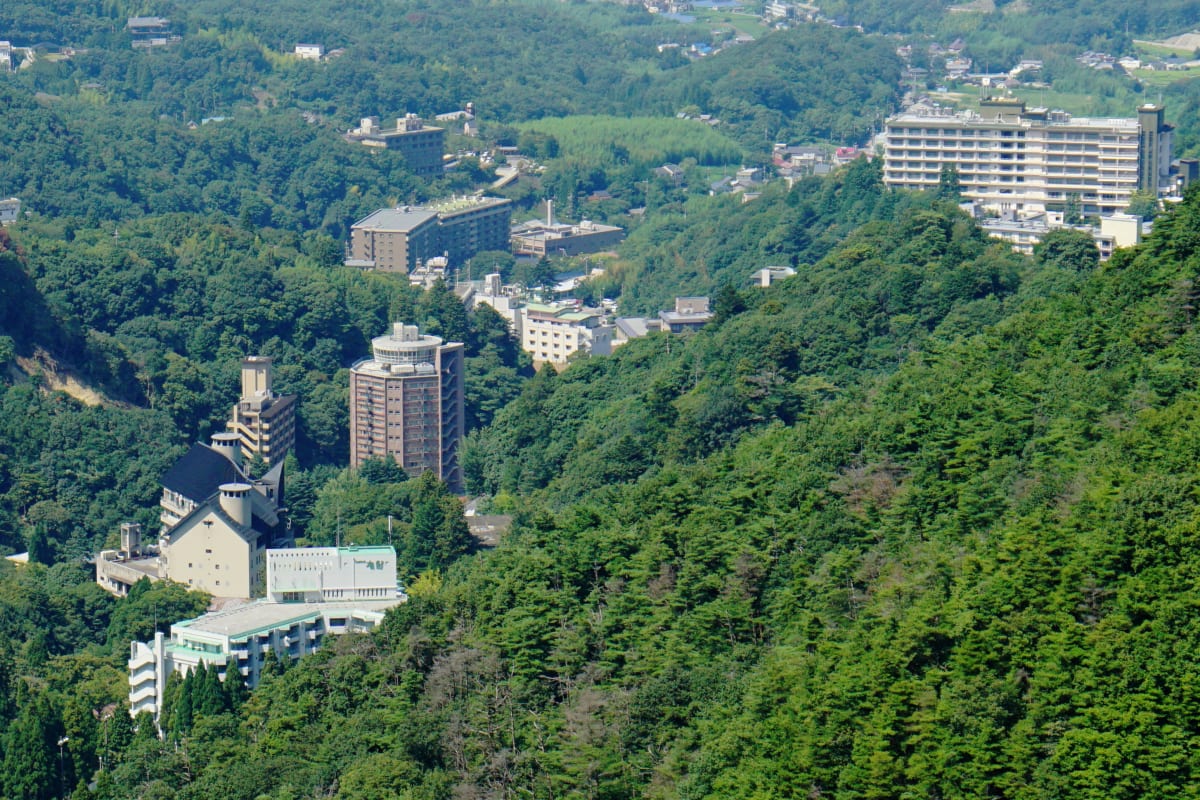
Arima Onsen sits in the hills above Kobe, close to Mount Rokko, and ranks among the oldest hot spring towns in Japan. The town draws visitors for two entirely different spring types that coexist within its compact footprint. Kinsen is the iron-rich golden water that stains surrounding rocks a rusty orange, while ginsen runs clear and carries both carbonation and mild radioactivity. Few other onsen destinations in Japan bring together two such distinct water types within a single small town.
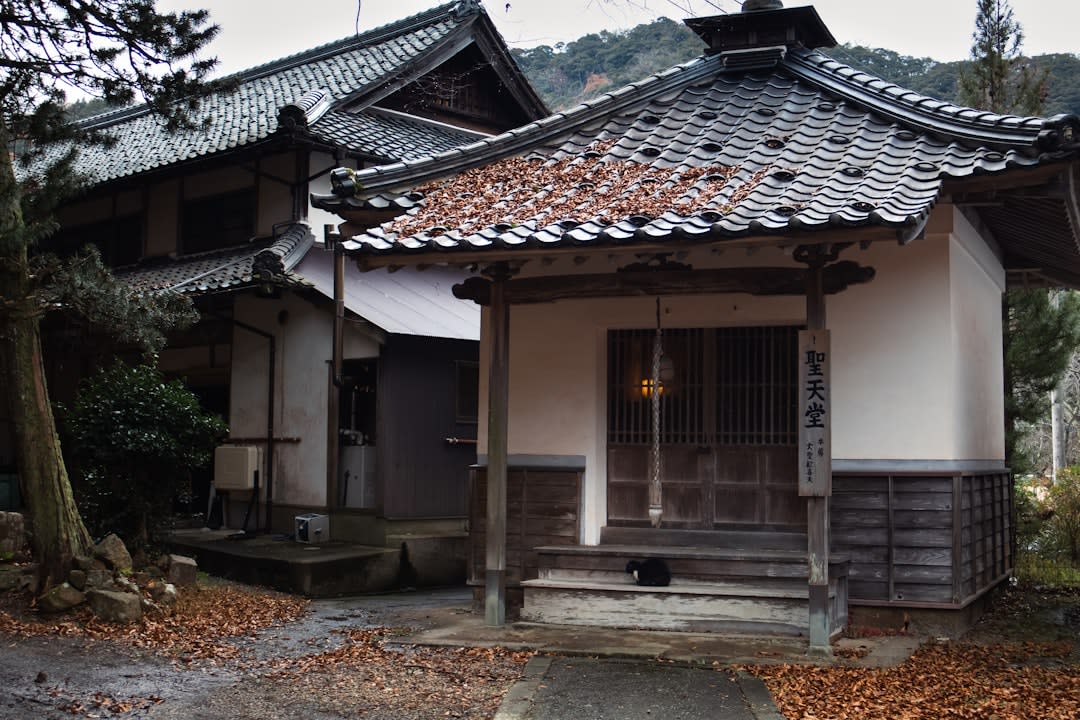
One of Japan's most beloved onsen towns. Visitors put on a yukata and wooden sandals and stroll between seven public bathhouses along a willow-lined canal. The wooden bridges, stone walkways, and traditional inn facades have barely changed in a century. The town is built for wandering.
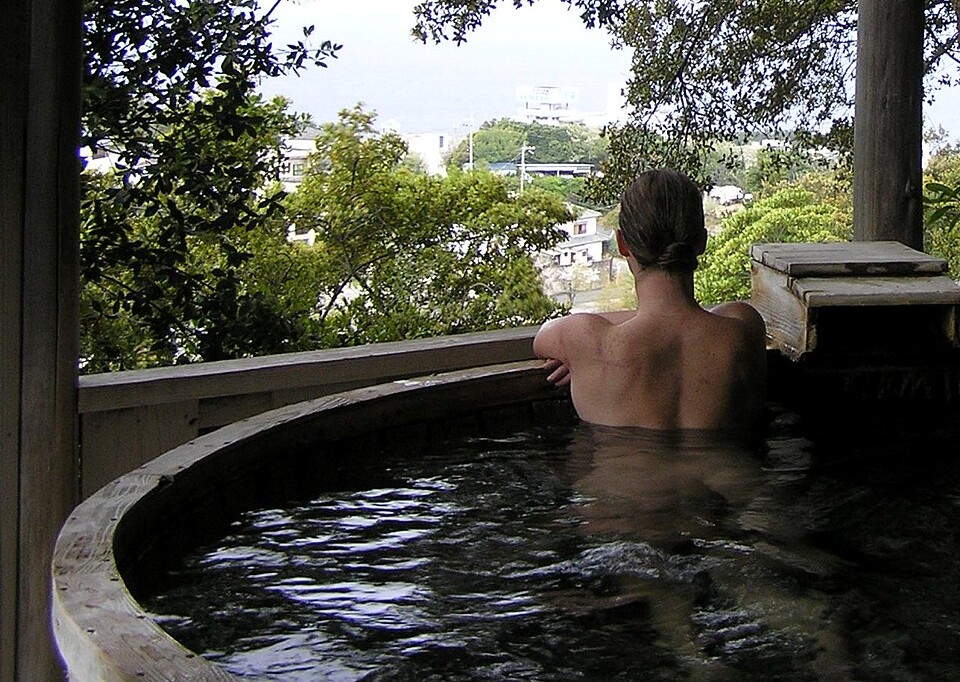
An old coastal resort town where hot springs meet the Pacific. The white-sand beach and dramatic rock formations create a setting unlike most onsen destinations. The ancient outdoor baths of Saki-no-Yu sit directly above the ocean. You soak while watching the waves crash below you.
Common questions
What is the water temperature at Yunogo Onsen?▾
The water temperature at Yunogo Onsen ranges up to 40°C (minimum around 40°C).
Is Yunogo Onsen free to visit?▾
Yunogo Onsen charges an entrance fee in JPY.
Is Yunogo Onsen a public or private bath?▾
Yunogo Onsen is a public bathing spring.
Are tattoos allowed at Yunogo Onsen?▾
No, Yunogo Onsen does not permit visible tattoos.