
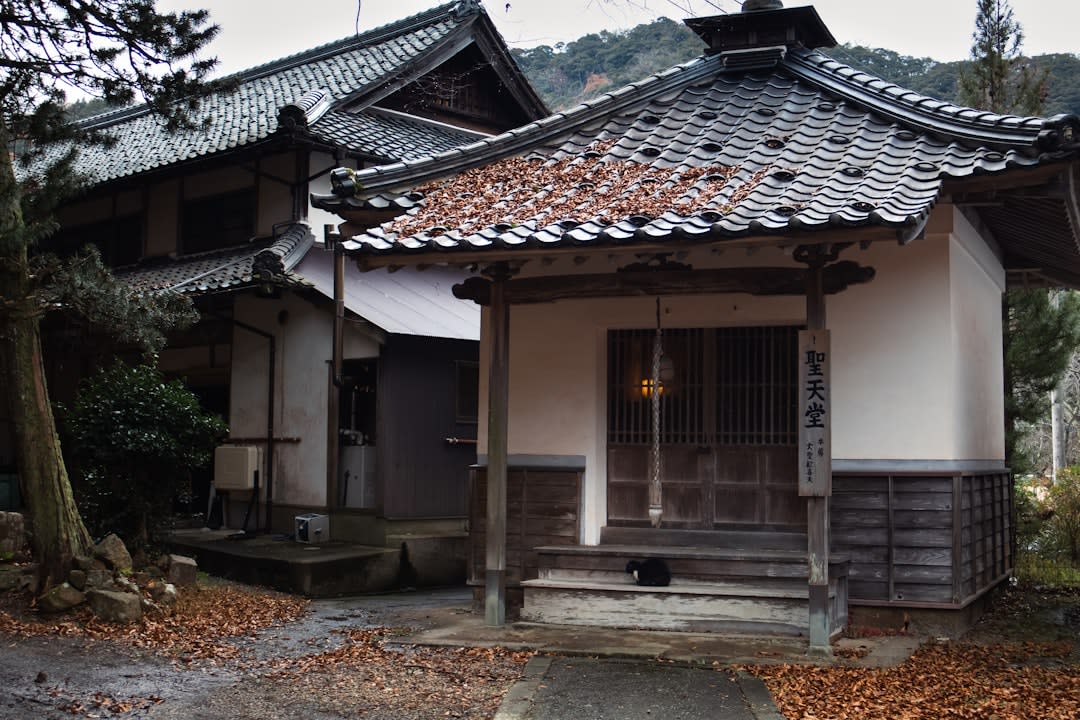
Kinosaki Onsen
城崎温泉
4.5 · 3100 reviews · via Google
Kinosaki Onsen
sodium-chloride · Kansai
Hotter than 71% of Japan springs (n=122).
More acidic than 36% of Japan springs (n=121).
Mineral profile
Bar width reflects listing order, not measured concentration.
Suitability
At a glance
Getting there
Easy — under 1km from a station
Cost
Moderate
Crowd level
Popular
About this spring
One of Japan's most beloved onsen towns. Visitors put on a yukata and wooden sandals and stroll between seven public bathhouses along a willow-lined canal. The wooden bridges, stone walkways, and traditional inn facades have barely changed in a century. The town is built for wandering.
Highlights
History
The springs were discovered in 720 AD by a Buddhist monk named Dochi Shonin.
He had arrived to find the local people sick and suffering. He prayed for a thousand days on their behalf. On the thousandth day, hot water welled up from the ground at the site now known as Mandara-yu. In 738 he established Onsen-ji Temple on the hill above the town. The seven communal bathhouses grew from that religious foundation. A catastrophic earthquake in 1925 destroyed much of the old townscape. The elegant three-storey wooden facades lining the canal today were built during the reconstruction that followed. The writer Shiga Naoya stayed here in 1917 to recover after being struck by a train in Tokyo. His short story At Kinosaki, written during that convalescence, became one of the most admired works of modern Japanese literature.
Local guide
The limited express train from Kyoto takes about two and a half hours to reach Kinosaki Onsen Station, following the Sea of Japan coast through Hyogo Prefecture as the landscape turns from industrial suburbs to rice paddies to dark, pine-covered hills. When you step off the platform and onto the main street, you will probably stop walking for a moment. The street runs alongside a narrow willow-lined canal, and at this hour of the evening it is full of people in yukata, shuffling along in wooden geta sandals, steam rising from the grates in the stone pavement below their feet.
The town is built around the idea that the entire village is one big ryokan. The station is the front entrance, the streets are the corridors, your inn is the guest room, and the seven public bathhouses scattered across a walkable ten-minute loop are the communal grand baths. Each bathhouse has a different architectural character. Goshonoyu is covered in a stepped gabled roof that looks like something from a Heian-era illustration. Mandayu sits beside a waterfall. Satononyu, the largest, has a cavernous interior rotenburo. When you check into almost any inn in town you receive a wooden stamp card and can visit as many as you like over the course of your stay.
The water type at Kinosaki is sodium chloride with a near-neutral pH of about 7.1, which sounds unremarkable until you get into it. The salt concentration in the baths is high enough to give the water real body. It feels warmer than it reads on the thermometer, and the heat penetrates quickly. Coming in from the cold canal-side air in January and sinking into Mandayu's outdoor rock pool, you can feel your legs go from numb to burning in about thirty seconds. The water emerges at up to 78 degrees from the source, which means dilution is necessary, but the individual bathhouses maintain different temperatures across their different pools.
What you will not find in any brochure is the moment when the evening crowds thin out, around nine o'clock, and you walk back along the canal in your damp yukata with geta on cold stone and just the sound of water in the weir and a few lanterns reflecting in the dark canal surface. The monk Dochi is credited with discovering the springs in the eighth century. Kinosaki has been refining this walking-and-soaking ritual ever since, and however many people do it each year, it does not feel worn out.
Mineral chemistry
Water character inferred from mineral type — verify on site.
Sodium chloride springs, essentially natural saltwater baths, are celebrated for their warming and moisturising effects. The salt forms a thin film on the skin that slows moisture evaporation, keeping skin hydrated longer than a freshwater bath.
Those with high blood pressure or heart conditions should consult a doctor before bathing, as the warming effect increases circulation. Avoid immersing open wounds.
Simple thermal springs have lower dissolved mineral content but are valued for the pure therapeutic effect of heat immersion itself — easing muscle tension and improving circulation. Considered the gentlest introduction to hot spring bathing.
Standard precautions apply: avoid bathing within 30 minutes of eating, keep soaks to 10–15 minutes for first-timers, and hydrate before and after.
Similar springs
 FREE
FREEThe valley occupies the center of Noboribetsu Onsen in Hokkaido. Jigokudani translates as Hell Valley. The crater covers 11 hectares and releases roughly 10,000 tonnes of hot spring water each day. Fumaroles vent steam across the floor of the valley, boiling pools bubble at the surface, and the surrounding cliffs carry heavy mineral staining. A walking path winds through the area in about 20 minutes and is open to all visitors at no cost. It ranks among the most striking landscapes accessible on foot anywhere in Japan.
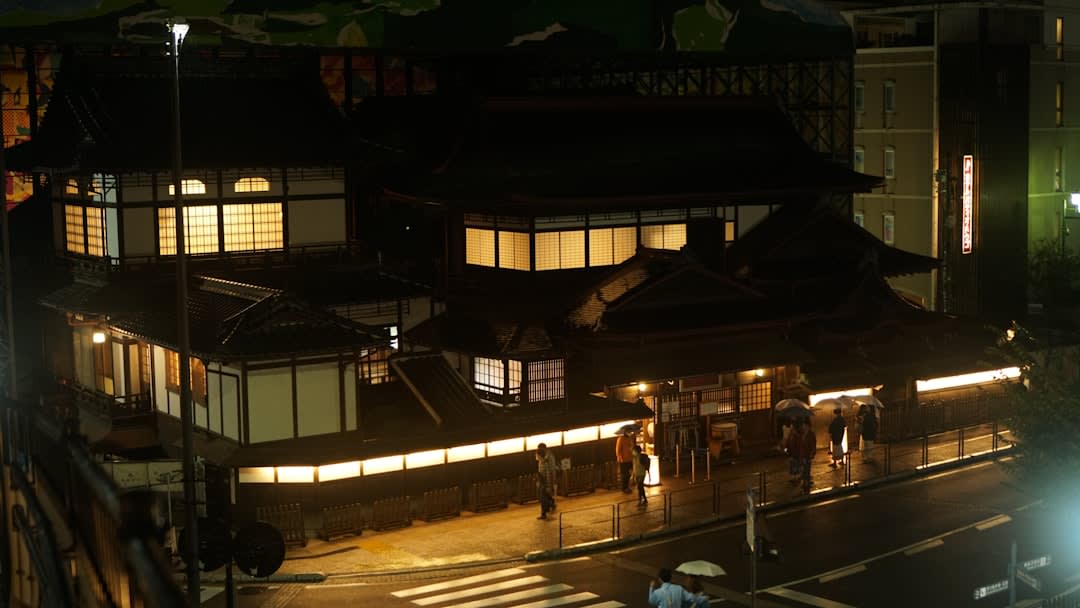
Dogo Onsen ranks among the oldest hot springs in Japan, with written records documenting its use for more than 1,300 years and oral traditions pointing back considerably further. The landmark Dogo Onsen Honkan is a three-storey wooden bathhouse finished in 1894, widely credited as the inspiration for the bathhouse depicted in Studio Ghibli's Spirited Away. The spring water is mildly alkaline and has long been valued for its ability to soften and smooth the skin.

Beppu is the most geothermally active city in Japan, with more than 2,900 hot spring vents located within the city limits and eight distinct thermal spring zones collectively known as the Beppu Hatto. The variety on offer is wide, ranging from grand hotel bathhouses to modest neighborhood public facilities to the celebrated Hells, a collection of brilliantly colored boiling pools scattered across the city. The Hells run far too hot for bathing, but they draw visitors who come to walk among them and take in the spectacle.

Arima Onsen sits in the hills above Kobe, close to Mount Rokko, and ranks among the oldest hot spring towns in Japan. The town draws visitors for two entirely different spring types that coexist within its compact footprint. Kinsen is the iron-rich golden water that stains surrounding rocks a rusty orange, while ginsen runs clear and carries both carbonation and mild radioactivity. Few other onsen destinations in Japan bring together two such distinct water types within a single small town.
Amenities
Getting there
From Osaka: JR San'in Main Line
Gateway: Kinosaki Onsen (150 min)
Walk to bathhouse
Total journey: 155 min
Take the JR San'in Main Line from Kyoto or Osaka to Kinosaki Onsen Station. The journey takes about 2.5 hours. The canal and the seven bathhouses are all within easy walking distance of the station.
Location & nearby
Kinosaki-cho, Toyooka City, Hyogo 669-6101
Make a day of it
Pair your soak with these nearby spots.
Attraction
Kinosaki Onsen
0.1km away
Attraction
Kinosakimugiwarazaikudensho Kan
0.2km away
Attraction
Kinosakionsen Satonoyu
0.4km away
Attraction
Kinosakimachimandarayu
0.4km away
Attraction
Jizo-yu Onsen
0.4km away
Attraction
KinosakiOnsen KankoTaishi:Kinosaki Onsen Miss Yukata Contest/ Tourisim Ambassador
0.4km away
More springs in Kansai
Arima Onsen sits in the hills above Kobe, close to Mount Rokko, and ranks among the oldest hot spring towns in Japan. The town draws visitors for two entirely different spring types that coexist within its compact footprint. Kinsen is the iron-rich golden water that stains surrounding rocks a rusty orange, while ginsen runs clear and carries both carbonation and mild radioactivity. Few other onsen destinations in Japan bring together two such distinct water types within a single small town.
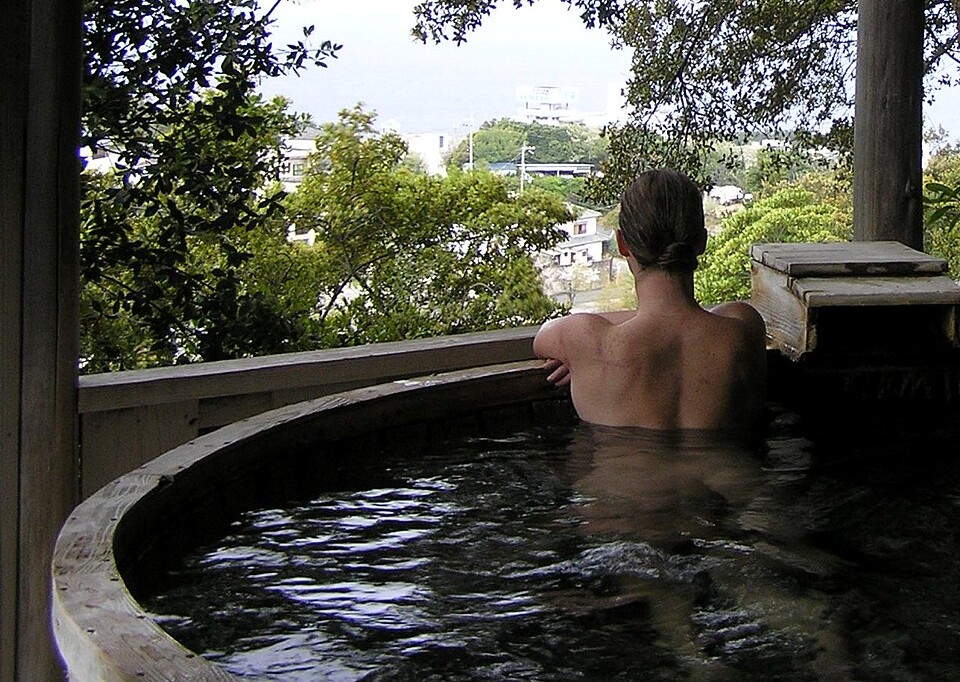
An old coastal resort town where hot springs meet the Pacific. The white-sand beach and dramatic rock formations create a setting unlike most onsen destinations. The ancient outdoor baths of Saki-no-Yu sit directly above the ocean. You soak while watching the waves crash below you.
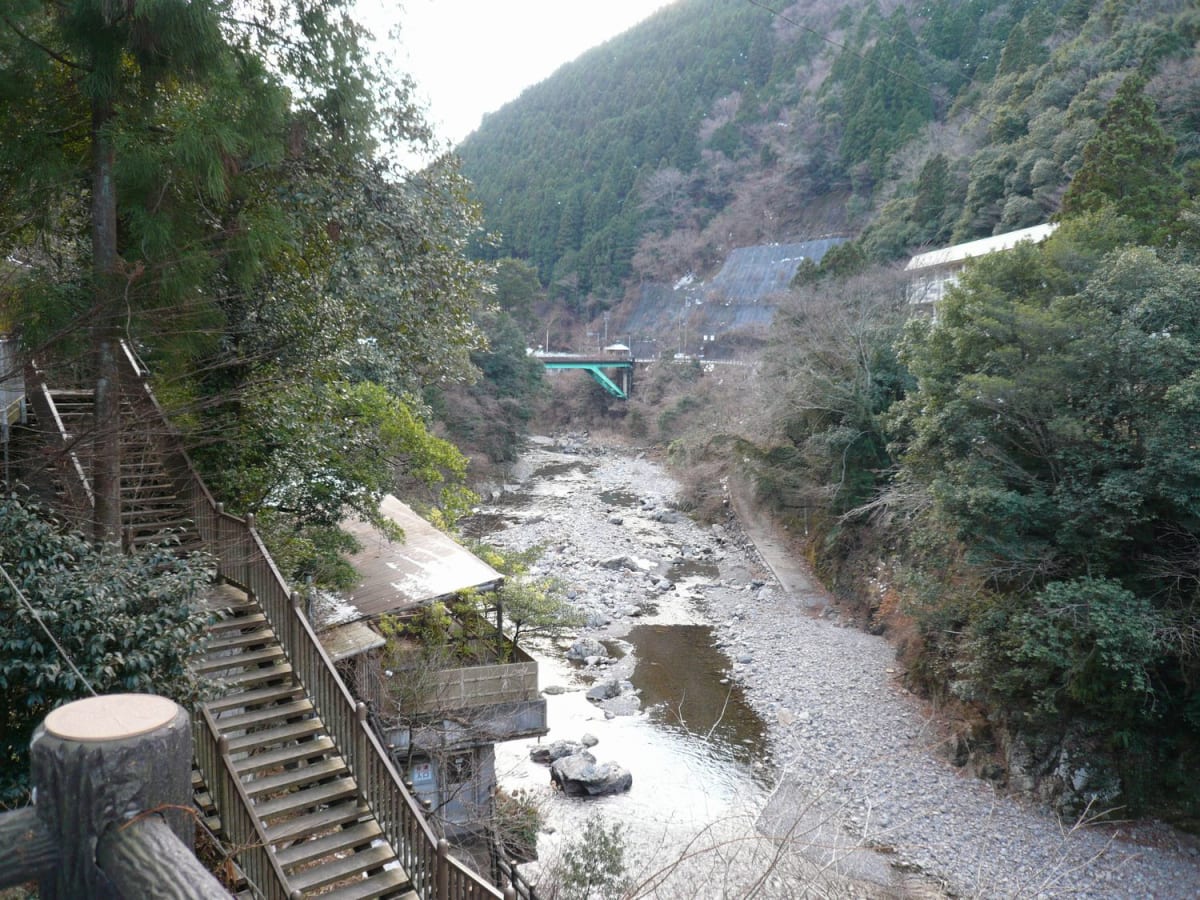
Ryujin Onsen sits in a narrow gorge carved through the Kii Mountains of Wakayama Prefecture, roughly 90 minutes from the coast by bus. The water is a sodium bicarbonate spring measuring pH 9.9, making it one of Japan's most alkaline, and it has long been regarded as one of the country's finest springs for beautifying the skin. Two ryokan, Kamigoten and Shimogoten, have operated in this gorge since the seventeenth century.
Common questions
What is the water temperature at Kinosaki Onsen?▾
The water temperature at Kinosaki Onsen ranges up to 78°C (minimum around 42°C).
Is Kinosaki Onsen free to visit?▾
Kinosaki Onsen charges an entrance fee in JPY.
Is Kinosaki Onsen a public or private bath?▾
Kinosaki Onsen is a public bathing spring.
Are tattoos allowed at Kinosaki Onsen?▾
Yes, Kinosaki Onsen welcomes visitors with tattoos.
What is the nearest station to Kinosaki Onsen?▾
The nearest station to Kinosaki Onsen is Ichinoyu Bus Stop, about 0.2km away.