Arima Onsen
有馬温泉
4.4 · 3600 reviews · via Google
Arima Onsen
iron · Kansai
Hotter than 93% of Japan springs (n=122).
More acidic than 19% of Japan springs (n=121).
Mineral profile
Bar width reflects listing order, not measured concentration.
Suitability
At a glance
Getting there
Easy — under 1km from a station
Cost
Moderate
Crowd level
Popular
About this spring
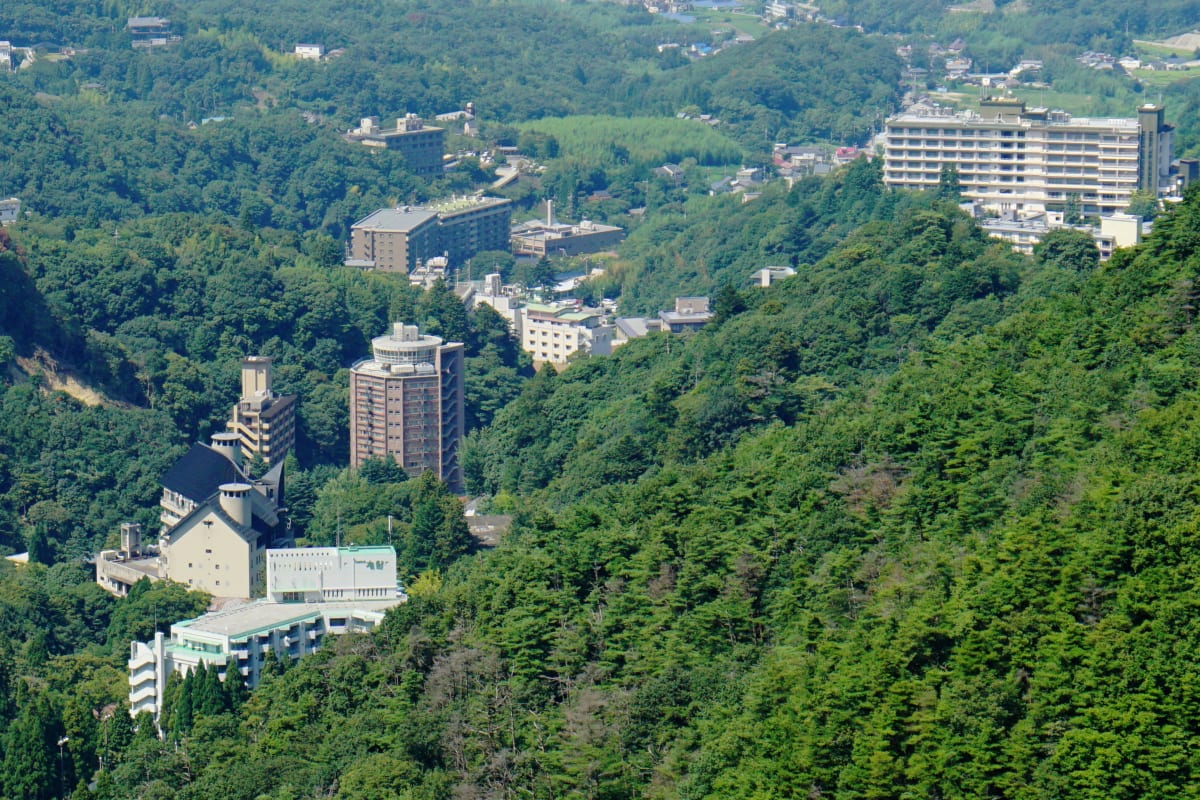
Arima Onsen sits in the hills above Kobe, close to Mount Rokko, and ranks among the oldest hot spring towns in Japan. The town draws visitors for two entirely different spring types that coexist within its compact footprint. Kinsen is the iron-rich golden water that stains surrounding rocks a rusty orange, while ginsen runs clear and carries both carbonation and mild radioactivity. Few other onsen destinations in Japan bring together two such distinct water types within a single small town.
Highlights
History
The springs at Arima appear by name in the Pillow Book and in other Heian-period texts from the tenth and eleventh centuries, placing them among the earliest documented hot spring sites in Japan.
The Buddhist monk Gyoki is credited with establishing the site as a bathing destination in the eighth century. During the sixteenth century, the warlord Toyotomi Hideyoshi became one of Arima's most devoted patrons, making more than ten visits and reportedly taking to the waters both before and after his military campaigns. His repeated presence lifted Arima out of its role as a remote healing retreat and turned it into a fashionable destination sought out by the leading figures of his time.
Local guide
One way to reach Arima is to take the Hankyu Line to Rokko Station, ride the Rokko Cable Car for ten minutes up through the pine forest to the summit plateau, cross the top of Mount Rokko on a winding bus road, and then drop down the far side on the Arima Ropeway in twelve minutes. When the gondola emerges from the trees and the old tile rooftops of the village come into view below you, the fact that you are less than an hour from central Kobe feels almost impossible. Arima sits in a steep-sided valley that cuts it off completely from the surrounding city, and that isolation is exactly why it has survived as a genuine hot spring town rather than a theme park version of one.
Arima is famous for having two entirely different kinds of water, and the difference between them is not subtle. The kinsen, or gold spring, arrives at the surface as a clear liquid but oxidizes almost immediately on contact with air, turning into a thick, reddish-brown water that looks like diluted rust. It is loaded with iron and sodium chloride, and when you lower yourself into a kinsen bath your skin is immediately coated with a faint mineral film, almost like being wrapped in warm salt air. The color stains the tiles and the stones a deep orange-brown over time, which gives the older bathhouses a patina that no amount of cleaning will remove. The ginsen, by contrast, stays clear, carries radium and carbonate, and produces a cool, fizzy sensation on the skin that feels completely different from the heavy warmth of the gold water.
The main public facility, Kin no Yu, is a low, plain building near the center of the village that has been in operation for a very long time. You pay a few hundred yen, leave your shoes in a cubby by the door, and join whoever is already in the cloudy brown water. Tosen Shrine, which guards the gods said to have discovered the springs, sits a short walk uphill and is the kind of small, shaded place that deserves ten quiet minutes even if you are not religious. The narrow shopping street between them sells ginger sweets that Hideyoshi Toyotomi supposedly requested on his visits in the sixteenth century, a detail that is probably embellished but is also probably at least partly true.
On winter evenings, when the temperature drops sharply in the valley, the red lanterns along the main street reflect in the wet stone paving and the steam rises from every drain and gutter. Standing at the edge of the public bath with the iron-brown water steaming in front of you, looking out through the wooden lattice at the dark hillside above the town, you understand why this place has been drawing visitors for well over a thousand years. It is not comfortable in a modern hotel sense. It is comfortable in a much older and more reliable way.
Mineral chemistry
Iron-bearing springs are recognised by their characteristic rust-red or amber colour and metallic taste. The iron content is associated with stimulation of red blood cell production and is traditionally recommended for anaemia and fatigue recovery.
Iron springs will stain light-coloured swimwear and towels a persistent brownish-orange. Those with haemochromatosis (iron overload condition) should seek medical advice before bathing.
Sodium chloride springs, essentially natural saltwater baths, are celebrated for their warming and moisturising effects. The salt forms a thin film on the skin that slows moisture evaporation, keeping skin hydrated longer than a freshwater bath.
Those with high blood pressure or heart conditions should consult a doctor before bathing, as the warming effect increases circulation. Avoid immersing open wounds.
Radium or radon springs are a recognised therapeutic category in several countries. At the low concentrations found in natural springs, exposure is associated with hormesis, a mild beneficial stress response.
Radon concentrations in natural hot springs are far below levels associated with health risk. Those who are pregnant should consult a doctor before bathing.
Carbonated hot springs are genuinely rare. The dissolved carbon dioxide creates micro-bubbles that cling to the skin, dilating capillaries and boosting local circulation — sometimes called "heart baths."
Carbonated springs are typically cooler than other spring types. Those with cardiovascular conditions should soak for shorter periods (10–15 minutes max) and exit slowly to avoid lightheadedness.
Similar springs
 FREE
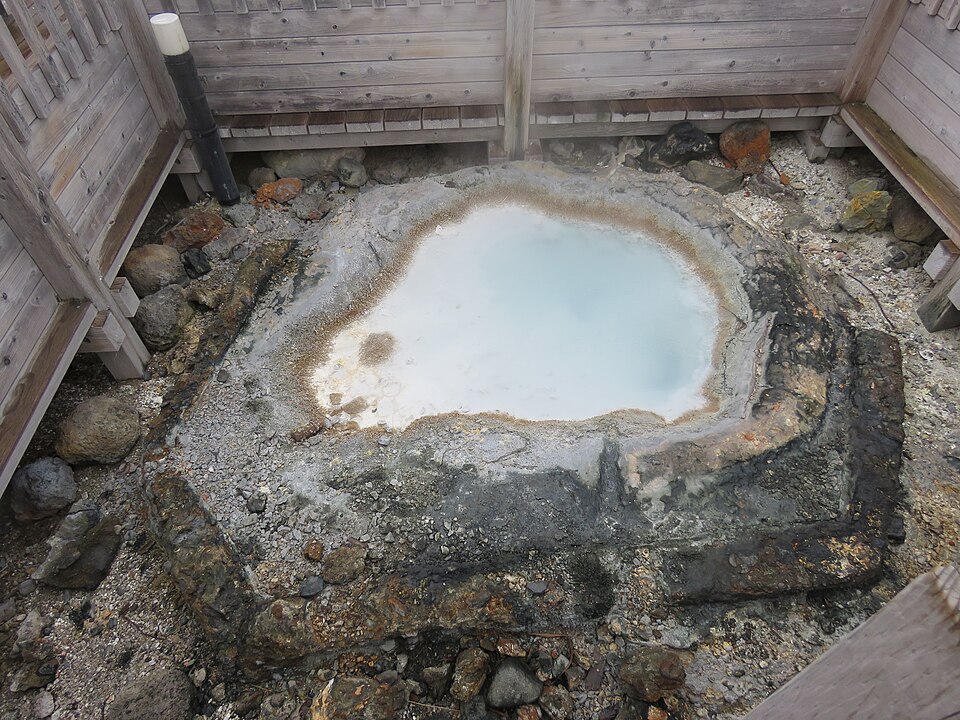
The valley occupies the center of Noboribetsu Onsen in Hokkaido. Jigokudani translates as Hell Valley. The crater covers 11 hectares and releases roughly 10,000 tonnes of hot spring water each day. Fumaroles vent steam across the floor of the valley, boiling pools bubble at the surface, and the surrounding cliffs carry heavy mineral staining. A walking path winds through the area in about 20 minutes and is open to all visitors at no cost. It ranks among the most striking landscapes accessible on foot anywhere in Japan.
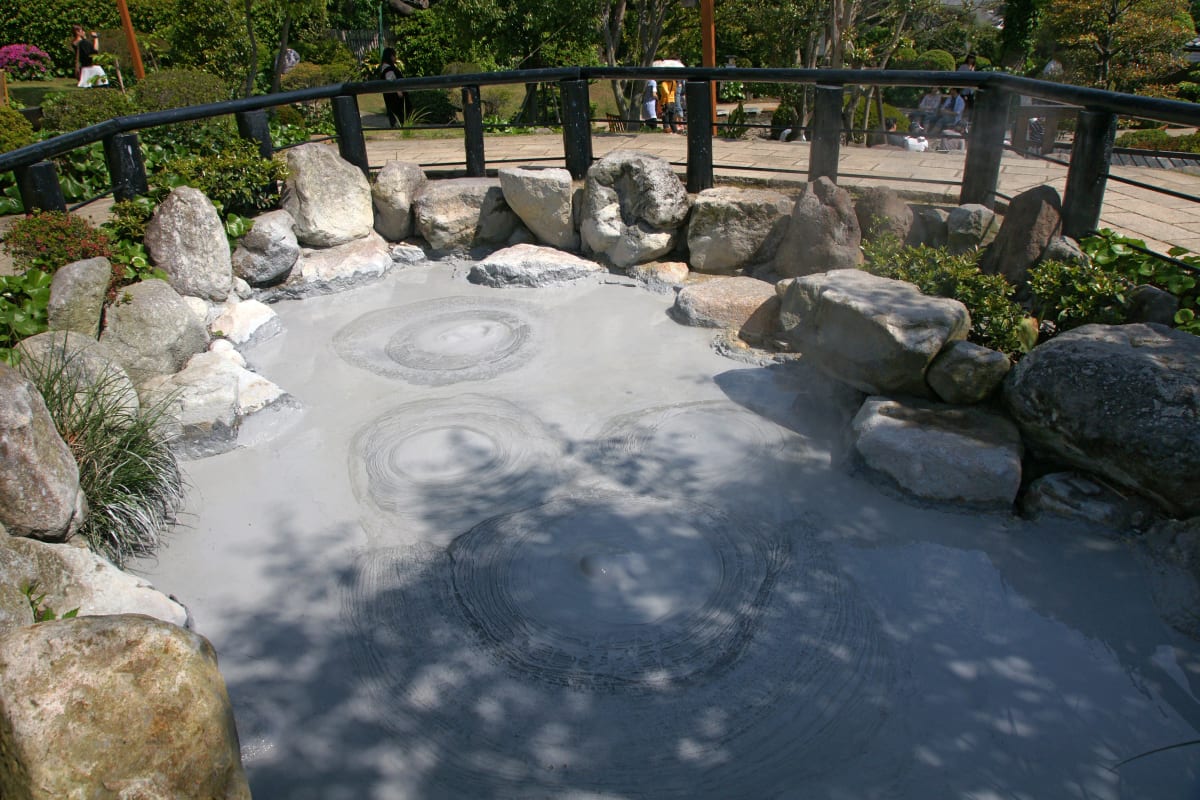
Beppu is the most geothermally active city in Japan, with more than 2,900 hot spring vents located within the city limits and eight distinct thermal spring zones collectively known as the Beppu Hatto. The variety on offer is wide, ranging from grand hotel bathhouses to modest neighborhood public facilities to the celebrated Hells, a collection of brilliantly colored boiling pools scattered across the city. The Hells run far too hot for bathing, but they draw visitors who come to walk among them and take in the spectacle.
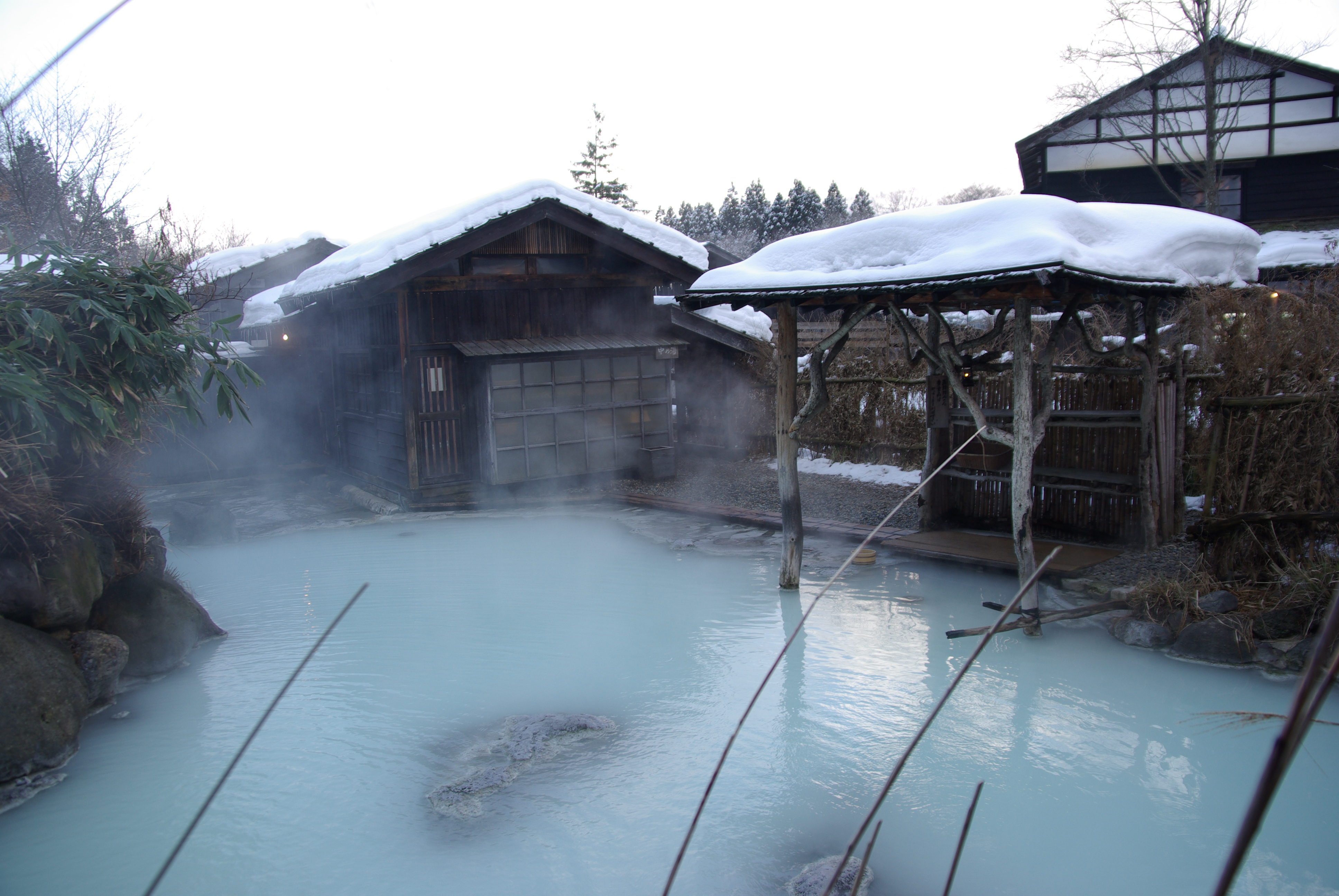
Tsuru-no-yu is the oldest of the seven inns at Nyuto, set deep in a beech forest in Akita Prefecture. The main draw is a large outdoor mixed-bathing pool fed by opaque, milky-white sulfurous water. Many regard it as the most beautiful onsen setting in Japan. People come here to put some distance between themselves and the rest of the world for a while.
One of Japan's most beloved onsen towns. Visitors put on a yukata and wooden sandals and stroll between seven public bathhouses along a willow-lined canal. The wooden bridges, stone walkways, and traditional inn facades have barely changed in a century. The town is built for wandering.
Amenities
Getting there
From Osaka: Kobe Municipal Subway + Kobe Electric Railway
Gateway: Arima Onsen
Walk to bathhouse
Total journey: 35 min
From Shin-Kobe Station, take the Kobe Municipal Subway Seishin-Yamate Line to Tanigami Station, then transfer to the Kobe Dentetsu Arima Line via Arimaguchi to Arima Onsen Station. The total journey takes about 40 minutes. From Osaka Umeda, direct buses to Arima take about 75 minutes.
Location & nearby
Arima Onsen, Arimacho, Kita Ward, Kobe, Hyogo 651-1401
Make a day of it
Pair your soak with these nearby spots.
Attraction
Arimaonsengai
0.0km away
Attraction
Arima onsen
0.0km away
Park
Kirin Beverage
0.1km away
Attraction
Kittebunka Museum
0.3km away
Attraction
Onsen Shrine
0.3km away
Park
Atagoyama Park
0.4km away
More springs in Kansai
One of Japan's most beloved onsen towns. Visitors put on a yukata and wooden sandals and stroll between seven public bathhouses along a willow-lined canal. The wooden bridges, stone walkways, and traditional inn facades have barely changed in a century. The town is built for wandering.
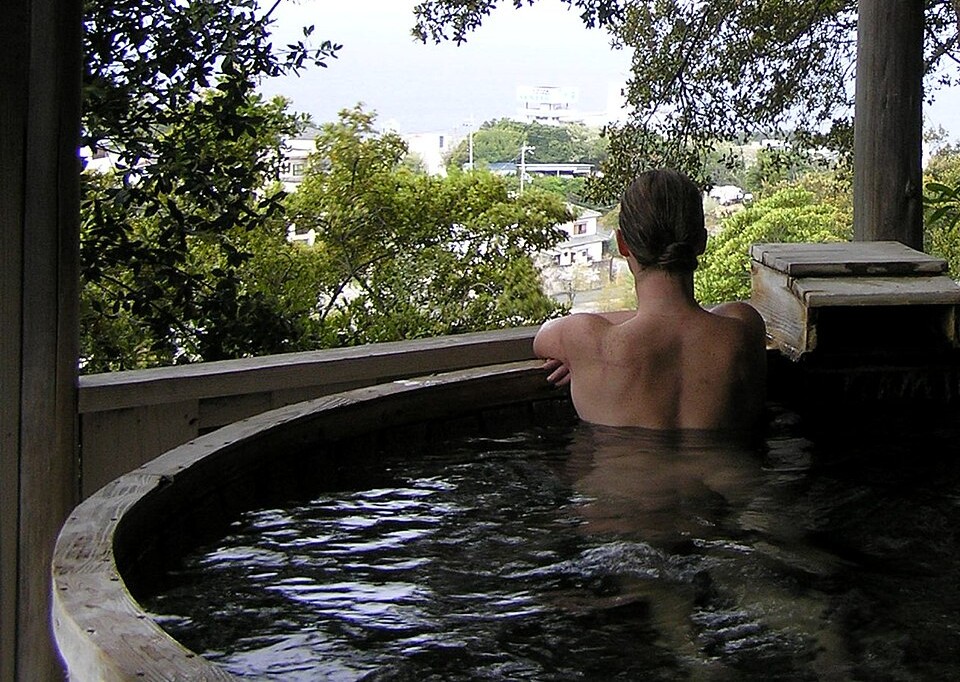
An old coastal resort town where hot springs meet the Pacific. The white-sand beach and dramatic rock formations create a setting unlike most onsen destinations. The ancient outdoor baths of Saki-no-Yu sit directly above the ocean. You soak while watching the waves crash below you.
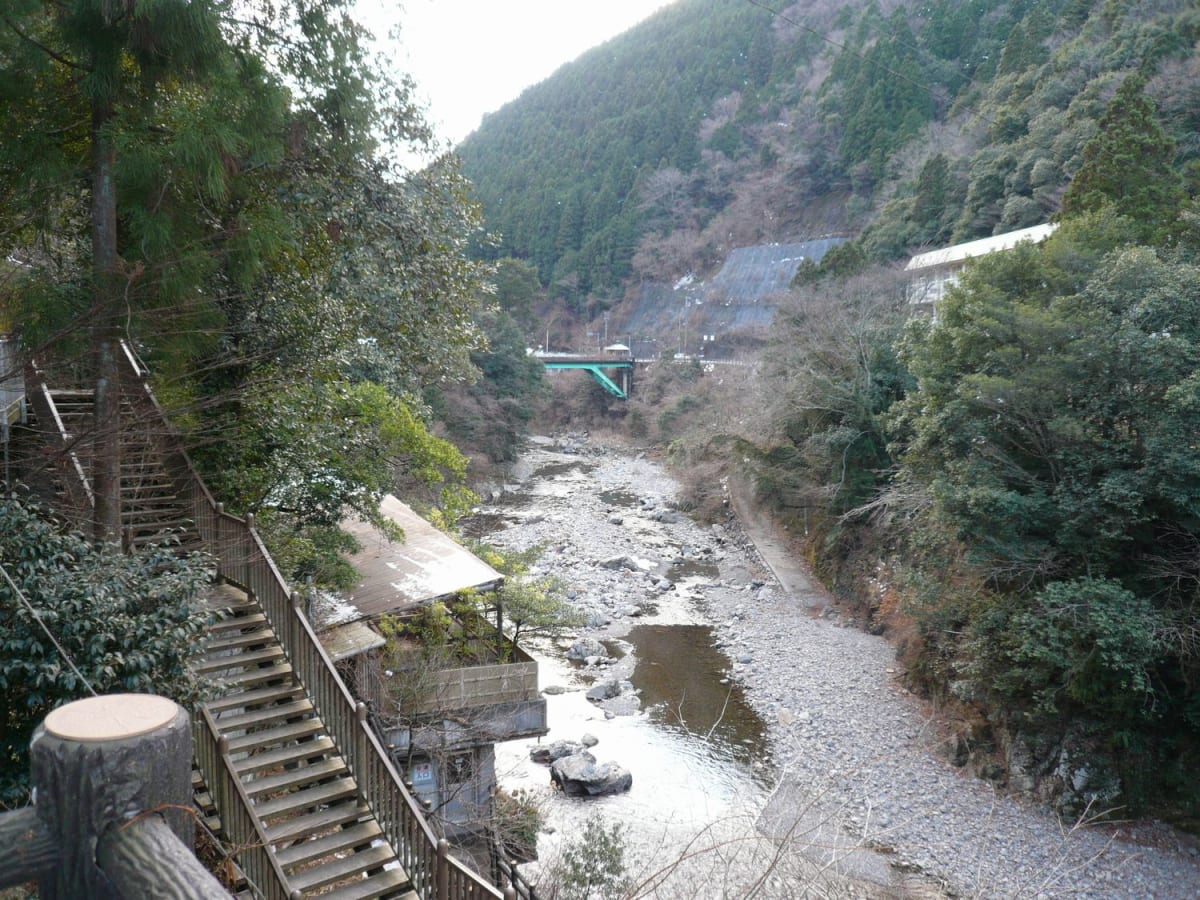
Ryujin Onsen sits in a narrow gorge carved through the Kii Mountains of Wakayama Prefecture, roughly 90 minutes from the coast by bus. The water is a sodium bicarbonate spring measuring pH 9.9, making it one of Japan's most alkaline, and it has long been regarded as one of the country's finest springs for beautifying the skin. Two ryokan, Kamigoten and Shimogoten, have operated in this gorge since the seventeenth century.
Common questions
What is the water temperature at Arima Onsen?▾
The water temperature at Arima Onsen ranges up to 98°C (minimum around 34°C).
Is Arima Onsen free to visit?▾
Arima Onsen charges an entrance fee in JPY.
Is Arima Onsen a public or private bath?▾
Arima Onsen is a public bathing spring.
Are tattoos allowed at Arima Onsen?▾
Tattoo policy varies at Arima Onsen. Check ahead of your visit.
What is the nearest station to Arima Onsen?▾
The nearest station to Arima Onsen is Arima Onsen, about 0.1km away.