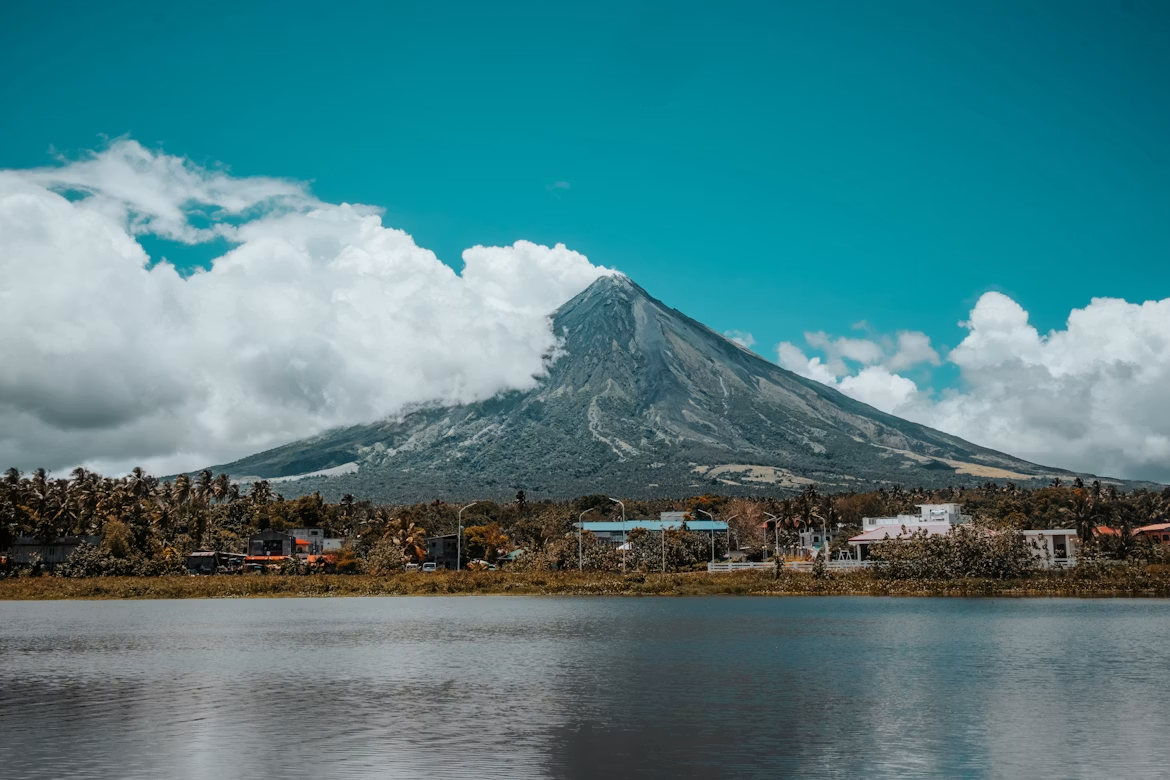
The Pacific Ring of Fire is the most volcanically active region on the planet, a horseshoe of fault lines and volcanoes wrapping the Pacific Ocean. It is responsible for a lot of earthquakes. It is also responsible for an extraordinary number of hot springs, because the same heat that drives the volcanoes warms the groundwater that surfaces as thermal pools.
Four countries along the western arc of that ring have built very different bathing cultures on top of the same geology. Here is what each one does, and what makes it worth a trip.
Japan: the spiritual home of bathing


SpringsAtlas may earn a commission, at no extra cost to you.
No country has turned hot springs into an art form like Japan. The onsen is woven into daily life, with thousands of springs feeding everything from grand historic ryokan to tiny free village baths. The etiquette is precise. You wash thoroughly before entering, you soak naked, and you keep the water pristine.
The variety is staggering. There is the milky sulfur water of the mountains, the acidic springs hot enough to demand short dips, the snow-viewing rotenburo of Hokkaido, and the seaside baths of Kyushu. If you want depth of culture and sheer number of choices, Japan is unmatched.
Taiwan: a quiet blend of influences
Taiwan inherited much of its bathing culture from the Japanese colonial period, then made it its own. The springs around Beitou in Taipei are easy and historic, but the island rewards going further, to the forest gorge of Wulai or the clear beauty waters of Jiaoxi in Yilan.
Taiwan also has unusual springs that stand out anywhere, including the rare seabed hot spring on Green Island and the therapeutic mud springs of Guanziling. It is compact, accessible, and far less crowded than Japan.
Indonesia: raw and volcanic
Indonesia sits on one of the densest concentrations of volcanoes in the world, and its hot springs feel closer to the source. Many are sulfurous and dramatic, set against active peaks. On Bali you can soak at Toya Bungkah on the shore of Lake Batur, facing the volcano you may have just hiked at dawn, or find quieter natural pools like Angseri hidden in a rice-terrace canyon.
Java pushes the drama further, from the highland resorts of Guci and Ciater to Cisolok, the only natural geyser in the country, where hot water erupts straight out of a riverbed. Indonesia is the place to go when you want your hot spring to feel like the planet doing something powerful right in front of you.
The Philippines: soaking in the tropics
The Philippines rounds out the arc with a warm, laid-back take on the hot spring. Around Laguna and Los Banos, at the foot of Mount Makiling, resort springs have drawn weekenders from Manila for generations. Head into the highlands and the experience shifts to cooler air and quieter pools.
The Philippine approach is less about strict ritual and more about easy, social relaxation, often combined with the country's natural warmth and hospitality.
The numbers tell a cultural story
When we look at the hot springs documented in our own directory across these four countries, a clear pattern emerges. These are the springs we have researched and verified so far, not a national census, but even as a sample the contrast is striking.
| Country | Springs documented | Avg peak temp | Typical setting |
|---|
| Japan | 122 | 63 C | Developed onsen towns |
| Taiwan | 25 | 56 C | Resort and forest springs |
| Philippines | 19 | 43 C | Tropical resort pools |
| Indonesia | 11 | 42 C | Mostly undeveloped, volcanic |
Put the spring counts side by side and the gap is impossible to miss.
| Country | Documented hot springs |
|---|
| Japan | ████████████████████████ 122 |
| Taiwan | █████ 25 |
| Philippines | ████ 19 |
| Indonesia | ██ 11 |
Why Japan and Taiwan run so far ahead
The first instinct is to assume Japan simply has more hot springs than the tropics. Geologically that is partly true, but it is not the real reason for the gap. The deeper story is about culture and development.
Japan is a large, temperate archipelago with cold winters across much of the country. For more than a thousand years, hot water rising from the ground was not just pleasant but genuinely valuable against the cold, and an entire culture of bathing grew up around it, complete with etiquette, architecture, and town economies built on the onsen. The result is that Japan did not just have springs, it documented, named, and developed them at a scale no other country matched. Our 122 listings are a fraction of the thousands that exist.
Taiwan is the telling case in the middle. It is a single island, far smaller than Japan, yet it has developed a genuine and sophisticated soaking culture. A large part of that traces directly to the Japanese colonial period from 1895 to 1945, when Japanese bathing customs and infrastructure were introduced and took root. Taiwan inherited the template and made it its own, which is why a much smaller island still supports a dense and well-developed hot spring scene.
Why the tropics tell a different story
The Philippines and Indonesia sit on the same Ring of Fire and almost certainly have as many springs in the ground, if not more. Indonesia alone has hundreds of thermal sites. So why do our documented counts run so much lower, and why are so many of them undeveloped?
The honest answer is climate and history. These are warm, tropical island nations where there is little need to seek out hot water for warmth. Historically, communities often related to thermal springs as sacred sites, sources for steaming or cooking, or simply natural curiosities, rather than as the center of a leisure bathing ritual. Without that cultural pull, the springs were never developed, named, and catalogued the way Japan's were over the centuries.
It also reflects geography. Spread across thousands of islands, these springs are often remote and hard to reach, which slowed the kind of resort development that turns a hot spring into a destination. The few that have been developed, like Toya Bungkah on Lake Batur or the Laguna resorts near Manila, are popular precisely because they are the exceptions.
The upshot is a real opportunity. The tropics hold a deep, largely undeveloped reserve of hot springs that the soaking world has barely begun to explore. As travel interest grows, places like Indonesia and the Philippines may yet develop the kind of culture around their springs that Japan built over a millennium.
Same fire, four different soaks
What ties these countries together is geology. What separates them is culture. Japan offers refinement and depth, Taiwan a relaxed and varied blend, Indonesia raw volcanic drama, and the Philippines tropical ease. If you are chasing hot springs, the Ring of Fire is the single richest stretch of coastline on earth, and each of these four countries is a different doorway into the same underground heat.