
Rosoku Onsen
ローソク温泉
Rosoku Onsen
radium · Chubu
Hotter than 0% of Japan springs (n=122).
More acidic than 16% of Japan springs (n=121).
Mineral profile
Bar width reflects listing order, not measured concentration.
Suitability
About this spring
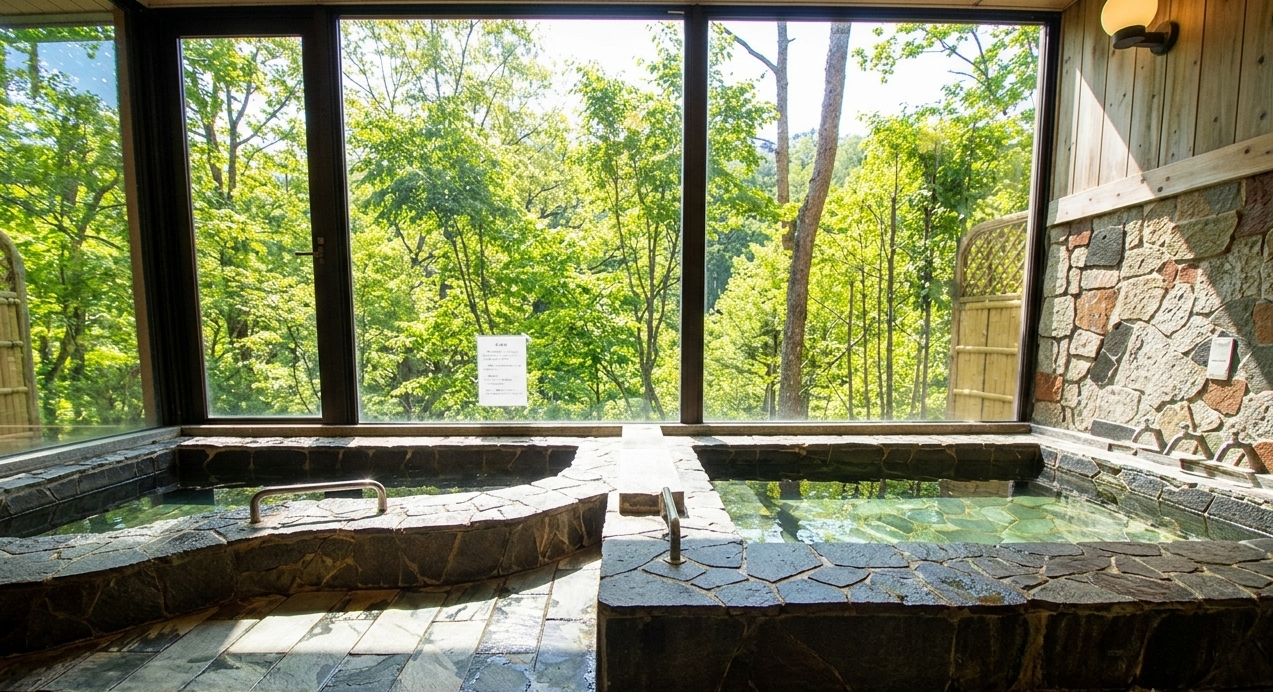
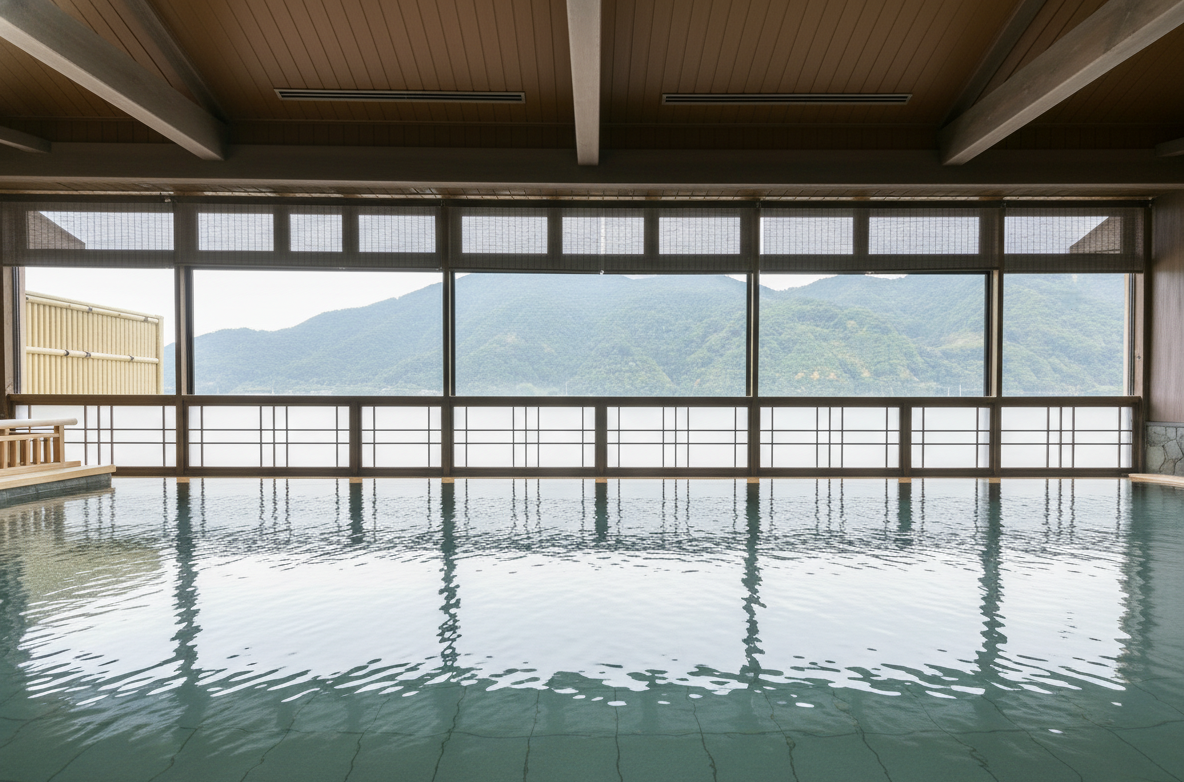
Rosoku Onsen, formally the Yunoshima Radium Mineral Spring Sanatorium (湯之島ラジウム鉱泉保養所), is a radium spring and cure-stay inn in the Takayama district of Nakatsugawa, in the mountains of Gifu Prefecture. The operator describes the water as among the richest in radium in Japan, drawn from several sources on an estate of about 80,000 tsubo (roughly 26 hectares) of forest with a mountain stream and walking paths. The spring is classed as a simple radioactive spring (単純放射能泉), and the operator cites a radon content of 2,020 × 10⁻¹⁰ curie (556 Mache units) measured by a Gifu Prefectural institute.
The inn is built around toji, the traditional cure stay: bathing, drinking the water and breathing the radon-rich air, with gentle walks between soaks. Meals favour vegetables from the inn's own pesticide-free farm, river fish and mountain vegetables. Day visitors are welcome on the days the inn is open to them, which the operator publishes each month.
Highlights
History
The operator states that its No.
1 source is designated by Nakatsugawa City as an important cultural property and a place of scenic beauty. The inn presents itself as a long-standing toji (cure-stay) destination built around its radium springs.
Local guide
Day-use bathing runs 09:30 to 15:00, with the last reception at 14:00 (on the day before a closure: 09:30 to 14:00, last reception 13:00). The adult fee is ¥1,360, with a discount from 13:00; elementary-school children pay ¥400 and younger children ¥200 (tax and bathing tax included). A private room for day visitors is ¥3,000 for up to four people, plus ¥550 for each additional person.
The inn publishes the next month's open days at the start of each month on its website and official LINE account. It is closed on the days marked, and Thursday and Friday are accommodation-only; the home page says Wednesday to Friday are accommodation-only from August, so check the calendar before you travel. Overnight stays are about ¥12,415 to ¥14,010 per person with two meals, booked by phone or LINE only (no online or fax booking).
Tattoos are welcome: the operator says it has never turned away bathers with them. Its bathing advice is about ten minutes per soak, two or three times a day, with an hour or more of rest afterwards, and to avoid bathing straight after a meal, alcohol or hard exercise.
Mineral chemistry
Radium or radon springs are a recognised therapeutic category in several countries. At the low concentrations found in natural springs, exposure is associated with hormesis, a mild beneficial stress response.
Radon concentrations in natural hot springs are far below levels associated with health risk. Those who are pregnant should consult a doctor before bathing.
Similar springs

Arima Onsen sits in the hills above Kobe, close to Mount Rokko, and ranks among the oldest hot spring towns in Japan. The town draws visitors for two entirely different spring types that coexist within its compact footprint. Kinsen is the iron-rich golden water that stains surrounding rocks a rusty orange, while ginsen runs clear and carries both carbonation and mild radioactivity. Few other onsen destinations in Japan bring together two such distinct water types within a single small town.
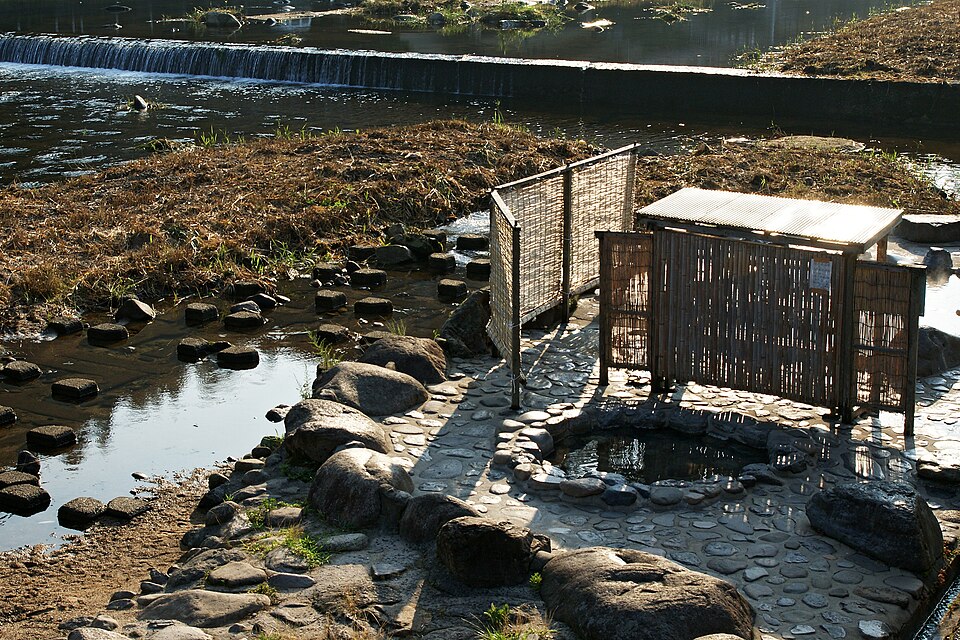
Misasa Onsen occupies a river valley at the base of Mitokusan, a sacred mountain in central Tottori Prefecture. No other hot spring in the world records higher natural concentrations of radon and radium, a fact that earned the area international scientific recognition at the Paris Exposition in the early twentieth century. Each year the town hosts a Marie Curie festival to honor the scientist credited with isolating and naming radium.
Amenities
Getting there
Rosoku Onsen is in the Takayama district of Nakatsugawa, in the mountains of Gifu. Overnight guests can ask for the operator's shuttle bus from Ena Station (JR Chuo Line) when they book; the operator asks for a week's notice so a driver can be arranged. For a day visit, plan to arrive by car or arrange your own transport, and check the inn's calendar first because day-use is not offered every day.
Location & nearby
2200-2 Takayama, Nakatsugawa, Gifu 508-0204
More springs in Chubu
 FREE
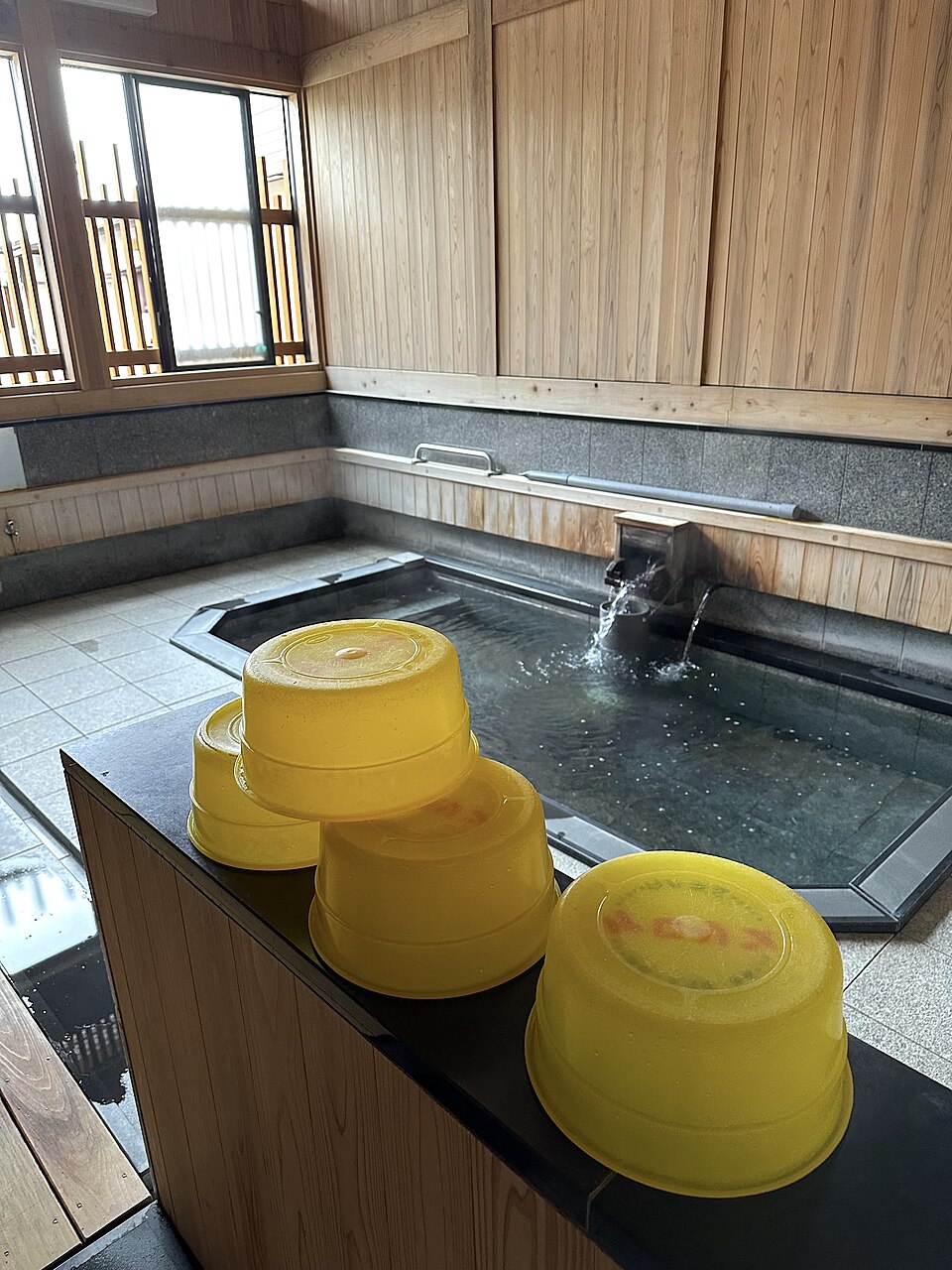
FREENozawa Onsen is a traditional village in Nagano Prefecture that maintains 13 free public bathhouses open to visitors and residents alike. These bathhouses, known as soto-yu, have been overseen by neighborhood cooperatives called yunakama for close to four centuries. The village also contains world-class ski slopes, a pairing that is genuinely uncommon anywhere in the world.
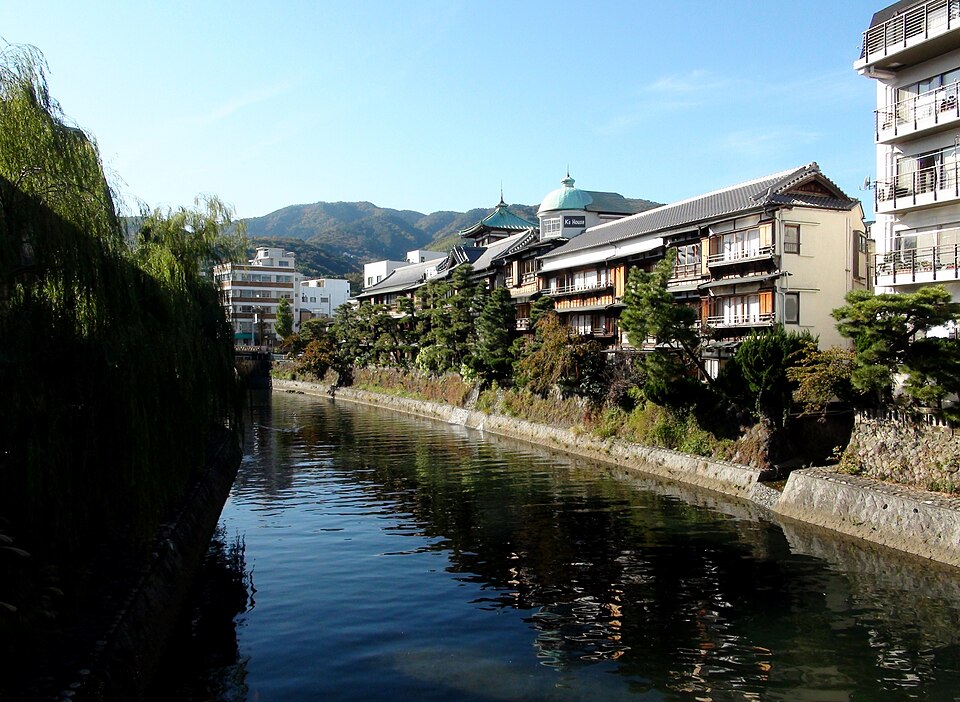
Ito sits along the eastern shore of the Izu Peninsula, facing the ocean and ranking among Japan's most productive hot spring districts by volume. More than 1,500 individual springs feed the town's supply, together pushing out around 30,000 kiloliters of water each day. Palm-lined avenues, tropical parks, and botanical gardens set the tone here, giving Ito a resort atmosphere that reads as distinctly its own compared to inland onsen destinations.
A mountain town in Niigata Prefecture famous for heavy snowfall and a unique sake-infused bath. After a day on the ski slopes, visitors soak in outdoor baths while snow falls silently around them. The town is also the setting of one of Japan's greatest novels.
Common questions
What is the water temperature at Rosoku Onsen?▾
The water temperature at Rosoku Onsen ranges up to 14°C (minimum around 13°C).
Is Rosoku Onsen free to visit?▾
Rosoku Onsen charges an entrance fee in JPY.
Is Rosoku Onsen a public or private bath?▾
Rosoku Onsen is a public bathing spring.
Are tattoos allowed at Rosoku Onsen?▾
Yes, Rosoku Onsen welcomes visitors with tattoos.
What is the nearest station to Rosoku Onsen?▾
The nearest station to Rosoku Onsen is Ena Station.