
Nagayu Onsen
長湯温泉
Nagayu Onsen
carbon-dioxide · Kyushu
Hotter than 24% of Japan springs (n=122).
More acidic than 31% of Japan springs (n=121).
Mineral profile
Bar width reflects listing order, not measured concentration.
Suitability
At a glance
Getting there
Easy — under 1km from a station
Cost
Moderate
About this spring
Nagayu Onsen is a compact hot spring settlement tucked into the mountains of Taketa City, in central Oita Prefecture. The springs hold the highest concentration of dissolved carbon dioxide found in any thermal spring in Japan. Bathers entering the water notice fine bubbles gathering across their skin almost immediately, and this carbonation defines the experience here more than anything else. The town maintains a sister-city partnership with Bad Krozingen in Germany, a spa community with a similarly long therapeutic tradition.
Highlights
History
Therapeutic use of the springs dates back to at least the eighth century.
During the Edo period, the Oka clan of Bungo took an active interest in the baths and constructed a dedicated bathing facility reserved for the feudal lord. That patronage lifted Nagayu from a local curative site to a place of recognized institutional standing. The unusual degree of carbonation in the water eventually caught German notice and brought about the sister-city arrangement with Bad Krozingen in Baden-Württemberg. Drinking the spring water has traditionally been recommended for gastrointestinal and circulatory complaints.
Local guide
Nagayu is not on the way to anything else, which is probably why it has stayed exactly itself. You reach it by local bus from Yufuin or Beppu, following small roads through Oita's southern highlands until the valley narrows and a cluster of low wooden buildings appears along a rushing river. There is no grand gateway, no themed entrance plaza, no neon. What there is, before you even find your inn, is a public tap beside the road with a small sign inviting you to drink from it. The water that comes out is cold, slightly fizzy on your tongue, and faintly earthy. This is the first clue that Nagayu's springs are doing something chemically unusual.
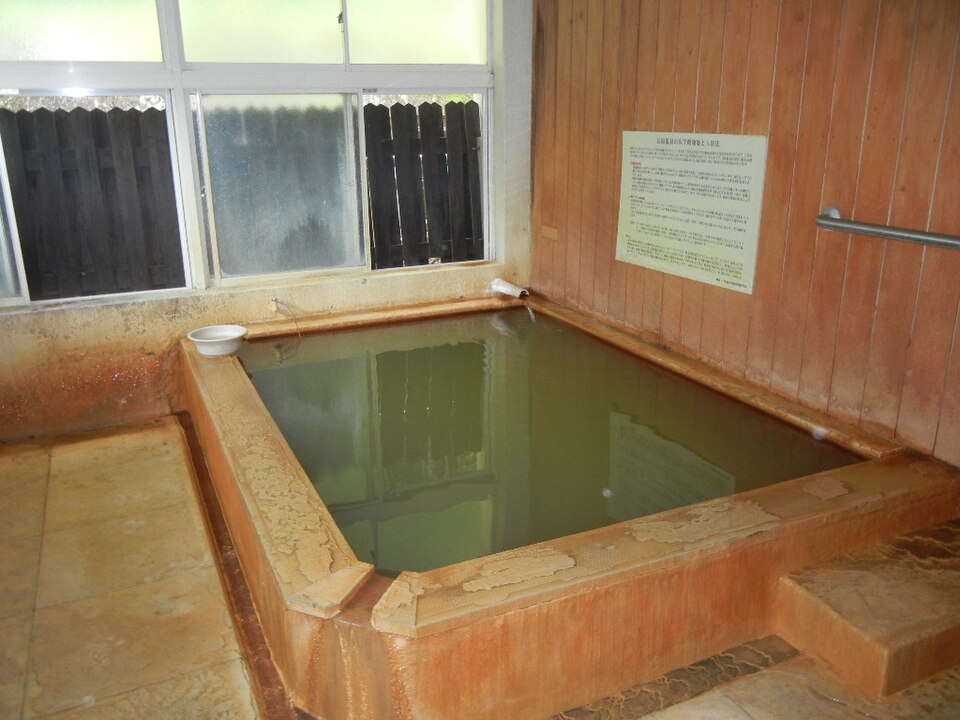
Nagayu holds the highest natural concentration of dissolved carbon dioxide of any hot spring in Japan, with some sources measuring over 1,300 parts per million. When you lower yourself into one of the baths here, the experience is immediately strange and then immediately pleasant. Tiny bubbles form all over your body within about thirty seconds. They cling to the fine hairs on your arms, cluster in the crooks of your elbows, and collect in a faint effervescent haze around your skin. It feels like the water is actively paying attention to you. The CO2 causes blood vessels near the surface to dilate, which creates a warm, flushed feeling that spreads from your skin inward, and your heart rate slows in a way that feels distinct from ordinary hot spring relaxation. The water is brownish and slightly cloudy in some baths, clearer in others, and the temperature runs between 30 and 50 degrees depending on the source.
The public bath Ramunekan sits at the center of the village, its name borrowed from the Japanese word for sparkling lemonade, ramune, which is what the spring water was compared to when carbonated drinks were still exotic. The building is old and unassuming, with wooden floors and a small changing area. You pay a nominal fee, step into the bath, and within moments you have forgotten that carbonated water is something you usually drink rather than sit in. Outside the bathhouse, benches along the river path invite you to sit with a cup of the drinkable spring water and do nothing in particular.
The people who discovered the CO2 health benefits early on were German spa doctors in the nineteenth century, and there is a modest European connection to how Nagayu has been discussed in the medical literature since. But the village itself is entirely, unremarkably Japanese. A few small restaurants serve Oita's kabosu citrus in everything. The rice fields come right up to the edge of the bathhouse parking lot. The bus timetable is pinned to a post and has not changed in years. If you want a spring that actually does something physically distinct to your body and does not ask you to perform enjoyment in return, Nagayu is the correct answer.
Mineral chemistry
Water character inferred from mineral type — verify on site.
Carbonated hot springs are genuinely rare. The dissolved carbon dioxide creates micro-bubbles that cling to the skin, dilating capillaries and boosting local circulation — sometimes called "heart baths."
Carbonated springs are typically cooler than other spring types. Those with cardiovascular conditions should soak for shorter periods (10–15 minutes max) and exit slowly to avoid lightheadedness.
Bicarbonate springs cleanse and soften the skin surface, removing excess sebum without stripping the skin's acid mantle. Traditionally recommended for acne-prone skin and sensitive skin types.
Bicarbonate springs are generally among the most gentle and well-tolerated onsen types.
Similar springs
 FREE
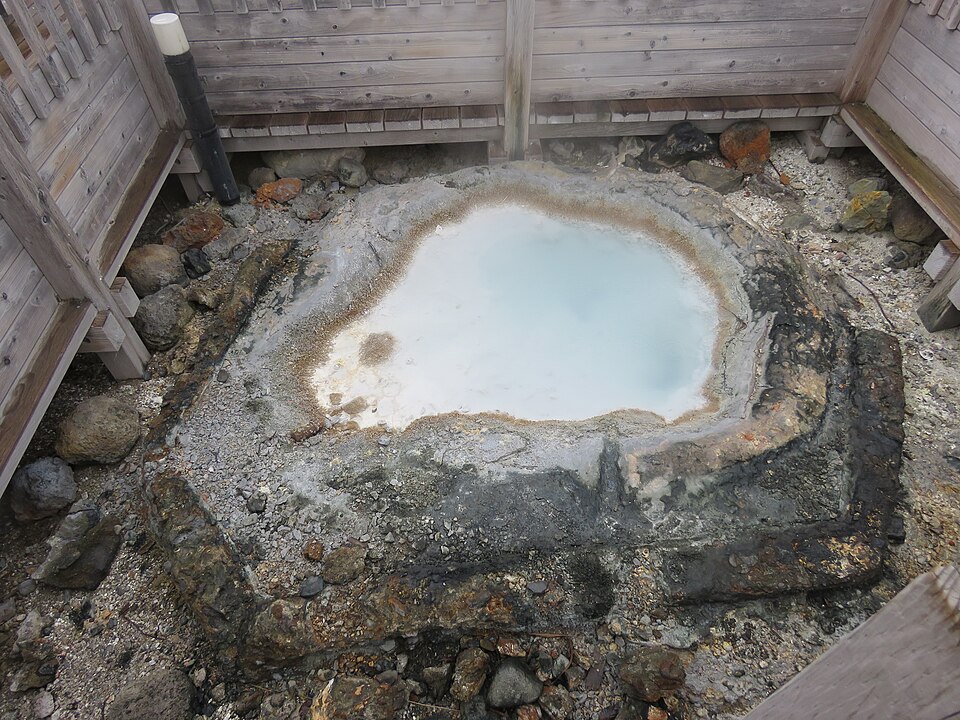
FREEThe valley occupies the center of Noboribetsu Onsen in Hokkaido. Jigokudani translates as Hell Valley. The crater covers 11 hectares and releases roughly 10,000 tonnes of hot spring water each day. Fumaroles vent steam across the floor of the valley, boiling pools bubble at the surface, and the surrounding cliffs carry heavy mineral staining. A walking path winds through the area in about 20 minutes and is open to all visitors at no cost. It ranks among the most striking landscapes accessible on foot anywhere in Japan.
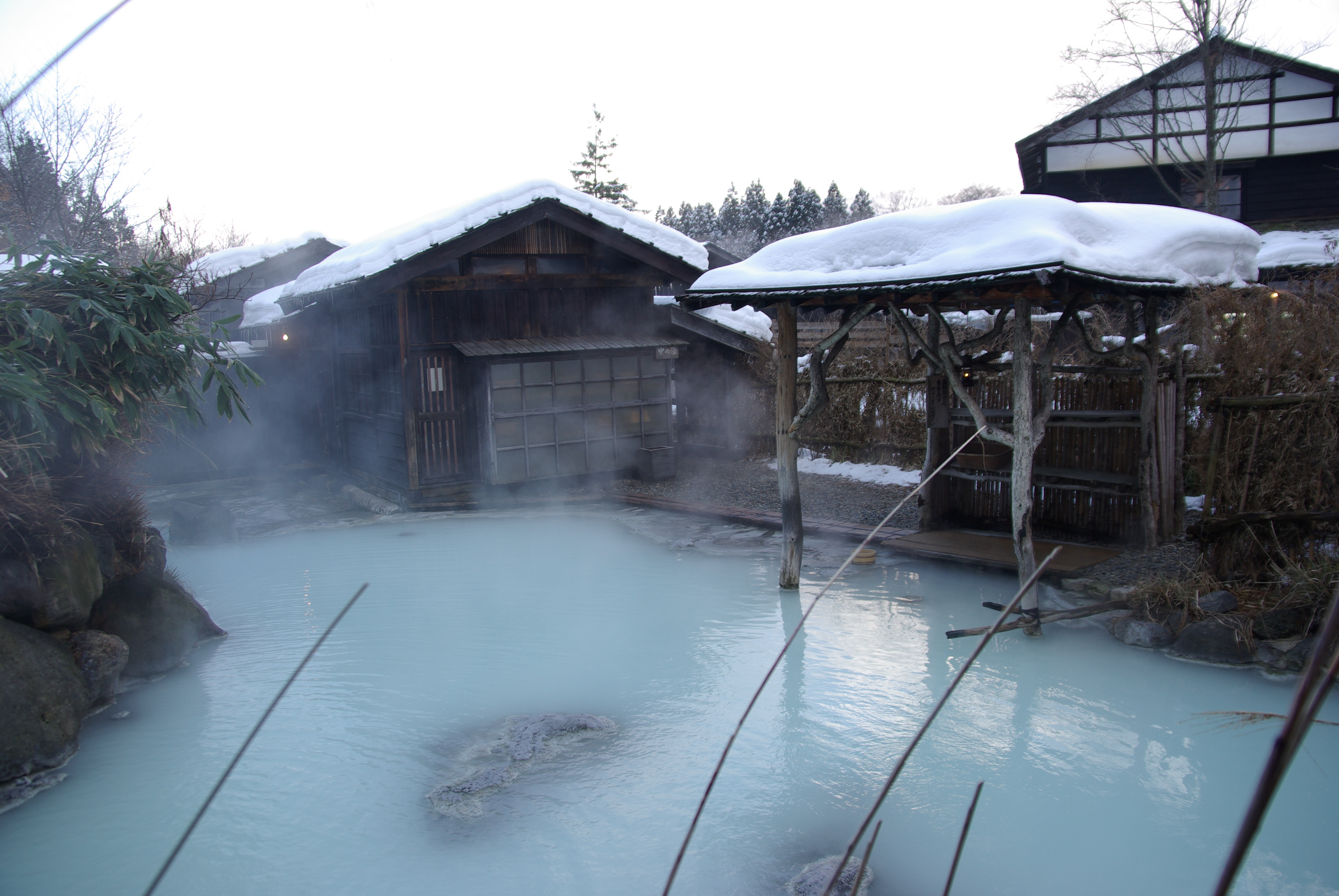
Tsuru-no-yu is the oldest of the seven inns at Nyuto, set deep in a beech forest in Akita Prefecture. The main draw is a large outdoor mixed-bathing pool fed by opaque, milky-white sulfurous water. Many regard it as the most beautiful onsen setting in Japan. People come here to put some distance between themselves and the rest of the world for a while.
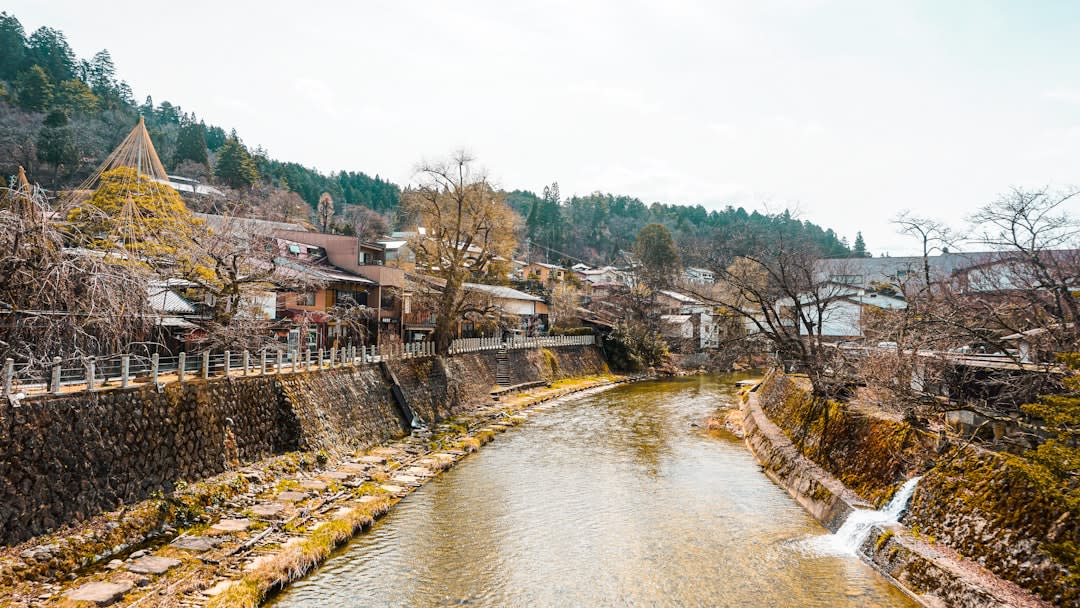
A peaceful artsy onsen town at the foot of Mt. Yufu in Oita Prefecture. The town is known for boutique galleries, craft shops, and ryokan with private outdoor baths. Lake Kinrin sits at the heart of it all. On quiet mornings, steam rises off the lake's surface in a way that seems almost designed to make you stop and stand still.
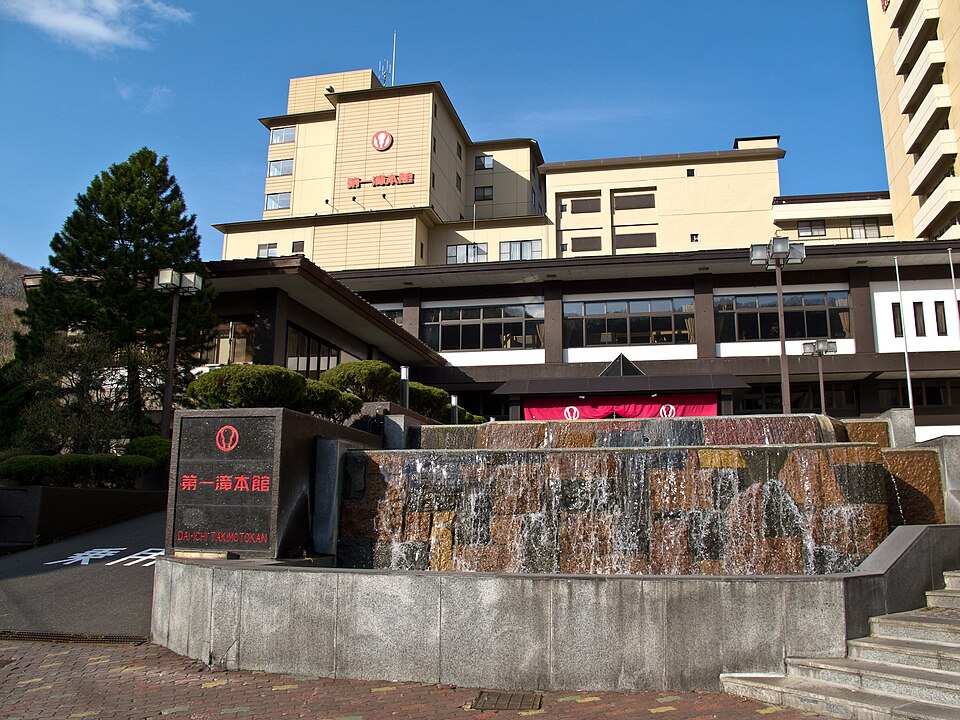
One of Hokkaido's most celebrated bathhouses. Dai-ichi Takimotokan channels water from seven distinct mineral springs into 35 pools spread across multiple floors. Indoor halls open onto outdoor rotenburo overlooking the steam-filled valley below. Day visitors are welcome without an overnight stay.
Amenities
Getting there
From Hakata, take the JR Shinkansen to Kumamoto, about 30 minutes. Then take the JR Hohi Main Line to Bungo-Taketa Station, about 1 hour 50 minutes. From Bungo-Taketa, take an Ono Taketa Bus to Michinoeki Nagayu Onsen, about 50 minutes. Weekend buses are reduced. A taxi from Bungo-Taketa covers the 14 km in about 20 minutes.
Location & nearby
Nagayu Onsen, Naoirimachi Oaza Nagayu, Taketa, Oita 878-0402
Make a day of it
Pair your soak with these nearby spots.
Attraction
Michino Station Nagayu Onsen
0.0km away
Attraction
Nagayu Onsen Sakamotogofuku Branch
0.1km away
Attraction
Nagayu Onsen Temma New
0.3km away
Attraction
Ramune Onsenkan
0.5km away
Attraction
Shizuko Onsen
0.6km away
Attraction
Nagayu Onsen Maguna
0.8km away
More springs in Kyushu
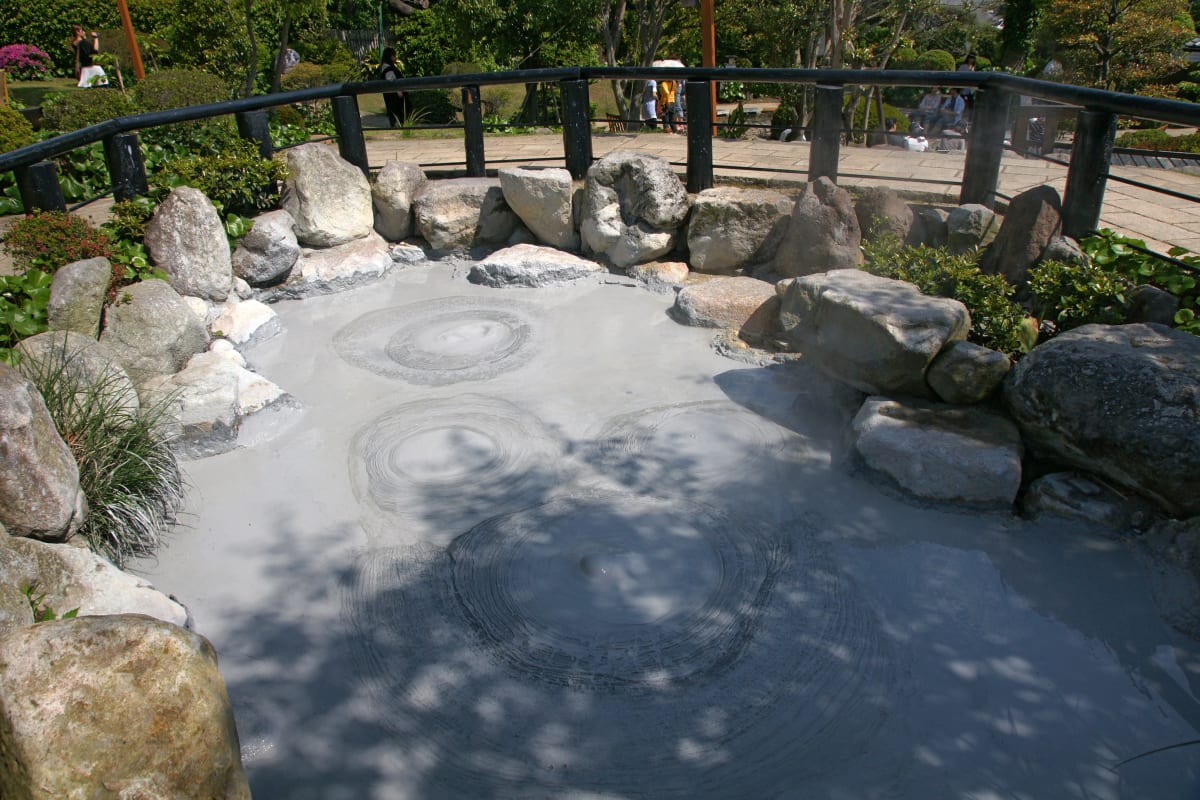
Beppu is the most geothermally active city in Japan, with more than 2,900 hot spring vents located within the city limits and eight distinct thermal spring zones collectively known as the Beppu Hatto. The variety on offer is wide, ranging from grand hotel bathhouses to modest neighborhood public facilities to the celebrated Hells, a collection of brilliantly colored boiling pools scattered across the city. The Hells run far too hot for bathing, but they draw visitors who come to walk among them and take in the spectacle.
A peaceful artsy onsen town at the foot of Mt. Yufu in Oita Prefecture. The town is known for boutique galleries, craft shops, and ryokan with private outdoor baths. Lake Kinrin sits at the heart of it all. On quiet mornings, steam rises off the lake's surface in a way that seems almost designed to make you stop and stand still.
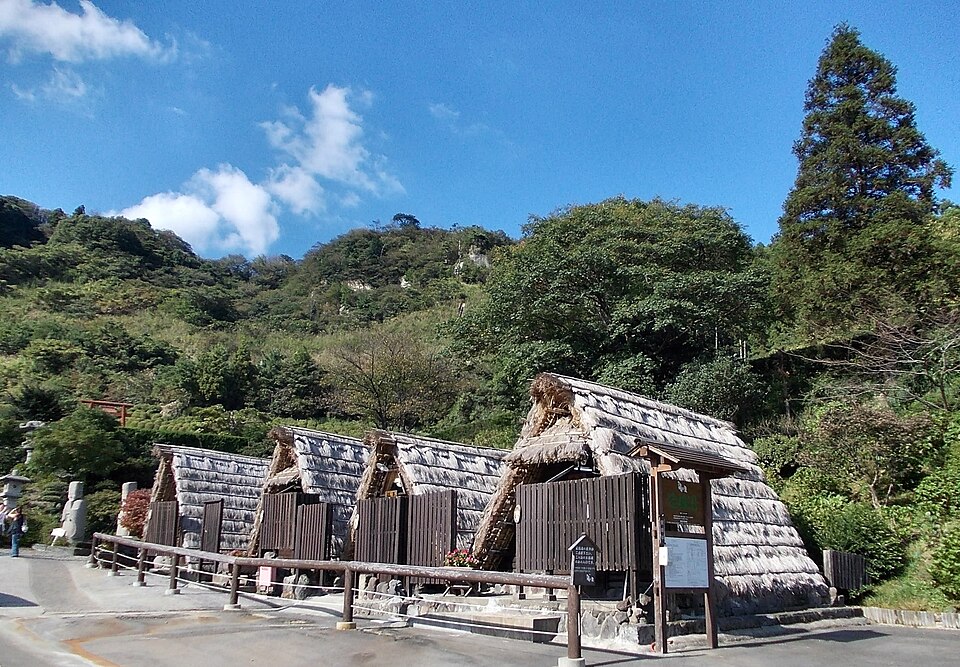
Set on a wooded slope in Beppu's Myoban district, this resort draws visitors for its yunohana, a term meaning hot spring flowers, which are white crystalline deposits that collect on surfaces where steam from the springs cools and condenses. The spring water itself is strongly sulfurous and acidic, rising at high temperatures from one of the eight volcanic source zones that make up Beppu Hatto.
Common questions
What is the water temperature at Nagayu Onsen?▾
The water temperature at Nagayu Onsen ranges up to 50°C (minimum around 30°C).
Is Nagayu Onsen free to visit?▾
Nagayu Onsen charges an entrance fee in JPY.
Is Nagayu Onsen a public or private bath?▾
Nagayu Onsen is a mixed bathing spring.
Are tattoos allowed at Nagayu Onsen?▾
Yes, Nagayu Onsen welcomes visitors with tattoos.