Beppu Onsen
別府温泉
4.4 · 4800 reviews · via Google
Beppu Onsen
sulfur · Kyushu
Hotter than 98% of Japan springs (n=122).
More acidic than 41% of Japan springs (n=121).
Mineral profile
Bar width reflects listing order, not measured concentration.
Suitability
At a glance
Getting there
Easy — under 1km from a station
Crowd level
Popular
About this spring
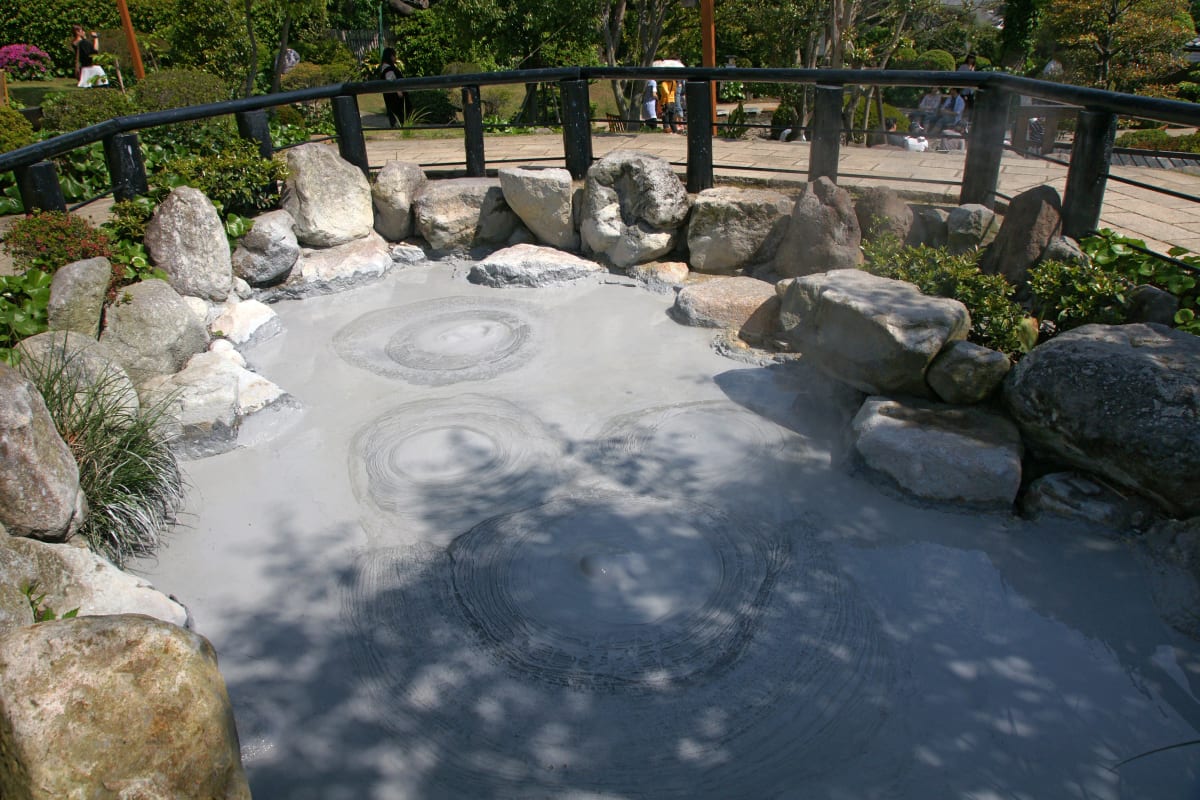
Beppu is the most geothermally active city in Japan, with more than 2,900 hot spring vents located within the city limits and eight distinct thermal spring zones collectively known as the Beppu Hatto. The variety on offer is wide, ranging from grand hotel bathhouses to modest neighborhood public facilities to the celebrated Hells, a collection of brilliantly colored boiling pools scattered across the city. The Hells run far too hot for bathing, but they draw visitors who come to walk among them and take in the spectacle.
Highlights
History
Local legends connect the springs to the deities Sukunabikona and Okuninushi.
Documents from the Kamakura period record the area as a place where wounded samurai came to heal. The Edo-period scholar Dr. Ekiken Kaibara described the springs at length in his writings, drawing broader attention to the site. During the Meiji era, the introduction of modern drilling methods expanded the number of accessible springs considerably. Following World War II, intensive development pushed Beppu to the top of Japan's hot spring destinations, a position it continues to hold.
Local guide
The JR Nippo Main Line from Kokura crosses Oita Bay and deposits you at Beppu Station with the harbor on one side and a steep green hillside on the other, every crease of which is exhaling white steam. Beppu's 2,909 thermal vents make it the second-largest hot spring discharge zone in the world, and the steam is not a tourist presentation, it rises from street drains, from gutters, from patches of bare earth between buildings, from vents in the hillside visible from the train window. The city smells like sulfur in a way that takes about ten minutes to stop noticing and then simply becomes the smell of the place.
The water across Beppu's eight distinct zones, the Beppu Hatto, covers almost the full range of spring chemistry available in Japan. The simple thermal baths in Hamawaki and Kannawa are clear and neutral, good for long soaks. The sulfur pools in Shibaseki turn a pale blue-white in deeper water. The iron pools run rust-brown. In Myoban, the water is a milky white sulfur spring that leaves a faint powdery residue on the skin. The pH across the city ranges from acid to neutral to alkaline depending on which bath you choose, meaning Beppu is less a single spring than a geological catalogue of what the earth produces when it runs hot.
The Hells, the jigoku, are the thing most visitors come to see before they bathe. Umi Jigoku in the Kannawa district is a cobalt blue pool at 98 degrees Celsius, the color coming from dissolved minerals reacting with the sky. It sits beside a pond where the waste heat keeps Amazon water lilies alive year-round, their leaves over a meter across floating on the surface in a botanical impossibility. Chinoike Jigoku, the Blood Pond, is the oldest documented hell in Japan, red from iron and magnesium, the color of diluted brick clay. Neither of these is a bathing pool, but both produce the specific sensation of standing at the edge of something genuinely dangerous and beautiful at the same time.
For the actual bathing, the network of public sento in Kannawa and Hamawaki is where Beppu operates as a real town rather than a tourist circuit. The Sunayu sand bath in Beppu Beach Park is the strangest option: attendants bury you up to the neck in black volcanic sand heated by the spring water beneath, and you lie there for ten minutes while the heat works through you from all directions. After the sand bath, even a simple hot tub feels like an extension of the ground itself.
Mineral chemistry
Water character inferred from mineral type — verify on site.
Sulfuric hot springs are among the most studied in balneology worldwide. The sulfur compounds, primarily hydrogen sulfide and thiosulfate, have documented antimicrobial and anti-inflammatory properties. Regular bathing is associated with relief from chronic skin conditions including eczema and psoriasis, as well as joint inflammation and muscle soreness. Sulfuric waters have been used therapeutically across Asia and Europe for centuries.
The distinctive rotten-egg smell dissipates quickly after leaving the bath. Avoid if you have a sulfur allergy, very sensitive skin, or respiratory conditions. Remove silver jewellery before entering — sulfur will blacken it permanently.
Sodium chloride springs, essentially natural saltwater baths, are celebrated for their warming and moisturising effects. The salt forms a thin film on the skin that slows moisture evaporation, keeping skin hydrated longer than a freshwater bath.
Those with high blood pressure or heart conditions should consult a doctor before bathing, as the warming effect increases circulation. Avoid immersing open wounds.
Iron-bearing springs are recognised by their characteristic rust-red or amber colour and metallic taste. The iron content is associated with stimulation of red blood cell production and is traditionally recommended for anaemia and fatigue recovery.
Iron springs will stain light-coloured swimwear and towels a persistent brownish-orange. Those with haemochromatosis (iron overload condition) should seek medical advice before bathing.
Simple thermal springs have lower dissolved mineral content but are valued for the pure therapeutic effect of heat immersion itself — easing muscle tension and improving circulation. Considered the gentlest introduction to hot spring bathing.
Standard precautions apply: avoid bathing within 30 minutes of eating, keep soaks to 10–15 minutes for first-timers, and hydrate before and after.
Similar springs
 FREE
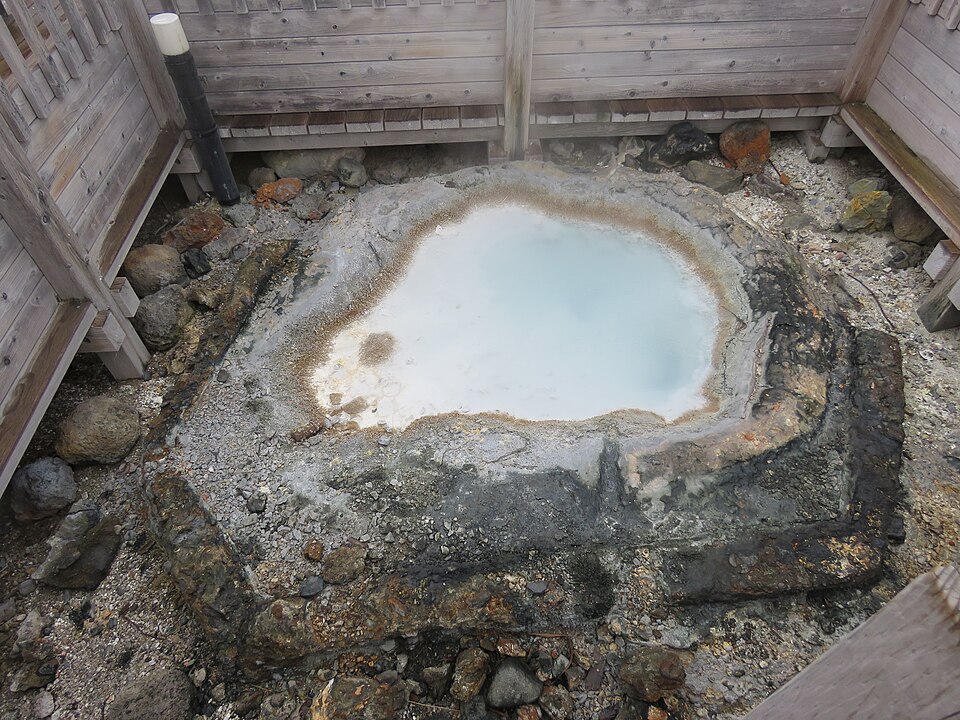
The valley occupies the center of Noboribetsu Onsen in Hokkaido. Jigokudani translates as Hell Valley. The crater covers 11 hectares and releases roughly 10,000 tonnes of hot spring water each day. Fumaroles vent steam across the floor of the valley, boiling pools bubble at the surface, and the surrounding cliffs carry heavy mineral staining. A walking path winds through the area in about 20 minutes and is open to all visitors at no cost. It ranks among the most striking landscapes accessible on foot anywhere in Japan.
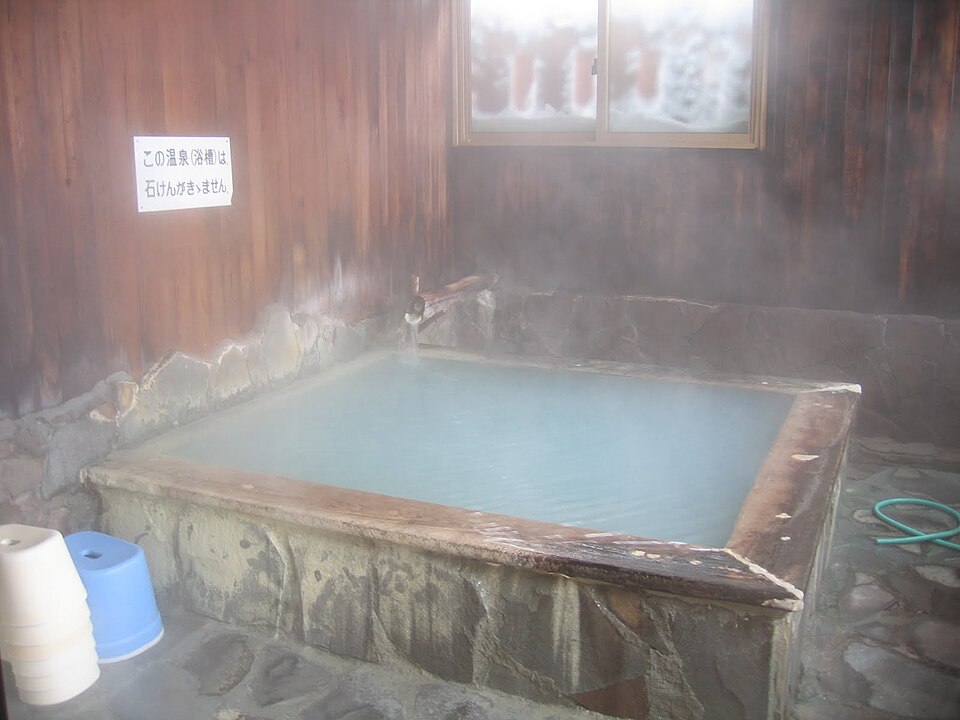
Set deep in the Hakkoda Mountains of Aomori Prefecture, Sukayu Onsen is a historic bathhouse best known for its cavernous mixed-bathing hall, the Sen-nin-buro, which translates as the Bath of a Thousand Bathers. The waters are strongly acidic, the setting is rustic and unhurried, and winter brings extraordinary snowfall to the surrounding mountains.
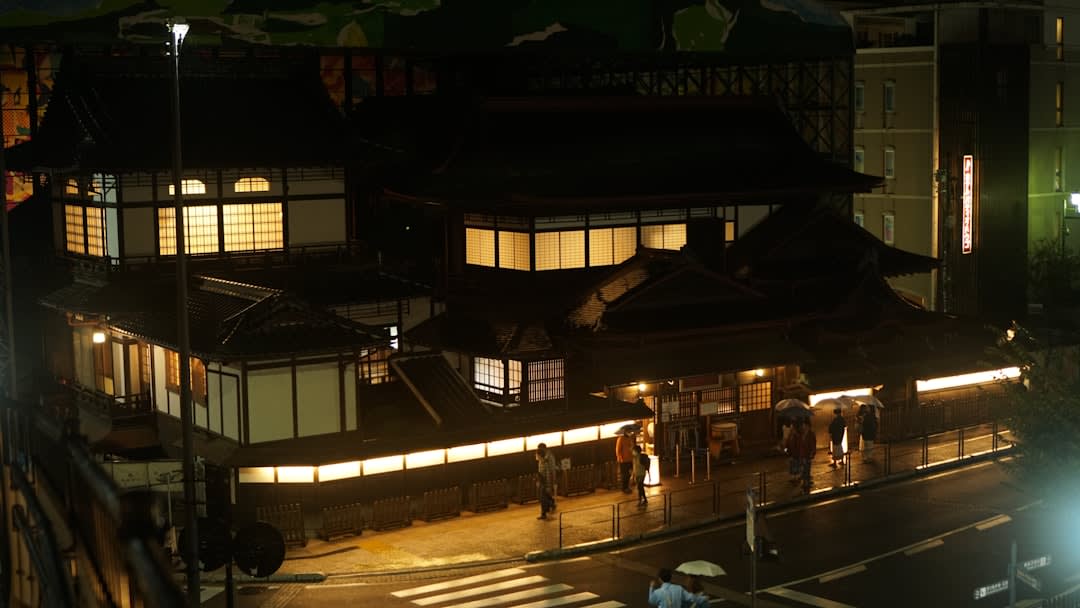
Dogo Onsen ranks among the oldest hot springs in Japan, with written records documenting its use for more than 1,300 years and oral traditions pointing back considerably further. The landmark Dogo Onsen Honkan is a three-storey wooden bathhouse finished in 1894, widely credited as the inspiration for the bathhouse depicted in Studio Ghibli's Spirited Away. The spring water is mildly alkaline and has long been valued for its ability to soften and smooth the skin.
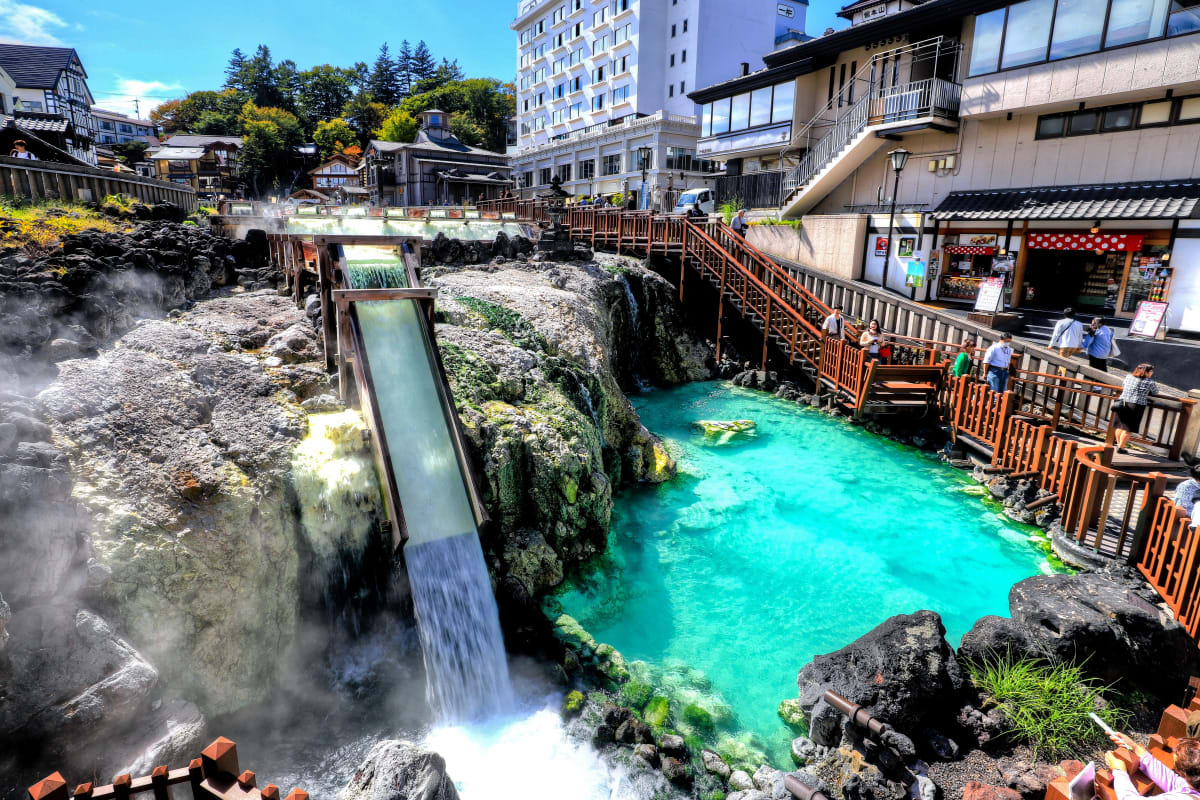 FREE
Kusatsu Onsen sits at 1,200 meters in the mountains of Gunma Prefecture and ranks among the most celebrated hot spring towns in Japan. The springs here produce more than 32,000 liters of water per minute, a volume unmatched anywhere else in the country. The water is strongly acidic and sulfurous, and its skin-healing properties have long made it legendary among visitors. Twice each day in the central town square, workers cool the scalding water by pulling long wooden paddles through it in unison while singing traditional songs. This practice is called yumomi.
Amenities
Getting there
From Fukuoka: Sanyo + Nippo Main Line
Gateway: Beppu (120 min)
Local bus to bathhouse
Total journey: 130 min
Take the JR Nippo Main Line from Kokura or Hakata to Beppu Station. Buses connect from the station to all major bath areas including Kannawa, Myoban, and Hamawaki.
Location & nearby
Beppu Onsen, Beppu, Oita
Make a day of it
Pair your soak with these nearby spots.
Attraction
Beppu Station Front Shuyu
0.1km away
Attraction
Beppua Tomyu Jiamu
0.2km away
Attraction
Tanoyu Onsen
0.2km away
Attraction
Station Front Hon
0.3km away
Attraction
Kyu Noguchi Hospital
0.3km away
Attraction
Noguchi Onsen
0.4km away
More springs in Kyushu
A peaceful artsy onsen town at the foot of Mt. Yufu in Oita Prefecture. The town is known for boutique galleries, craft shops, and ryokan with private outdoor baths. Lake Kinrin sits at the heart of it all. On quiet mornings, steam rises off the lake's surface in a way that seems almost designed to make you stop and stand still.
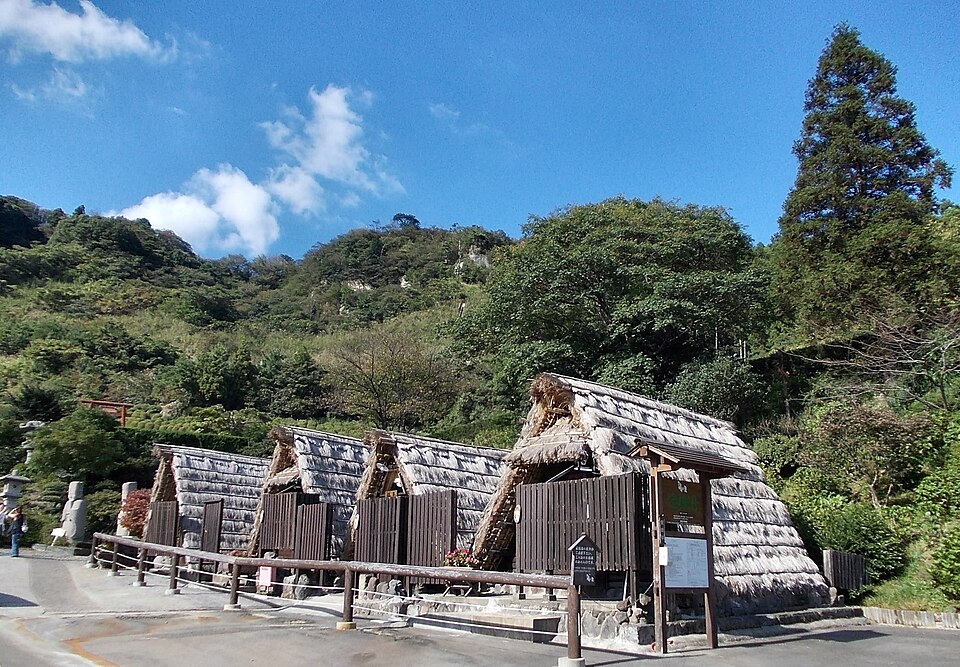
Set on a wooded slope in Beppu's Myoban district, this resort draws visitors for its yunohana, a term meaning hot spring flowers, which are white crystalline deposits that collect on surfaces where steam from the springs cools and condenses. The spring water itself is strongly sulfurous and acidic, rising at high temperatures from one of the eight volcanic source zones that make up Beppu Hatto.
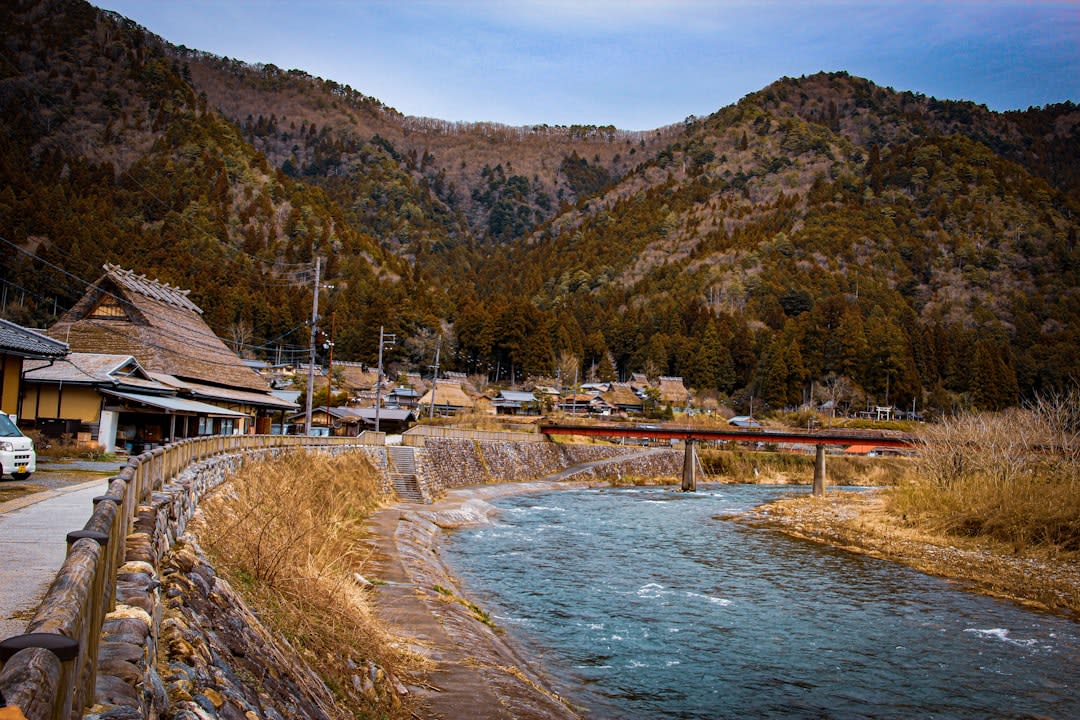
Ibusuki is a subtropical coastal city at the southern tip of Kyushu, built around natural sand baths in which bathers are buried in geothermally heated black sand. The beach stretches along the foot of Mt. Kaimon, a volcano of near-perfect conical shape. Attendants dressed in yukata guide visitors to their assigned patches of sand, lay them down, and cover them over, leaving them to look up at the open sky.
Common questions
What is the water temperature at Beppu Onsen?▾
The water temperature at Beppu Onsen ranges up to 105°C (minimum around 28°C).
Is Beppu Onsen a public or private bath?▾
Beppu Onsen is a mixed bathing spring.
Are tattoos allowed at Beppu Onsen?▾
Tattoo policy varies at Beppu Onsen. Check ahead of your visit.
What is the nearest station to Beppu Onsen?▾
The nearest station to Beppu Onsen is Beppu Eki, about 0km away.