
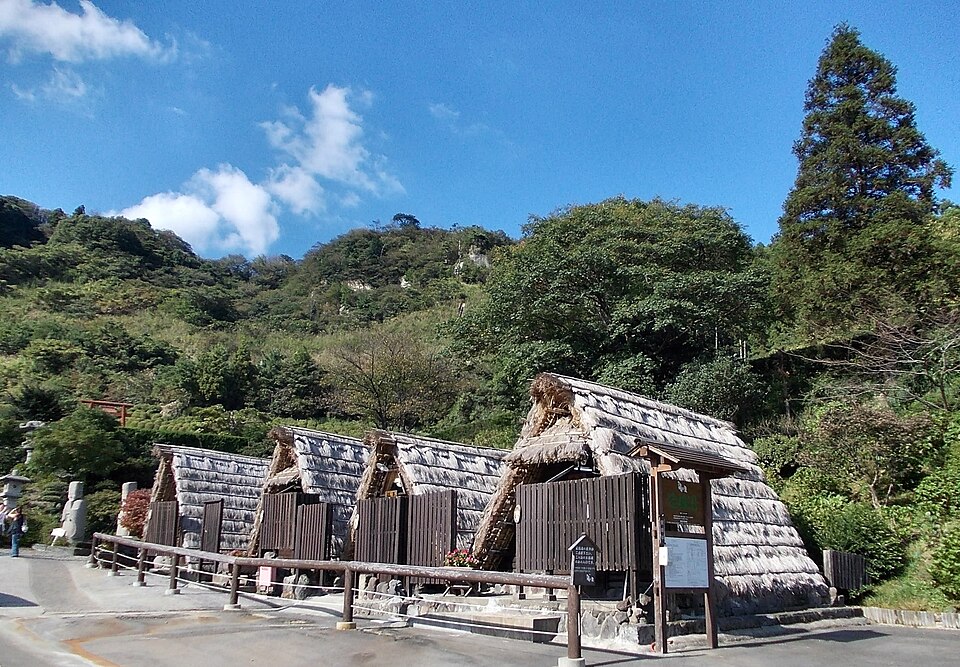
Myoban Yunosato Onsen
明礬湯の里
4.0 · 2268 reviews · via Google
Myoban Yunosato Onsen
sulfur · Kyushu
Hotter than 82% of Japan springs (n=122).
More acidic than 7% of Japan springs (n=121).
Mineral profile
Bar width reflects listing order, not measured concentration.
Suitability
At a glance
Getting there
Easy — under 1km from a station
Cost
Moderate
Crowd level
Popular
About this spring
Set on a wooded slope in Beppu's Myoban district, this resort draws visitors for its yunohana, a term meaning hot spring flowers, which are white crystalline deposits that collect on surfaces where steam from the springs cools and condenses. The spring water itself is strongly sulfurous and acidic, rising at high temperatures from one of the eight volcanic source zones that make up Beppu Hatto.
Highlights
History
Yunohana production in the Myoban district stretches back centuries.
Gatherers would collect the crystalline deposits, dry them, and sell the resulting powder as a remedy for skin conditions and digestive ailments, making this volcanic hillside an early site of medicinal commerce. Reconstructed thatched-roof huts near the main bathhouse show visitors the same collection method that local producers have practiced since the Edo period.
Local guide
Beppu station sits right on the edge of Beppu Bay and the streets immediately around it are dense with hotels, arcades, and the ordinary machinery of a busy Japanese city. But take a taxi or local bus about twenty minutes uphill into the Myoban district and the city falls away. The hillsides here are dotted with wooden structures that look almost agricultural at first glance. They have low, rounded thatched roofs and no windows to speak of, and thin threads of steam leak from their eaves in all weather. These are yugoya, steam huts, and they are doing something that has been designated a national intangible folk cultural asset. Inside them, sulphur crystals called yunohana are slowly growing on the clay floor, produced by the geothermal vapour rising through the ground, accumulating at roughly one millimeter a day before being harvested and dried over forty to sixty days.
Myoban Yunosato Onsen is set among these huts. The water here is acidic sulphur with a pH of about 2.2, and the baths are a striking milky blue-white that shifts toward pale grey depending on the light and the time of day. The sulphur smell is strong and immediate when you approach the outdoor pools, the kind of sharp eggy note that reminds you the earth is doing something serious underfoot. When you enter the bath the water feels soft on your skin at first, then develops a faint tingle that is the acidity doing its work. The water is hot, the steam rises fast, and the combination with cold mountain air makes the outdoor rotenburo feel like something you could sit in for half an hour without noticing.
The visual moment that stays with you is the sight of the yugoya from the bath itself. You are sitting in steaming blue-white water with your back to the hillside and the thatched roof structures ahead of you, wisps of steam curling from every joint and gap. It looks like a scene from a Japan that existed before electricity. The huts have been maintained in essentially this form since the Edo period, and the production method for yunohana has changed almost nothing since the 1600s. The crystals collected from the Myoban district are sold throughout Japan as bath salts, which means there is a good chance that unremarkable drugstore onsen tablet in your bathroom cabinet came from a hut on this hillside.
Myoban sits within Beppu's eight distinct spring zones, known collectively as Beppu Hatto, but it has the most particular visual identity of any of them. The mixed bathing option available at some of the pools here is one of the few remaining places in Beppu's history where rotenburo were genuinely communal rather than segregated. Getting here from central Beppu takes effort, and most tourists do not make the trip up the hill. That is their loss. The walk among the steam huts before you even change into your bathing clothes is worth the bus fare by itself.
Mineral chemistry
Sulfuric hot springs are among the most studied in balneology worldwide. The sulfur compounds, primarily hydrogen sulfide and thiosulfate, have documented antimicrobial and anti-inflammatory properties. Regular bathing is associated with relief from chronic skin conditions including eczema and psoriasis, as well as joint inflammation and muscle soreness. Sulfuric waters have been used therapeutically across Asia and Europe for centuries.
The distinctive rotten-egg smell dissipates quickly after leaving the bath. Avoid if you have a sulfur allergy, very sensitive skin, or respiratory conditions. Remove silver jewellery before entering — sulfur will blacken it permanently.
Acidic springs (pH below 6) have natural exfoliating properties. The low pH gently dissolves dead skin cells, leaving skin noticeably smoother after a soak. Strongly acidic springs (pH below 3) also carry antimicrobial effects potent enough that they have historically been used to treat skin infections.
Limit initial soaks to 3–5 minutes until you know how your skin responds. Rinse thoroughly with fresh water afterwards to neutralise the acid. Not recommended for broken skin, active eczema flare-ups, fresh tattoos, or children under 10.
Similar springs
 FREE
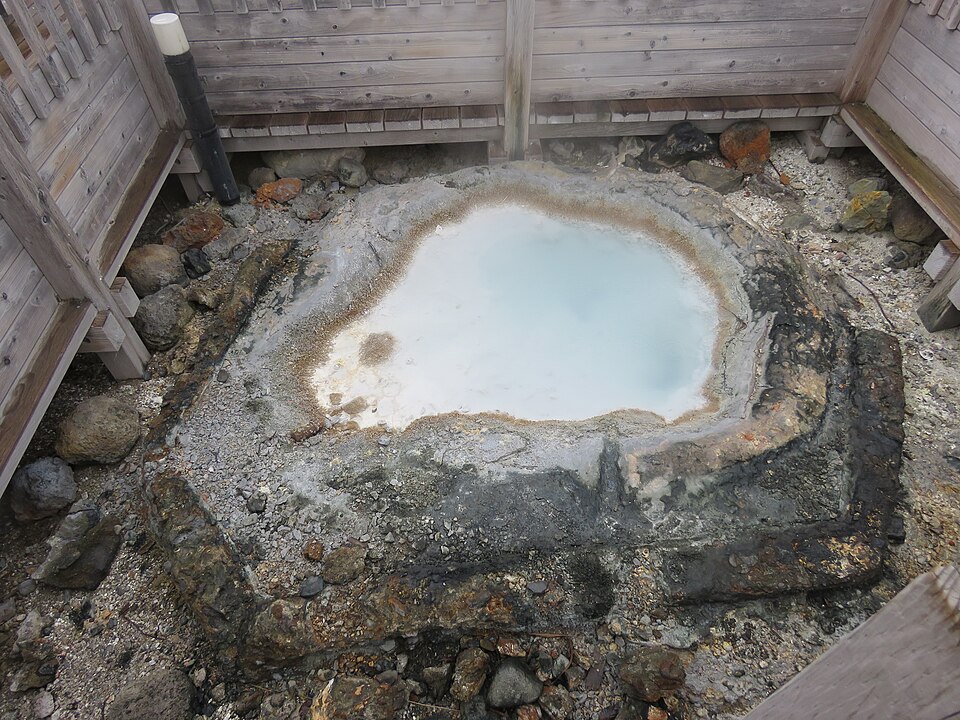
FREEThe valley occupies the center of Noboribetsu Onsen in Hokkaido. Jigokudani translates as Hell Valley. The crater covers 11 hectares and releases roughly 10,000 tonnes of hot spring water each day. Fumaroles vent steam across the floor of the valley, boiling pools bubble at the surface, and the surrounding cliffs carry heavy mineral staining. A walking path winds through the area in about 20 minutes and is open to all visitors at no cost. It ranks among the most striking landscapes accessible on foot anywhere in Japan.
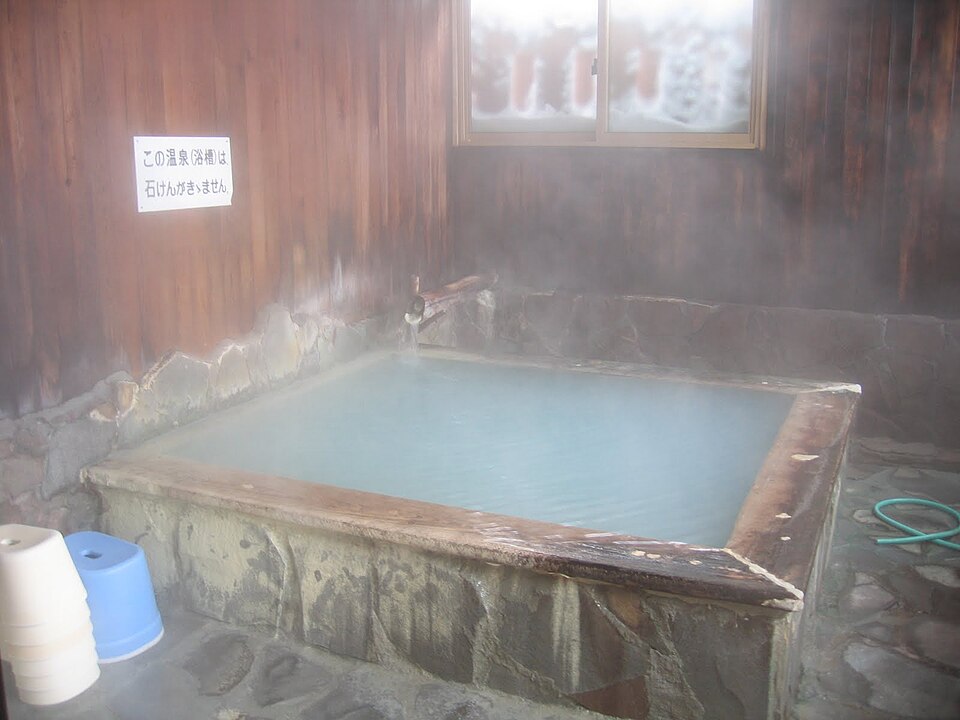
Set deep in the Hakkoda Mountains of Aomori Prefecture, Sukayu Onsen is a historic bathhouse best known for its cavernous mixed-bathing hall, the Sen-nin-buro, which translates as the Bath of a Thousand Bathers. The waters are strongly acidic, the setting is rustic and unhurried, and winter brings extraordinary snowfall to the surrounding mountains.
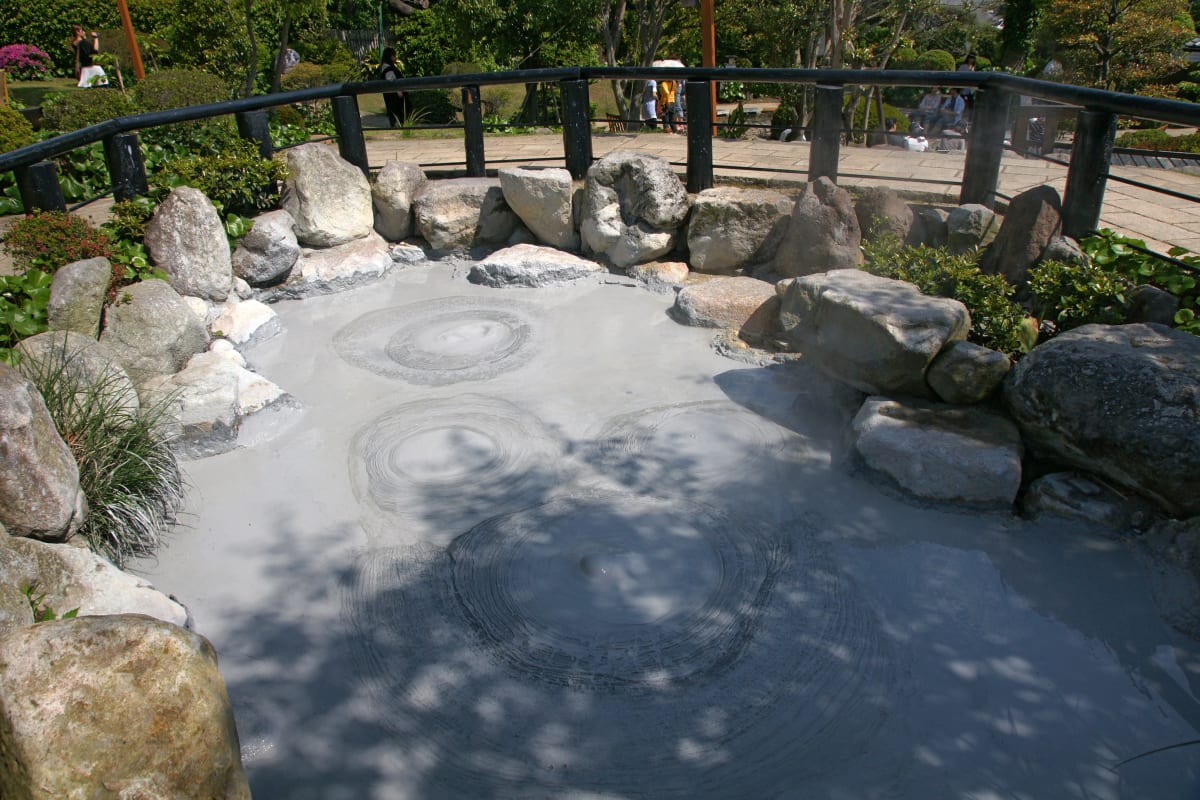
Beppu is the most geothermally active city in Japan, with more than 2,900 hot spring vents located within the city limits and eight distinct thermal spring zones collectively known as the Beppu Hatto. The variety on offer is wide, ranging from grand hotel bathhouses to modest neighborhood public facilities to the celebrated Hells, a collection of brilliantly colored boiling pools scattered across the city. The Hells run far too hot for bathing, but they draw visitors who come to walk among them and take in the spectacle.
 FREE
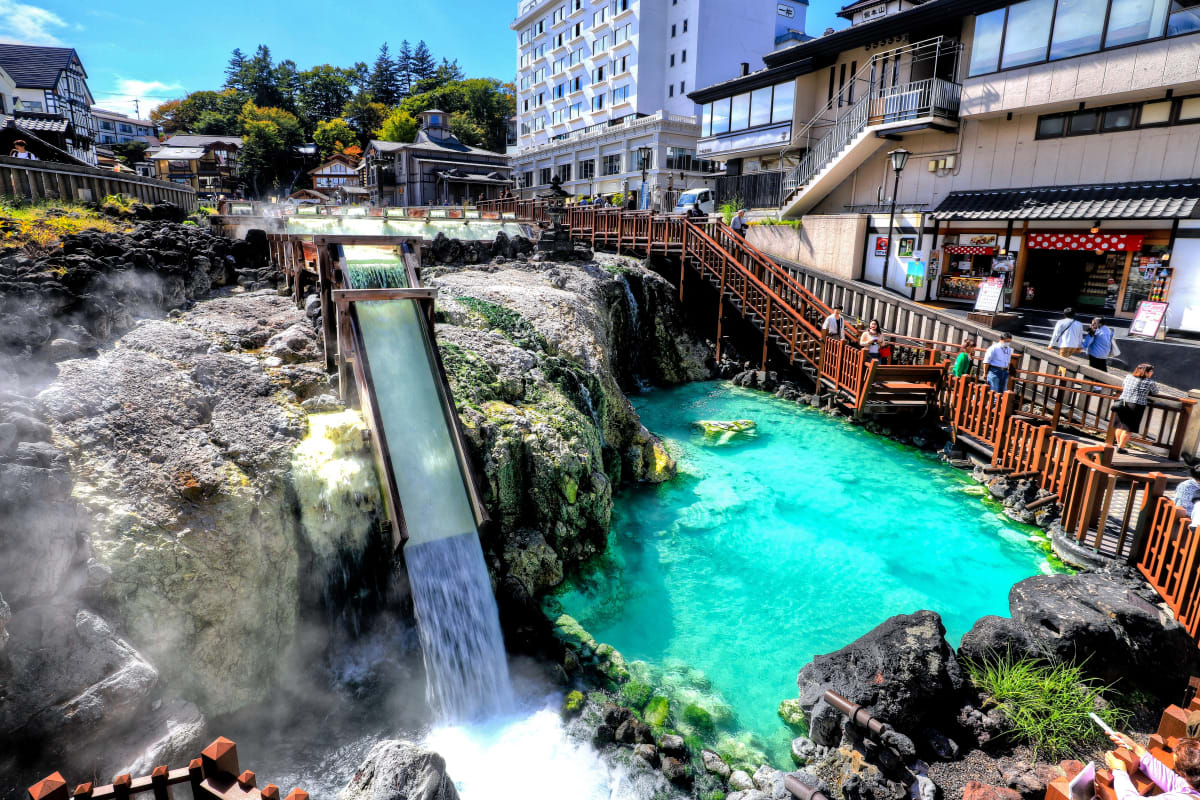
FREEKusatsu Onsen sits at 1,200 meters in the mountains of Gunma Prefecture and ranks among the most celebrated hot spring towns in Japan. The springs here produce more than 32,000 liters of water per minute, a volume unmatched anywhere else in the country. The water is strongly acidic and sulfurous, and its skin-healing properties have long made it legendary among visitors. Twice each day in the central town square, workers cool the scalding water by pulling long wooden paddles through it in unison while singing traditional songs. This practice is called yumomi.
Amenities
Getting there
From Beppu Station West Exit, take a Kamenoi Bus on route 5 or 41 bound for Ritsumeikan Asia Pacific University and alight at the Jizoyu-mae stop. The journey takes about 25 minutes. Myoban Yunosato is a short uphill walk from the bus stop.
Location & nearby
〒874-0840 大分県別府市鶴見6組
Make a day of it
Pair your soak with these nearby spots.
Attraction
Myoban Jigoku
0.2km away
Attraction
Myo Bansannoyu
0.2km away
Attraction
Yuyaebisu
0.2km away
Attraction
Yunosato Myo Ban Onsen
0.3km away
Attraction
Kazusabijin
0.6km away
Attraction
Tsurunayo
1.0km away
More springs in Kyushu
Beppu is the most geothermally active city in Japan, with more than 2,900 hot spring vents located within the city limits and eight distinct thermal spring zones collectively known as the Beppu Hatto. The variety on offer is wide, ranging from grand hotel bathhouses to modest neighborhood public facilities to the celebrated Hells, a collection of brilliantly colored boiling pools scattered across the city. The Hells run far too hot for bathing, but they draw visitors who come to walk among them and take in the spectacle.
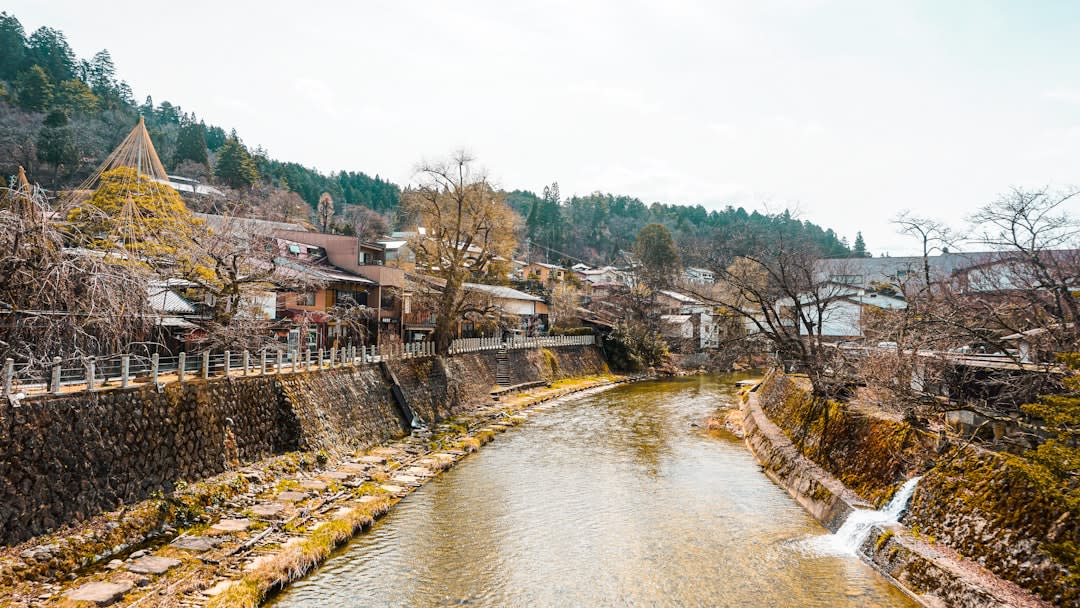
A peaceful artsy onsen town at the foot of Mt. Yufu in Oita Prefecture. The town is known for boutique galleries, craft shops, and ryokan with private outdoor baths. Lake Kinrin sits at the heart of it all. On quiet mornings, steam rises off the lake's surface in a way that seems almost designed to make you stop and stand still.
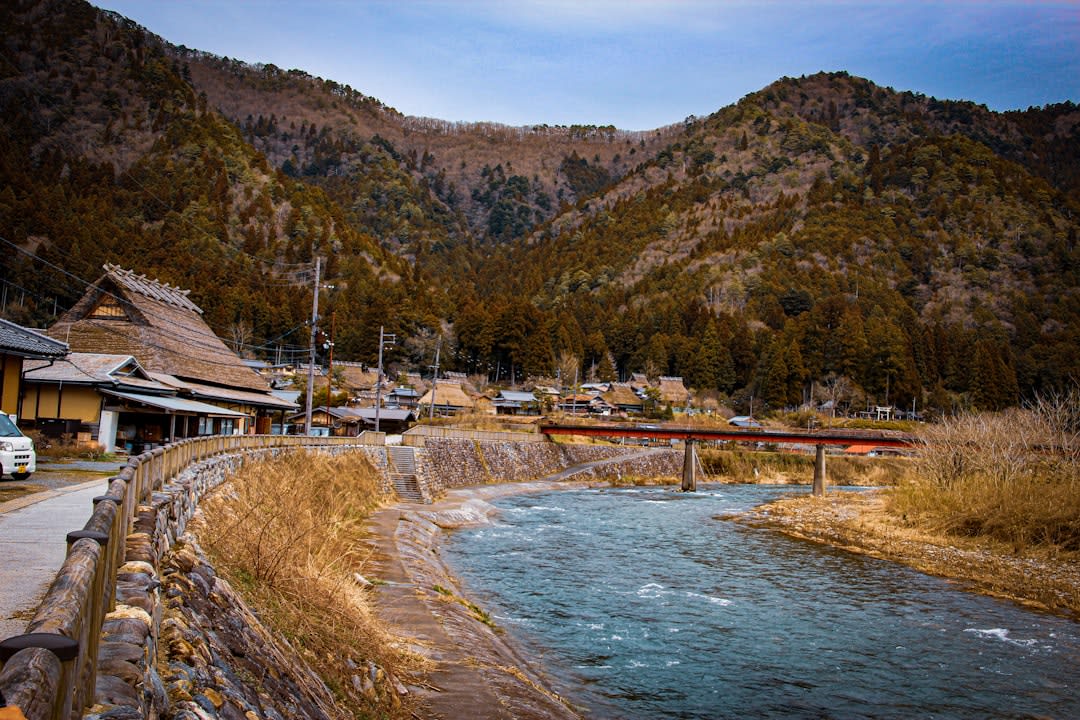
Ibusuki is a subtropical coastal city at the southern tip of Kyushu, built around natural sand baths in which bathers are buried in geothermally heated black sand. The beach stretches along the foot of Mt. Kaimon, a volcano of near-perfect conical shape. Attendants dressed in yukata guide visitors to their assigned patches of sand, lay them down, and cover them over, leaving them to look up at the open sky.
Common questions
What is the water temperature at Myoban Yunosato Onsen?▾
The water temperature at Myoban Yunosato Onsen ranges up to 90°C (minimum around 50°C).
Is Myoban Yunosato Onsen free to visit?▾
Myoban Yunosato Onsen charges an entrance fee in JPY.
Is Myoban Yunosato Onsen a public or private bath?▾
Myoban Yunosato Onsen is a mixed bathing spring.
Are tattoos allowed at Myoban Yunosato Onsen?▾
Yes, Myoban Yunosato Onsen welcomes visitors with tattoos.
What is the nearest station to Myoban Yunosato Onsen?▾
The nearest station to Myoban Yunosato Onsen is Jizoyu Mae, about 0.2km away.