
Hirayu Onsen
平湯温泉
Hirayu Onsen
sulfur · Chubu
Hotter than 86% of Japan springs (n=122).
More acidic than 26% of Japan springs (n=121).
Mineral profile
Bar width reflects listing order, not measured concentration.
Suitability
At a glance
Getting there
Easy — under 1km from a station
Cost
High
About this spring
Hirayu Onsen is the oldest and largest of five hot spring villages that form the Okuhida Onsen-go cluster in Gifu Prefecture, positioned at the gateway to the Japanese Alps. Across all five villages, combined output exceeds 37,000 liters of spring water per minute, placing the cluster third in Japan for total volume. Hirayu functions as the central bus hub for the Okuhida area and the adjoining national park, with routes running to Takayama, Matsumoto, and points beyond.
Highlights
History
The springs were first recorded in the 1560s, during the Warring States period.
Local legend holds that soldiers in the service of Takeda Shingen were crossing the Okuhida mountains when an old white monkey led them from a waterfall to steaming pools in the valley below. The men bathed there, rested, and recovered their strength. Takeda Shingen himself is said to have soaked in the waters at a later point. Through the Edo period, Hirayu grew into a lodging stop for lords traveling through the Hokuriku region. The village falls within Chubusangaku National Park and draws from a geothermal system with more than 100 individual sources.
Local guide
The bus from Takayama Station follows the Miyagawa River north and then climbs through a series of switchbacks into the Hida Mountains, arriving at Hirayu Bus Terminal at 1,250 meters above sea level after about an hour. Hirayu is the transport hub of the Okuhida Onsen region, which means buses to Norikura, Shin-Hotaka, and the other mountain villages all pass through here, and the terminal itself sits at the center of a small village surrounded by peaks. The Yakedake and Norikura volcanoes both rise to the east and west, and it is their ongoing geothermal activity that heats the forty separate spring sources flowing beneath the village floor.
The sulfur content at Hirayu is high enough to color some of the water white. The milky-white sulfur springs here are uncommon even within Gifu Prefecture, and the sodium bicarbonate and chloride compounds that mix with the sulfur give the water a slightly alkaline quality despite the volcanic origin. In the bath, the water feels light and just slightly slippery, not in the way of an alkaline simple spring but from the fine sulfur particles suspended in it. The smell is mild, the kind of sulfur you notice when you first lower yourself in and then stop noticing within a few minutes. It leaves a faint warmth on the skin that persists well after you dress.
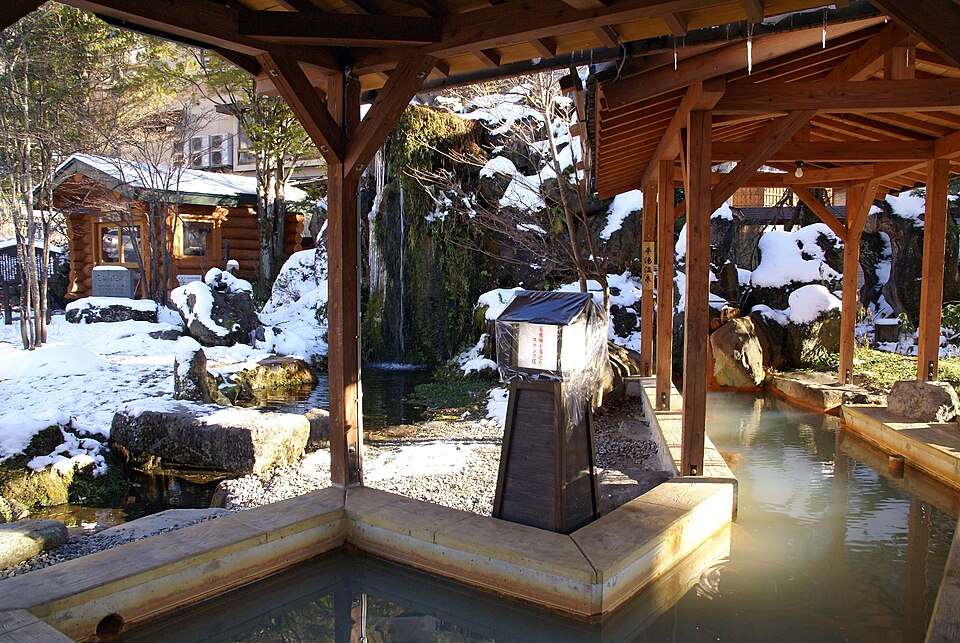
The flagship day-bath facility here is Hirayu no Mori, which operates sixteen separate outdoor rotenburo fed directly from the Norikura source. The pools vary in temperature, and the arrangement allows you to move between them across a wide area of outdoor space shaded by tall conifers. In winter, snow accumulates on the surrounding trees while the pools stay hot, and steam covers the entire bathing area in a low moving cloud. Beside the bus terminal, the small folk-history museum Hirayu Minzokukan runs its own outdoor bath called Hirayu no Yu, open from early morning until late evening for a suggested donation of 300 yen.
From Hirayu, a bus line runs directly to the Norikura Skyline during summer and autumn, reaching the second-highest paved road in Japan at 2,702 meters. You can soak at altitude in the morning and be standing at the edge of a snowfield by afternoon. The Shin-Hotaka Ropeway, Japan's only double-decker gondola, is forty minutes further along the valley road and lifts passengers to an observation platform at 2,156 meters. Most visitors base themselves at Hirayu for two nights to cover both, using the outdoor baths as the anchor point between longer excursions into the mountains.
Mineral chemistry
Sulfuric hot springs are among the most studied in balneology worldwide. The sulfur compounds, primarily hydrogen sulfide and thiosulfate, have documented antimicrobial and anti-inflammatory properties. Regular bathing is associated with relief from chronic skin conditions including eczema and psoriasis, as well as joint inflammation and muscle soreness. Sulfuric waters have been used therapeutically across Asia and Europe for centuries.
The distinctive rotten-egg smell dissipates quickly after leaving the bath. Avoid if you have a sulfur allergy, very sensitive skin, or respiratory conditions. Remove silver jewellery before entering — sulfur will blacken it permanently.
Bicarbonate springs cleanse and soften the skin surface, removing excess sebum without stripping the skin's acid mantle. Traditionally recommended for acne-prone skin and sensitive skin types.
Bicarbonate springs are generally among the most gentle and well-tolerated onsen types.
Sodium chloride springs, essentially natural saltwater baths, are celebrated for their warming and moisturising effects. The salt forms a thin film on the skin that slows moisture evaporation, keeping skin hydrated longer than a freshwater bath.
Those with high blood pressure or heart conditions should consult a doctor before bathing, as the warming effect increases circulation. Avoid immersing open wounds.
Calcium chloride springs share the heat-retaining property of sodium chloride springs but with a stronger warming effect. Prized for muscle and joint relief.
The strong warming effect means those with cardiovascular conditions, high blood pressure, or pregnancy should limit soak duration and consult a doctor if in doubt.
Iron-bearing springs are recognised by their characteristic rust-red or amber colour and metallic taste. The iron content is associated with stimulation of red blood cell production and is traditionally recommended for anaemia and fatigue recovery.
Iron springs will stain light-coloured swimwear and towels a persistent brownish-orange. Those with haemochromatosis (iron overload condition) should seek medical advice before bathing.
Similar springs
 FREE
FREEThe valley occupies the center of Noboribetsu Onsen in Hokkaido. Jigokudani translates as Hell Valley. The crater covers 11 hectares and releases roughly 10,000 tonnes of hot spring water each day. Fumaroles vent steam across the floor of the valley, boiling pools bubble at the surface, and the surrounding cliffs carry heavy mineral staining. A walking path winds through the area in about 20 minutes and is open to all visitors at no cost. It ranks among the most striking landscapes accessible on foot anywhere in Japan.

Set deep in the Hakkoda Mountains of Aomori Prefecture, Sukayu Onsen is a historic bathhouse best known for its cavernous mixed-bathing hall, the Sen-nin-buro, which translates as the Bath of a Thousand Bathers. The waters are strongly acidic, the setting is rustic and unhurried, and winter brings extraordinary snowfall to the surrounding mountains.

Beppu is the most geothermally active city in Japan, with more than 2,900 hot spring vents located within the city limits and eight distinct thermal spring zones collectively known as the Beppu Hatto. The variety on offer is wide, ranging from grand hotel bathhouses to modest neighborhood public facilities to the celebrated Hells, a collection of brilliantly colored boiling pools scattered across the city. The Hells run far too hot for bathing, but they draw visitors who come to walk among them and take in the spectacle.
 FREE
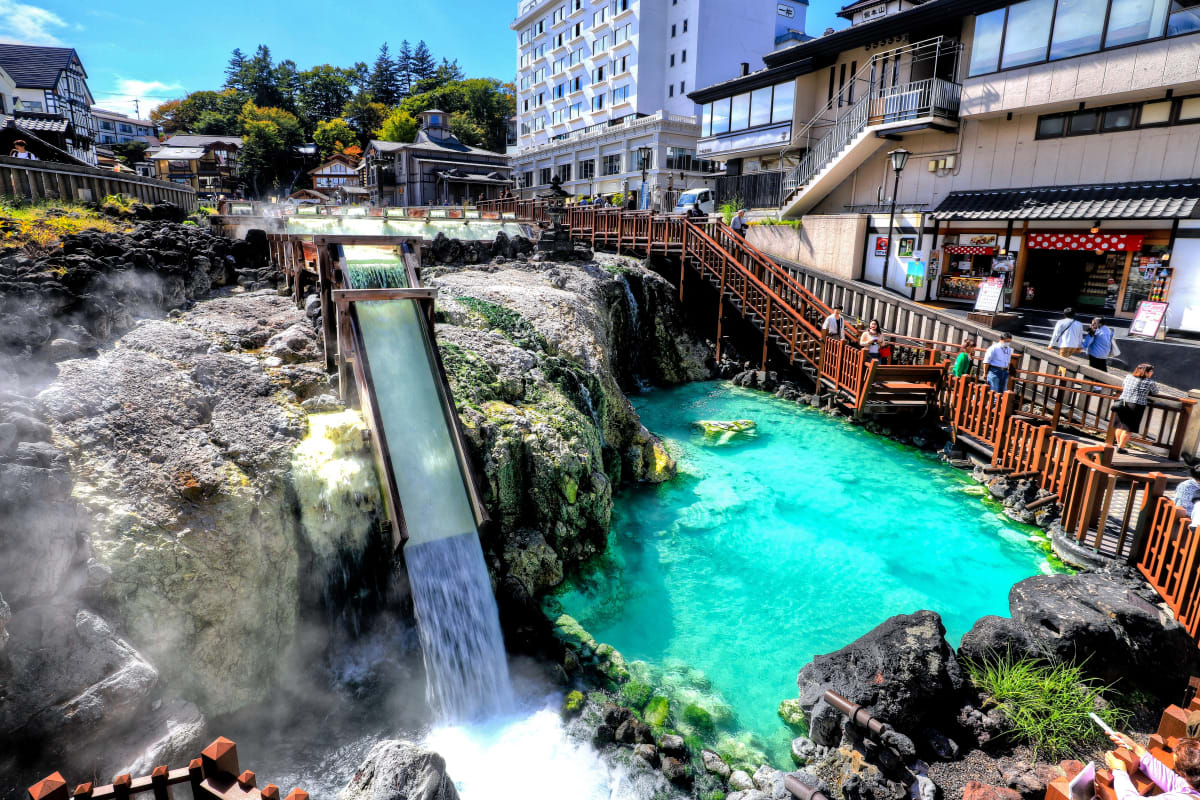
FREEKusatsu Onsen sits at 1,200 meters in the mountains of Gunma Prefecture and ranks among the most celebrated hot spring towns in Japan. The springs here produce more than 32,000 liters of water per minute, a volume unmatched anywhere else in the country. The water is strongly acidic and sulfurous, and its skin-healing properties have long made it legendary among visitors. Twice each day in the central town square, workers cool the scalding water by pulling long wooden paddles through it in unison while singing traditional songs. This practice is called yumomi.
Amenities
Getting there
Hirayu Onsen has no train station. All access is by bus. From Matsumoto, take the Alpico highway bus toward Takayama and alight at Hirayu Onsen Bus Terminal, about 90 minutes. Seat reservations are required. From Takayama, Nohi Bus runs to Hirayu in about 60 minutes, departing roughly once per hour with no reservation needed.
Location & nearby
Hirayu Onsen, Okuhida Onsengo Hirayu, Takayama, Gifu 506-1433
Make a day of it
Pair your soak with these nearby spots.
Attraction
Hirayukankissuigensenno Inn
0.0km away
Attraction
Hotakasho Sanganoyu
0.2km away
Attraction
Komorebi
0.2km away
Attraction
Shirakawa-Gou,Takayama
0.3km away
Attraction
Hirayu Onsen Fukayamasakuraan
0.4km away
Park
Akandana Parking (departure only)
0.6km away
More springs in Chubu
 FREE
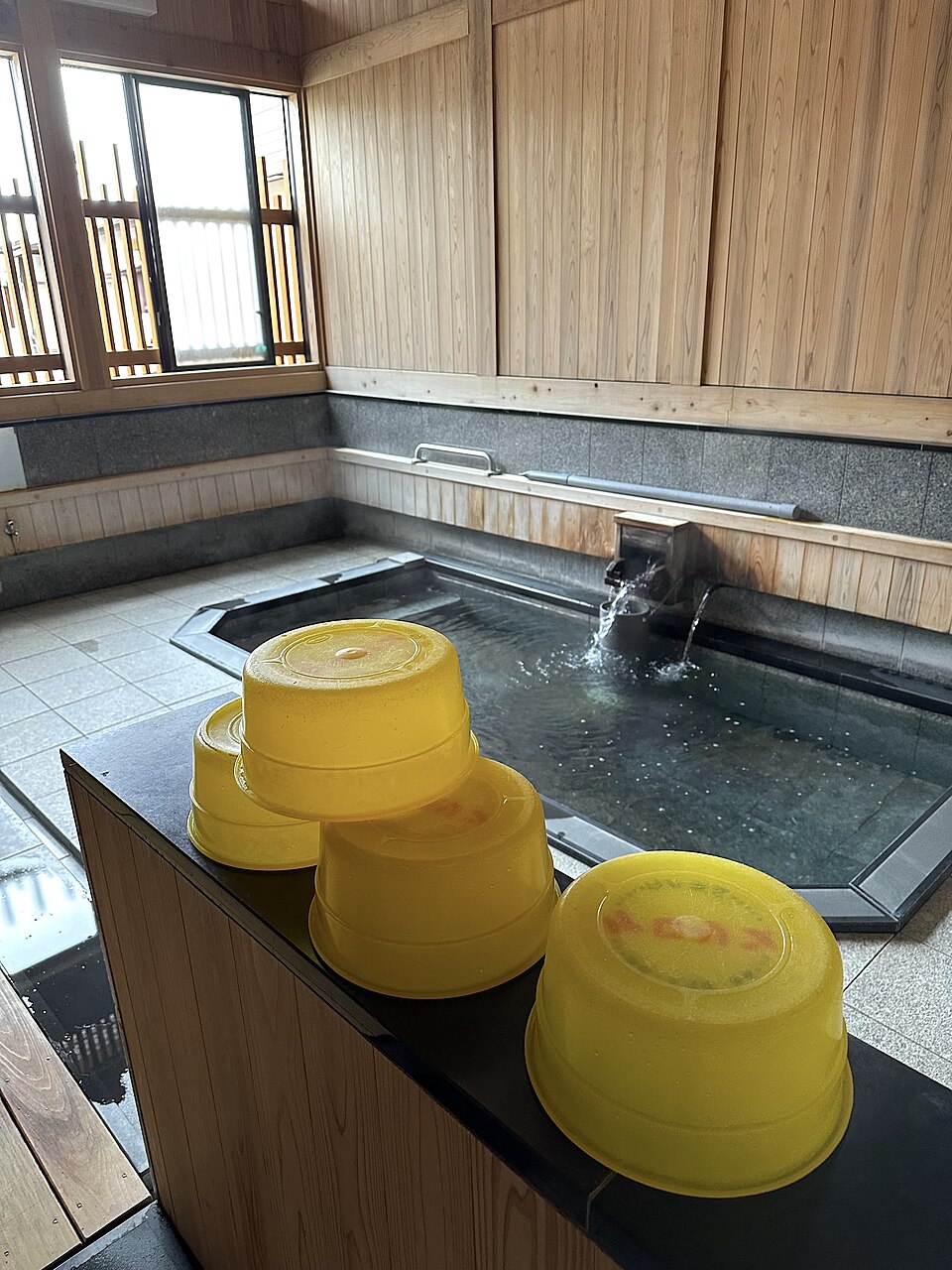
FREENozawa Onsen is a traditional village in Nagano Prefecture that maintains 13 free public bathhouses open to visitors and residents alike. These bathhouses, known as soto-yu, have been overseen by neighborhood cooperatives called yunakama for close to four centuries. The village also contains world-class ski slopes, a pairing that is genuinely uncommon anywhere in the world.
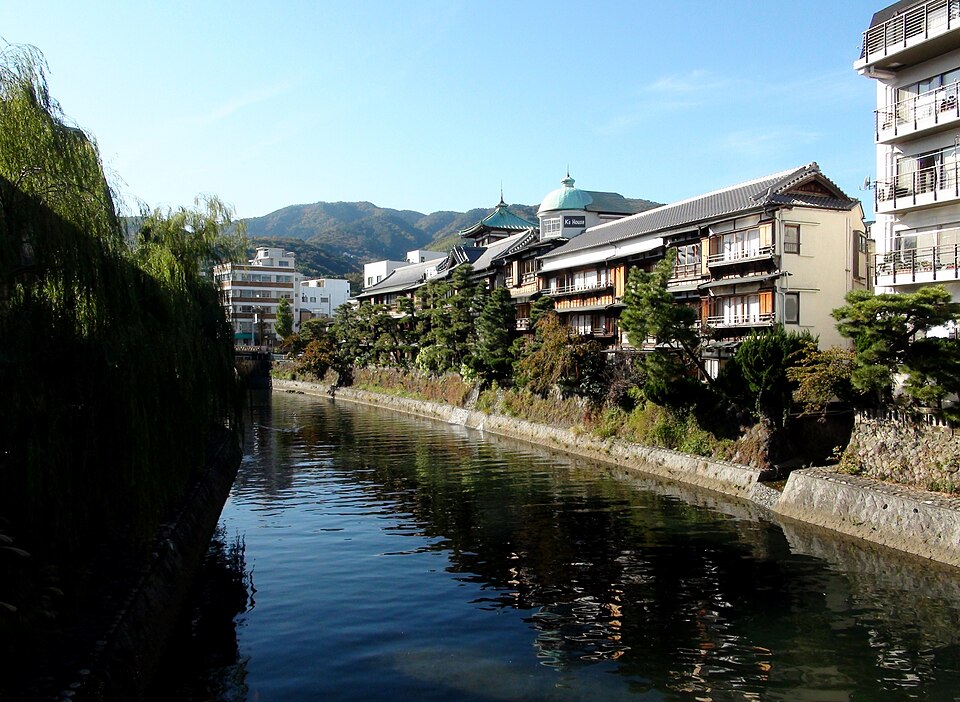
Ito sits along the eastern shore of the Izu Peninsula, facing the ocean and ranking among Japan's most productive hot spring districts by volume. More than 1,500 individual springs feed the town's supply, together pushing out around 30,000 kiloliters of water each day. Palm-lined avenues, tropical parks, and botanical gardens set the tone here, giving Ito a resort atmosphere that reads as distinctly its own compared to inland onsen destinations.
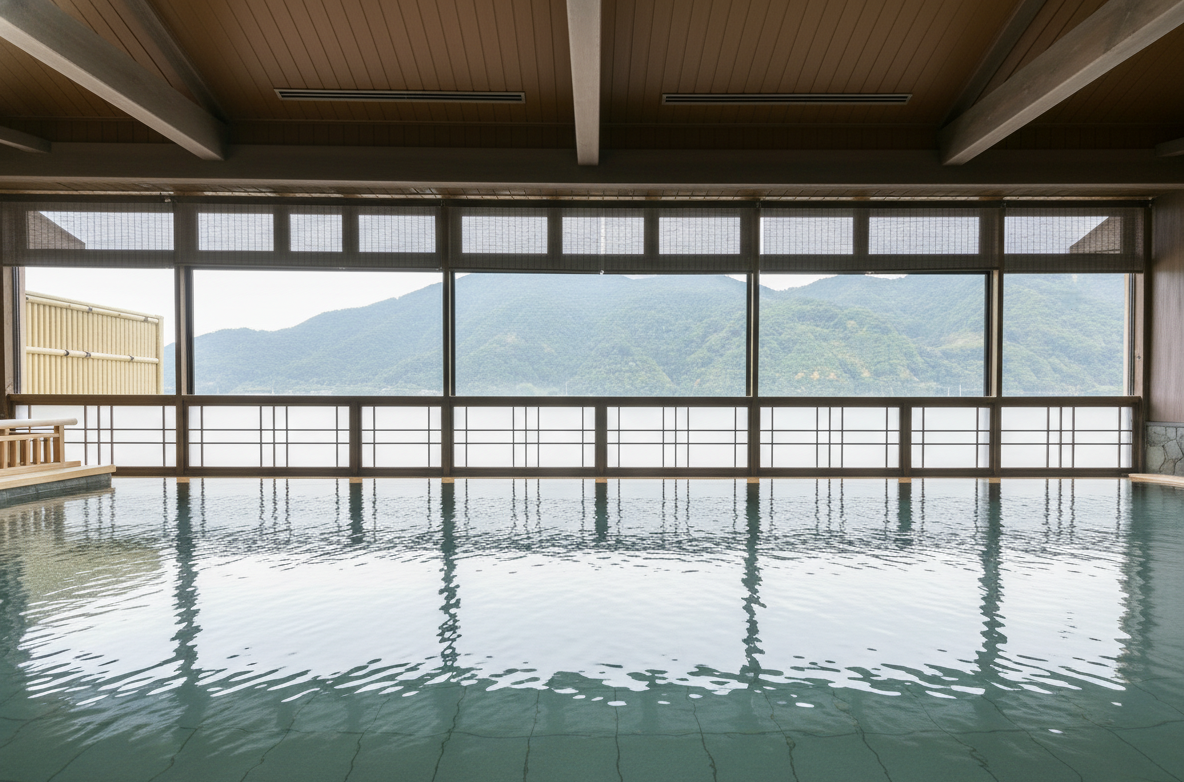
A mountain town in Niigata Prefecture famous for heavy snowfall and a unique sake-infused bath. After a day on the ski slopes, visitors soak in outdoor baths while snow falls silently around them. The town is also the setting of one of Japan's greatest novels.
Common questions
What is the water temperature at Hirayu Onsen?▾
The water temperature at Hirayu Onsen ranges up to 91°C (minimum around 50°C).
Is Hirayu Onsen free to visit?▾
Hirayu Onsen charges an entrance fee in JPY.
Is Hirayu Onsen a public or private bath?▾
Hirayu Onsen is a public bathing spring.
Are tattoos allowed at Hirayu Onsen?▾
Tattoo policy varies at Hirayu Onsen. Check ahead of your visit.
What is the nearest station to Hirayu Onsen?▾
The nearest station to Hirayu Onsen is Alps Kaido Hirayu, about 0km away.