
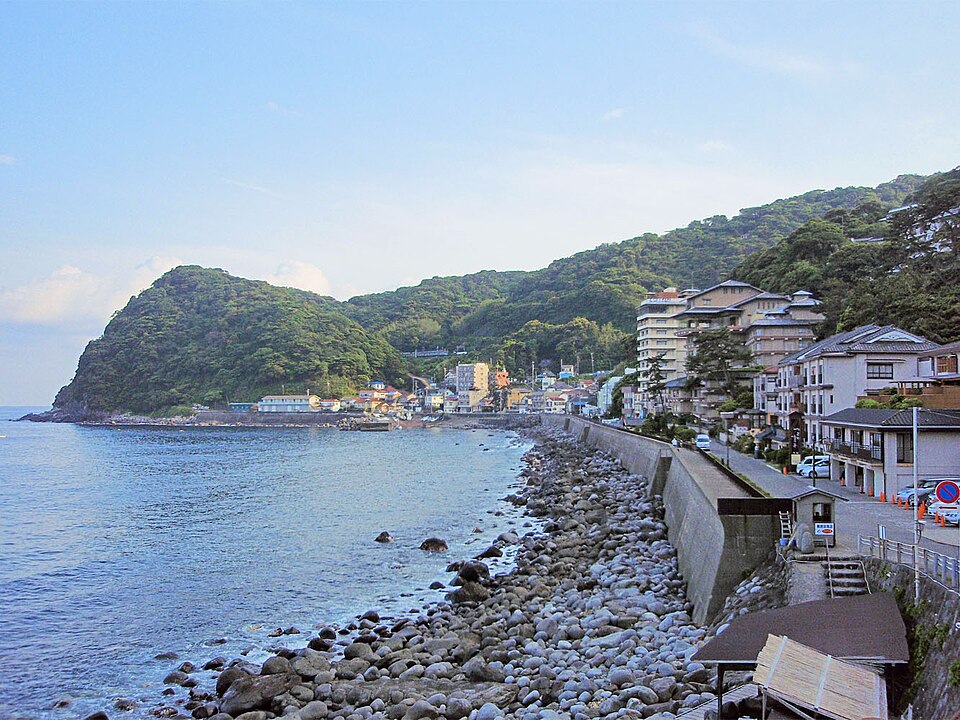
Hokkawa Onsen
北川温泉
Hokkawa Onsen
sodium-chloride · Chubu
Hotter than 80% of Japan springs (n=122).
More acidic than 56% of Japan springs (n=121).
Mineral profile
Bar width reflects listing order, not measured concentration.
Suitability
At a glance
Getting there
Easy — under 1km from a station
Cost
High
About this spring
Hokkawa Onsen sits on the eastern coast of the Izu Peninsula in Shizuoka Prefecture, facing out across the Pacific Ocean. The water is sodium chloride and surfaces at temperatures reaching up to 85 degrees Celsius. The defining experience here is soaking in an outdoor bath while looking over open ocean. The town is quiet and small, and the ryokan are intimate in scale.
Highlights
History
The Izu Peninsula supports an unusual concentration of hot springs, a product of its geology.
Four tectonic plates converge beneath the seafloor in this area, generating sustained volcanic and hydrothermal activity. Hokkawa's springs rank among the oldest documented in the region, with more than 1,200 years of recorded use. The village is positioned with mountains rising steeply at its back and the Pacific opening wide in front, a combination that made its open-air, ocean-facing baths particularly valued. The Nikkei newspaper has ranked the spring among Japan's top 10 baths in natural settings.
Local guide
The eastern coast of the Izu Peninsula runs roughly an hour south of Atami by local train and bus, and Hokkawa sits near the end of that stretch where the mountains drop sharply to a coastline of black volcanic rock and small fishing coves. Getting here from Tokyo requires either the Odoriko express to Inatori and a short bus, or a drive down the coastal road from Ito. Either way, you arrive in a place that functions primarily as a small fishing town that happens to have been producing hot spring water since at least the ninth century. The Pacific is directly below the village on the eastern side, and the mountains are directly above it on the west, leaving a narrow inhabited strip in between.
The water at Hokkawa is a sodium chloride spring, the same broad category as many coastal Izu springs, but the specific composition here is on the stronger end for salt concentration. In the bath it is clear and odorless, and the dissolved salt gives it a density you notice immediately. It holds heat efficiently, which is why a soak here in the cooler months leaves you genuinely warm rather than just briefly flushed. The skin stays salt-coated in a light, invisible way for an hour or two afterward, which keeps the warmth sealed in. The springs have been here long enough that every family-run inn in the village has its own private pipe to the source.
The standout outdoor experience at Hokkawa is Kuroneiwa, a public rotenburo built directly on the beach at sea level on a platform of black volcanic rock. The admission is 600 yen. The pool sits far enough from the water's edge to be safe, but close enough that the ocean fills your entire view when you sink down into it. On calm days the Pacific is a flat deep blue all the way to the horizon. On rougher days the spray reaches the outer wall of the pool. The wind here comes off open water with no land intervening between the Izu coast and the open ocean, and after a long soak at Kuroneiwa in early winter, stepping out into that cold salt air feels like a genuine physical contrast.
Hokkawa is not a busy resort town. Most of the accommodation is in small traditional inns rather than large hotels, and the pace of the place matches the fishing village rhythm rather than the tourist calendar. Spring and autumn bring the most comfortable bathing weather, and the black volcanic coastline that runs both north and south from Hokkawa makes for good walking between soaks, especially at low tide when the tidal pools along the lava shelf are exposed and full of sea life.
Mineral chemistry
Water character inferred from mineral type — verify on site.
Sodium chloride springs, essentially natural saltwater baths, are celebrated for their warming and moisturising effects. The salt forms a thin film on the skin that slows moisture evaporation, keeping skin hydrated longer than a freshwater bath.
Those with high blood pressure or heart conditions should consult a doctor before bathing, as the warming effect increases circulation. Avoid immersing open wounds.
Similar springs
 FREE
FREEThe valley occupies the center of Noboribetsu Onsen in Hokkaido. Jigokudani translates as Hell Valley. The crater covers 11 hectares and releases roughly 10,000 tonnes of hot spring water each day. Fumaroles vent steam across the floor of the valley, boiling pools bubble at the surface, and the surrounding cliffs carry heavy mineral staining. A walking path winds through the area in about 20 minutes and is open to all visitors at no cost. It ranks among the most striking landscapes accessible on foot anywhere in Japan.

Beppu is the most geothermally active city in Japan, with more than 2,900 hot spring vents located within the city limits and eight distinct thermal spring zones collectively known as the Beppu Hatto. The variety on offer is wide, ranging from grand hotel bathhouses to modest neighborhood public facilities to the celebrated Hells, a collection of brilliantly colored boiling pools scattered across the city. The Hells run far too hot for bathing, but they draw visitors who come to walk among them and take in the spectacle.

Arima Onsen sits in the hills above Kobe, close to Mount Rokko, and ranks among the oldest hot spring towns in Japan. The town draws visitors for two entirely different spring types that coexist within its compact footprint. Kinsen is the iron-rich golden water that stains surrounding rocks a rusty orange, while ginsen runs clear and carries both carbonation and mild radioactivity. Few other onsen destinations in Japan bring together two such distinct water types within a single small town.

Tsuru-no-yu is the oldest of the seven inns at Nyuto, set deep in a beech forest in Akita Prefecture. The main draw is a large outdoor mixed-bathing pool fed by opaque, milky-white sulfurous water. Many regard it as the most beautiful onsen setting in Japan. People come here to put some distance between themselves and the rest of the world for a while.
Amenities
Getting there
Take the JR Tokaido Line to Atami Station, then transfer to the Izu Kyuko Line to Izu-Hokkawa Station. The journey takes about 40 minutes from Atami. The onsen's riverside and seaside baths are within walking distance of the station. From Tokyo, the Odoriko limited express runs directly to the Izu coast, taking about 2 hours 20 minutes.
Location & nearby
Hokkawa Onsen, Shizuoka
Make a day of it
Pair your soak with these nearby spots.
Attraction
Kitagawaonsen
0.0km away
Attraction
Izu Kitagawaonsen(Hokkawaonsen) Izu Hokkawa Onsen
0.1km away
Attraction
MochisuiPrivate Gazebo Nichinonagori
0.1km away
Park
Izumauntendogguran
0.6km away
Attraction
ōKawaonsenrotemburo Isonoyu
1.0km away
Attraction
Mishimajinja
1.1km away
More springs in Chubu
 FREE
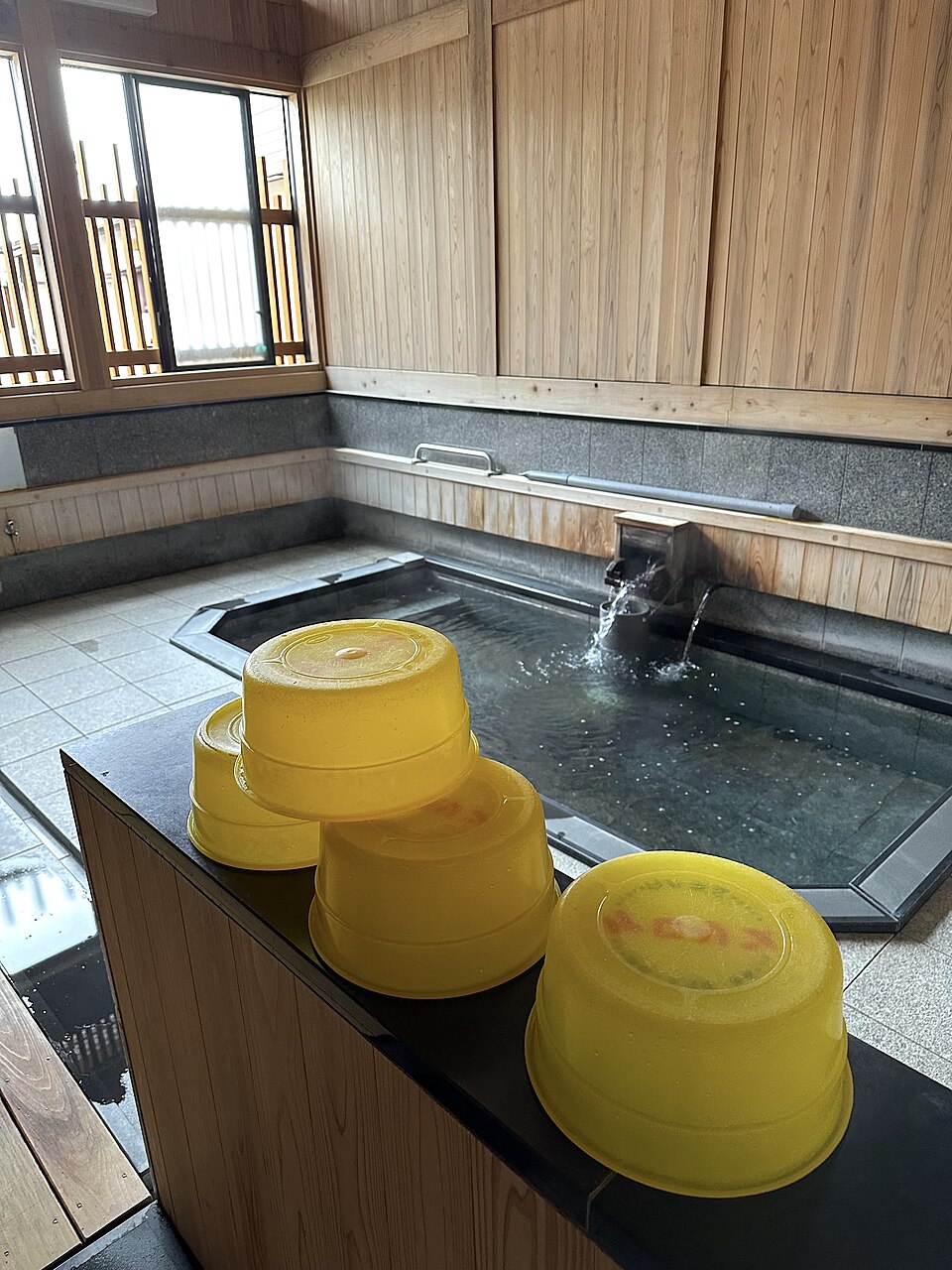
FREENozawa Onsen is a traditional village in Nagano Prefecture that maintains 13 free public bathhouses open to visitors and residents alike. These bathhouses, known as soto-yu, have been overseen by neighborhood cooperatives called yunakama for close to four centuries. The village also contains world-class ski slopes, a pairing that is genuinely uncommon anywhere in the world.
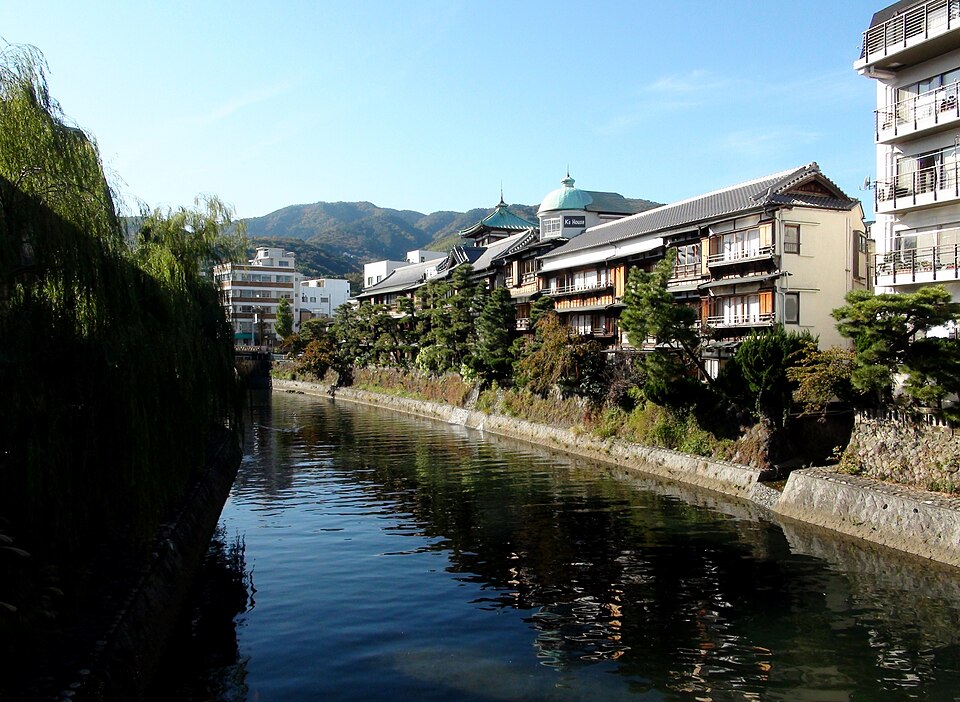
Ito sits along the eastern shore of the Izu Peninsula, facing the ocean and ranking among Japan's most productive hot spring districts by volume. More than 1,500 individual springs feed the town's supply, together pushing out around 30,000 kiloliters of water each day. Palm-lined avenues, tropical parks, and botanical gardens set the tone here, giving Ito a resort atmosphere that reads as distinctly its own compared to inland onsen destinations.
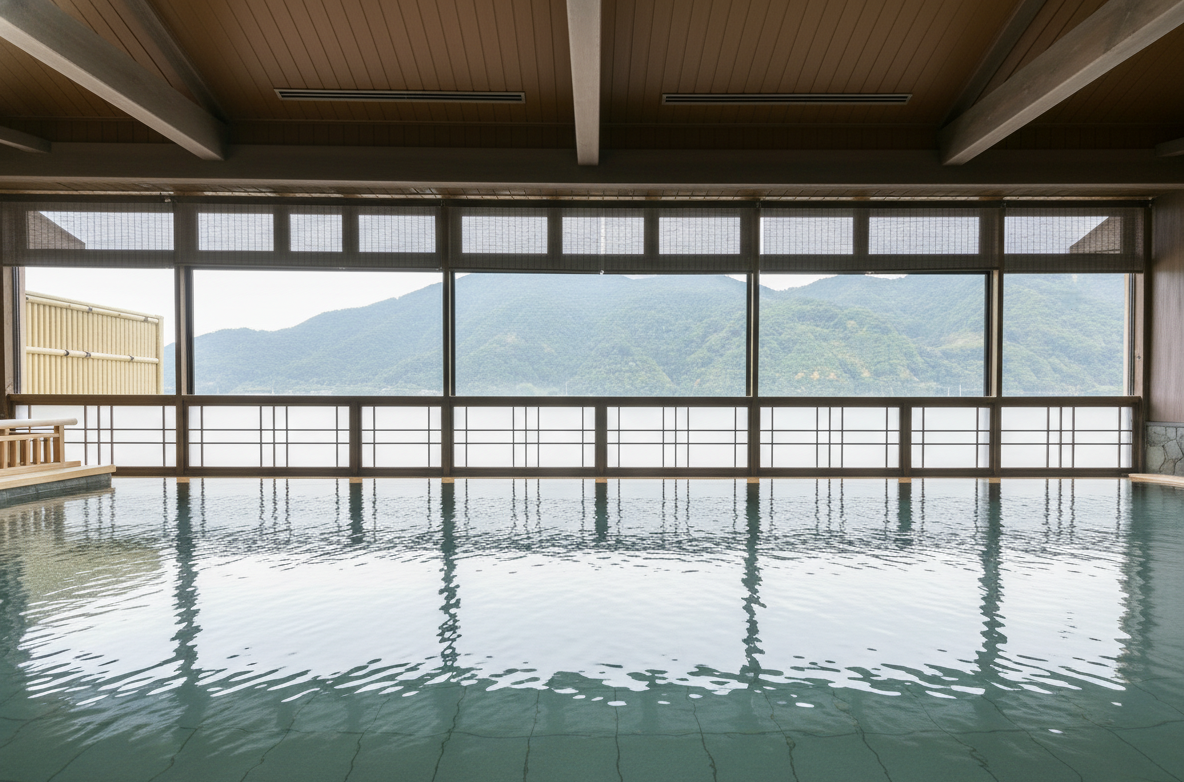
A mountain town in Niigata Prefecture famous for heavy snowfall and a unique sake-infused bath. After a day on the ski slopes, visitors soak in outdoor baths while snow falls silently around them. The town is also the setting of one of Japan's greatest novels.
Common questions
What is the water temperature at Hokkawa Onsen?▾
The water temperature at Hokkawa Onsen ranges up to 85°C (minimum around 45°C).
Is Hokkawa Onsen free to visit?▾
Hokkawa Onsen charges an entrance fee in JPY.
Is Hokkawa Onsen a public or private bath?▾
Hokkawa Onsen is a public bathing spring.
Are tattoos allowed at Hokkawa Onsen?▾
Tattoo policy varies at Hokkawa Onsen. Check ahead of your visit.
What is the nearest station to Hokkawa Onsen?▾
The nearest station to Hokkawa Onsen is Hokkawa Onsen, about 0km away.