
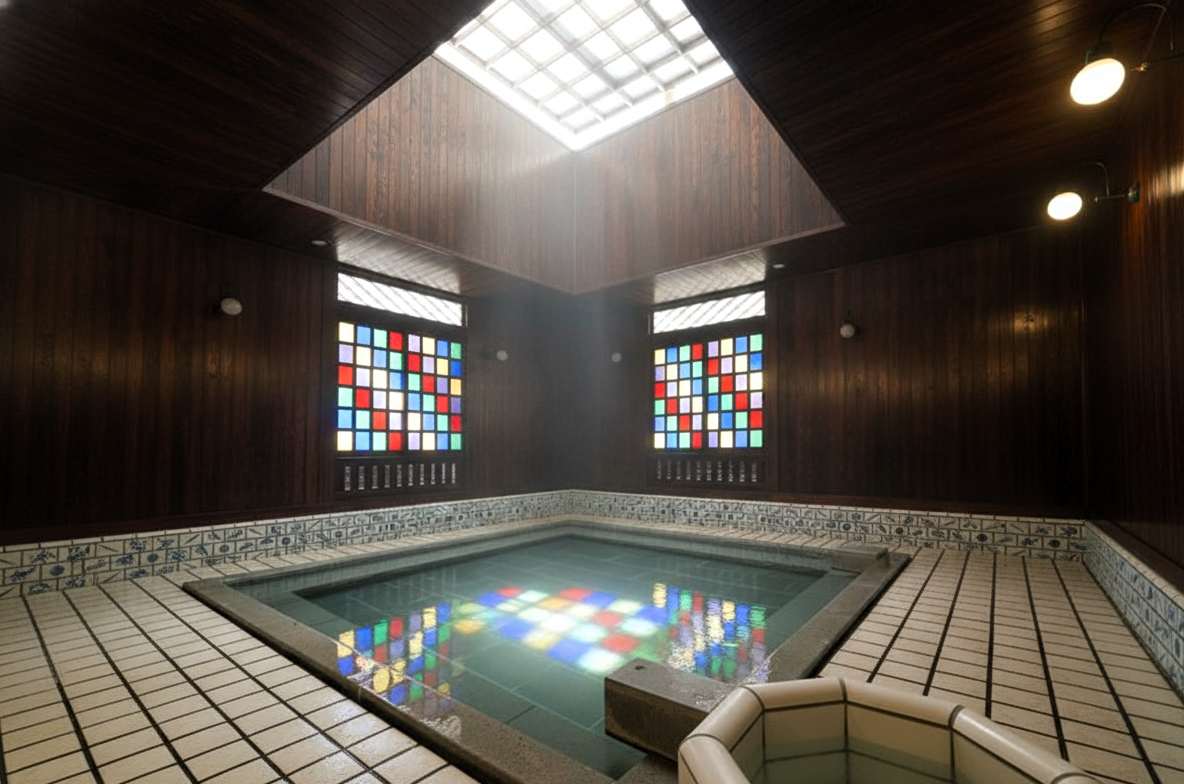
Yamashiro Onsen
山代温泉
Yamashiro Onsen
sodium-bicarbonate · Chubu
Hotter than 57% of Japan springs (n=122).
More acidic than 56% of Japan springs (n=121).
Mineral profile
Bar width reflects listing order, not measured concentration.
Suitability
At a glance
Getting there
Easy — under 1km from a station
Cost
Moderate
About this spring
Yamashiro Onsen ranks among the largest hot spring resort towns in the Hokuriku region, situated in Kaga, Ishikawa Prefecture. The town counts 31 traditional ryokan and traces its origins back more than 1,300 years. At the center of town stands Kose no Sato Yunodori, a public bathhouse that welcomes day visitors and serves as the communal gathering point of the resort.
Highlights
History
According to the founding legend, the Buddhist monk Gyoki came upon the springs during the Nara period after tracking an injured crow he had observed soaking in the warm water.
The site took shape as a formal destination in the Heian era, built around the Yakuo-in Onsen-ji temple complex and consecrated to Yakushi Nyorai. The warlord Akechi Mitsuhide made his way here during the Sengoku period. Come the Meiji era, the town drew literary figures, among them Izumi Kyoka, who found its surroundings well suited to writing. Its position within easy reach of both Osaka and Kyoto kept Yamashiro Onsen in steady favor across every period of its history.
Local guide
The bus from Komatsu Station takes about twenty minutes and drops you in front of Yamashiro Onsen's central plaza, a broad, stone-paved square with the Ko-soyu bathhouse at its center. The building is a restored Meiji-era structure with a peaked roof and wide wooden eaves, and it looks substantial enough that you notice it before you notice anything else about the town. According to local tradition, the springs here were found about 1,300 years ago when a wandering Buddhist monk named Gyoki followed a three-legged crow, the mythological Yatagarasu, to a pool where the bird was bathing its injured wing. Whether you credit the story or not, the spring has been in continuous use long enough to accumulate a genuinely thick history.
Yamashiro runs two public bathhouses, the Ko-soyu and the newer Soyu, and the practical difference between them gives you an informal measure of how a hot spring town ages. Ko-soyu is old Meiji wood and dim light and the faint echo of a place that has been absorbing steam for well over a century. Soyu is brighter and more contemporary, with shower stations and a cleaner layout. Both supply water from the same source, a sodium bicarbonate and sodium chloride type that emerges at 65 degrees Celsius. In the bath it is colorless and clear, alkaline enough to feel slightly silky on the skin, and warm in the deep way that sodium-heavy water tends to be.
The Edo-period layout of the town survives almost intact around these two bathhouses. The inns line the surrounding streets in the traditional pattern, with guests making multiple trips to the communal bath through the day rather than relying on private baths in their rooms. The main street still has artisan workshops making Kutani porcelain and Yamanaka lacquerware, and the evening walk between the lit storefronts and the steam rising from the bath buildings has a character that larger resort towns have long since traded away.
Yamashiro was a destination for Meiji-era writers and artists, and the literary connections left a faint cultural seriousness on the place that you can still detect. The town rewards taking your time with it rather than arriving for a single bath and departing.
Mineral chemistry
Water character inferred from mineral type — verify on site.
Bicarbonate springs cleanse and soften the skin surface, removing excess sebum without stripping the skin's acid mantle. Traditionally recommended for acne-prone skin and sensitive skin types.
Bicarbonate springs are generally among the most gentle and well-tolerated onsen types.
Sodium chloride springs, essentially natural saltwater baths, are celebrated for their warming and moisturising effects. The salt forms a thin film on the skin that slows moisture evaporation, keeping skin hydrated longer than a freshwater bath.
Those with high blood pressure or heart conditions should consult a doctor before bathing, as the warming effect increases circulation. Avoid immersing open wounds.
Similar springs
 FREE
FREEThe valley occupies the center of Noboribetsu Onsen in Hokkaido. Jigokudani translates as Hell Valley. The crater covers 11 hectares and releases roughly 10,000 tonnes of hot spring water each day. Fumaroles vent steam across the floor of the valley, boiling pools bubble at the surface, and the surrounding cliffs carry heavy mineral staining. A walking path winds through the area in about 20 minutes and is open to all visitors at no cost. It ranks among the most striking landscapes accessible on foot anywhere in Japan.

Beppu is the most geothermally active city in Japan, with more than 2,900 hot spring vents located within the city limits and eight distinct thermal spring zones collectively known as the Beppu Hatto. The variety on offer is wide, ranging from grand hotel bathhouses to modest neighborhood public facilities to the celebrated Hells, a collection of brilliantly colored boiling pools scattered across the city. The Hells run far too hot for bathing, but they draw visitors who come to walk among them and take in the spectacle.

Arima Onsen sits in the hills above Kobe, close to Mount Rokko, and ranks among the oldest hot spring towns in Japan. The town draws visitors for two entirely different spring types that coexist within its compact footprint. Kinsen is the iron-rich golden water that stains surrounding rocks a rusty orange, while ginsen runs clear and carries both carbonation and mild radioactivity. Few other onsen destinations in Japan bring together two such distinct water types within a single small town.

Tsuru-no-yu is the oldest of the seven inns at Nyuto, set deep in a beech forest in Akita Prefecture. The main draw is a large outdoor mixed-bathing pool fed by opaque, milky-white sulfurous water. Many regard it as the most beautiful onsen setting in Japan. People come here to put some distance between themselves and the rest of the world for a while.
Amenities
Getting there
Take the Hokuriku Shinkansen to Kaga-Onsen Station, then a local bus or taxi to Yamashiro Onsen. The journey from Kanazawa takes about 30 minutes.
Location & nearby
Yamashiro Onsen, Kaga, Ishikawa
Make a day of it
Pair your soak with these nearby spots.
Attraction
Yamashiro Onsen
0.0km away
Attraction
Kutaniyakitaikengyarari Co Co
0.0km away
Park
Yorozusho En
0.4km away
Park
Makomokechi
0.4km away
Park
Yamashirosuma Topa Ku
0.4km away
Attraction
Yamashiro Onsen Yamashitaka Nagayama
0.5km away
More springs in Chubu
 FREE
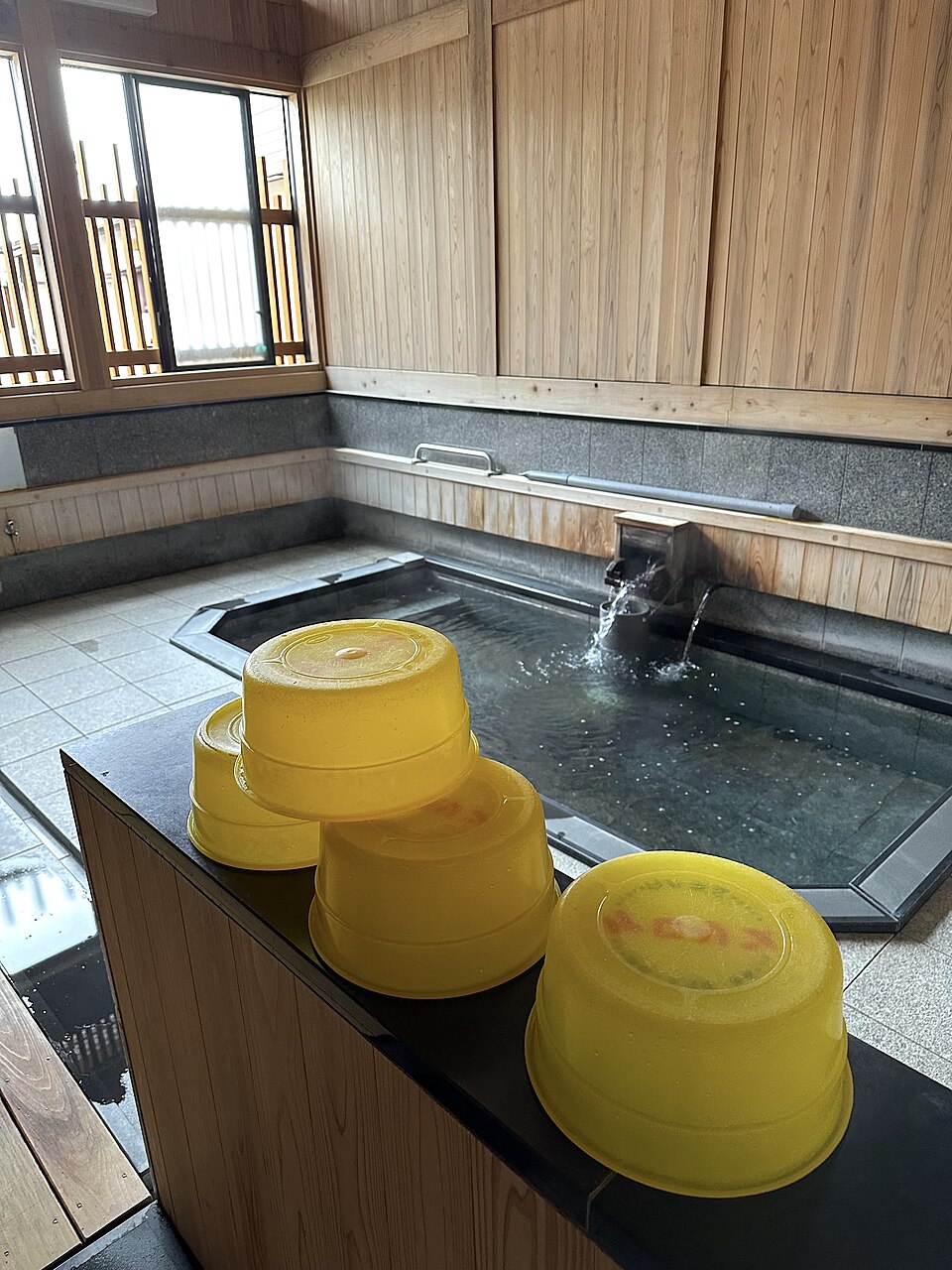
FREENozawa Onsen is a traditional village in Nagano Prefecture that maintains 13 free public bathhouses open to visitors and residents alike. These bathhouses, known as soto-yu, have been overseen by neighborhood cooperatives called yunakama for close to four centuries. The village also contains world-class ski slopes, a pairing that is genuinely uncommon anywhere in the world.
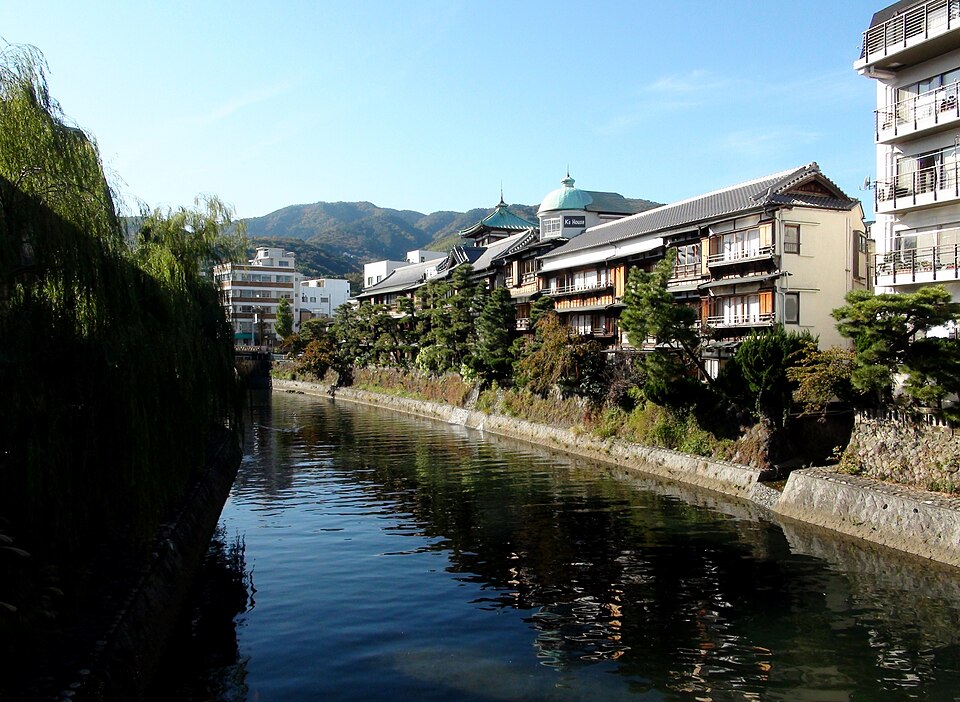
Ito sits along the eastern shore of the Izu Peninsula, facing the ocean and ranking among Japan's most productive hot spring districts by volume. More than 1,500 individual springs feed the town's supply, together pushing out around 30,000 kiloliters of water each day. Palm-lined avenues, tropical parks, and botanical gardens set the tone here, giving Ito a resort atmosphere that reads as distinctly its own compared to inland onsen destinations.
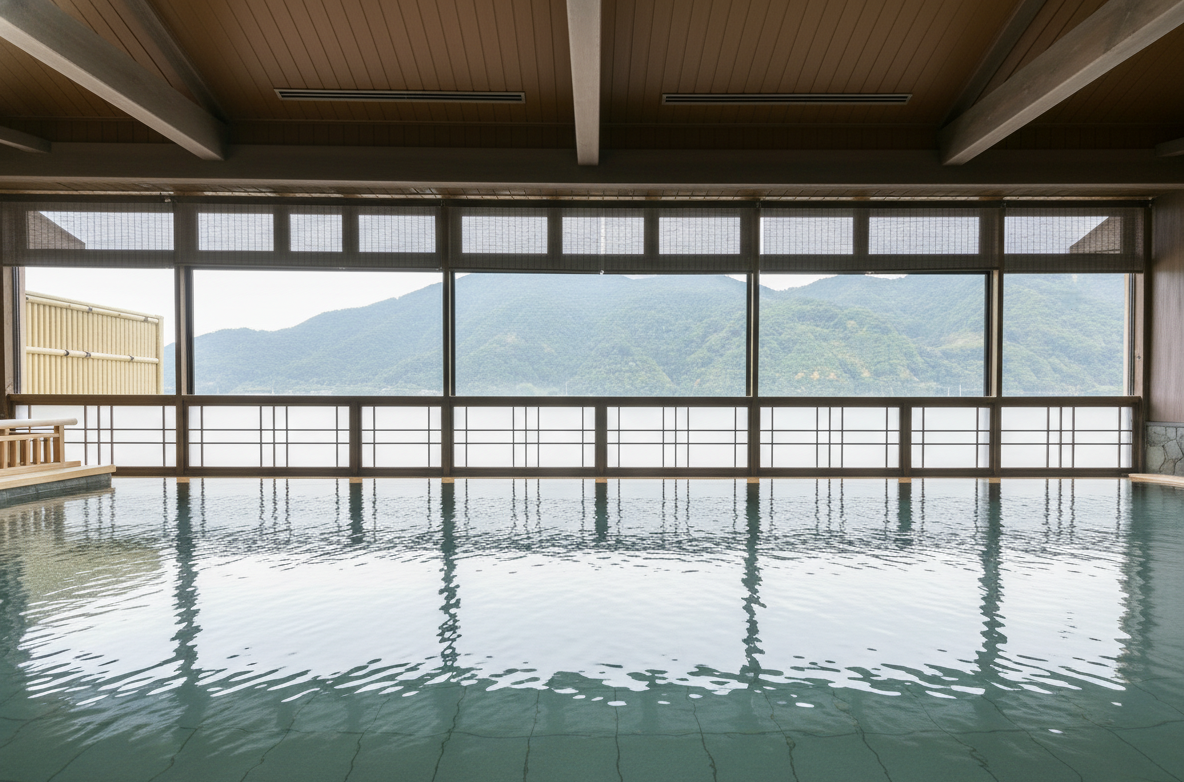
A mountain town in Niigata Prefecture famous for heavy snowfall and a unique sake-infused bath. After a day on the ski slopes, visitors soak in outdoor baths while snow falls silently around them. The town is also the setting of one of Japan's greatest novels.
Common questions
What is the water temperature at Yamashiro Onsen?▾
The water temperature at Yamashiro Onsen ranges up to 65°C (minimum around 65°C).
Is Yamashiro Onsen free to visit?▾
Yamashiro Onsen charges an entrance fee in JPY.
Is Yamashiro Onsen a public or private bath?▾
Yamashiro Onsen is a public bathing spring.
Are tattoos allowed at Yamashiro Onsen?▾
No, Yamashiro Onsen does not permit visible tattoos.