
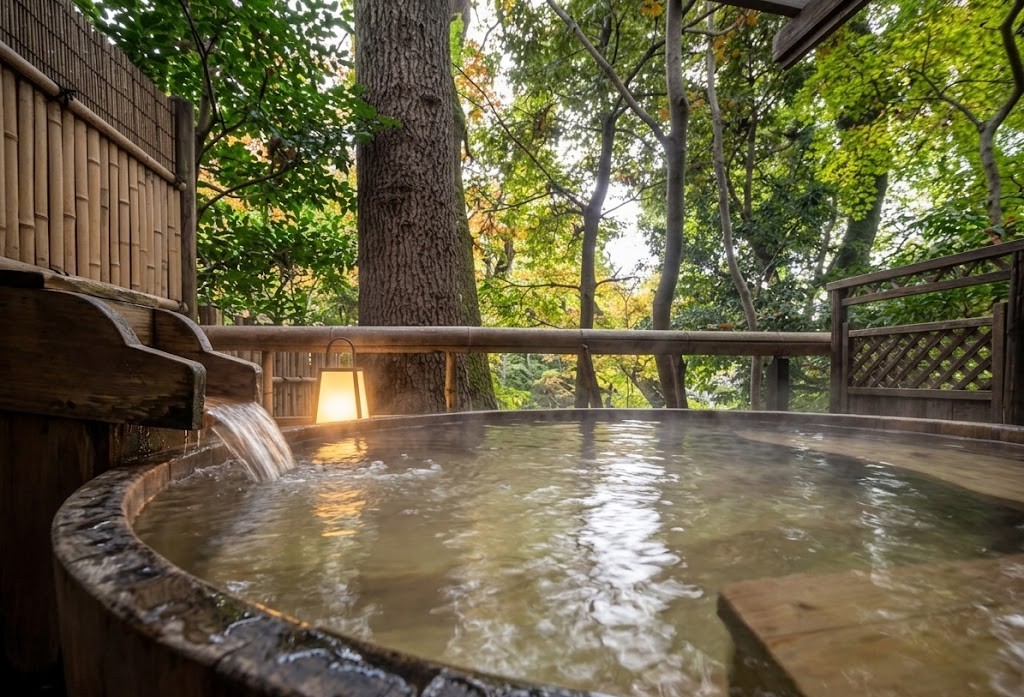
Tsurumaki Onsen
鶴巻温泉
Tsurumaki Onsen
calcium-chloride · Greater Tokyo
Hotter than 6% of Japan springs (n=122).
More acidic than 82% of Japan springs (n=121).
Mineral profile
Bar width reflects listing order, not measured concentration.
Suitability
At a glance
Getting there
Easy — under 1km from a station
Cost
High
About this spring
Tsurumaki Onsen is a compact hot spring resort in Hadano, Kanagawa Prefecture, roughly 70 minutes by train from Shinjuku. Its waters rank among the most calcium-rich of any hot spring on earth, with concentrations measured at approximately 2,650 mg per kilogram. The Motoyu Jinya inn has operated on the grounds of the former Mitsui family estate since 1917 and remains open today. The resort's size and proximity to central Tokyo make it a practical choice for a half-day excursion.
Highlights
History
During the Edo period, the well water in this area was found to carry an unusually high mineral load.
The Mitsui zaibatsu took note and constructed a substantial villa on the site during the Meiji era, using it to host business associates and government dignitaries, which drew the resort to the attention of Tokyo society. That estate was converted into the Motoyu Jinya inn in 1917. Rail access improved considerably when Tsurumaki-Onsen Station opened on the Odakyu Odawara Line in 1927, placing the resort within easy reach of the capital. The baths today draw from two distinct sources: the Tsurumaki Sennoyu, which is mildly alkaline, and the neutral Hadano Number 1 source.
Local guide
Take the Odakyu Line from Shinjuku and within an hour the apartment blocks thin out, the Tanzawa foothills appear ahead of you, and the train stops at a small station called Tsurumaki Onsen. Four minutes on foot from the platform and you are at the gate of Motoyu Jinya, a long-established inn on land that once belonged to Wada Yoshimori, a general of the Kamakura Shogunate in the twelfth century. The fact that you can reach genuine feudal-era hot spring territory from central Tokyo in under sixty minutes without a Shinkansen ticket is something that surprises most people the first time they make the trip.
The spring at Tsurumaki is a calcium bicarbonate type, pulled from deep inside the Tanzawa mountain formation. It earned a reputation over several centuries as being among the best calcium-content springs in Japan, and people used to drink it for digestive ailments as much as bathe in it. The water is completely clear and odorless, which can feel slightly anticlimactic after the sulfur drama of bigger onsen destinations. But the real quality shows up in the way it feels. It has an unusually dense, almost slippery character on the skin from the high bicarbonate content, and the calcium gives the bath a weight you do not find in lighter springs. The inn sources two types of water from the same underground system, one slightly warmer and more concentrated than the other.
The grounds of Motoyu Jinya spread across more than thirty thousand square meters of forest garden. Walking through them between baths feels nothing like the cramped arrangements of city onsen. The old main building, originally constructed by the Mitsui zaibatsu to host important guests, still stands with its wide corridors and heavy wooden beams. A small on-site museum holds objects from the inn's history dating back centuries.
For people based in Tokyo who have written off day-trip onsen as too crowded or too diluted, Tsurumaki is a genuine correction. The Odakyu Line runs direct and frequently, the walk from the station is shorter than most urban commutes to the office, and the water itself is serious. You will almost certainly be back.
Mineral chemistry
Water character inferred from mineral type — verify on site.
Calcium chloride springs share the heat-retaining property of sodium chloride springs but with a stronger warming effect. Prized for muscle and joint relief.
The strong warming effect means those with cardiovascular conditions, high blood pressure, or pregnancy should limit soak duration and consult a doctor if in doubt.
Similar springs
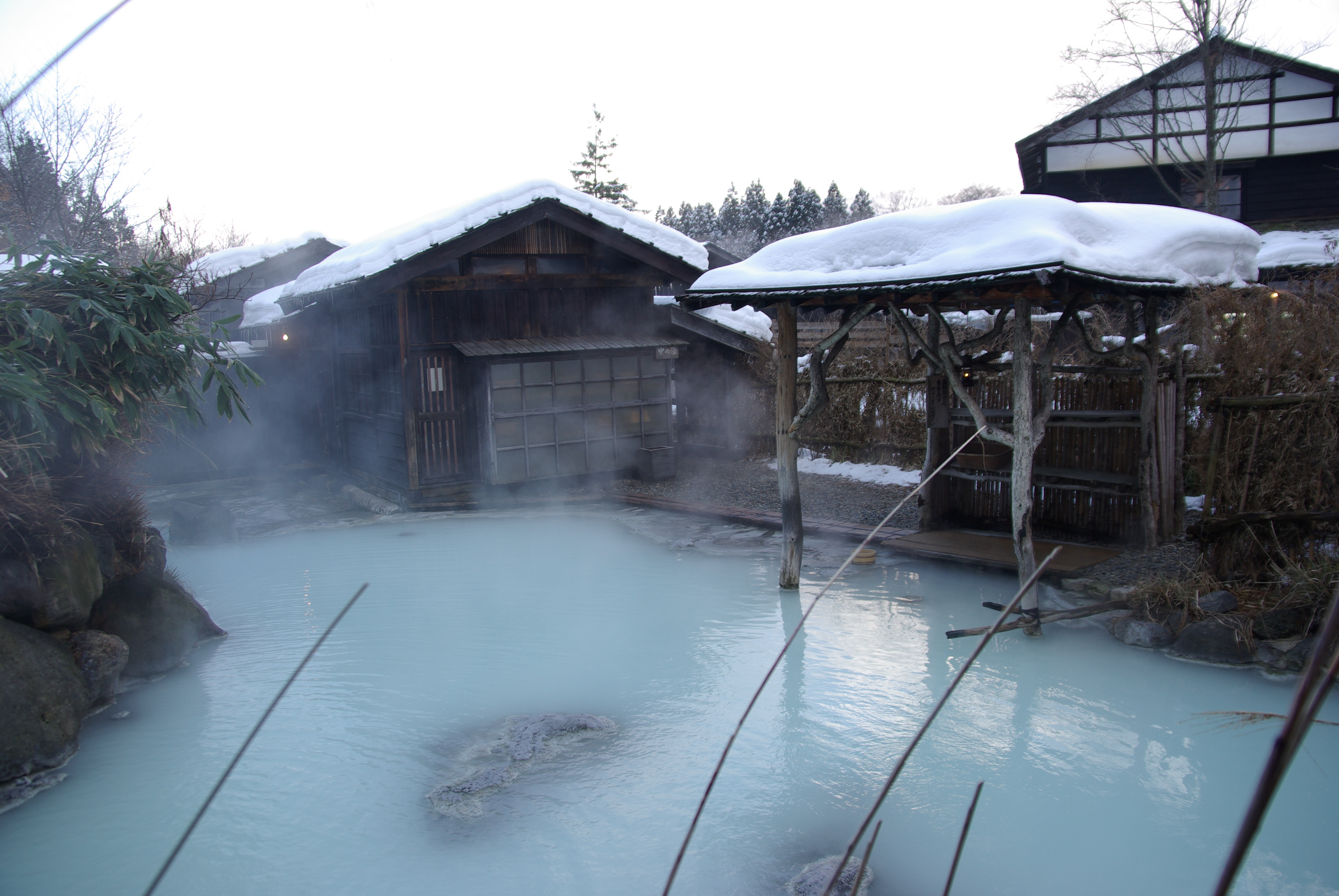
Tsuru-no-yu is the oldest of the seven inns at Nyuto, set deep in a beech forest in Akita Prefecture. The main draw is a large outdoor mixed-bathing pool fed by opaque, milky-white sulfurous water. Many regard it as the most beautiful onsen setting in Japan. People come here to put some distance between themselves and the rest of the world for a while.
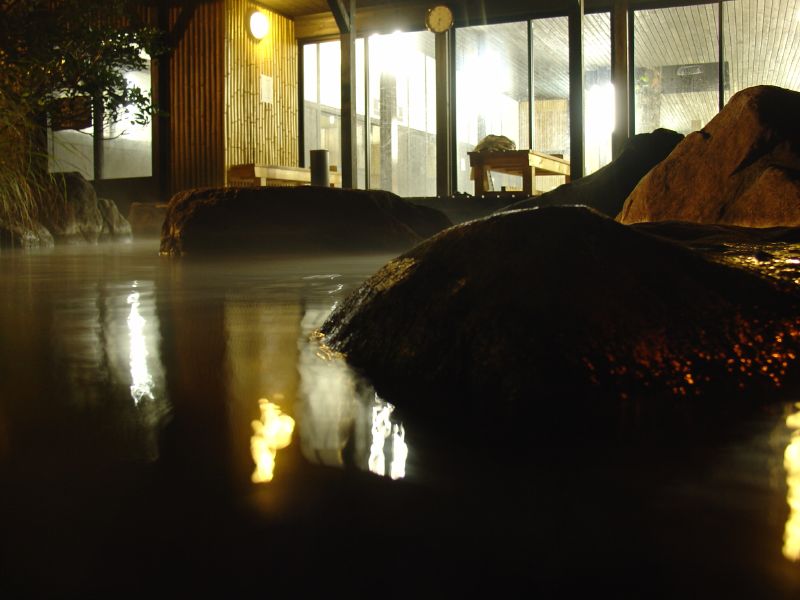
Hyotan Onsen sits in Beppu's Kannawa steam district and ranks among the city's most beloved public bathhouses. The facility draws on seven separate spring waters and brings them together across a range of bathing options, including a hot-sand bath, a waterfall pool, private family rooms, and an open-air rotenburo, all within a single complex surrounded by rising geothermal steam. It is the only onsen in Japan to have received three Michelin Stars.
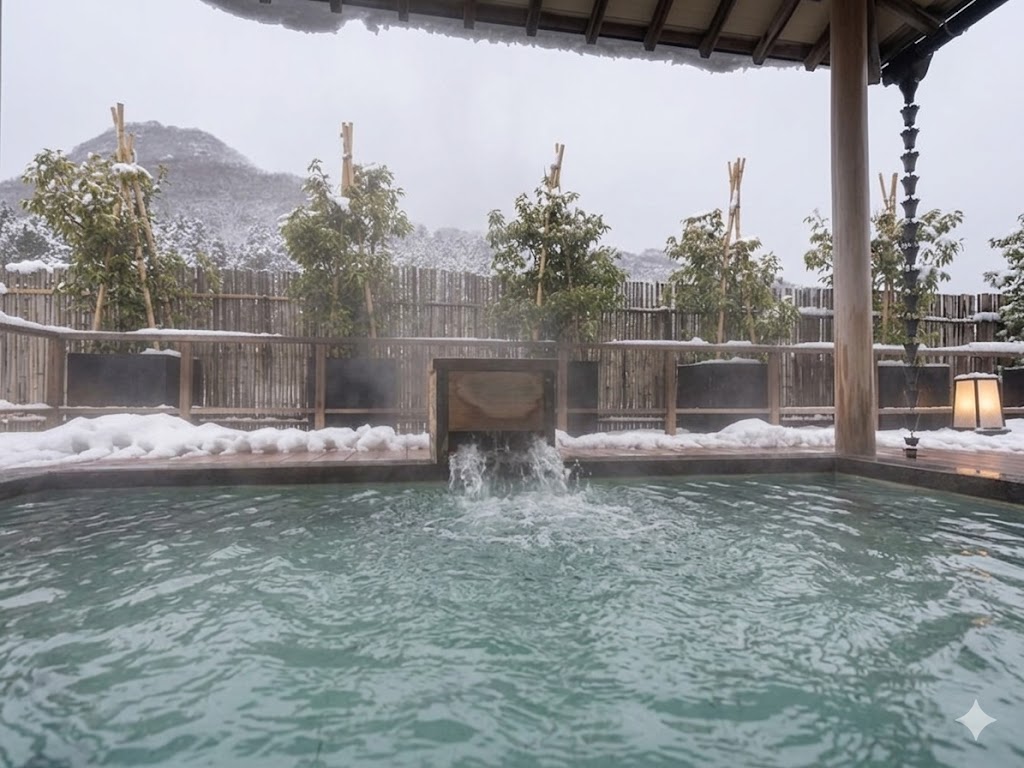
Iwamuro Onsen is a traditional hot spring town in Niigata Prefecture that has served as a rest stop for travelers heading to the sacred Yahiko Shrine for centuries. The spring was discovered more than 300 years ago when a Buddhist priest named Shokai followed a wild goose that bathed its injured wings in the warm water until they healed. The waters carry a reputation for their smooth, skin-softening character. The town also sustains a living Echigo Geiko (Niigata geisha) entertainment culture.
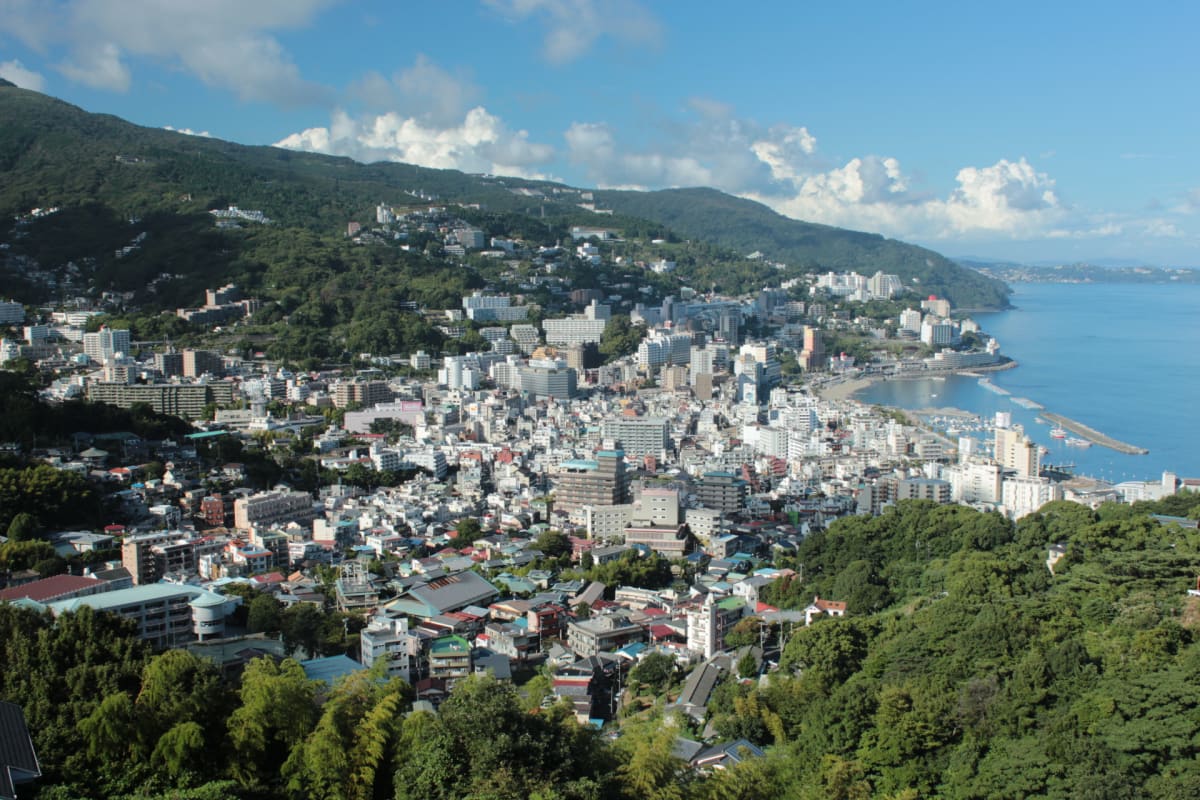
Atami Onsen sits on the Izu Peninsula with views across Sagami Bay, roughly 90 minutes by rail from Tokyo. The city contains around 500 geothermal springs that together discharge approximately 20,000 liters of water per minute. Its ocean scenery, mild climate, and plentiful spring water earned Atami a reputation as one of Japan's most celebrated resort towns in the postwar years.
Amenities
Getting there
Take the Odakyu Odawara Line from Shinjuku to Tsurumaki-Onsen Station. Express trains take about 70 minutes. The main bathing facilities are a 4-minute walk from the station exit.
Location & nearby
Tsurumaki Onsen, Kanagawa
Make a day of it
Pair your soak with these nearby spots.
Attraction
Miyanagatakehikokinenbijutsukan
0.1km away
Attraction
PuranbēRutsurumaki
0.1km away
Attraction
Jin'Yaspasaron
0.2km away
Attraction
Tsurumakinodaikeyaki
0.4km away
Park
HikarinookakōEn
0.5km away
Attraction
Hiratsukashihakubutsukan
0.5km away
More springs in Greater Tokyo
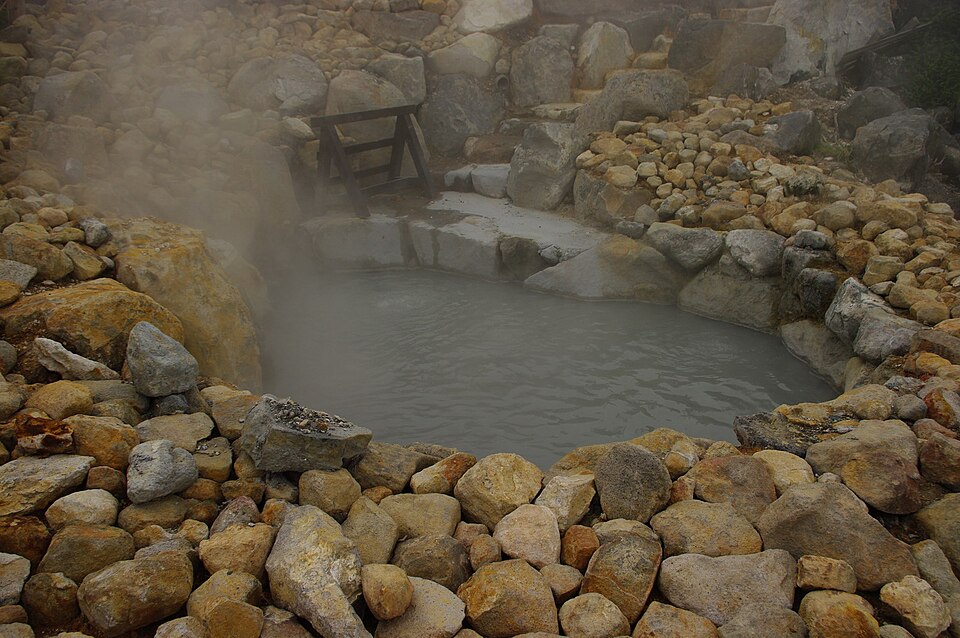
Hakone is a sizable onsen district spread across a caldera, roughly 90 minutes from Tokyo by rail. Seventeen distinct spring sources supply the area's bathhouses, which range from large hotel rotenburo with views of Mt. Fuji and Lake Ashi to small, family-operated facilities tucked along the Old Tokaido road. Because the mineral makeup differs from one source to the next, visiting multiple bathhouses yields a genuinely different soaking experience each time.
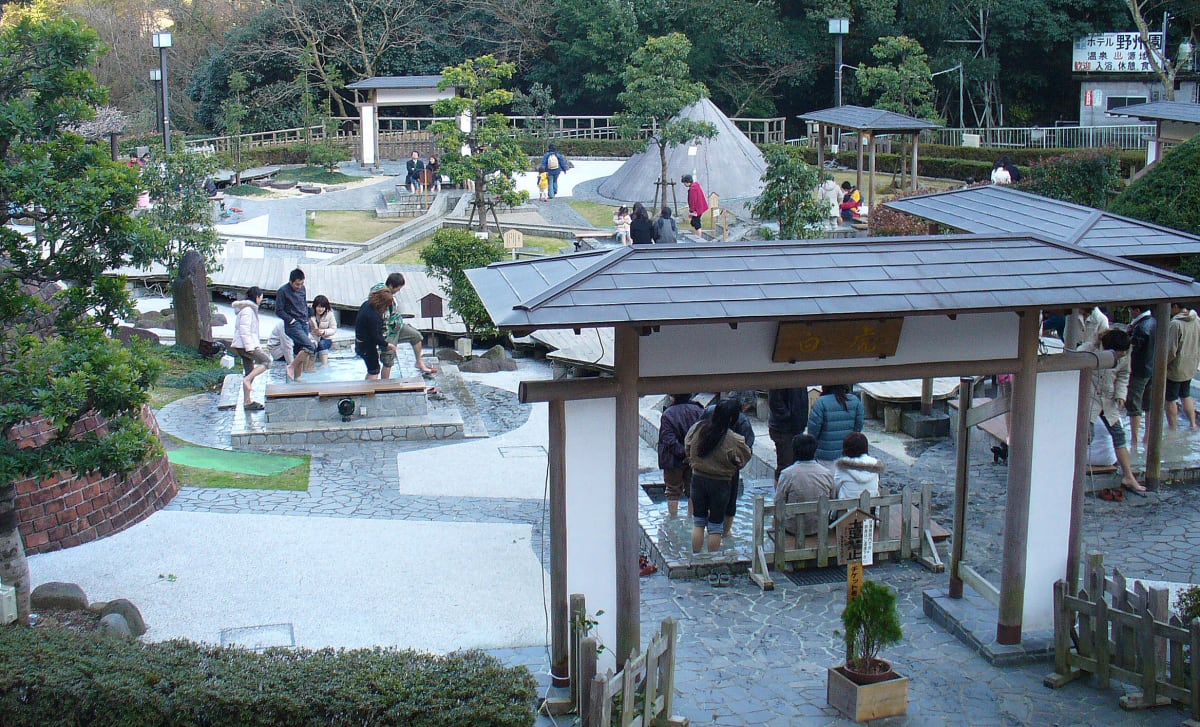
Yugawara Onsen sits along a river in Kanagawa Prefecture, caught between mountain slopes and the nearby coast. The waters are clear and mild, with a gentle quality that makes them suitable for children and older visitors alike. Most of the ryokan in town open their baths to day visitors, and the overall tempo here is unhurried and low-key.
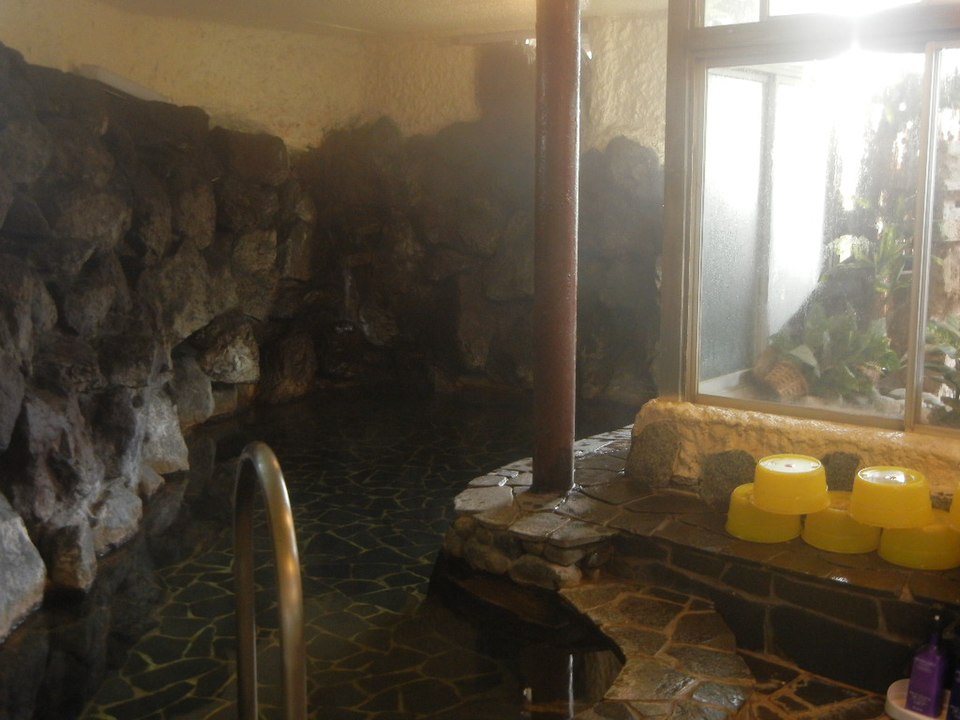
Iiyama Onsen sits in northern Nagano Prefecture near the Nozawa Onsen highlands and produces water with a pH of 11.3, placing it among the most alkaline natural hot springs anywhere in Japan. The soft, high-alkaline water has long been sought out as a beauty spring, widely praised for the way it smooths and softens the skin. The Hokuriku Shinkansen now stops at Iiyama Station, cutting travel time from Tokyo considerably.
Common questions
What is the water temperature at Tsurumaki Onsen?▾
The water temperature at Tsurumaki Onsen ranges up to 37°C (minimum around 26°C).
Is Tsurumaki Onsen free to visit?▾
Tsurumaki Onsen charges an entrance fee in JPY.
Is Tsurumaki Onsen a public or private bath?▾
Tsurumaki Onsen is a public bathing spring.
Are tattoos allowed at Tsurumaki Onsen?▾
No, Tsurumaki Onsen does not permit visible tattoos.