
Miyanoshita Onsen
宮ノ下温泉
3.4 · 21 reviews · via Google
Miyanoshita Onsen
sodium-chloride · Greater Tokyo
Hotter than 73% of Japan springs (n=122).
More acidic than 79% of Japan springs (n=121).
Mineral profile
Bar width reflects listing order, not measured concentration.
Suitability
At a glance
Getting there
Easy — under 1km from a station
Cost
High
Crowd level
Quiet
About this spring
Miyanoshita sits on a plateau in the Haya River valley within the Hakone caldera and ranks among the oldest and most storied springs in the region. It belongs to the group known as the Seven Hot Springs of Hakone and has drawn both Japanese and foreign travelers since the Edo period. The Fujiya Hotel opened its doors here in 1878 and was among the first Western-style resort hotels in Japan.
Highlights
History
Use of these springs dates to at least the early Edo period.
Emperor Meiji stopped here in 1873 as part of a tour through Japan. The Fujiya Hotel was founded in 1878 and grew into a defining landmark of Meiji-era tourism, receiving writers, diplomats, and foreign dignitaries over the decades. The hotel continues to operate today and is counted among the oldest resort hotels in the country.
Local guide
From Shinjuku you take the Odakyu Romance Car, and within about ninety minutes the suburbs give way to the folded green hills of Hakone. At Hakone-Yumoto you switch to the Hakone Tozan Railway, a narrow-gauge line that winds uphill through tight switchbacks past small waterfalls and cedar forest so dense it blocks out the sky. Miyanoshita Station is three stops up, perched in the valley of the Haya River, and when you step onto the platform you immediately notice the old wooden tram shelter, the carved stone bridges, and the faint smell of warm stone carried on the river air. This is the oldest developed hot spring village in Hakone, and it does not look like it is trying to pretend otherwise.
The water at Miyanoshita is a sodium chloride spring with a pH of 8.4, putting it comfortably on the alkaline side. It runs clear and has very little scent. What it does have is that particular slippery quality that alkaline water develops against skin, leaving you feeling smooth and lightly coated for hours after you step out of the bath. The temperature flows consistently warm without the violent heat of some of Hakone's sulfur springs further up the mountain. It is the kind of water you can sit in for a long time without urgency, which suits Miyanoshita's overall pace perfectly.
The Fujiya Hotel, which has been standing at the center of the village since 1878, is impossible to miss and impossible to ignore. Its facade is a layered confection of Meiji-era ambition, mixing traditional Japanese rooflines with Western balconies and ornate wooden railings painted pale green. It opened to serve foreign visitors who began arriving in Japan after the ports opened, and its guest list from the following century reads like someone assembled it as a joke: Albert Einstein, Charlie Chaplin, John Lennon and Yoko Ono, and in 1893, Archduke Franz Ferdinand of Austria, four years before a bullet in Sarajevo changed everything. The main building and several wings are now designated important cultural assets. You can tour the lobby and the old flower-patterned dining room even if you are not staying.
What makes Miyanoshita worth the trip is precisely this layering of time. It sits between two eras without fully belonging to either, and it wears that honestly. The public footbaths along the main street are free and busy in the evenings with exhausted hikers coming down from the Daikanzan ridge above the village. The small grocery below the station sells bottles of the local spring water. Jozen-ji temple is a five-minute walk up the hillside. And the tram, still running its improbable switchback route up the mountain, pulls in every thirty minutes with its bell clanging, as though Hakone in 1910 and Hakone today are the same place separated only by glass.
Mineral chemistry
Water character inferred from mineral type — verify on site.
Sodium chloride springs, essentially natural saltwater baths, are celebrated for their warming and moisturising effects. The salt forms a thin film on the skin that slows moisture evaporation, keeping skin hydrated longer than a freshwater bath.
Those with high blood pressure or heart conditions should consult a doctor before bathing, as the warming effect increases circulation. Avoid immersing open wounds.
Alkaline springs (pH above 8) are known for their skin-softening effect, sometimes called "beauty water" in bathing cultures across Asia. The high pH saponifies skin oils, producing a characteristic silky feel on the skin surface.
The slippery feeling underfoot in highly alkaline springs is normal — take care when standing and walking in the bath. Avoid prolonged soaking if you have dry or sensitive skin.
Similar springs
 FREE
FREEThe valley occupies the center of Noboribetsu Onsen in Hokkaido. Jigokudani translates as Hell Valley. The crater covers 11 hectares and releases roughly 10,000 tonnes of hot spring water each day. Fumaroles vent steam across the floor of the valley, boiling pools bubble at the surface, and the surrounding cliffs carry heavy mineral staining. A walking path winds through the area in about 20 minutes and is open to all visitors at no cost. It ranks among the most striking landscapes accessible on foot anywhere in Japan.

Beppu is the most geothermally active city in Japan, with more than 2,900 hot spring vents located within the city limits and eight distinct thermal spring zones collectively known as the Beppu Hatto. The variety on offer is wide, ranging from grand hotel bathhouses to modest neighborhood public facilities to the celebrated Hells, a collection of brilliantly colored boiling pools scattered across the city. The Hells run far too hot for bathing, but they draw visitors who come to walk among them and take in the spectacle.

Arima Onsen sits in the hills above Kobe, close to Mount Rokko, and ranks among the oldest hot spring towns in Japan. The town draws visitors for two entirely different spring types that coexist within its compact footprint. Kinsen is the iron-rich golden water that stains surrounding rocks a rusty orange, while ginsen runs clear and carries both carbonation and mild radioactivity. Few other onsen destinations in Japan bring together two such distinct water types within a single small town.

Tsuru-no-yu is the oldest of the seven inns at Nyuto, set deep in a beech forest in Akita Prefecture. The main draw is a large outdoor mixed-bathing pool fed by opaque, milky-white sulfurous water. Many regard it as the most beautiful onsen setting in Japan. People come here to put some distance between themselves and the rest of the world for a while.
Amenities
Getting there
Take the Odakyu Line from Shinjuku to Hakone-Yumoto Station. The journey takes about 80 minutes. From Hakone-Yumoto, take the Hakone Tozan Railway to Miyanoshita Station, about 15 minutes further.
Location & nearby
Miyanoshita, 箱根町 Hakone, Ashigarashimo District, Kanagawa 250-0404
Make a day of it
Pair your soak with these nearby spots.
Attraction
Daiwakuyahakone
0.1km away
Attraction
Rakuyujurin Nature Museum
0.2km away
Attraction
Kiga-onsen-iriguchi
0.2km away
Attraction
Tenoyu
0.2km away
Attraction
Taiko Notaki
0.2km away
Attraction
Hakone Onsen
0.3km away
More springs in Greater Tokyo
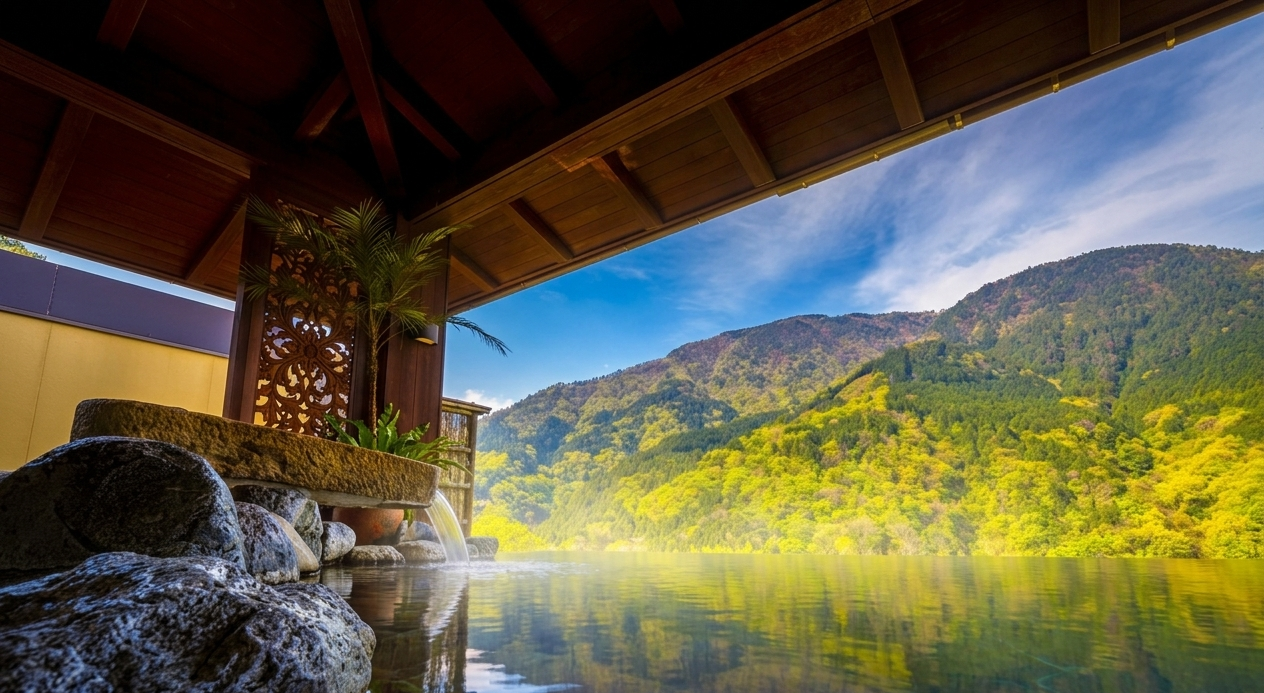
Hakone is a sizable onsen district spread across a caldera, roughly 90 minutes from Tokyo by rail. Seventeen distinct spring sources supply the area's bathhouses, which range from large hotel rotenburo with views of Mt. Fuji and Lake Ashi to small, family-operated facilities tucked along the Old Tokaido road. Because the mineral makeup differs from one source to the next, visiting multiple bathhouses yields a genuinely different soaking experience each time.
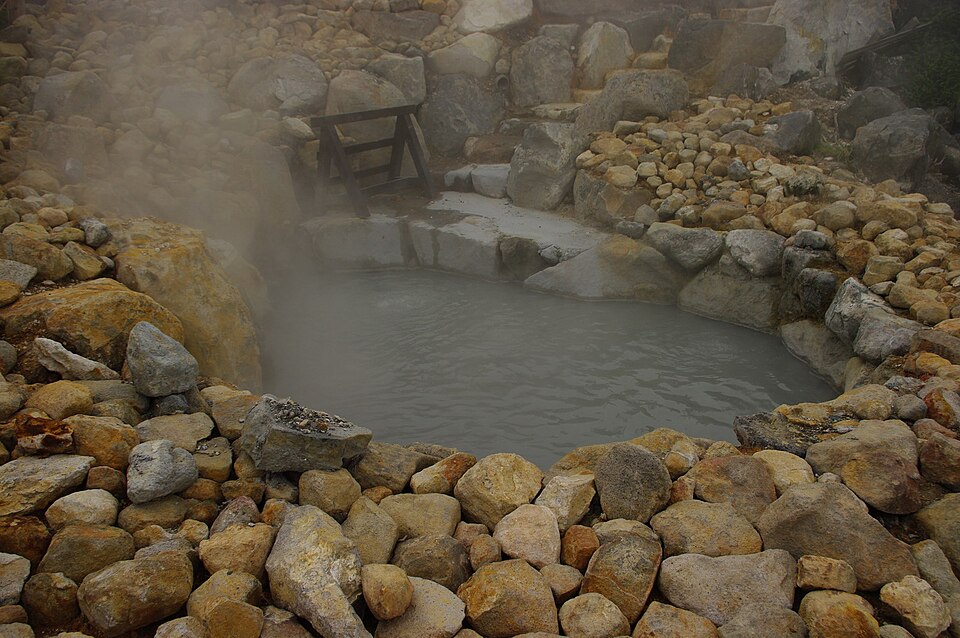
Yugawara Onsen sits along a river in Kanagawa Prefecture, caught between mountain slopes and the nearby coast. The waters are clear and mild, with a gentle quality that makes them suitable for children and older visitors alike. Most of the ryokan in town open their baths to day visitors, and the overall tempo here is unhurried and low-key.
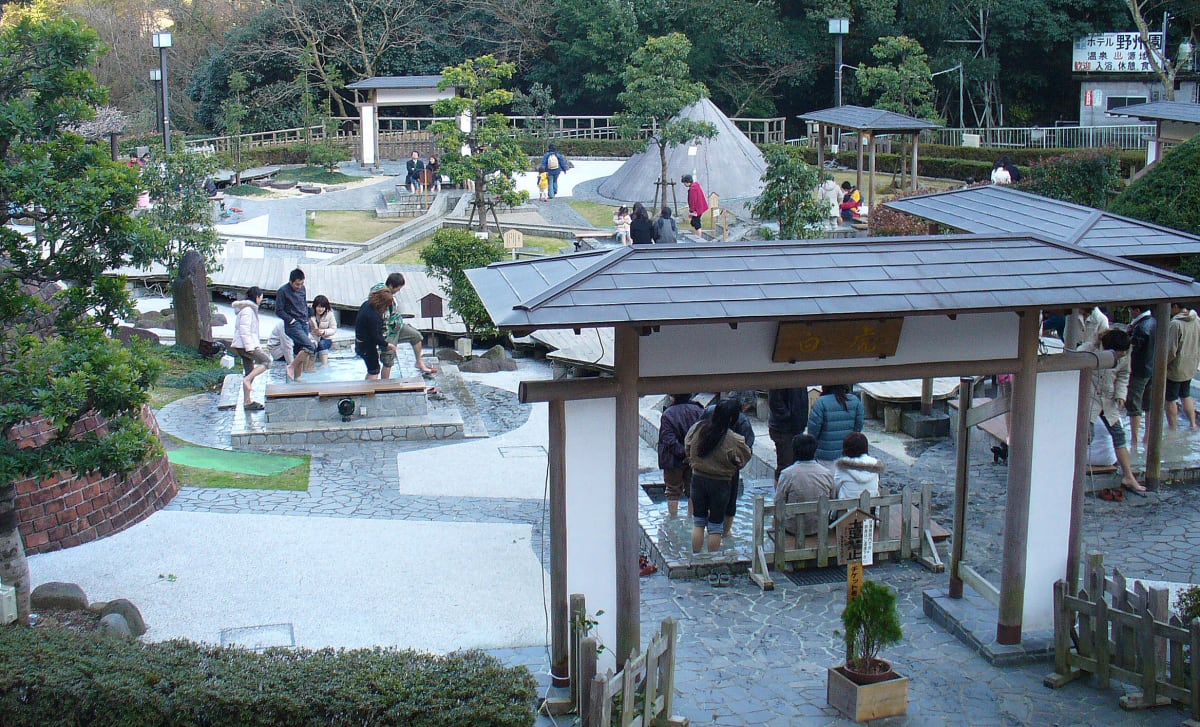
Iiyama Onsen sits in northern Nagano Prefecture near the Nozawa Onsen highlands and produces water with a pH of 11.3, placing it among the most alkaline natural hot springs anywhere in Japan. The soft, high-alkaline water has long been sought out as a beauty spring, widely praised for the way it smooths and softens the skin. The Hokuriku Shinkansen now stops at Iiyama Station, cutting travel time from Tokyo considerably.
Common questions
What is the water temperature at Miyanoshita Onsen?▾
The water temperature at Miyanoshita Onsen ranges up to 80°C (minimum around 42°C).
Is Miyanoshita Onsen free to visit?▾
Miyanoshita Onsen charges an entrance fee in JPY.
Is Miyanoshita Onsen a public or private bath?▾
Miyanoshita Onsen is a public bathing spring.
Are tattoos allowed at Miyanoshita Onsen?▾
No, Miyanoshita Onsen does not permit visible tattoos.
What is the nearest station to Miyanoshita Onsen?▾
The nearest station to Miyanoshita Onsen is Hotel-mae, about 0.1km away.