
Tokigawa Onsen
ときがわ温泉
4.3 · 169 reviews · via Google
Tokigawa Onsen
simple-alkaline · Greater Tokyo
Hotter than 5% of Japan springs (n=122).
More acidic than 98% of Japan springs (n=121).
Mineral profile
Bar width reflects listing order, not measured concentration.
Suitability
At a glance
Getting there
Moderate — a short ride from a station
Cost
High
Crowd level
Quiet
About this spring
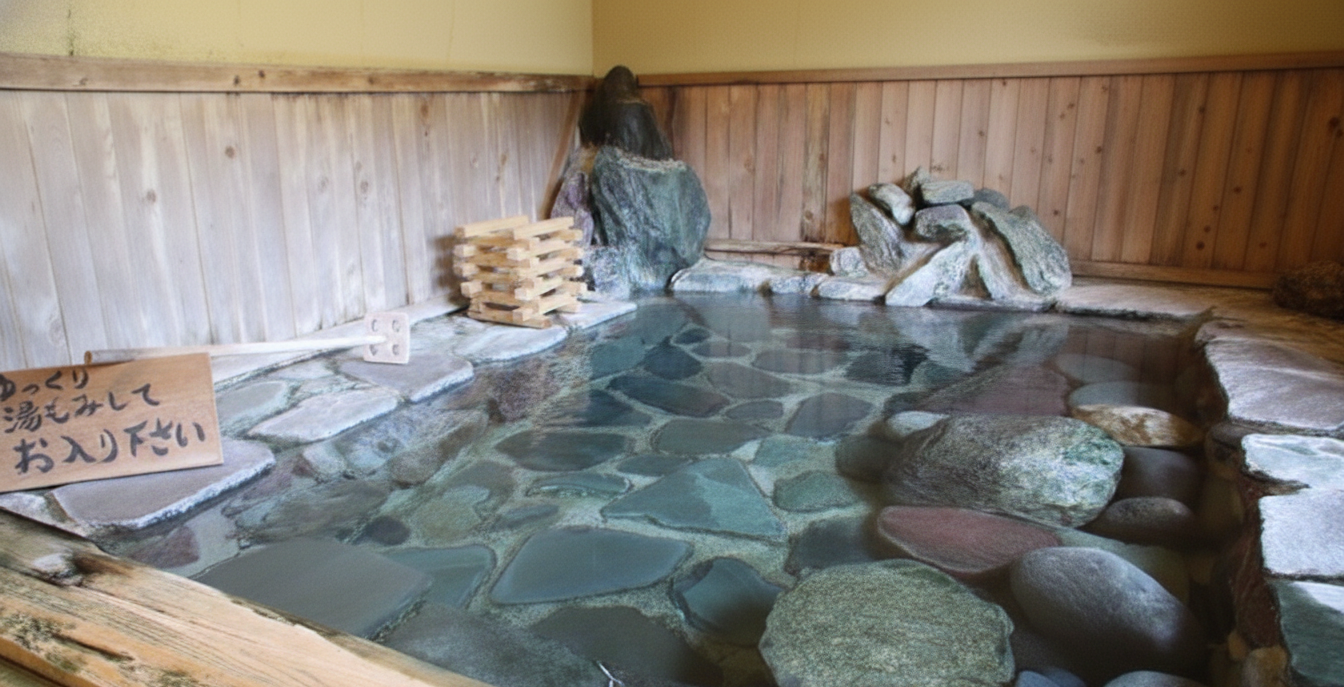
Tokigawa Onsen sits in Hiki District, Saitama Prefecture, roughly 90 minutes from central Tokyo. The water rises from Chichibu Paleozoic strata at a depth of 1,700 meters and registers pH 10, placing it firmly in the highly alkaline range. Bathers consistently note the silky feel it leaves on the skin. The facility has held onto its Showa-era bathhouse character rather than updating it.
Highlights
History
The geological strata that feed Tokigawa's springs formed hundreds of millions of years ago.
When the deep source was eventually developed for public bathing, the operators chose to maintain mid-twentieth-century bathhouse architecture and atmosphere rather than replace it, and that Showa-era character has been kept intact since. The town of Tokigawa itself came into being in 1955 through the consolidation of surrounding villages, communities long connected to the Chichibu region's traditional trades of silk farming and woodworking.
Local guide
Most people living in Tokyo have never heard of Tokigawa-machi, which is exactly the point. It sits in Saitama Prefecture, about 60 kilometers northwest of Shinjuku, in a section of the Chichibu hills where the valley of the Tsukigawa River holds a patchwork of rice paddies, small farms, and old farmhouses with traditional dark-tiled roofs. The quickest approach from Tokyo is the Tobu Tojo Line to Ogawamachi, then a local bus that follows the river upstream into territory that emphatically does not feel like a Tokyo suburb. The rice fields here are still worked by hand in places, the roadside stands sell seasonal vegetables on an honor system, and the bus runs infrequently enough that you pay attention to the schedule.
The spring water here belongs to a category called simple alkaline, but the description does not prepare you for the actual experience. The water at Tokigawa is drawn from 1,700 meters underground through Chichibu paleozoic strata and comes out at pH 10, placing it among the most strongly alkaline onsen in Japan. It emerges at 36 degrees Celsius, which is close to body temperature, meaning it does not scald you the moment you enter, and it does not cool down quickly in the tub. The water is perfectly clear. The alkalinity works on your skin like a mild solvent on natural oils, gently removing the outer layer of sebum and dead cells, and what you are left with after 20 minutes of soaking is skin that feels actively different. Not just clean. Soft in a way that ordinary bathing does not produce. You keep touching your hands together because the texture is unusual.
The ryokan serving Tokigawa Onsen are small and keep visitor numbers low, some limiting access to a few groups per day to maintain the quiet atmosphere. The meals run to local Saitama cuisine, meaning seasonal mountain vegetables from the surrounding hills, river fish from the Tsukigawa, and dishes that change with what is growing. The gardens at the older inns are the kind that have been maintained for generations rather than designed recently, with large stones in predictable positions and moss that has been growing under the same trees for decades.
The satoyama landscape around Tokigawa, the traditional mosaic of farmland, managed woodlands, and small settlements that defines this stretch of Saitama, is accessible on foot directly from the onsen. Trails follow the river upstream and through the cedar plantations on the hillsides, and in April the cherry trees along the Tsukigawa riverbank flower in a display that draws day-trippers from the cities. For the rest of the year, Tokigawa stays mostly to itself. It is the most accessible version of rural Japan from central Tokyo, close enough to reach without a full day of travel and quiet enough to actually feel the distance you have traveled.
Mineral chemistry
Water character inferred from mineral type — verify on site.
Alkaline springs (pH above 8) are known for their skin-softening effect, sometimes called "beauty water" in bathing cultures across Asia. The high pH saponifies skin oils, producing a characteristic silky feel on the skin surface.
The slippery feeling underfoot in highly alkaline springs is normal — take care when standing and walking in the bath. Avoid prolonged soaking if you have dry or sensitive skin.
Similar springs
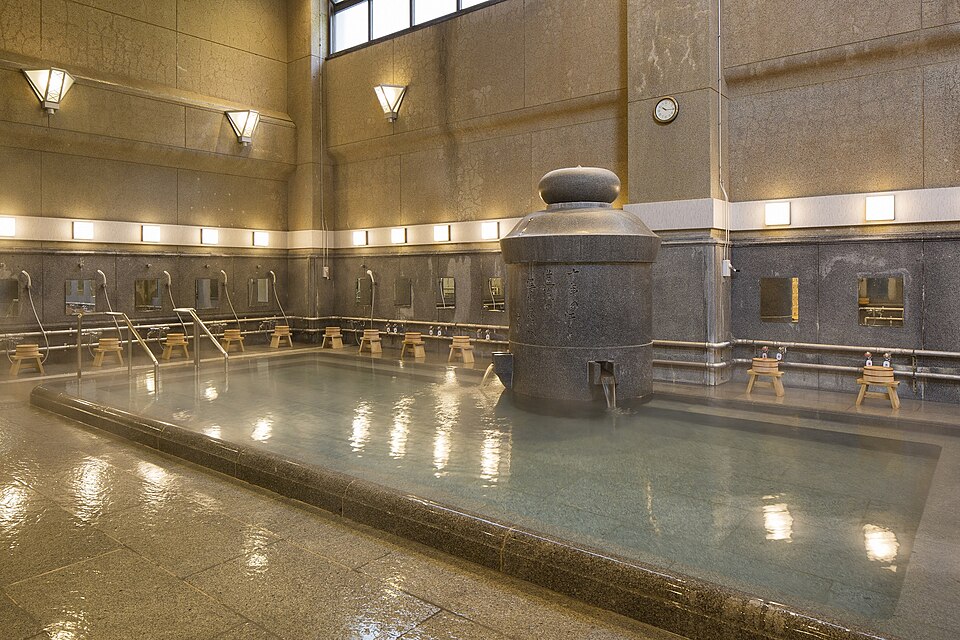
Tsubaki Onsen occupies a single large bathhouse on the Kii Peninsula in Wakayama Prefecture, surrounded by forest and roughly 2.5 hours from Osaka by train. The spring registers pH 9.9, placing it among the most alkaline waters in Japan. The facility is straightforward and well-maintained, attracting visitors from the Kumano region as well as day-trippers traveling in from the coast.
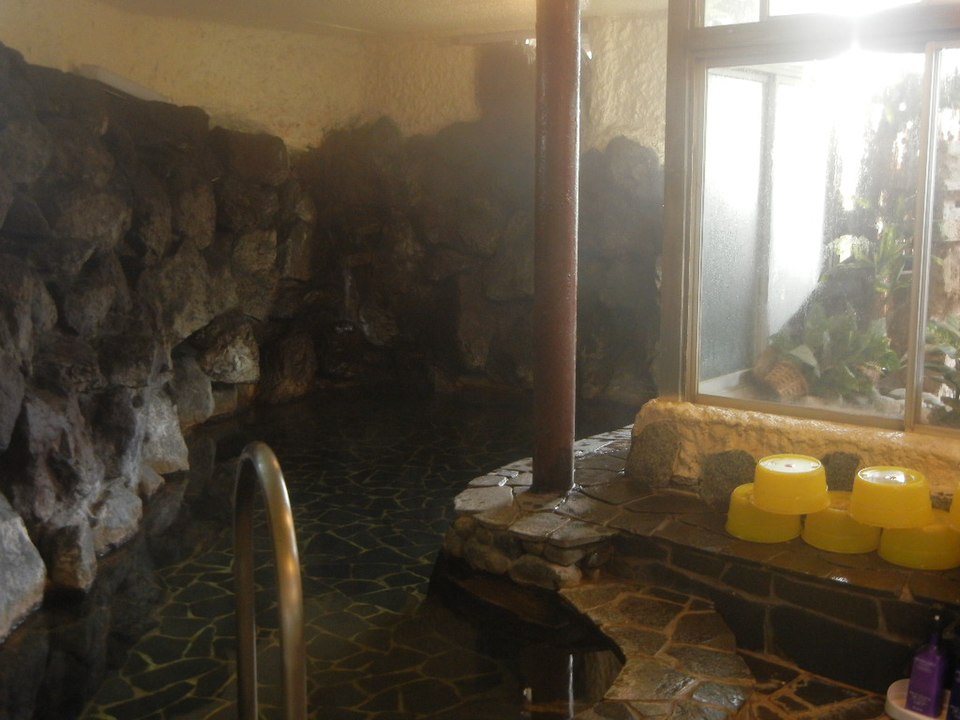
Iiyama Onsen sits in northern Nagano Prefecture near the Nozawa Onsen highlands and produces water with a pH of 11.3, placing it among the most alkaline natural hot springs anywhere in Japan. The soft, high-alkaline water has long been sought out as a beauty spring, widely praised for the way it smooths and softens the skin. The Hokuriku Shinkansen now stops at Iiyama Station, cutting travel time from Tokyo considerably.
 FREE
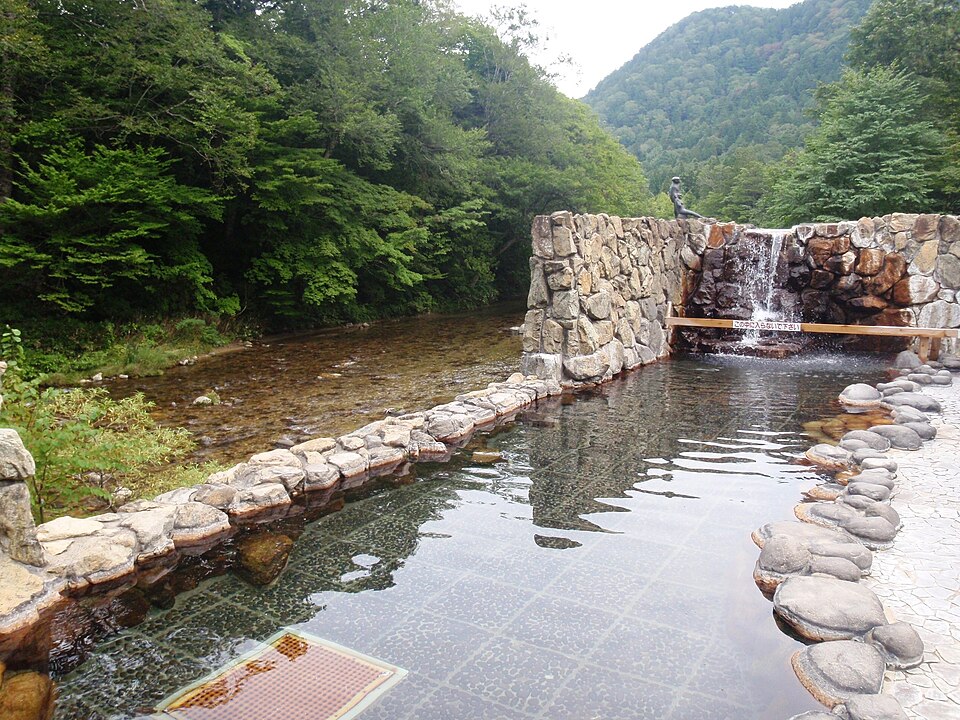
FREEKappa-no-yu is a free, open-air bathing spot tucked into Yagen Valley on the Shimokita Peninsula in Aomori Prefecture, roughly 2 kilometers up the slope from the central Yagen Onsen cluster. Two separate baths rest beside a clear mountain stream, surrounded by old-growth beech and cypress trees. The water temperature holds at 46 degrees Celsius. Visitors are not permitted to bring soap or shampoo. The baths are open from April through November and charge no entry fee.
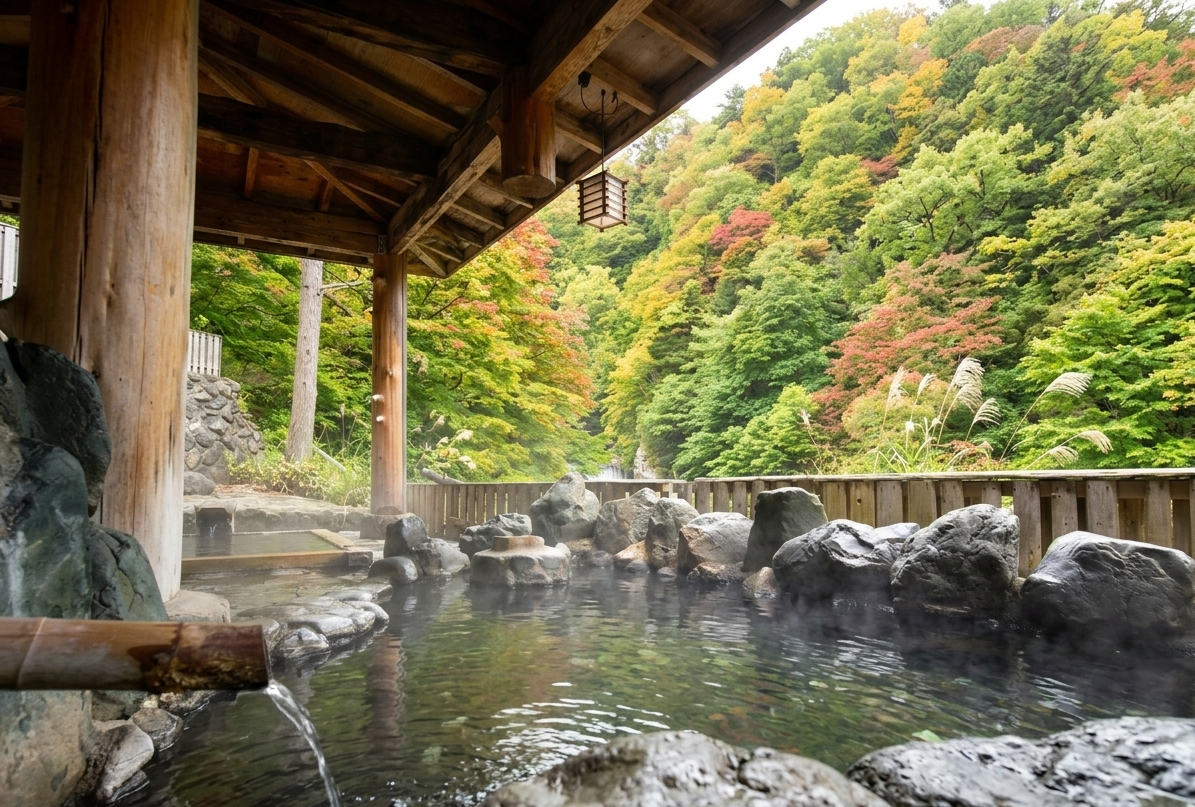
Akinomiya Hot Springs is a cluster of mountain springs situated along the Yakunai River at the western foot of Mount Kurikoma in Akita Prefecture, widely regarded as the prefecture's oldest spring resort. The geothermal area has been catalogued as containing more than 50 individual springs and fumaroles. The innermost of these, Takanoyu, is both the most remote and the most celebrated.
Amenities
Getting there
Take the JR Hachiko Line from Hachioji or Ooi-machi toward Kozu, then transfer to a local bus or taxi to Tokigawa Onsen. Alternatively, take the Seibu Ikebukuro Line to Hanno Station and take a bus toward Tokigawa. The journey from Tokyo takes about 90 minutes.
Location & nearby
〒355-0366 埼玉県比企郡ときがわ町大野537
More springs in Greater Tokyo
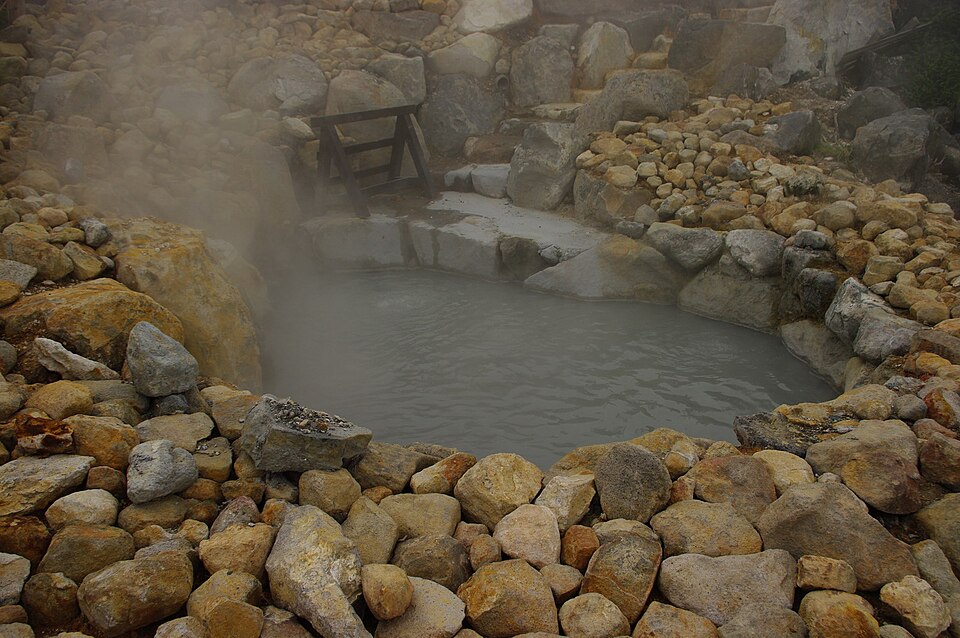
Hakone is a sizable onsen district spread across a caldera, roughly 90 minutes from Tokyo by rail. Seventeen distinct spring sources supply the area's bathhouses, which range from large hotel rotenburo with views of Mt. Fuji and Lake Ashi to small, family-operated facilities tucked along the Old Tokaido road. Because the mineral makeup differs from one source to the next, visiting multiple bathhouses yields a genuinely different soaking experience each time.
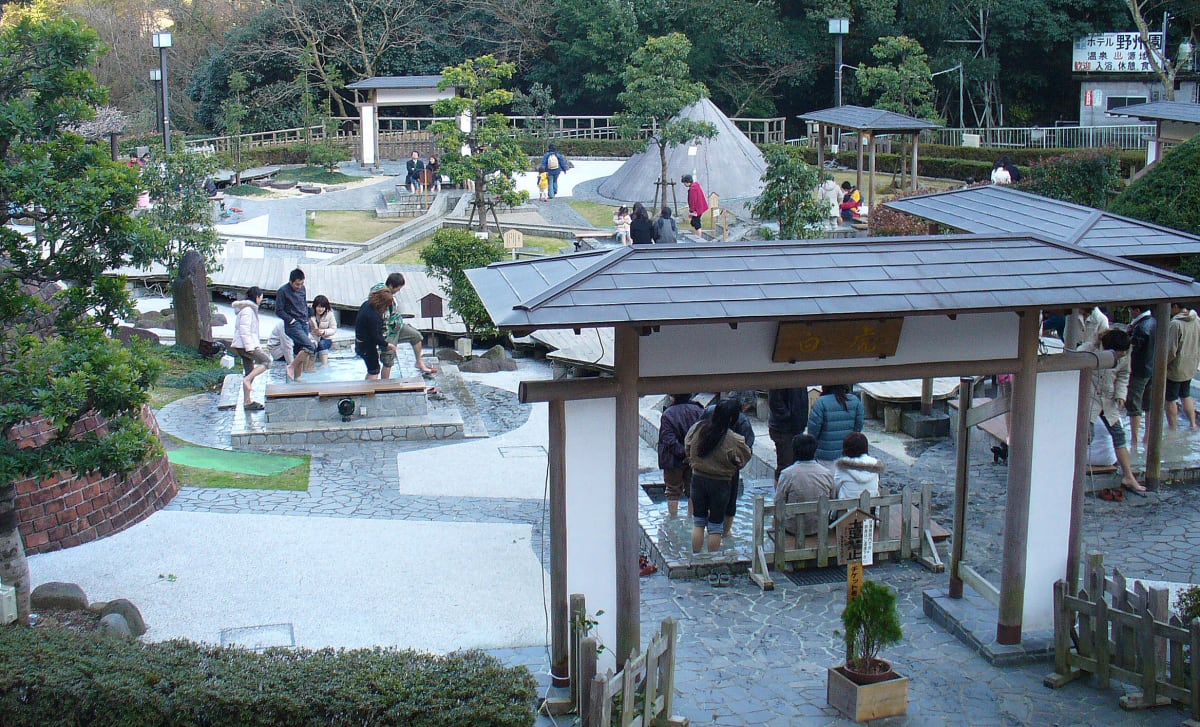
Yugawara Onsen sits along a river in Kanagawa Prefecture, caught between mountain slopes and the nearby coast. The waters are clear and mild, with a gentle quality that makes them suitable for children and older visitors alike. Most of the ryokan in town open their baths to day visitors, and the overall tempo here is unhurried and low-key.
Iiyama Onsen sits in northern Nagano Prefecture near the Nozawa Onsen highlands and produces water with a pH of 11.3, placing it among the most alkaline natural hot springs anywhere in Japan. The soft, high-alkaline water has long been sought out as a beauty spring, widely praised for the way it smooths and softens the skin. The Hokuriku Shinkansen now stops at Iiyama Station, cutting travel time from Tokyo considerably.
Common questions
What is the water temperature at Tokigawa Onsen?▾
The water temperature at Tokigawa Onsen ranges up to 36°C (minimum around 36°C).
Is Tokigawa Onsen free to visit?▾
Tokigawa Onsen charges an entrance fee in JPY.
Is Tokigawa Onsen a public or private bath?▾
Tokigawa Onsen is a public bathing spring.
Are tattoos allowed at Tokigawa Onsen?▾
Yes, Tokigawa Onsen welcomes visitors with tattoos.