
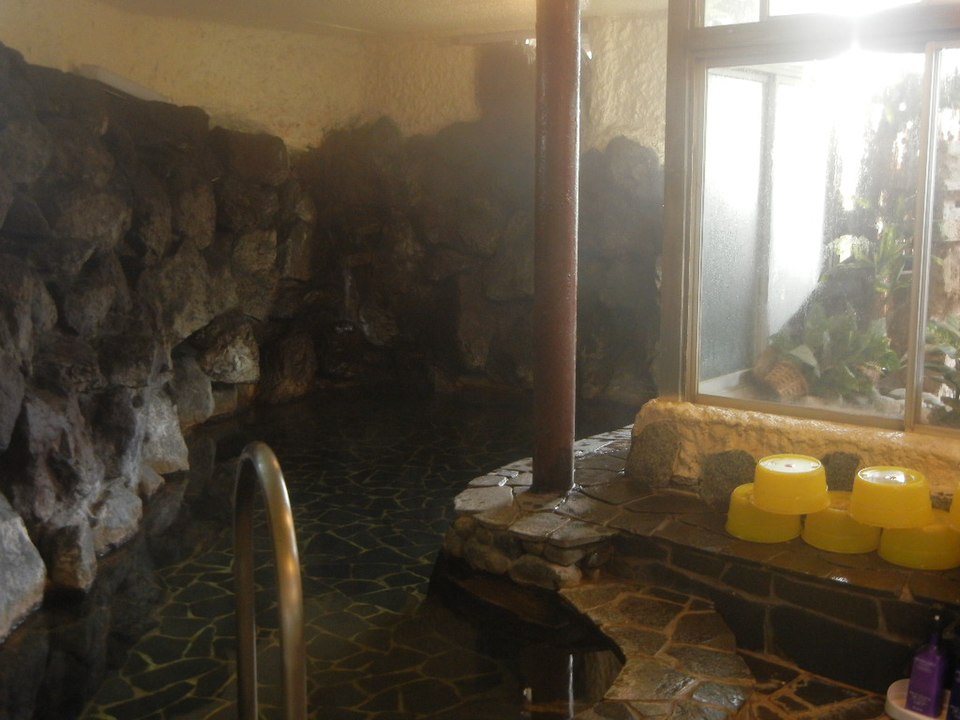
Iiyama Onsen
飯山温泉
4.1 · 508 reviews · via Google
Iiyama Onsen
simple-alkaline · Greater Tokyo
Hotter than 2% of Japan springs (n=122).
More acidic than 99% of Japan springs (n=121).
Mineral profile
Bar width reflects listing order, not measured concentration.
Suitability
At a glance
Getting there
Easy — under 1km from a station
Cost
Moderate
Crowd level
Quiet
About this spring
Iiyama Onsen sits in northern Nagano Prefecture near the Nozawa Onsen highlands and produces water with a pH of 11.3, placing it among the most alkaline natural hot springs anywhere in Japan. The soft, high-alkaline water has long been sought out as a beauty spring, widely praised for the way it smooths and softens the skin. The Hokuriku Shinkansen now stops at Iiyama Station, cutting travel time from Tokyo considerably.
Highlights
History
The springs at Iiyama have been in use since at least the Kamakura period.
Organized development came during the Kan'ei era of the 1620s to 1630s, when the feudal lord of the Iiyama Domain directed the construction of bathhouses and lodging facilities, bringing what had been informal local bathing spots into a proper resort setting. The area shares Nagano's longstanding tradition of communal outdoor bathing with neighboring Nozawa Onsen. The 2024 extension of the Hokuriku Shinkansen to Iiyama Station brought a substantial improvement in access from Tokyo.
Local guide
On the limited express Romance Car out of Shinjuku, the city dissolves surprisingly quickly. Within forty-five minutes the Odakyu line is moving through forested hills in Kanagawa Prefecture, and the valley that holds Iiyama Onsen sits in the Atsugi mountains above a murmuring tributary stream. There is no resort town here, no grid of souvenir shops or illuminated hotel frontages. There is one old wooden ryokan called Motoyu, built above the stream, where the water coming out of the ground carries a pH of 11.3.
That number is worth pausing on. A pH of 7 is neutral. Most alkaline springs in Japan sit between 8 and 9.5. At 11.3, Iiyama Onsen ranks among the highest-alkaline spring waters recorded in the entire country. When you lower yourself into a bath here, the feeling is not simply warm water. The water has a distinctive slip to it, almost frictionless against the skin, and it has been described since the Edo period as a beauty spring because strong alkalinity acts as a natural exfoliant, dissolving the outer layer of dead skin cells as you soak. After twenty minutes you step out and your skin feels faintly different, not just clean but smooth in a way that tends to last through the following day.
The indoor bath at Motoyu is lined with old wood and built low to the ground, in the style of baths that have not been redesigned to look rustic but simply are. The open-air bath looks directly onto the mountain stream below, and depending on the season you are listening to either rushing snowmelt or the slower summer current. A private kawa-buro style option lets you sit at the water level with the river moving past just below the wooden deck railing, which is a strange and genuinely good feeling.
The kitchen here is taken seriously. The head chef holds a Shijo Shinryu title in the traditional Japanese culinary arts, and kaiseki meals use local Kanagawa ingredients through the seasons. The freshwater ayu fish from the stream, served in autumn, is a specific reason some guests return. But the central draw of Iiyama remains the water, which is plain-looking and clear and almost inert-seeming until you have been in it for ten minutes and your skin starts to feel like it belongs to someone who sleeps eight hours a night.
Mineral chemistry
Water character inferred from mineral type — verify on site.
Alkaline springs (pH above 8) are known for their skin-softening effect, sometimes called "beauty water" in bathing cultures across Asia. The high pH saponifies skin oils, producing a characteristic silky feel on the skin surface.
The slippery feeling underfoot in highly alkaline springs is normal — take care when standing and walking in the bath. Avoid prolonged soaking if you have dry or sensitive skin.
Similar springs
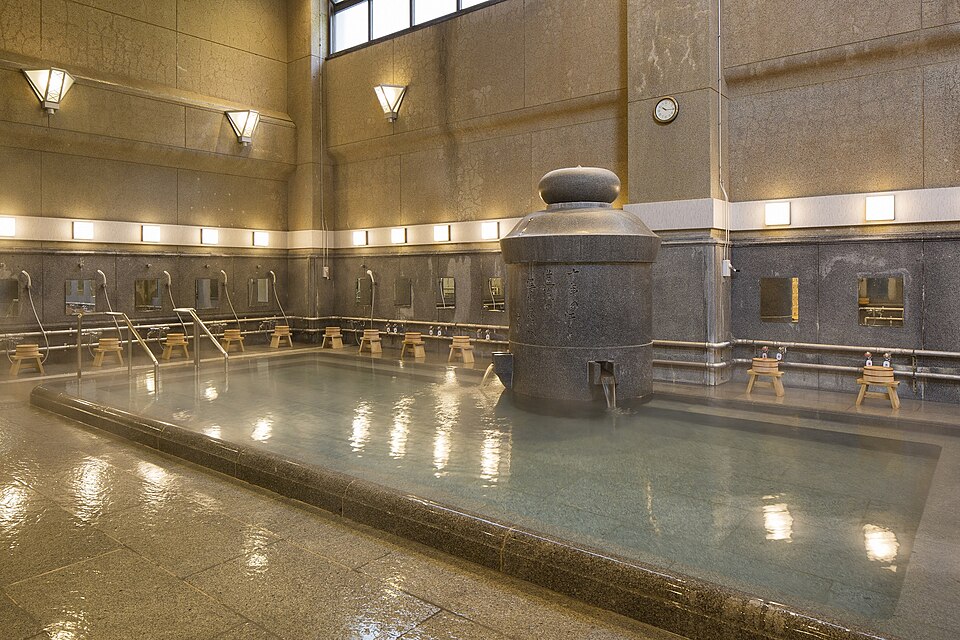
Tsubaki Onsen occupies a single large bathhouse on the Kii Peninsula in Wakayama Prefecture, surrounded by forest and roughly 2.5 hours from Osaka by train. The spring registers pH 9.9, placing it among the most alkaline waters in Japan. The facility is straightforward and well-maintained, attracting visitors from the Kumano region as well as day-trippers traveling in from the coast.
 FREE
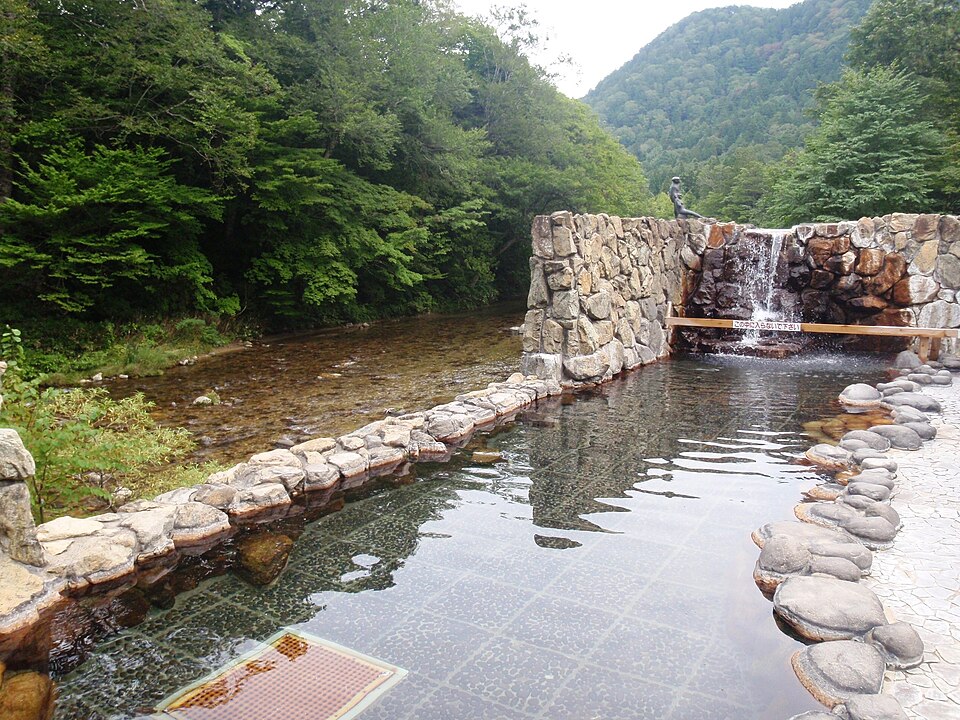
FREEKappa-no-yu is a free, open-air bathing spot tucked into Yagen Valley on the Shimokita Peninsula in Aomori Prefecture, roughly 2 kilometers up the slope from the central Yagen Onsen cluster. Two separate baths rest beside a clear mountain stream, surrounded by old-growth beech and cypress trees. The water temperature holds at 46 degrees Celsius. Visitors are not permitted to bring soap or shampoo. The baths are open from April through November and charge no entry fee.
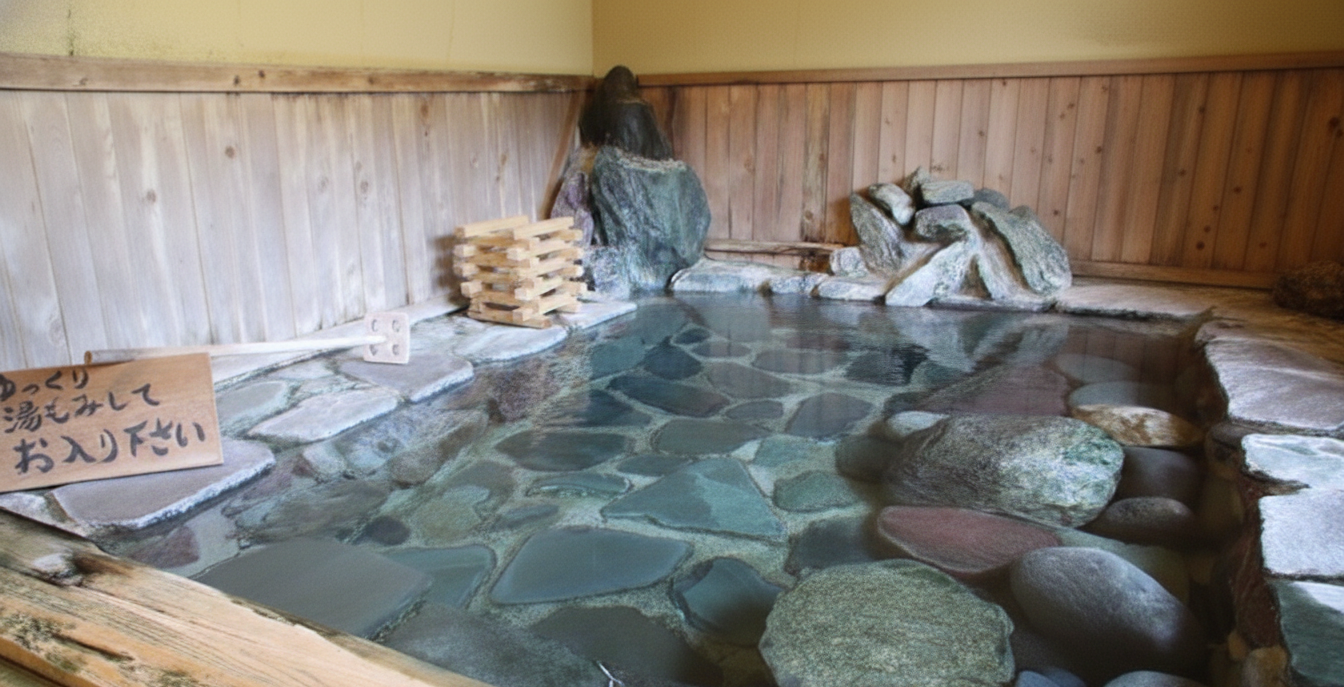
Tokigawa Onsen sits in Hiki District, Saitama Prefecture, roughly 90 minutes from central Tokyo. The water rises from Chichibu Paleozoic strata at a depth of 1,700 meters and registers pH 10, placing it firmly in the highly alkaline range. Bathers consistently note the silky feel it leaves on the skin. The facility has held onto its Showa-era bathhouse character rather than updating it.
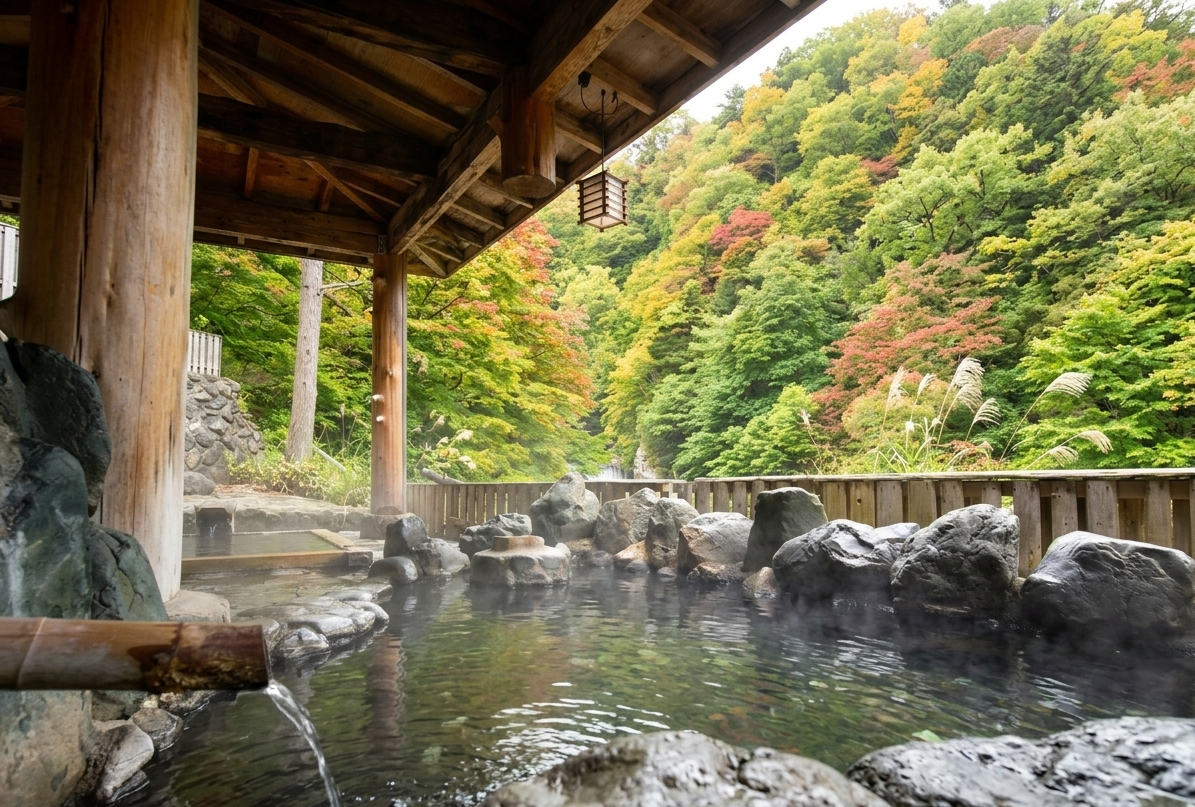
Akinomiya Hot Springs is a cluster of mountain springs situated along the Yakunai River at the western foot of Mount Kurikoma in Akita Prefecture, widely regarded as the prefecture's oldest spring resort. The geothermal area has been catalogued as containing more than 50 individual springs and fumaroles. The innermost of these, Takanoyu, is both the most remote and the most celebrated.
Amenities
Getting there
Take the Hokuriku Shinkansen to Iiyama Station. From there, take a local bus or taxi to your chosen onsen district. The journey from Tokyo takes about 2 hours.
Location & nearby
4916 Iiyama, Atsugi, Kanagawa 243-0213
Make a day of it
Pair your soak with these nearby spots.
Attraction
īYamaonsen
0.0km away
Attraction
Motoyuryokan
0.0km away
Park
īYamakurien
0.4km away
Park
īYamahakusanshinrinkōEn
0.8km away
Park
MiyanosatokōEn
0.8km away
Park
īYamakannonnoinumaki
0.8km away
More springs in Greater Tokyo
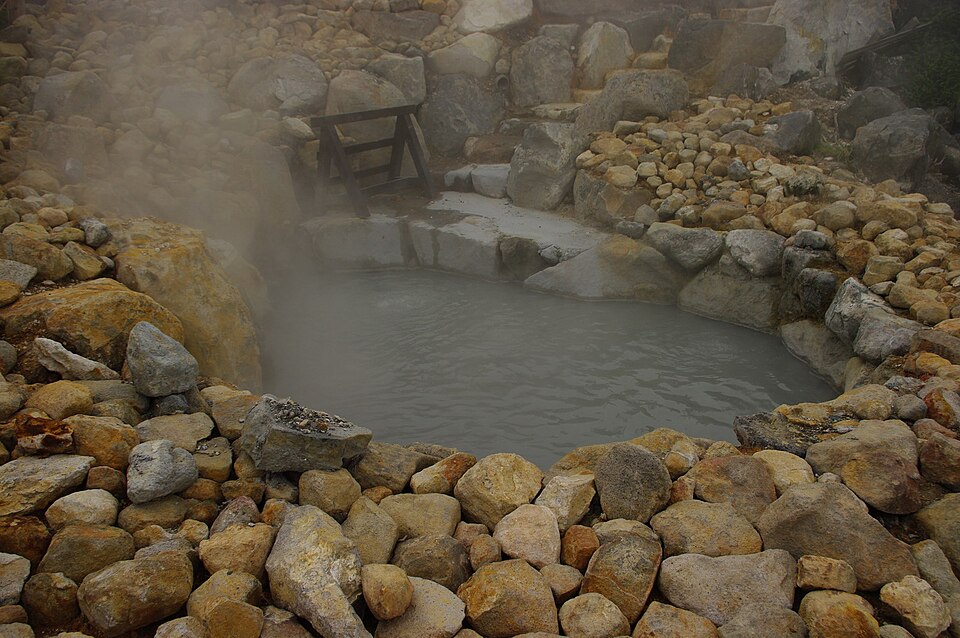
Hakone is a sizable onsen district spread across a caldera, roughly 90 minutes from Tokyo by rail. Seventeen distinct spring sources supply the area's bathhouses, which range from large hotel rotenburo with views of Mt. Fuji and Lake Ashi to small, family-operated facilities tucked along the Old Tokaido road. Because the mineral makeup differs from one source to the next, visiting multiple bathhouses yields a genuinely different soaking experience each time.
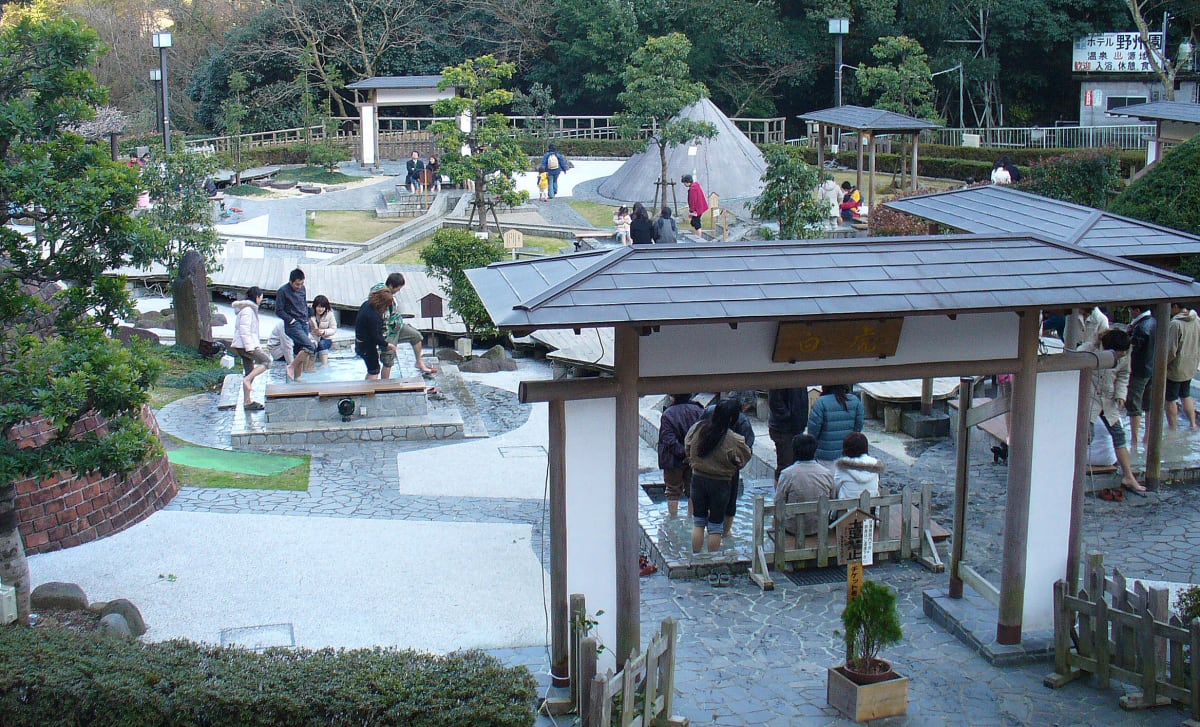
Yugawara Onsen sits along a river in Kanagawa Prefecture, caught between mountain slopes and the nearby coast. The waters are clear and mild, with a gentle quality that makes them suitable for children and older visitors alike. Most of the ryokan in town open their baths to day visitors, and the overall tempo here is unhurried and low-key.
Tokigawa Onsen sits in Hiki District, Saitama Prefecture, roughly 90 minutes from central Tokyo. The water rises from Chichibu Paleozoic strata at a depth of 1,700 meters and registers pH 10, placing it firmly in the highly alkaline range. Bathers consistently note the silky feel it leaves on the skin. The facility has held onto its Showa-era bathhouse character rather than updating it.
Common questions
What is the water temperature at Iiyama Onsen?▾
The water temperature at Iiyama Onsen ranges up to 32°C (minimum around 28°C).
Is Iiyama Onsen free to visit?▾
Iiyama Onsen charges an entrance fee in JPY.
Is Iiyama Onsen a public or private bath?▾
Iiyama Onsen is a public bathing spring.
Are tattoos allowed at Iiyama Onsen?▾
No, Iiyama Onsen does not permit visible tattoos.