
Futamata Onsen
二股らじうむ温泉
3.9 · 680 reviews · via Google
Futamata Onsen
sodium-chloride · Hokkaido
Hotter than 11% of Japan springs (n=122).
More acidic than 36% of Japan springs (n=121).
Mineral profile
Bar width reflects listing order, not measured concentration.
Suitability
At a glance
Getting there
Remote — over 5km from the nearest station
Cost
High
Crowd level
Quiet
About this spring
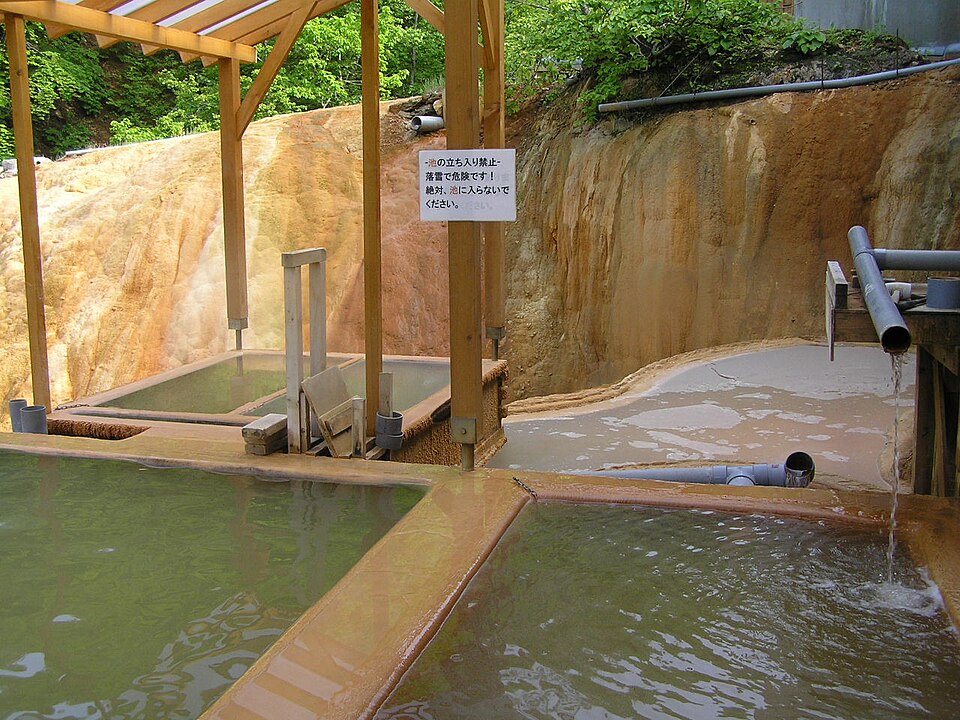
Set deep in the forests outside Oshamanbe in western Hokkaido, this isolated onsen resort draws visitors for one exceptional feature: a 25-meter calcite dome built up gradually by the mineral-laden waters flowing from the spring. The waters carry naturally occurring radon. The dome holds official status as a Hokkaido Natural Monument. Reaching the resort requires either a private vehicle or a transfer arranged in advance.
Highlights
History
The Ainu who lived in this region named the spot God's Onsen, having watched wounded animals recover by bathing in the spring waters.
Yoshishige Saga constructed the first proper bathhouse here in 1900, and the resort took on the name Saga Onsen in his honor. The calcite dome, accumulated layer by layer from minerals deposited by the spring over many centuries, received designation as a Hokkaido Natural Monument in 1965, formally recognizing the site's geological importance.
Local guide
From the city of Toyako on the western shore of Lake Toya, the road curls inland through spruce and silver birch until it dead-ends at a single wooden building beside a small river. This is Futamata Radium Onsen, and the first thing you notice is not the bathhouse at all. Rising from the forest floor just beside the entry is a pale, dripping tower of layered calcium deposits, roughly twenty-five meters tall and still growing. Hokkaido Prefecture designated it a natural monument in 1965. It is one of only two calcareous sinter formations of this scale in the world, the other being Yellowstone's travertine terraces. The monument sits there in the trees, absolutely matter-of-fact, and nothing about the unpainted building beside it suggests you are looking at something rare.
The Ainu people found this spring long before any Japanese settler arrived. Their story goes that a wounded bear was seen wading in the pond here, and when the bear healed and walked back into the forest, the people named the water God's Onsen. Mr. Yoshishige Saga formalized the site in 1900, building the first hut and calling it Saga Onsen. The name Futamata Radium came later, after scientific analysis confirmed trace concentrations of naturally occurring radon dissolved in the water. The radon level is low enough to be safe but high enough to have earned the spring a devoted following among people who swear by its restorative effect on joints and circulation.
The outdoor pool is simple. Wooden planks surround a natural rock basin that fills with 43-degree water piped directly from the source. The water itself is clear, not cloudy, and slightly warmer than most outdoor baths, with a clean neutral smell and a faint silkiness on the skin from the dissolved calcium and sodium. Because you are outside and the forest presses in close on all sides, there is no traffic noise, no ambient resort hum. In summer you hear the river and the birds. In autumn the birch leaves come down bright yellow across the surface of the pool.
Kuromatsunai Station on the JR Hakodate Main Line is the closest rail point, about twelve kilometers back toward the coast, and from there you will need a taxi or a rental car. No bus serves the final stretch of road. That isolation is most of the point. The nearest other hot spring is more than twenty minutes away, and on a weekday outside of summer you may have the outdoor pool entirely to yourself, the carved wooden tub, the mineral tower dripping nearby, and the silence of a Hokkaido forest in the middle of the week.
Mineral chemistry
Water character inferred from mineral type — verify on site.
Sodium chloride springs, essentially natural saltwater baths, are celebrated for their warming and moisturising effects. The salt forms a thin film on the skin that slows moisture evaporation, keeping skin hydrated longer than a freshwater bath.
Those with high blood pressure or heart conditions should consult a doctor before bathing, as the warming effect increases circulation. Avoid immersing open wounds.
Calcium chloride springs share the heat-retaining property of sodium chloride springs but with a stronger warming effect. Prized for muscle and joint relief.
The strong warming effect means those with cardiovascular conditions, high blood pressure, or pregnancy should limit soak duration and consult a doctor if in doubt.
Similar springs
 FREE
FREEThe valley occupies the center of Noboribetsu Onsen in Hokkaido. Jigokudani translates as Hell Valley. The crater covers 11 hectares and releases roughly 10,000 tonnes of hot spring water each day. Fumaroles vent steam across the floor of the valley, boiling pools bubble at the surface, and the surrounding cliffs carry heavy mineral staining. A walking path winds through the area in about 20 minutes and is open to all visitors at no cost. It ranks among the most striking landscapes accessible on foot anywhere in Japan.

Beppu is the most geothermally active city in Japan, with more than 2,900 hot spring vents located within the city limits and eight distinct thermal spring zones collectively known as the Beppu Hatto. The variety on offer is wide, ranging from grand hotel bathhouses to modest neighborhood public facilities to the celebrated Hells, a collection of brilliantly colored boiling pools scattered across the city. The Hells run far too hot for bathing, but they draw visitors who come to walk among them and take in the spectacle.
 FREE
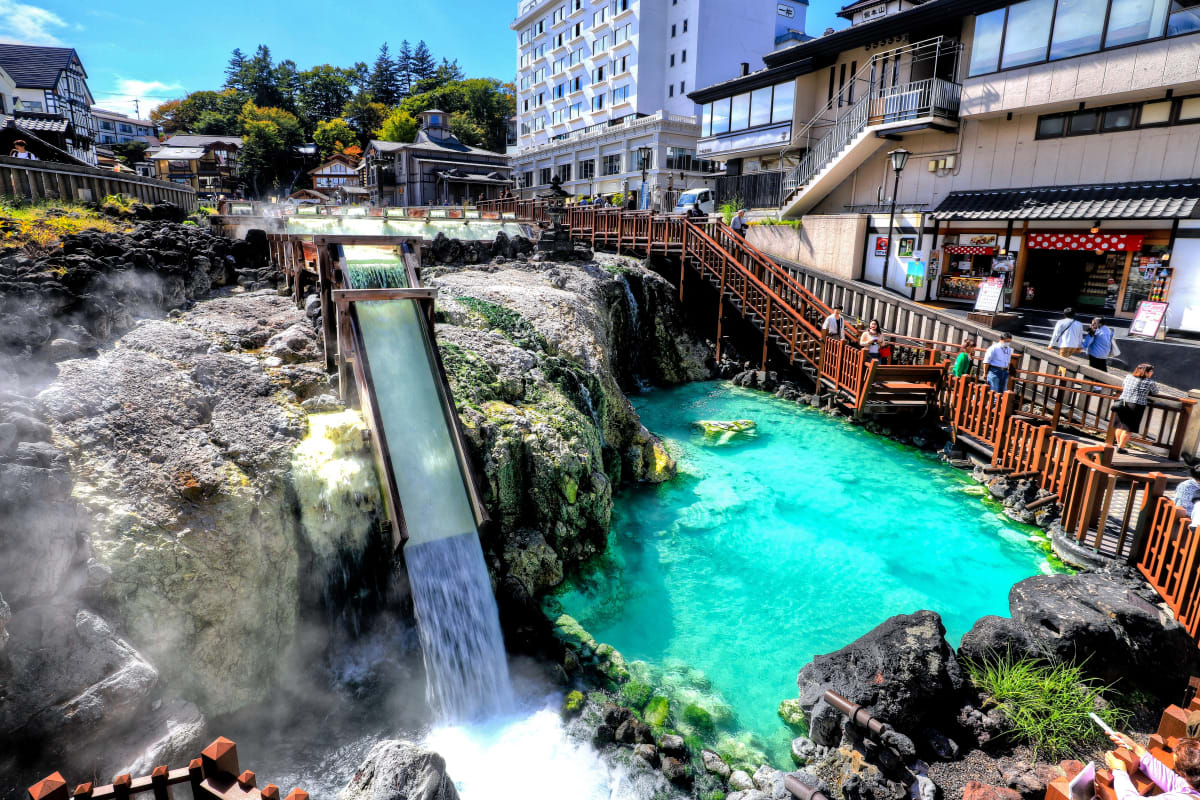
FREEKusatsu Onsen sits at 1,200 meters in the mountains of Gunma Prefecture and ranks among the most celebrated hot spring towns in Japan. The springs here produce more than 32,000 liters of water per minute, a volume unmatched anywhere else in the country. The water is strongly acidic and sulfurous, and its skin-healing properties have long made it legendary among visitors. Twice each day in the central town square, workers cool the scalding water by pulling long wooden paddles through it in unison while singing traditional songs. This practice is called yumomi.

Arima Onsen sits in the hills above Kobe, close to Mount Rokko, and ranks among the oldest hot spring towns in Japan. The town draws visitors for two entirely different spring types that coexist within its compact footprint. Kinsen is the iron-rich golden water that stains surrounding rocks a rusty orange, while ginsen runs clear and carries both carbonation and mild radioactivity. Few other onsen destinations in Japan bring together two such distinct water types within a single small town.
Amenities
Getting there
Futamata Onsen is most practically reached by car. From Sapporo, take the Doo Expressway to the Oshamanbe IC, then drive about 30 minutes into the valley. The nearest train station is Oshamambe on the JR Hakodate Main Line, but there is no bus from the station. Arrange a transfer with the ryokan in advance.
Location & nearby
32 Ōmine, Oshamambe, Yamakoshi District, Hokkaido 049-3501
More springs in Hokkaido
FREEThe valley occupies the center of Noboribetsu Onsen in Hokkaido. Jigokudani translates as Hell Valley. The crater covers 11 hectares and releases roughly 10,000 tonnes of hot spring water each day. Fumaroles vent steam across the floor of the valley, boiling pools bubble at the surface, and the surrounding cliffs carry heavy mineral staining. A walking path winds through the area in about 20 minutes and is open to all visitors at no cost. It ranks among the most striking landscapes accessible on foot anywhere in Japan.
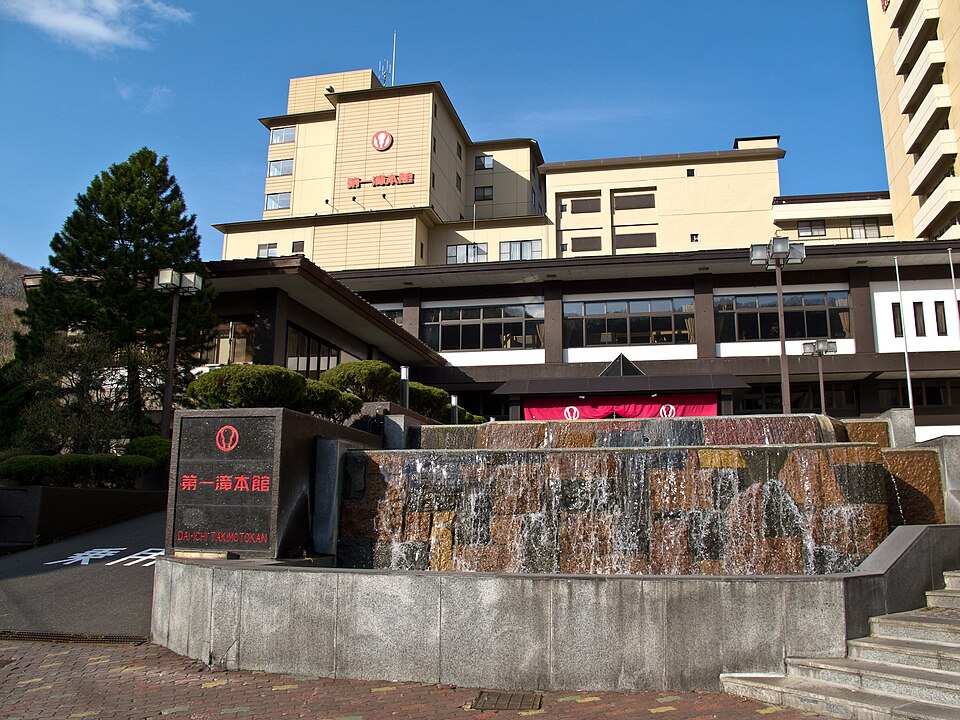
One of Hokkaido's most celebrated bathhouses. Dai-ichi Takimotokan channels water from seven distinct mineral springs into 35 pools spread across multiple floors. Indoor halls open onto outdoor rotenburo overlooking the steam-filled valley below. Day visitors are welcome without an overnight stay.
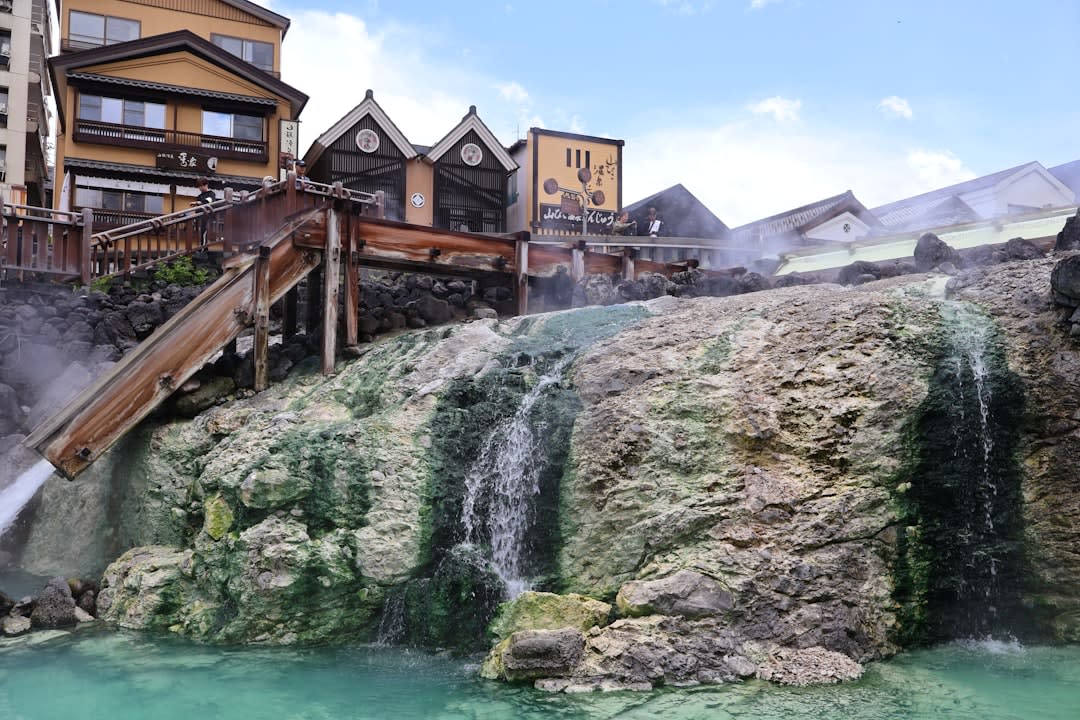
Noboribetsu Onsen is the best-known hot spring resort in Hokkaido, centered on a volcanic crater called Jigokudani, a name that translates to Hell Valley. From the crater floor, nine chemically distinct spring types rise to the surface, each with its own mineral character. Sulfurous steam drifts across the landscape constantly, giving the valley a quality found nowhere else in Japan. The ground here is visibly alive.
Common questions
What is the water temperature at Futamata Onsen?▾
The water temperature at Futamata Onsen ranges up to 43°C (minimum around 43°C).
Is Futamata Onsen free to visit?▾
Futamata Onsen charges an entrance fee in JPY.
Is Futamata Onsen a public or private bath?▾
Futamata Onsen is a public bathing spring.
Are tattoos allowed at Futamata Onsen?▾
No, Futamata Onsen does not permit visible tattoos.
What is the nearest station to Futamata Onsen?▾
The nearest station to Futamata Onsen is Kuromatsunai Station, about 11.7km away.