
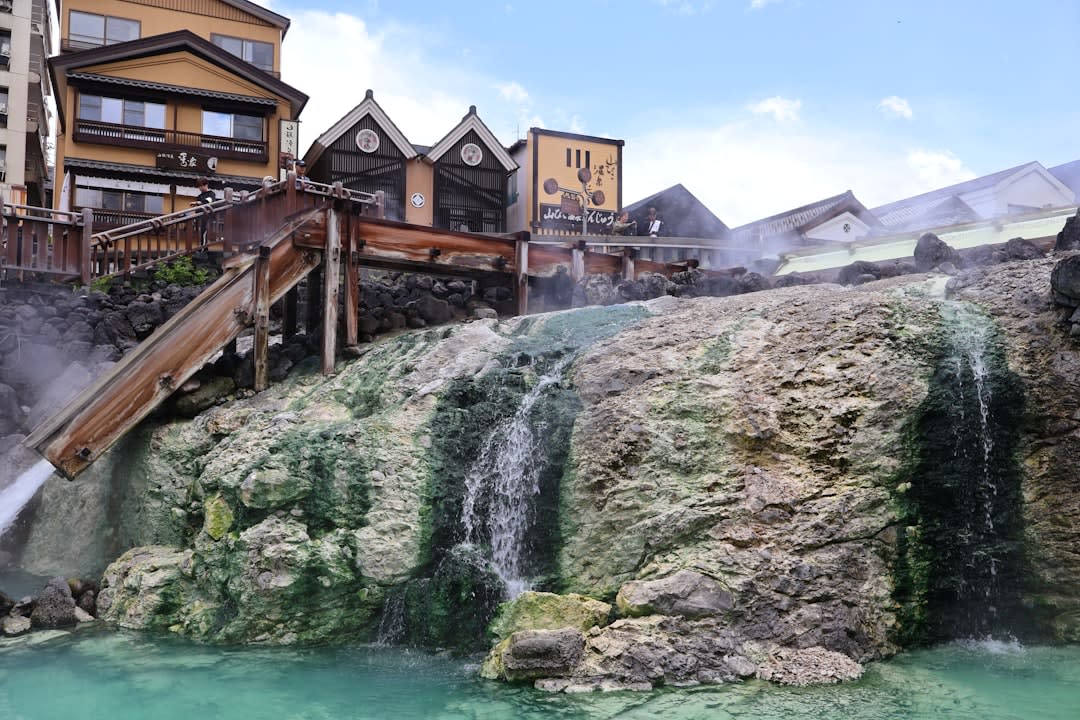
Noboribetsu Onsen
登別温泉
4.3 · 2800 reviews · via Google
Noboribetsu Onsen
sulfur · Hokkaido
Hotter than 80% of Japan springs (n=122).
More acidic than 11% of Japan springs (n=121).
Mineral profile
Bar width reflects listing order, not measured concentration.
Suitability
At a glance
Getting there
Remote — over 5km from the nearest station
Cost
Low
Crowd level
Popular
About this spring
Noboribetsu Onsen is the best-known hot spring resort in Hokkaido, centered on a volcanic crater called Jigokudani, a name that translates to Hell Valley. From the crater floor, nine chemically distinct spring types rise to the surface, each with its own mineral character. Sulfurous steam drifts across the landscape constantly, giving the valley a quality found nowhere else in Japan. The ground here is visibly alive.
Highlights
History
The Ainu people inhabited this area long before Japanese settlers came, naming the steaming river valley nupur-pet, which means murky river, and drawing on the mineral-rich waters to treat ailments.
The first written account in the Edo period dates to 1790, when explorer Mogami Tokunai documented the site and noted its reputation for therapeutic use. The foundations of the modern resort trace back to a carpenter named Kinzo Takimoto, who came to the valley in 1858 hoping the waters would help his wife's skin condition. He built a small hut, the treatment worked well enough that he stayed, and he eventually established a proper inn. By 1881, Takimoto had paid to build a road connecting the valley to the wider region. A two-storey building followed in 1888. The volcanic crater of Jigokudani received official designation as a protected landscape in 1934. The town now attracts visitors from throughout Japan, drawn by the experience of nine different volcanic spring types all flowing from a single volcanic source.
Local guide
Most people arrive at Noboribetsu Station and board the Donan Bus without really knowing what they are heading into. The twenty-minute ride deposits you at the Noboribetsu Onsen bus terminal, where the smell hits you before you have finished standing up. There is sulfur in the air, and something metallic underneath it, and the steam from the valley behind town drifts right across the main shopping street. You realize quickly that this is not an onsen town that happens to have hot springs. It is a town that exists entirely because the ground here is unstable and generous.
Noboribetsu Onsen is extraordinary because of its sheer variety. Eleven distinct spring types come out of the ground here, which is a number that has no rival in Japan. Within a few hundred meters you can move from a milky, odorless sodium bicarbonate pool, where the water leaves your skin feeling clean and slightly dry, to a strongly acidic iron spring that turns a deep rust color and smells like a struck match. The sulfur baths at the larger ryokan are a yellow-white and opaque, hot enough that you ease in slowly, and the water has a fine silky texture on your skin that feels nothing like ordinary hot water. The salt springs are heavier, warmer somehow even at the same temperature, and they leave a light film on your arms when you climb out.
The original ryokan in the area, Daiichi Takimotokan, opened in 1858 and built its first bath for the wife of its founder. Today it pipes five spring types into a three-story bathing complex with 35 pools. Walking between them in a single visit is a geology lesson no textbook can replicate, because each bath smells different, feels different, and leaves a different mark on your body.
In winter, the outdoor rotenburo baths at the hotels along the valley edge fill with snow on their stone surrounds while the water stays searing hot. Sitting in a milky white sulfur pool with snow falling directly onto your shoulders, looking out toward the dark silhouette of the valley, is an experience that requires no special planning and no advance booking at most places. Just arrive, pay the day-use fee, and get in. The water will do the rest.
Mineral chemistry
Sulfuric hot springs are among the most studied in balneology worldwide. The sulfur compounds, primarily hydrogen sulfide and thiosulfate, have documented antimicrobial and anti-inflammatory properties. Regular bathing is associated with relief from chronic skin conditions including eczema and psoriasis, as well as joint inflammation and muscle soreness. Sulfuric waters have been used therapeutically across Asia and Europe for centuries.
The distinctive rotten-egg smell dissipates quickly after leaving the bath. Avoid if you have a sulfur allergy, very sensitive skin, or respiratory conditions. Remove silver jewellery before entering — sulfur will blacken it permanently.
Sodium chloride springs, essentially natural saltwater baths, are celebrated for their warming and moisturising effects. The salt forms a thin film on the skin that slows moisture evaporation, keeping skin hydrated longer than a freshwater bath.
Those with high blood pressure or heart conditions should consult a doctor before bathing, as the warming effect increases circulation. Avoid immersing open wounds.
Iron-bearing springs are recognised by their characteristic rust-red or amber colour and metallic taste. The iron content is associated with stimulation of red blood cell production and is traditionally recommended for anaemia and fatigue recovery.
Iron springs will stain light-coloured swimwear and towels a persistent brownish-orange. Those with haemochromatosis (iron overload condition) should seek medical advice before bathing.
Similar springs
 FREE
FREEThe valley occupies the center of Noboribetsu Onsen in Hokkaido. Jigokudani translates as Hell Valley. The crater covers 11 hectares and releases roughly 10,000 tonnes of hot spring water each day. Fumaroles vent steam across the floor of the valley, boiling pools bubble at the surface, and the surrounding cliffs carry heavy mineral staining. A walking path winds through the area in about 20 minutes and is open to all visitors at no cost. It ranks among the most striking landscapes accessible on foot anywhere in Japan.

Set deep in the Hakkoda Mountains of Aomori Prefecture, Sukayu Onsen is a historic bathhouse best known for its cavernous mixed-bathing hall, the Sen-nin-buro, which translates as the Bath of a Thousand Bathers. The waters are strongly acidic, the setting is rustic and unhurried, and winter brings extraordinary snowfall to the surrounding mountains.

Beppu is the most geothermally active city in Japan, with more than 2,900 hot spring vents located within the city limits and eight distinct thermal spring zones collectively known as the Beppu Hatto. The variety on offer is wide, ranging from grand hotel bathhouses to modest neighborhood public facilities to the celebrated Hells, a collection of brilliantly colored boiling pools scattered across the city. The Hells run far too hot for bathing, but they draw visitors who come to walk among them and take in the spectacle.
 FREE
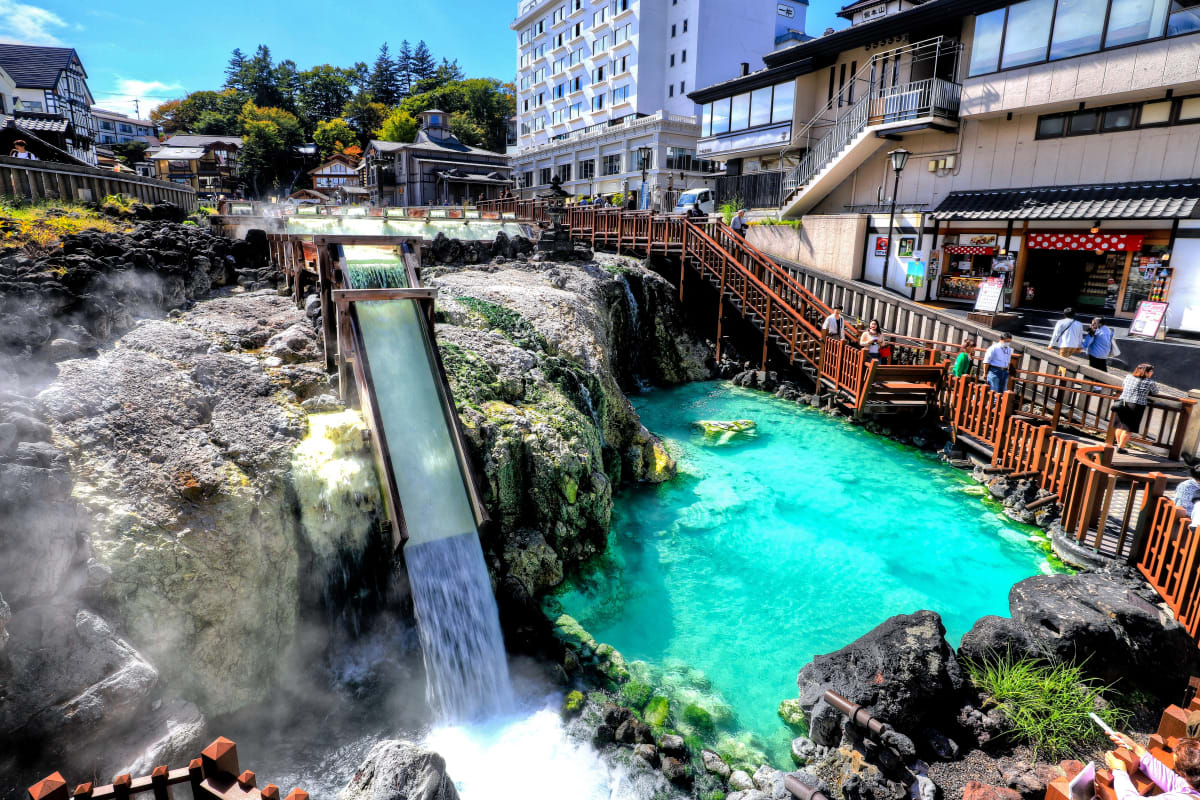
FREEKusatsu Onsen sits at 1,200 meters in the mountains of Gunma Prefecture and ranks among the most celebrated hot spring towns in Japan. The springs here produce more than 32,000 liters of water per minute, a volume unmatched anywhere else in the country. The water is strongly acidic and sulfurous, and its skin-healing properties have long made it legendary among visitors. Twice each day in the central town square, workers cool the scalding water by pulling long wooden paddles through it in unison while singing traditional songs. This practice is called yumomi.
Amenities
Getting there
From Tokyo: Hokkaido Shinkansen
Gateway: Shin-Hakodate-Hokuto (240 min)
Limited Express Hokuto to Noboribetsu Station, then Donan Bus (~20 min)
Total journey: 300 min
From Tokyo: Hokkaido Shinkansen
Gateway: Shin-Sapporo
Total journey: 480 min
From Noboribetsu Station, take the Donan Bus on the Noboribetsu Onsen line. The ride takes about 20 minutes to the Noboribetsu Onsen bus terminal.
Location & nearby
Noboribetsuonsencho, Noboribetsu City, Hokkaido 059-0551
More springs in Hokkaido
FREEThe valley occupies the center of Noboribetsu Onsen in Hokkaido. Jigokudani translates as Hell Valley. The crater covers 11 hectares and releases roughly 10,000 tonnes of hot spring water each day. Fumaroles vent steam across the floor of the valley, boiling pools bubble at the surface, and the surrounding cliffs carry heavy mineral staining. A walking path winds through the area in about 20 minutes and is open to all visitors at no cost. It ranks among the most striking landscapes accessible on foot anywhere in Japan.
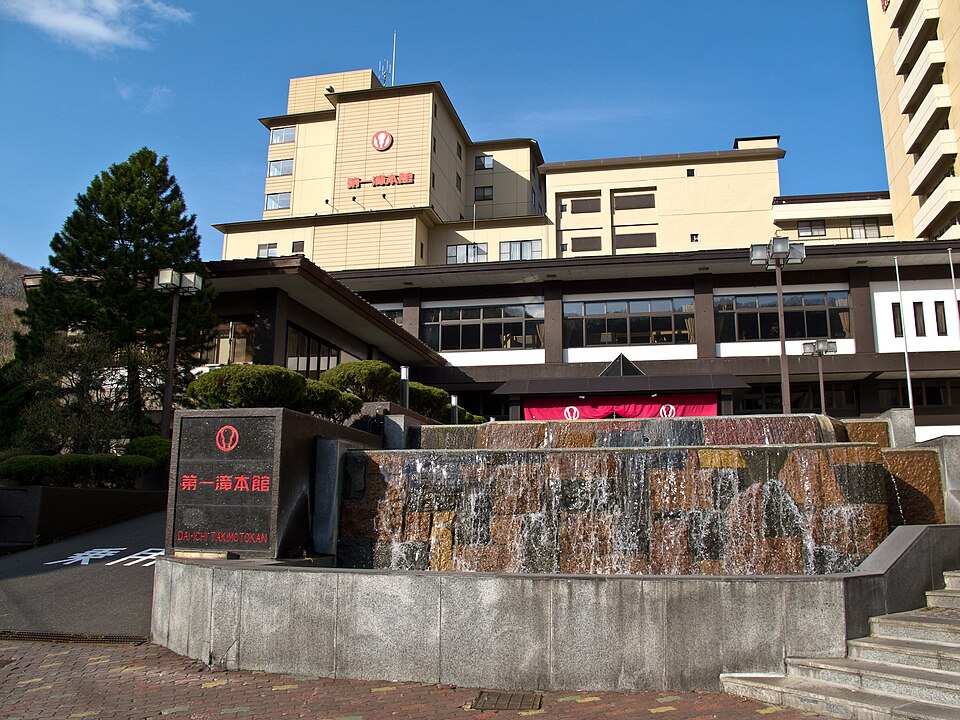
One of Hokkaido's most celebrated bathhouses. Dai-ichi Takimotokan channels water from seven distinct mineral springs into 35 pools spread across multiple floors. Indoor halls open onto outdoor rotenburo overlooking the steam-filled valley below. Day visitors are welcome without an overnight stay.
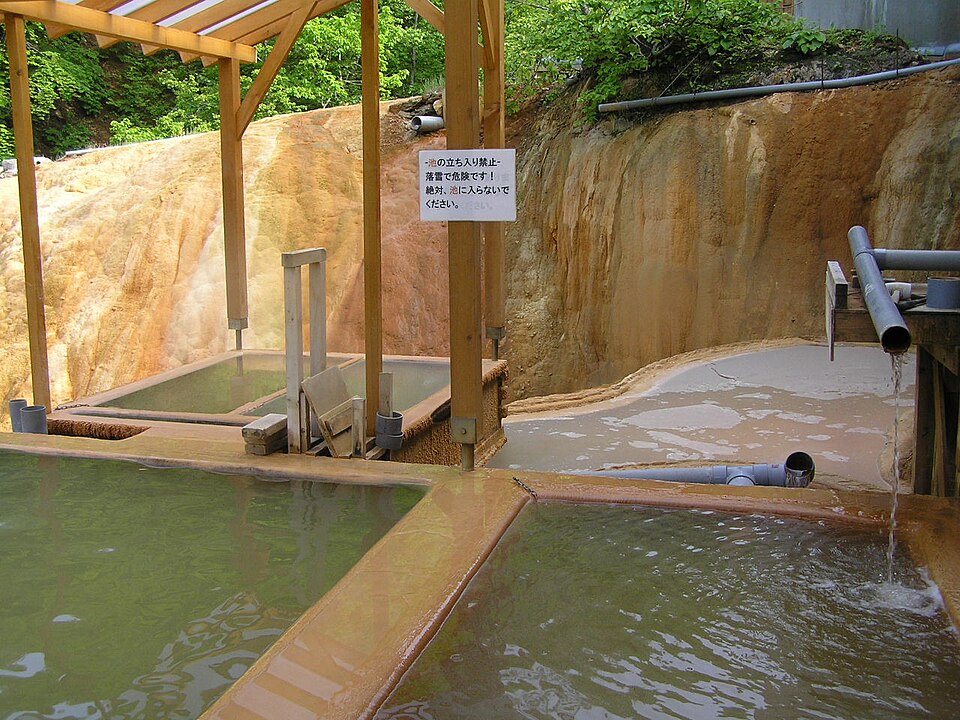
Set deep in the forests outside Oshamanbe in western Hokkaido, this isolated onsen resort draws visitors for one exceptional feature: a 25-meter calcite dome built up gradually by the mineral-laden waters flowing from the spring. The waters carry naturally occurring radon. The dome holds official status as a Hokkaido Natural Monument. Reaching the resort requires either a private vehicle or a transfer arranged in advance.
Common questions
What is the water temperature at Noboribetsu Onsen?▾
The water temperature at Noboribetsu Onsen ranges up to 85°C (minimum around 40°C).
Is Noboribetsu Onsen free to visit?▾
Noboribetsu Onsen charges an entrance fee in JPY.
Is Noboribetsu Onsen a public or private bath?▾
Noboribetsu Onsen is a public bathing spring.
Are tattoos allowed at Noboribetsu Onsen?▾
Tattoo policy varies at Noboribetsu Onsen. Check ahead of your visit.