
Hawai Onsen
羽合温泉
Hawai Onsen
sodium-chloride · Kansai
Hotter than 48% of Japan springs (n=122).
More acidic than 56% of Japan springs (n=121).
Mineral profile
Bar width reflects listing order, not measured concentration.
Suitability
At a glance
Getting there
Easy — under 1km from a station
Cost
High
About this spring
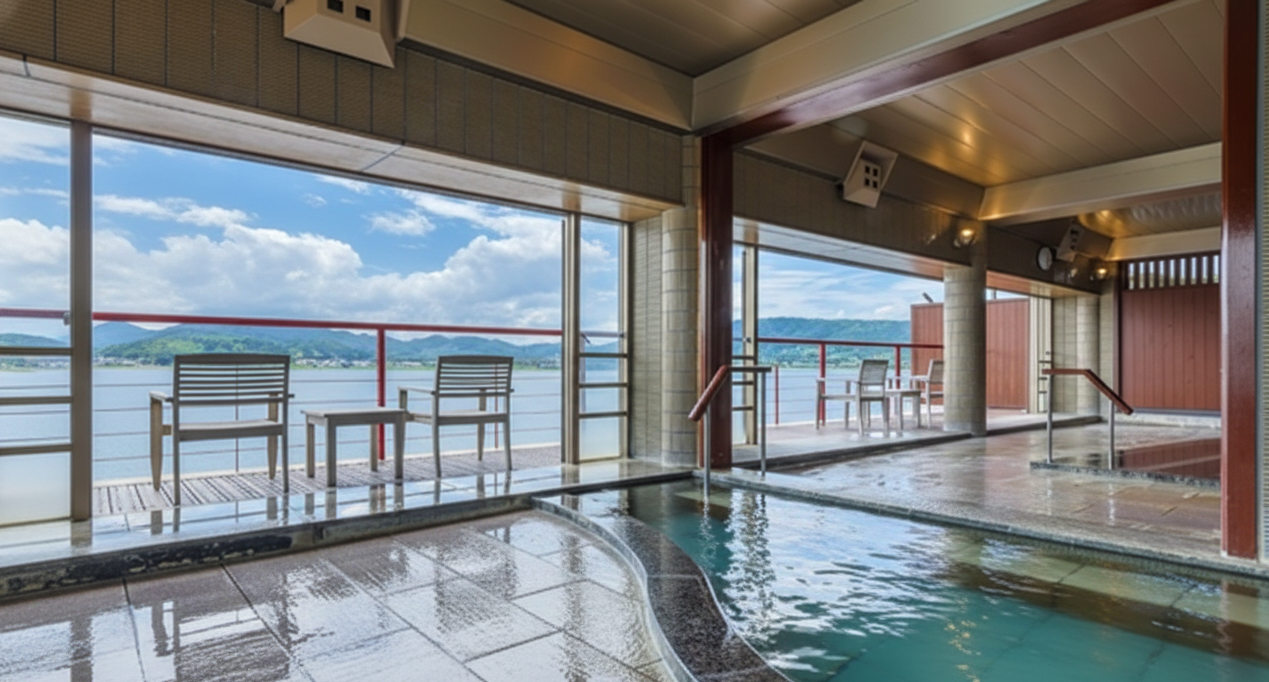
Hawai Onsen occupies the northern shore of Lake Togo in Tottori Prefecture. The ryokan here were built on land reclaimed from the lake itself, and certain rooms have windows positioned so that guests can fish directly from them into the water below. Where geothermal water seeps up through the lake floor, mist collects along the surface, and most mornings the lake takes on a hazy, otherworldly quality.
Highlights
History
The name Hawaida appears in a written record from 1258, making that document the earliest known evidence of awareness of geothermal activity in this area.
In 1843, fishermen began noticing warm water welling up from the bottom of Lake Togo. Organized development followed in 1866, when Kosuke Yumura ran bamboo pipes to draw the spring water for bathing and then reclaimed land from the lake on which to build a ryokan. Before that period of development, the area went by the name Asozu Onsen.
Local guide
Coming from Tottori City, the Sanin Main Line follows the coast westward until it reaches Hawai Onsen Station, where you step onto a platform so close to Lake Togo that you can see the water immediately. The town name is not a typo or a tourism gimmick. It was the name of the area long before Hawaii became a well-known word outside the Pacific, and the official spelling in English omits the second i. Local shopkeepers have long since learned to find the confusion amusing. The lake itself is shallow and warm, fed partly by hot spring water rising from the lakebed, and the fog that rolls across it on cool mornings comes directly from the heat differential between the spring-warmed water and the air above.
Hawai Onsen was formally developed starting in 1866, when a man named Kosuke Yumura ran bamboo tubes from a spring vent beneath the lake to supply his first bathhouse. The fishermen in the area had noticed the lake water running warm in certain spots as far back as 1843, though documentary records of the region go back to 1258. The spring type is sodium and calcium chloride, with temperatures between 50 and 60 degrees at the source. In the bath, the water is clear and carries a faint salinity. The calcium content gives it a slight weight and leaves the skin feeling sealed against the cold after you climb out, which matters in a lakeside town where the wind comes off the water in autumn.
The most distinctive feature of the town is the Bokoro ryokan, which opened in 1931 and sits on a small reclaimed platform above the lake surface. You reach it by crossing a red bridge from the shore, and the outdoor bath positioned over the water gives the impression of floating between two open skies. Several other inns in the town have fishing lines hanging from their room windows directly into the lake below. In the evenings, guests actually use them. Down the main street, the footbath system known as the Baths of the Seven Lucky Gods connects seven separate ashiyu basins, each one named for a different deity, linked by a walking route through the town.
The train ride from Tottori Station to Hawai Onsen takes about thirty-five minutes. The hot spring area is small enough to walk entirely, and the lake path that circles the shore connects Hawai Onsen to the adjacent Togo Onsen district in under twenty minutes. Both areas sit within the Misasa-Togoko Prefectural Natural Park, and on clear days the low hills behind the lake reflect clearly enough in the water to make it hard to tell where the shoreline actually is.
Mineral chemistry
Water character inferred from mineral type — verify on site.
Sodium chloride springs, essentially natural saltwater baths, are celebrated for their warming and moisturising effects. The salt forms a thin film on the skin that slows moisture evaporation, keeping skin hydrated longer than a freshwater bath.
Those with high blood pressure or heart conditions should consult a doctor before bathing, as the warming effect increases circulation. Avoid immersing open wounds.
Calcium chloride springs share the heat-retaining property of sodium chloride springs but with a stronger warming effect. Prized for muscle and joint relief.
The strong warming effect means those with cardiovascular conditions, high blood pressure, or pregnancy should limit soak duration and consult a doctor if in doubt.
Similar springs
 FREE
FREEThe valley occupies the center of Noboribetsu Onsen in Hokkaido. Jigokudani translates as Hell Valley. The crater covers 11 hectares and releases roughly 10,000 tonnes of hot spring water each day. Fumaroles vent steam across the floor of the valley, boiling pools bubble at the surface, and the surrounding cliffs carry heavy mineral staining. A walking path winds through the area in about 20 minutes and is open to all visitors at no cost. It ranks among the most striking landscapes accessible on foot anywhere in Japan.

Beppu is the most geothermally active city in Japan, with more than 2,900 hot spring vents located within the city limits and eight distinct thermal spring zones collectively known as the Beppu Hatto. The variety on offer is wide, ranging from grand hotel bathhouses to modest neighborhood public facilities to the celebrated Hells, a collection of brilliantly colored boiling pools scattered across the city. The Hells run far too hot for bathing, but they draw visitors who come to walk among them and take in the spectacle.

Arima Onsen sits in the hills above Kobe, close to Mount Rokko, and ranks among the oldest hot spring towns in Japan. The town draws visitors for two entirely different spring types that coexist within its compact footprint. Kinsen is the iron-rich golden water that stains surrounding rocks a rusty orange, while ginsen runs clear and carries both carbonation and mild radioactivity. Few other onsen destinations in Japan bring together two such distinct water types within a single small town.

Tsuru-no-yu is the oldest of the seven inns at Nyuto, set deep in a beech forest in Akita Prefecture. The main draw is a large outdoor mixed-bathing pool fed by opaque, milky-white sulfurous water. Many regard it as the most beautiful onsen setting in Japan. People come here to put some distance between themselves and the rest of the world for a while.
Amenities
Getting there
Take the JR San'in Main Line to Matsuzaki Station. From Tottori City the ride takes about 1 hour. The Hawai Onsen district is about 4 kilometers from the station. Take a local bus or short taxi to the lakeside ryokan.
Location & nearby
Hawai Onsen, Yurihama, Tōhaku District, Tottori
Make a day of it
Pair your soak with these nearby spots.
Park
To Go Kohan Park
0.2km away
Attraction
Seitaiiniwamoto
0.4km away
Attraction
Hawaii Yu Town
0.6km away
Park
To Go Kohawairinkai Park Asatsu Park Moyo Shimonohiroba
0.8km away
Park
Yu Oasis Ryuhokaku
0.8km away
Park
Misasatogoko Prefectural Natural Park
0.9km away
More springs in Kansai
Arima Onsen sits in the hills above Kobe, close to Mount Rokko, and ranks among the oldest hot spring towns in Japan. The town draws visitors for two entirely different spring types that coexist within its compact footprint. Kinsen is the iron-rich golden water that stains surrounding rocks a rusty orange, while ginsen runs clear and carries both carbonation and mild radioactivity. Few other onsen destinations in Japan bring together two such distinct water types within a single small town.
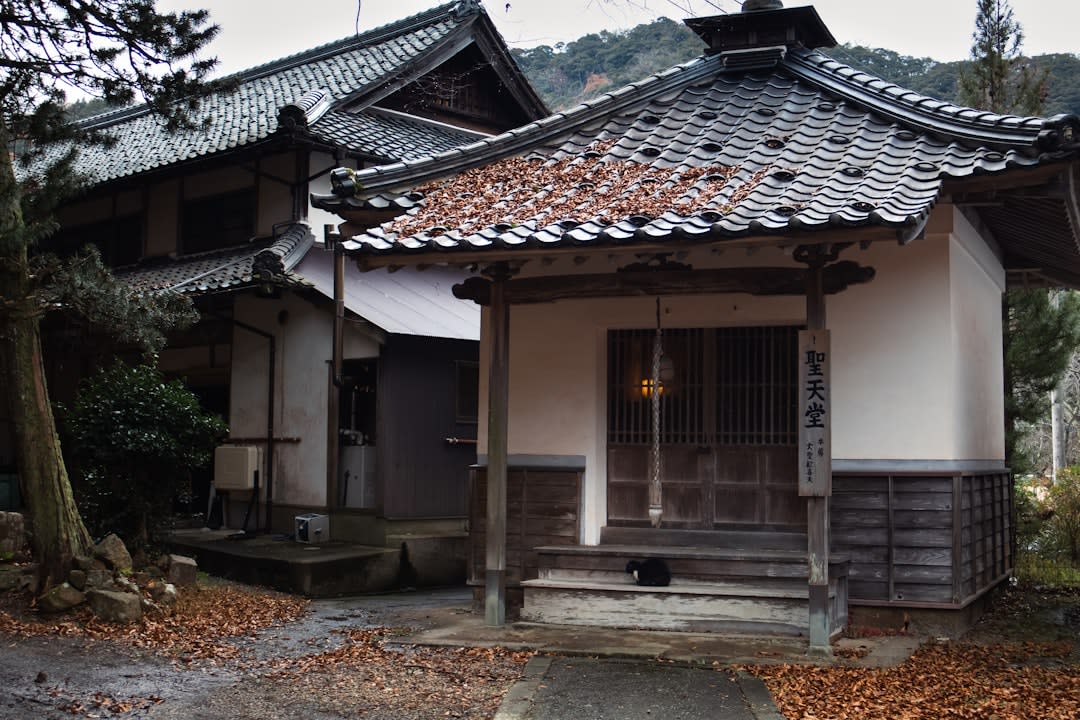
One of Japan's most beloved onsen towns. Visitors put on a yukata and wooden sandals and stroll between seven public bathhouses along a willow-lined canal. The wooden bridges, stone walkways, and traditional inn facades have barely changed in a century. The town is built for wandering.
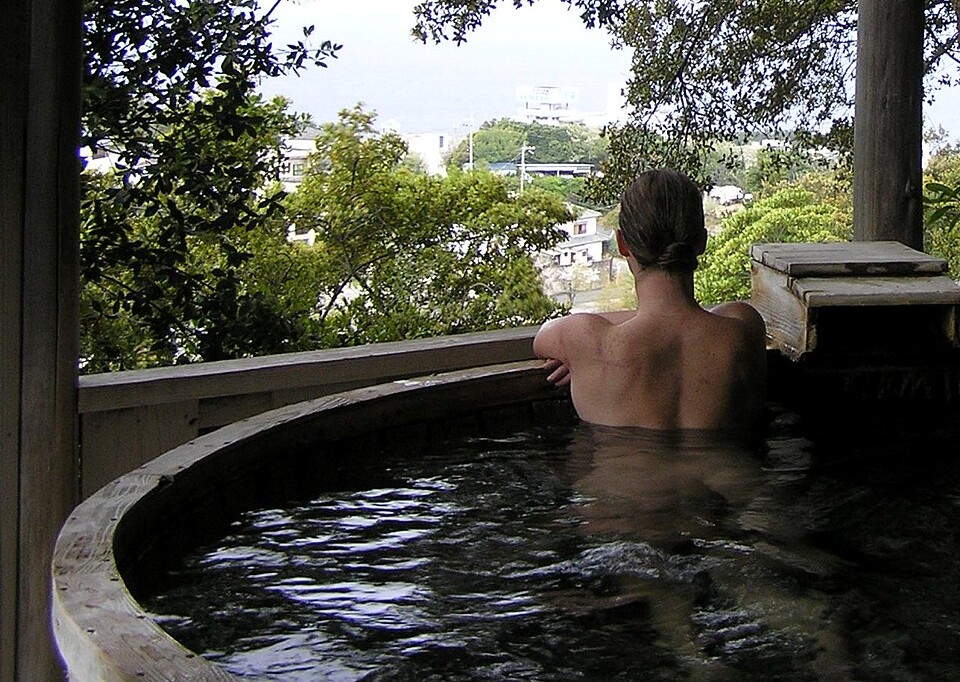
An old coastal resort town where hot springs meet the Pacific. The white-sand beach and dramatic rock formations create a setting unlike most onsen destinations. The ancient outdoor baths of Saki-no-Yu sit directly above the ocean. You soak while watching the waves crash below you.
Common questions
What is the water temperature at Hawai Onsen?▾
The water temperature at Hawai Onsen ranges up to 60°C (minimum around 50°C).
Is Hawai Onsen free to visit?▾
Hawai Onsen charges an entrance fee in JPY.
Is Hawai Onsen a public or private bath?▾
Hawai Onsen is a mixed bathing spring.
Are tattoos allowed at Hawai Onsen?▾
No, Hawai Onsen does not permit visible tattoos.
What is the nearest station to Hawai Onsen?▾
The nearest station to Hawai Onsen is Hawai Onsen, about 0km away.