
Ryujin Onsen
龍神温泉
4.3 · 1614 reviews · via Google
Ryujin Onsen
Hydrogen Carbonate · Kansai
Hotter than 34% of Japan springs (n=122).
More acidic than 96% of Japan springs (n=121).
Mineral profile
Bar width reflects listing order, not measured concentration.
Suitability
At a glance
Getting there
Easy — under 1km from a station
Cost
High
Crowd level
Moderate
About this spring
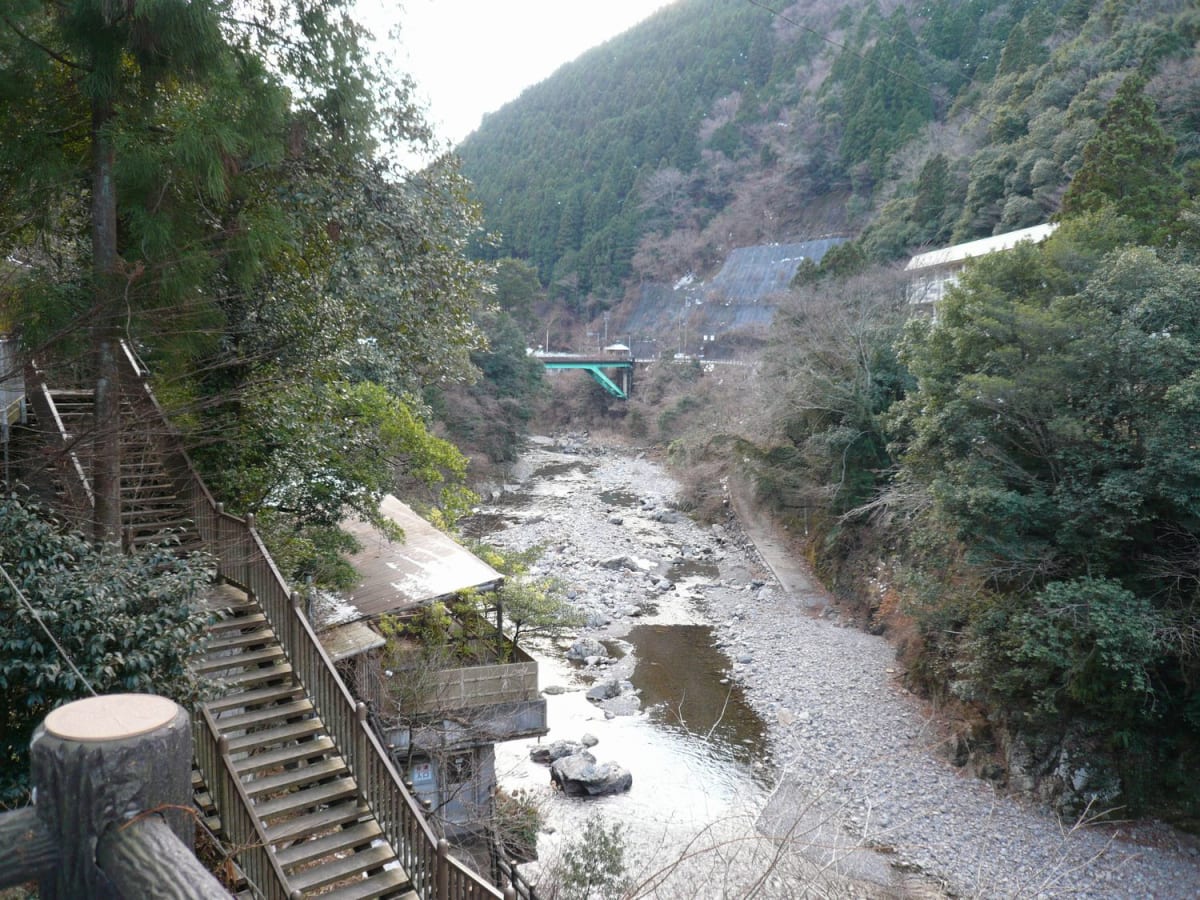
Ryujin Onsen sits in a narrow gorge carved through the Kii Mountains of Wakayama Prefecture, roughly 90 minutes from the coast by bus. The water is a sodium bicarbonate spring measuring pH 9.9, making it one of Japan's most alkaline, and it has long been regarded as one of the country's finest springs for beautifying the skin. Two ryokan, Kamigoten and Shimogoten, have operated in this gorge since the seventeenth century.
Highlights
History
The spring's origin is traditionally credited to En no Gyoja, the seventh-century ascetic who founded the Shugendo mountain practice, said to have come upon the waters during his travels through these sacred peaks.
The name Ryujin, meaning Dragon God, traces to a legend in which Kobo Daishi received a dream from a dragon king who pointed him toward the spring. The recorded history of the resort as a lodging destination begins in 1639, when Tokugawa Yorinobu, the first lord of the Kishu Domain, had Shimogoten built to house his samurai attendants. The upper lodge, Kamigoten, followed in 1657 as quarters for Yorinobu's own visits. Both ryokan continue to operate today under their original names.
Local guide
The road into Ryujin Onsen follows the Hidakagawa River upstream from the coast of Wakayama, climbing through the Kii Peninsula's mountain interior for about ninety minutes by bus from Katsura Station on the Kisei Line. The valley narrows as you go, the cedar trees get taller, and the river stays visible below the road the entire way. By the time you arrive at the cluster of twenty or so inns that constitutes the town, you understand why Kobo Daishi supposedly received its location in a dream rather than finding it by walking around. It takes a specific kind of attention to reach this place on purpose.
Ryujin Onsen is one of Japan's three designated bijin-no-yu, hot springs classified as beauty waters. The water is a sodium bicarbonate spring with a weakly alkaline chemistry that has two effects simultaneously. First, it removes excess oil and dead surface skin cells, leaving the skin very smooth within a single session. Second, the alkalinity in the water softens its surface tension so thoroughly that the bath feels different from anything else, closer to a warm, slightly thick liquid than ordinary hot water. The water is completely clear, and there is almost no odor. It comes out of the source at 48 degrees, warm enough that the outdoor pools need no supplemental heating in most weather.
The legend attached to the place involves the dragon king Nanda Ryuo, who appeared to Kobo Daishi in a dream and instructed him to open a bath at this exact location. The name Ryujin means dragon god, and the inn called Kamigoten, upper palace, was built as the lodging for the Tokugawa lords of the Kii domain during the Edo period. The Tokugawa connection meant the spring was largely private for much of its early history, which explains why it stayed so small and why the road to it remained difficult for so long.
The outdoor bath at Kamigoten extends over the Hidakagawa River on a wooden platform. The water from the spring flows directly into the pool, and below the platform the river moves over dark stones. In autumn, the red maples on the opposite bank reflect in the river surface. In summer, dragonflies work the air above the water. The hair-washing legend that follows this spring comes from generations of women who noticed that washing their hair in the water left it softer and more manageable than any other water in the region. That claim has survived three centuries and is still repeated by every inn along the valley.
Mineral chemistry
Water character inferred from mineral type — verify on site.
Bicarbonate springs cleanse and soften the skin surface, removing excess sebum without stripping the skin's acid mantle. Traditionally recommended for acne-prone skin and sensitive skin types.
Bicarbonate springs are generally among the most gentle and well-tolerated onsen types.
Sodium chloride springs, essentially natural saltwater baths, are celebrated for their warming and moisturising effects. The salt forms a thin film on the skin that slows moisture evaporation, keeping skin hydrated longer than a freshwater bath.
Those with high blood pressure or heart conditions should consult a doctor before bathing, as the warming effect increases circulation. Avoid immersing open wounds.
Calcium chloride springs share the heat-retaining property of sodium chloride springs but with a stronger warming effect. Prized for muscle and joint relief.
The strong warming effect means those with cardiovascular conditions, high blood pressure, or pregnancy should limit soak duration and consult a doctor if in doubt.
Similar springs
 FREE
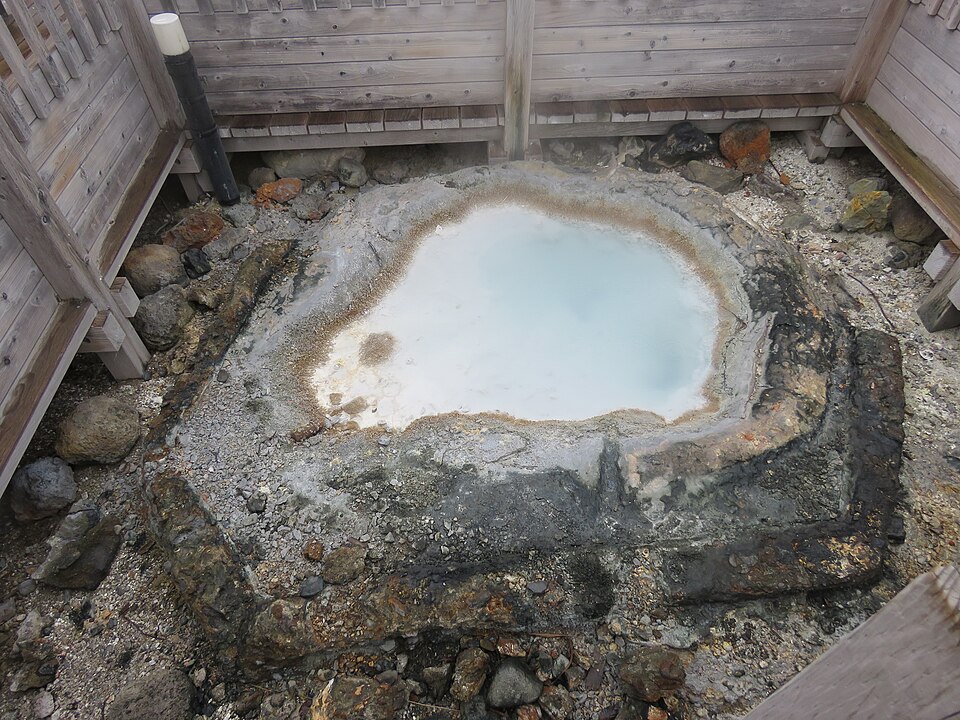
FREEThe valley occupies the center of Noboribetsu Onsen in Hokkaido. Jigokudani translates as Hell Valley. The crater covers 11 hectares and releases roughly 10,000 tonnes of hot spring water each day. Fumaroles vent steam across the floor of the valley, boiling pools bubble at the surface, and the surrounding cliffs carry heavy mineral staining. A walking path winds through the area in about 20 minutes and is open to all visitors at no cost. It ranks among the most striking landscapes accessible on foot anywhere in Japan.
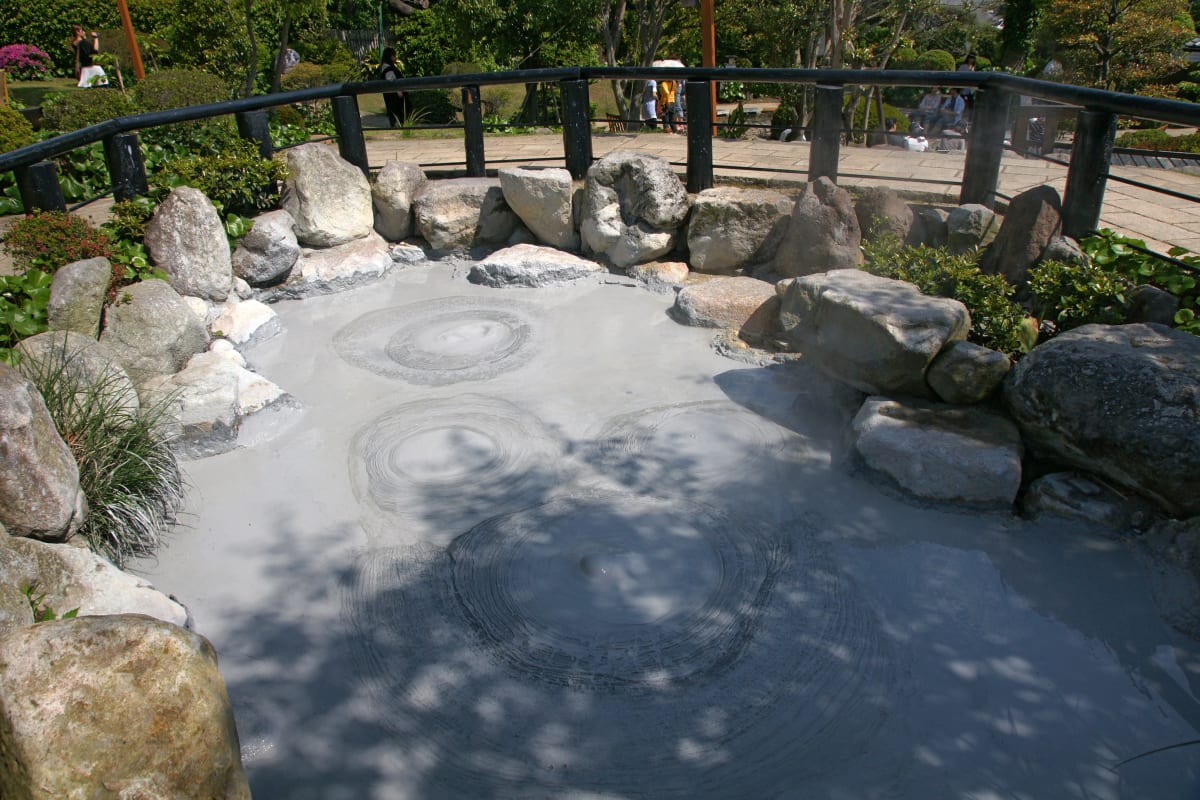
Beppu is the most geothermally active city in Japan, with more than 2,900 hot spring vents located within the city limits and eight distinct thermal spring zones collectively known as the Beppu Hatto. The variety on offer is wide, ranging from grand hotel bathhouses to modest neighborhood public facilities to the celebrated Hells, a collection of brilliantly colored boiling pools scattered across the city. The Hells run far too hot for bathing, but they draw visitors who come to walk among them and take in the spectacle.
 FREE
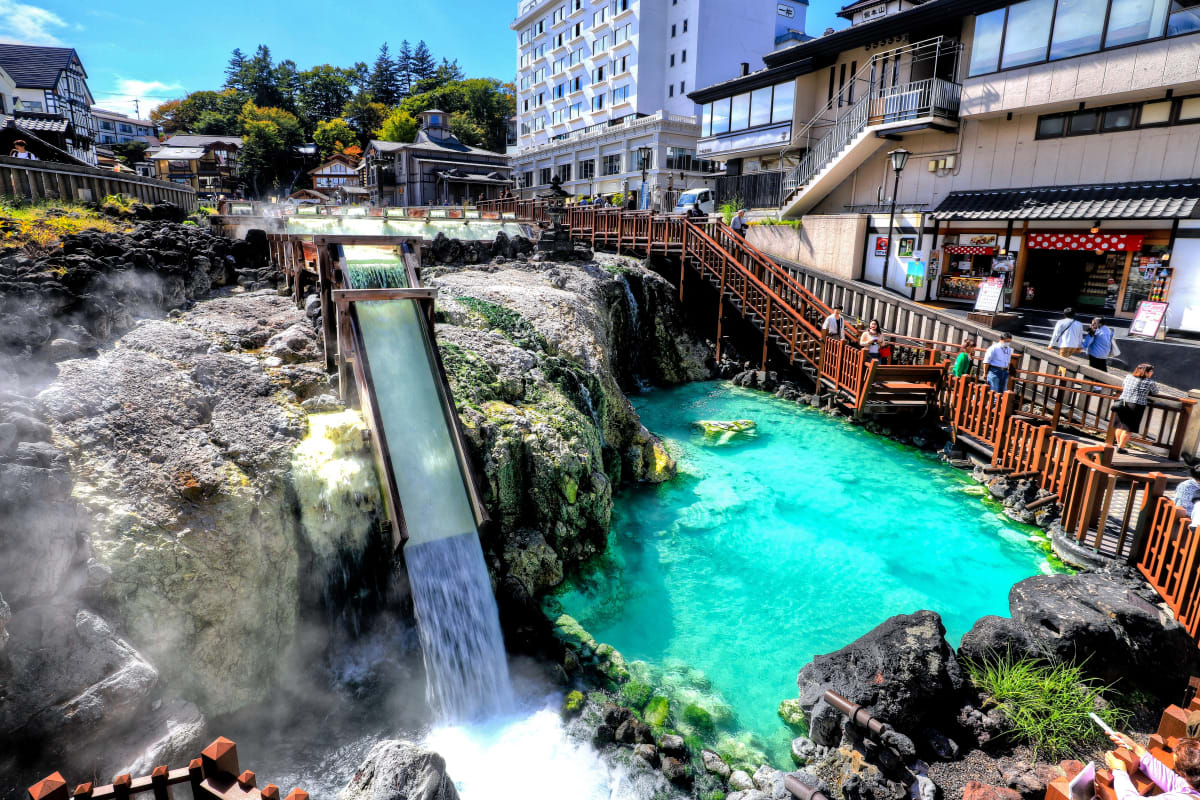
FREEKusatsu Onsen sits at 1,200 meters in the mountains of Gunma Prefecture and ranks among the most celebrated hot spring towns in Japan. The springs here produce more than 32,000 liters of water per minute, a volume unmatched anywhere else in the country. The water is strongly acidic and sulfurous, and its skin-healing properties have long made it legendary among visitors. Twice each day in the central town square, workers cool the scalding water by pulling long wooden paddles through it in unison while singing traditional songs. This practice is called yumomi.
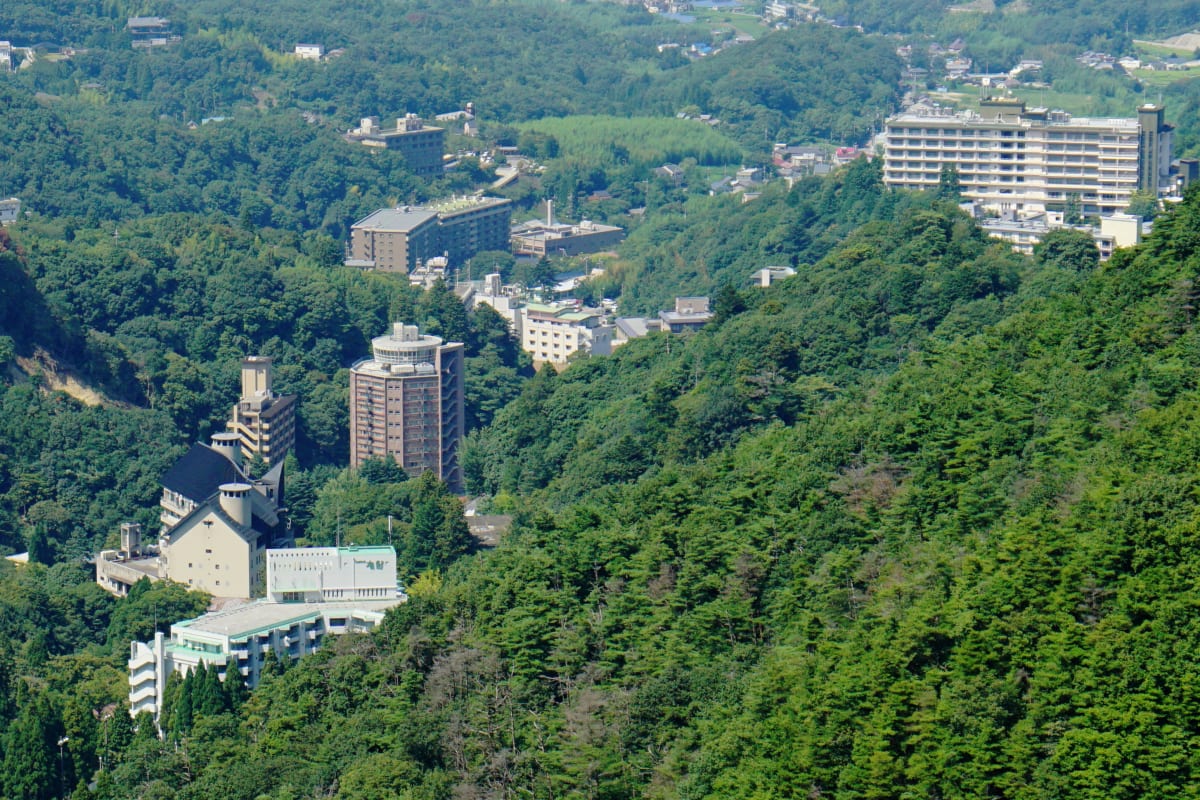
Arima Onsen sits in the hills above Kobe, close to Mount Rokko, and ranks among the oldest hot spring towns in Japan. The town draws visitors for two entirely different spring types that coexist within its compact footprint. Kinsen is the iron-rich golden water that stains surrounding rocks a rusty orange, while ginsen runs clear and carries both carbonation and mild radioactivity. Few other onsen destinations in Japan bring together two such distinct water types within a single small town.
Amenities
Getting there
From Shin-Osaka, take the JR Kinokuni Line Kuroshio limited express to Kii-Tanabe Station. The ride takes about 2 hours. From the stop in front of the station, board a Ryujin Bus on the Ryujin Line to Ryujin Onsen. The bus takes about 90 minutes through mountain terrain. Departures are limited, so check the timetable in advance.
Location & nearby
〒645-0525 和歌山県田辺市龍神村龍神37
Make a day of it
Pair your soak with these nearby spots.
Attraction
RyūJinonsenmotoyu
0.0km away
Attraction
RyūJinwaーTo
1.1km away
Attraction
RyūJinmuramandarabijutsukan
1.4km away
More springs in Kansai
Arima Onsen sits in the hills above Kobe, close to Mount Rokko, and ranks among the oldest hot spring towns in Japan. The town draws visitors for two entirely different spring types that coexist within its compact footprint. Kinsen is the iron-rich golden water that stains surrounding rocks a rusty orange, while ginsen runs clear and carries both carbonation and mild radioactivity. Few other onsen destinations in Japan bring together two such distinct water types within a single small town.
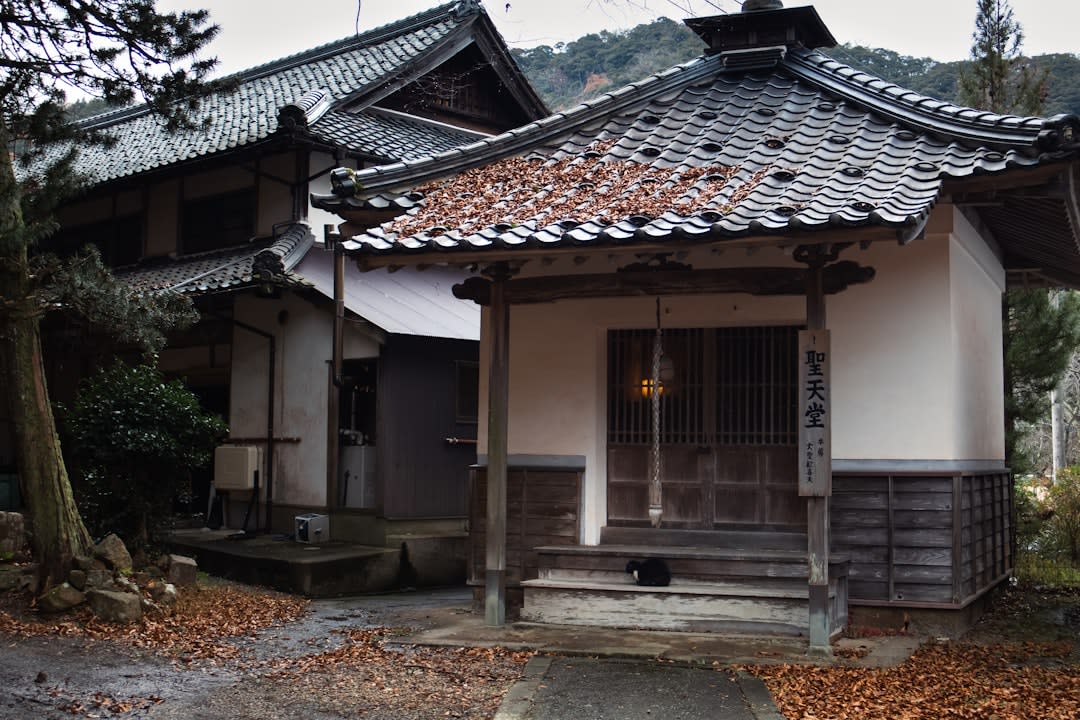
One of Japan's most beloved onsen towns. Visitors put on a yukata and wooden sandals and stroll between seven public bathhouses along a willow-lined canal. The wooden bridges, stone walkways, and traditional inn facades have barely changed in a century. The town is built for wandering.
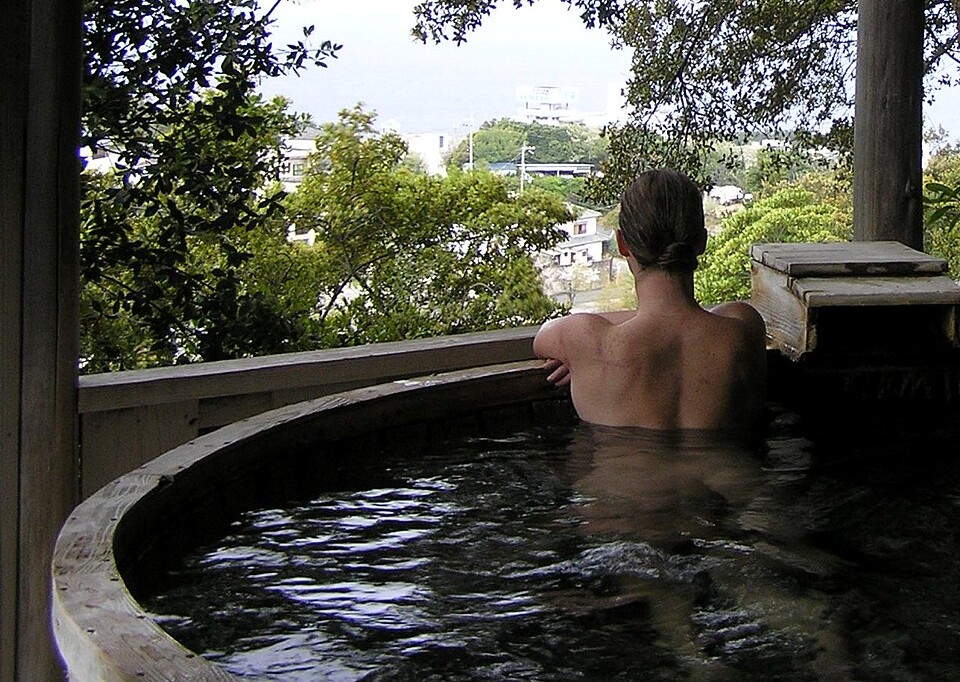
An old coastal resort town where hot springs meet the Pacific. The white-sand beach and dramatic rock formations create a setting unlike most onsen destinations. The ancient outdoor baths of Saki-no-Yu sit directly above the ocean. You soak while watching the waves crash below you.
Common questions
What is the water temperature at Ryujin Onsen?▾
The water temperature at Ryujin Onsen ranges up to 52°C (minimum around 48°C).
Is Ryujin Onsen free to visit?▾
Ryujin Onsen charges an entrance fee in JPY.
Is Ryujin Onsen a public or private bath?▾
Ryujin Onsen is a public bathing spring.
Are tattoos allowed at Ryujin Onsen?▾
No, Ryujin Onsen does not permit visible tattoos.
What is the nearest station to Ryujin Onsen?▾
The nearest station to Ryujin Onsen is Ryujin Onsen, about 0.1km away.