
Togo Onsen
東郷温泉
Togo Onsen
sodium-chloride · Kansai
Hotter than 89% of Japan springs (n=122).
More acidic than 41% of Japan springs (n=121).
Mineral profile
Bar width reflects listing order, not measured concentration.
Suitability
At a glance
Getting there
Easy — under 1km from a station
Cost
Low
About this spring
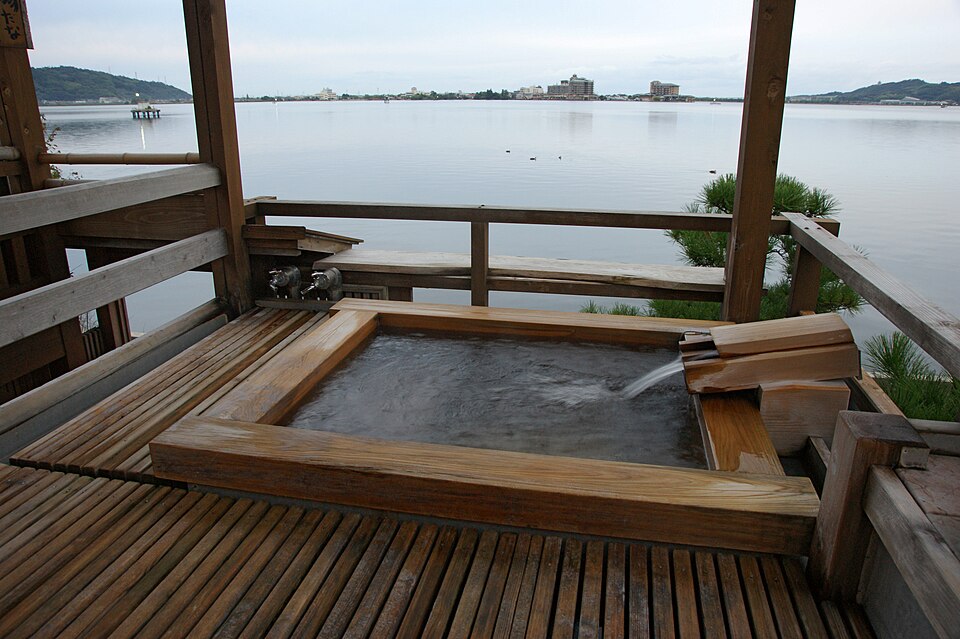
Togo Onsen sits along the edge of Lake Togo, a coastal lagoon in the town of Yurihama on the San'in coast of Tottori Prefecture. The ryokan line the shore so closely that guests can drop a fishing line directly from their room windows into the lake. The water changes hue across the course of the day as the sunlight moves, and the thermal water itself wells up from beneath the lakebed rather than from a distant source on land.
Highlights
History
A document dated 1749 records local residents piping hot spring water up through bamboo tubes pushed into the floor of the lake.
The Tottori Domain issued formal authorization in 1843 to draw the waters for medicinal purposes, making it one of the earliest officially sanctioned therapeutic uses of a hot spring anywhere in the San'in region. The area began developing as a resort in 1868, at the opening of the Meiji era. In 1872 a shared bath was constructed on a small island set in the middle of the lake. The later arrival of the San'in Main Line at Matsuzaki Station, toward the end of the Meiji period, opened the resort to broader travel and brought annual visitor numbers to 10,000.
Local guide
The San-in coast of Tottori is the part of Japan that travelers on the standard Kyoto-Hiroshima circuit mostly skip, and the towns along it benefit from that. From Kurayoshi, a small bus route follows the coast east to the edge of Lake Togo, a shallow brackish lagoon that sits between low hills on the landward side and a narrow sand bar separating it from the Japan Sea. The lake is four square kilometers of still water that changes color through the day, grey in the morning, green in the afternoon, orange at dusk, and the town of Yurihama wraps around its southern shore with its hotels and inns positioned to catch the lake view at every angle.
The water at Togo Onsen comes from an unusual origin. The spring sources are located under the lakebed itself, which makes Togo one of the only onsen towns in Japan where the hot water rises directly through lake sediment before being piped to the inns. The spring is classified as sodium-calcium chloride and sodium sulfate, emerging at temperatures between 85 and 94 degrees Celsius at the source, which requires substantial dilution before bathing. It is clear in the tub, with a faint mineral quality that you taste if any gets on your lips. The sodium and calcium content gives it the same body-warming characteristic you find in coastal salt springs, and the sulfate component adds a slight slipperiness that makes your skin feel finished after a soak.
The cultural detail that distinguishes Togo Onsen from the other lake-edge onsen towns of western Japan is the Hanakairo plum orchard event held in the surrounding hills each February and March. The hillsides above the lake hold several thousand ume plum trees, and when they flower in late winter, the white and pink blossoms open while snow still sits on the higher ground, and the combination of cold air, blossom smell, and lake view from the outdoor baths is specific to this time and place. Sitting in an outdoor bath facing the lake while the plum smell comes through the steam is the experience that repeat visitors to Togo tend to describe first.
The town itself is small and unhurried. The lakefront promenade, the public footbath pavilion near the central bus stop, and the wooden walkways connecting the older inns all give Togo the feeling of a place that attracts people who already know what they want rather than visitors who need to be sold on something. The coastal road continues east to Misasa Onsen and the Tottori sand dunes if you want to keep moving, but Togo is a reasonable argument for staying put. The view from any lakeside outdoor bath at dusk, with the Japan Sea visible just beyond the sand bar and the hills settling into dark blue, is worth the detour from wherever you were going.
Mineral chemistry
Water character inferred from mineral type — verify on site.
Sodium chloride springs, essentially natural saltwater baths, are celebrated for their warming and moisturising effects. The salt forms a thin film on the skin that slows moisture evaporation, keeping skin hydrated longer than a freshwater bath.
Those with high blood pressure or heart conditions should consult a doctor before bathing, as the warming effect increases circulation. Avoid immersing open wounds.
Sulfate springs contain dissolved calcium, sodium, or magnesium sulfate. Calcium sulfate springs are traditionally associated with wound healing and post-surgical recovery.
Sodium sulfate springs can have a mild laxative effect in sensitive individuals — stay well hydrated.
Similar springs
 FREE
FREEThe valley occupies the center of Noboribetsu Onsen in Hokkaido. Jigokudani translates as Hell Valley. The crater covers 11 hectares and releases roughly 10,000 tonnes of hot spring water each day. Fumaroles vent steam across the floor of the valley, boiling pools bubble at the surface, and the surrounding cliffs carry heavy mineral staining. A walking path winds through the area in about 20 minutes and is open to all visitors at no cost. It ranks among the most striking landscapes accessible on foot anywhere in Japan.

Beppu is the most geothermally active city in Japan, with more than 2,900 hot spring vents located within the city limits and eight distinct thermal spring zones collectively known as the Beppu Hatto. The variety on offer is wide, ranging from grand hotel bathhouses to modest neighborhood public facilities to the celebrated Hells, a collection of brilliantly colored boiling pools scattered across the city. The Hells run far too hot for bathing, but they draw visitors who come to walk among them and take in the spectacle.

Arima Onsen sits in the hills above Kobe, close to Mount Rokko, and ranks among the oldest hot spring towns in Japan. The town draws visitors for two entirely different spring types that coexist within its compact footprint. Kinsen is the iron-rich golden water that stains surrounding rocks a rusty orange, while ginsen runs clear and carries both carbonation and mild radioactivity. Few other onsen destinations in Japan bring together two such distinct water types within a single small town.

Tsuru-no-yu is the oldest of the seven inns at Nyuto, set deep in a beech forest in Akita Prefecture. The main draw is a large outdoor mixed-bathing pool fed by opaque, milky-white sulfurous water. Many regard it as the most beautiful onsen setting in Japan. People come here to put some distance between themselves and the rest of the world for a while.
Amenities
Getting there
Take the JR San'in Main Line to Matsuzaki Station. From Tottori City the journey takes about 1 hour. Togo Onsen ryokan are within walking distance of the station on the southern shore of Lake Togo.
Location & nearby
Togo Onsen, Yurihama, Tōhaku District, Tottori
Make a day of it
Pair your soak with these nearby spots.
Attraction
Matsuzaki Shrine Shakusamura
0.7km away
Park
Ayameike
1.1km away
More springs in Kansai
Arima Onsen sits in the hills above Kobe, close to Mount Rokko, and ranks among the oldest hot spring towns in Japan. The town draws visitors for two entirely different spring types that coexist within its compact footprint. Kinsen is the iron-rich golden water that stains surrounding rocks a rusty orange, while ginsen runs clear and carries both carbonation and mild radioactivity. Few other onsen destinations in Japan bring together two such distinct water types within a single small town.
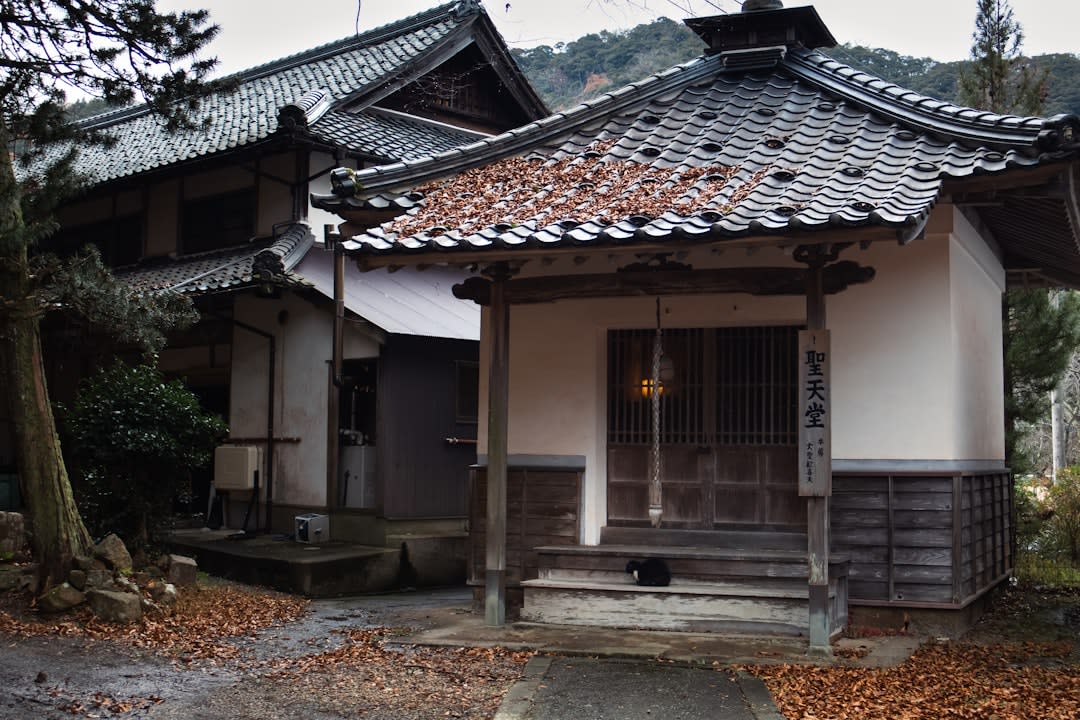
One of Japan's most beloved onsen towns. Visitors put on a yukata and wooden sandals and stroll between seven public bathhouses along a willow-lined canal. The wooden bridges, stone walkways, and traditional inn facades have barely changed in a century. The town is built for wandering.
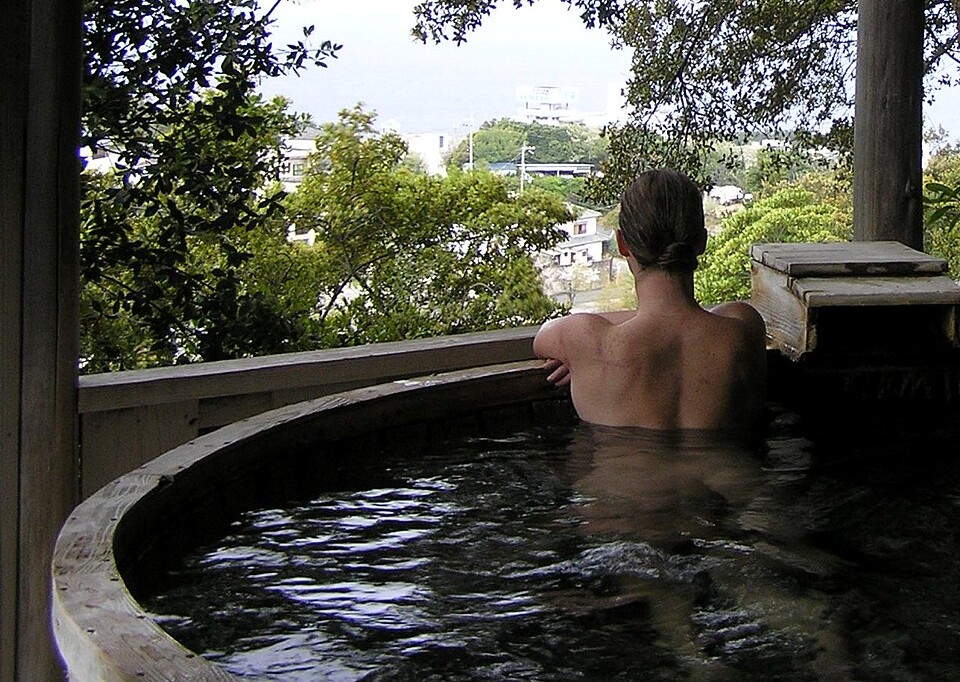
An old coastal resort town where hot springs meet the Pacific. The white-sand beach and dramatic rock formations create a setting unlike most onsen destinations. The ancient outdoor baths of Saki-no-Yu sit directly above the ocean. You soak while watching the waves crash below you.
Common questions
What is the water temperature at Togo Onsen?▾
The water temperature at Togo Onsen ranges up to 94°C (minimum around 85°C).
Is Togo Onsen free to visit?▾
Togo Onsen charges an entrance fee in JPY.
Is Togo Onsen a public or private bath?▾
Togo Onsen is a public bathing spring.
Are tattoos allowed at Togo Onsen?▾
No, Togo Onsen does not permit visible tattoos.
What is the nearest station to Togo Onsen?▾
The nearest station to Togo Onsen is Matsuzaki-ekimae (Matsuzaki Sta.), about 0km away.