
Furofushi Onsen
不老不死温泉
4.3 · 3054 reviews · via Google
Furofushi Onsen
iron · Tohoku
Hotter than 40% of Japan springs (n=122).
More acidic than 18% of Japan springs (n=121).
Mineral profile
Bar width reflects listing order, not measured concentration.
Suitability
At a glance
Getting there
Easy — under 1km from a station
Cost
Moderate
Crowd level
Popular
About this spring
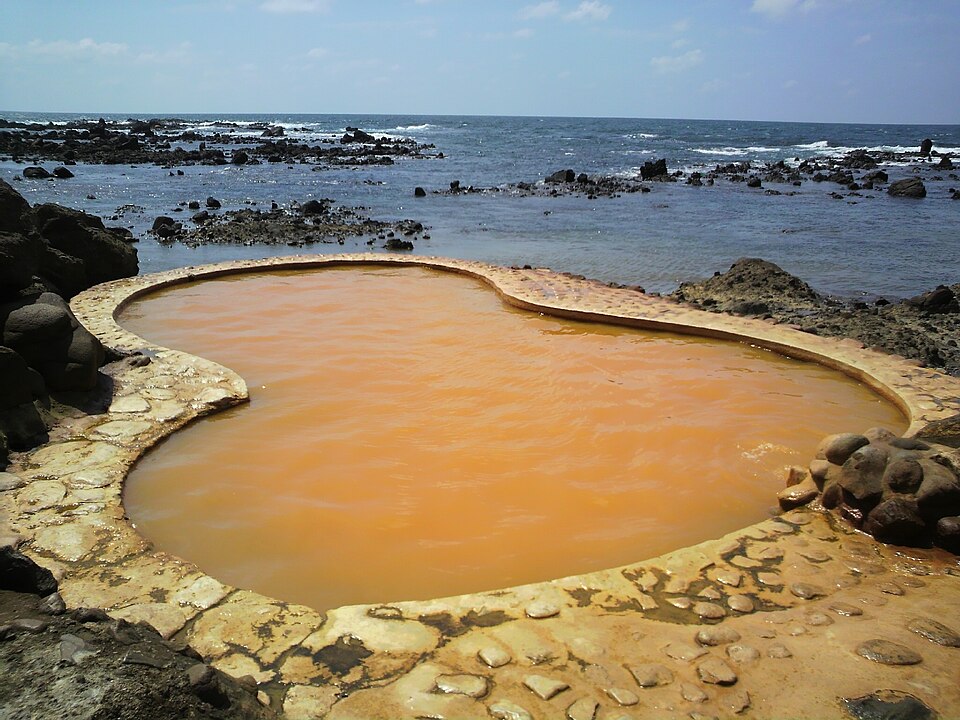
Furofushi Onsen occupies a rocky cape in Fukaura, Aomori Prefecture, with outdoor bathing pools positioned at the edge of the Sea of Japan cliffs. The spring water runs a deep reddish-brown from its high iron and sodium chloride content. The main open-air bath and a dedicated women's pool both use fully undiluted water drawn straight from the source. Sunsets over the water are a particular draw. Once day visitors depart in the late afternoon, overnight guests have the pools to themselves.
Highlights
History
The cliffs along this stretch of Aomori coast have carried a reputation for healing waters across many generations.
The name Furofushi comes from a phrase connoting perpetual youth and immortality, an idea rooted in a longstanding local belief that the iron-rich spring water holds rejuvenating power. The resort as it stands today was formally opened in 1970 and has grown into one of the best-known onsen properties in Aomori, recognized for pairing thermal bathing with the rugged scenery of the Sea of Japan.
Local guide
The road north from Hirosaki follows the Shirakami coast until the cliffs close in and the Sea of Japan fills the entire left side of your view. Getting here requires a train on the JR Gonosen Line to Fukaura Station and then a bus that winds along the shoreline, and by the time the driver announces your stop at Furofushionsen, the Pacific is right there beneath you. Koganezaki Furofushi Onsen sits on a rocky cape where the land just drops away. There is no town around it, no row of souvenir shops. Just the lodge, the rock, and the water below.
The spring itself flows from an iron-heavy source deep in the Koganezaki headland. When you first see the outdoor bath, the water looks almost black. Dip your hand in and it turns reddish-brown, the color of rust in a jar. The iron oxidizes the moment it hits the air, and the water is so dense and opaque you cannot see past your own knees once you sit down. The name Furofushi translates roughly to perpetual youth and immortality, a name that local fishermen were using for these waters long before anyone built a proper bathhouse here. On your skin, the salt and iron leave a faint metallic warmth that stays with you for hours after you towel off.
There are four baths in total. The most famous is the gourd-shaped mixed outdoor pool carved into the cliff, which sits low enough that the incoming waves at high tide seem close enough to reach out and touch. The round women's bath sits slightly further along the cape. Both draw from the same undiluted source, meaning no tap water has been mixed in to cool it down. The indoor baths are good, but anyone who travels this far and skips the gourd bath has made a serious mistake.
The one rule here worth knowing before you visit: the outdoor baths close at four in the afternoon for day visitors. After that, they are reserved for overnight guests. The reason is the sunset. Fukaura sits along an eighty-kilometer stretch of coast that the town calls its sunset shore, and when the sun goes down over the Japan Sea from inside that gourd-shaped pool, the sky turns colors you genuinely cannot describe to someone who has not seen it. The Ministry of the Environment has designated this cape one of Japan's finest stargazing spots, and on clear winter nights, the ink-dark sky overhead and the deep rust-red water around you make the case for staying the night absolutely obvious.
Mineral chemistry
Iron-bearing springs are recognised by their characteristic rust-red or amber colour and metallic taste. The iron content is associated with stimulation of red blood cell production and is traditionally recommended for anaemia and fatigue recovery.
Iron springs will stain light-coloured swimwear and towels a persistent brownish-orange. Those with haemochromatosis (iron overload condition) should seek medical advice before bathing.
Sodium chloride springs, essentially natural saltwater baths, are celebrated for their warming and moisturising effects. The salt forms a thin film on the skin that slows moisture evaporation, keeping skin hydrated longer than a freshwater bath.
Those with high blood pressure or heart conditions should consult a doctor before bathing, as the warming effect increases circulation. Avoid immersing open wounds.
Similar springs
 FREE
FREEThe valley occupies the center of Noboribetsu Onsen in Hokkaido. Jigokudani translates as Hell Valley. The crater covers 11 hectares and releases roughly 10,000 tonnes of hot spring water each day. Fumaroles vent steam across the floor of the valley, boiling pools bubble at the surface, and the surrounding cliffs carry heavy mineral staining. A walking path winds through the area in about 20 minutes and is open to all visitors at no cost. It ranks among the most striking landscapes accessible on foot anywhere in Japan.

Beppu is the most geothermally active city in Japan, with more than 2,900 hot spring vents located within the city limits and eight distinct thermal spring zones collectively known as the Beppu Hatto. The variety on offer is wide, ranging from grand hotel bathhouses to modest neighborhood public facilities to the celebrated Hells, a collection of brilliantly colored boiling pools scattered across the city. The Hells run far too hot for bathing, but they draw visitors who come to walk among them and take in the spectacle.

Arima Onsen sits in the hills above Kobe, close to Mount Rokko, and ranks among the oldest hot spring towns in Japan. The town draws visitors for two entirely different spring types that coexist within its compact footprint. Kinsen is the iron-rich golden water that stains surrounding rocks a rusty orange, while ginsen runs clear and carries both carbonation and mild radioactivity. Few other onsen destinations in Japan bring together two such distinct water types within a single small town.

Tsuru-no-yu is the oldest of the seven inns at Nyuto, set deep in a beech forest in Akita Prefecture. The main draw is a large outdoor mixed-bathing pool fed by opaque, milky-white sulfurous water. Many regard it as the most beautiful onsen setting in Japan. People come here to put some distance between themselves and the rest of the world for a while.
Amenities
Getting there
Take the Tohoku Shinkansen to Shin-Aomori Station, then board the scenic Resort Shirakami rapid express on the JR Gono Line to WeSpa Tsubakiyama Station. The coastal journey takes about 3 hours. From WeSpa Tsubakiyama, a free shuttle bus takes about 15 minutes to Furofushi Onsen. Advance reservation is required for the shuttle.
Location & nearby
〒038-2327 Aomori, Nishitsugaru District, Fukaura, Henashi, Shimokiyotaki−15−1
Make a day of it
Pair your soak with these nearby spots.
Attraction
OGonzakifuro Fushi Onsen
0.0km away
Attraction
Tomosarizaki Lighthouse
0.3km away
Attraction
Michinoku Onsen
1.6km away
More springs in Tohoku

Set deep in the Hakkoda Mountains of Aomori Prefecture, Sukayu Onsen is a historic bathhouse best known for its cavernous mixed-bathing hall, the Sen-nin-buro, which translates as the Bath of a Thousand Bathers. The waters are strongly acidic, the setting is rustic and unhurried, and winter brings extraordinary snowfall to the surrounding mountains.
Tsuru-no-yu is the oldest of the seven inns at Nyuto, set deep in a beech forest in Akita Prefecture. The main draw is a large outdoor mixed-bathing pool fed by opaque, milky-white sulfurous water. Many regard it as the most beautiful onsen setting in Japan. People come here to put some distance between themselves and the rest of the world for a while.
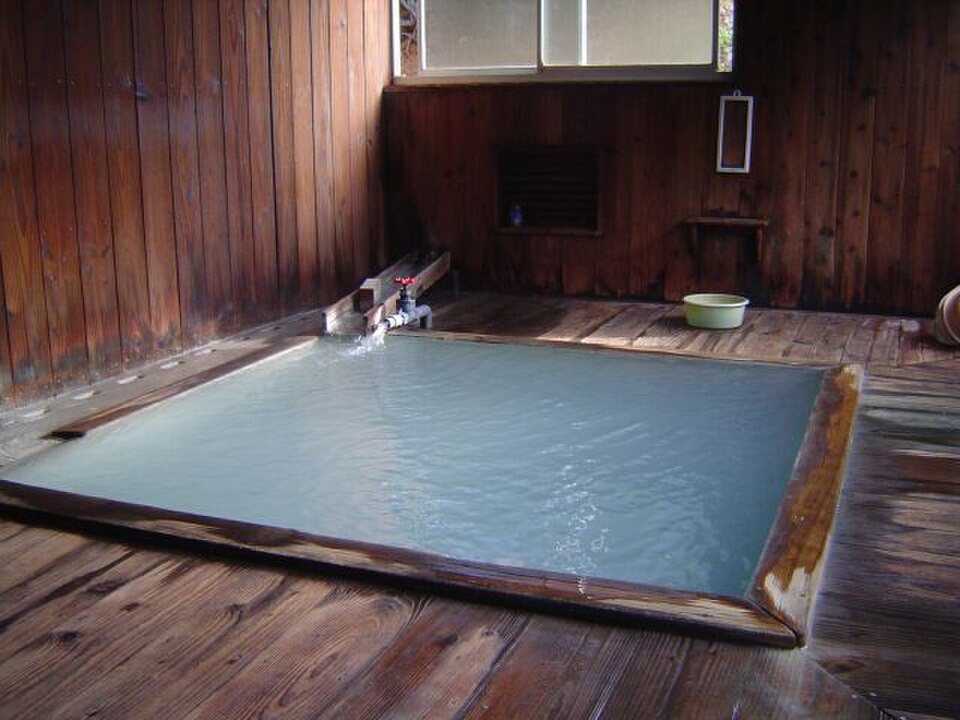
Ofuka Onsen sits at roughly 1,100 meters in the Hachimantai highland of Akita Prefecture, a compact and out-of-the-way spring that opens each year from early May through mid-October. The water is a straightforward sulfur type and flows in generous volume. What draws most visitors is the ondol, platforms warmed from below by geothermal steam rising through the ground. This form of heat therapy has deep roots in northeast Asia but is uncommon in Japan.
Common questions
What is the water temperature at Furofushi Onsen?▾
The water temperature at Furofushi Onsen ranges up to 54°C (minimum around 52°C).
Is Furofushi Onsen free to visit?▾
Furofushi Onsen charges an entrance fee in JPY.
Is Furofushi Onsen a public or private bath?▾
Furofushi Onsen is a mixed bathing spring.
Are tattoos allowed at Furofushi Onsen?▾
No, Furofushi Onsen does not permit visible tattoos.
What is the nearest station to Furofushi Onsen?▾
The nearest station to Furofushi Onsen is Furofushionsen, about 0km away.