
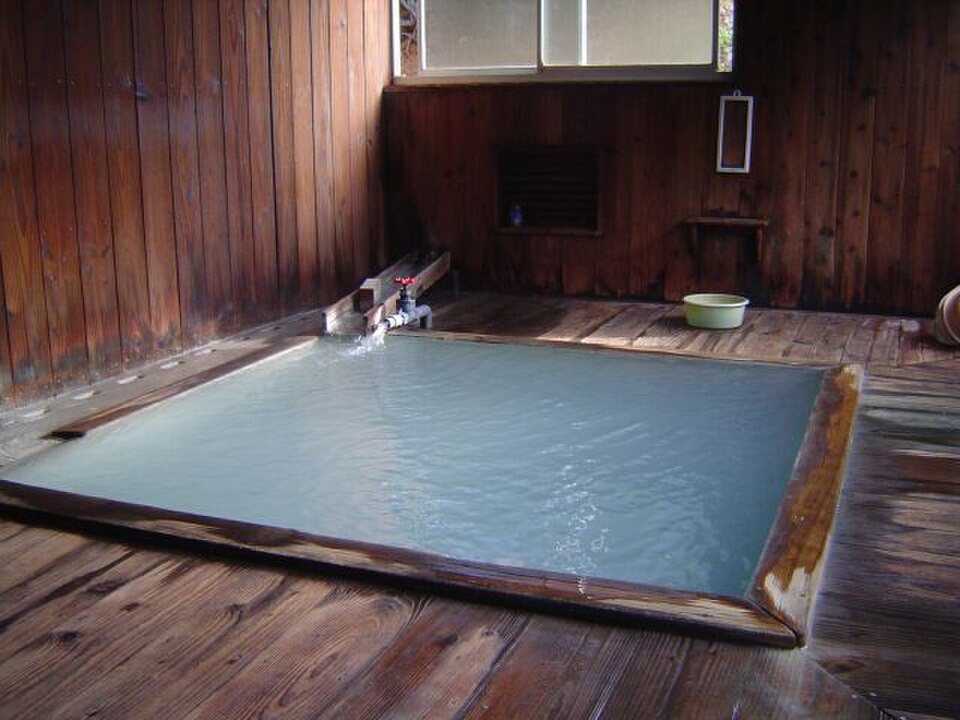
Ofuka Onsen
大深温泉
4.4 · 2640 reviews · via Google
Ofuka Onsen
塩酸 · Tohoku
Hotter than 70% of Japan springs (n=122).
More acidic than 0% of Japan springs (n=121).
Mineral profile
Bar width reflects listing order, not measured concentration.
Suitability
At a glance
Getting there
Easy — under 1km from a station
Cost
Moderate
Crowd level
Popular
About this spring
Ofuka Onsen sits at roughly 1,100 meters in the Hachimantai highland of Akita Prefecture, a compact and out-of-the-way spring that opens each year from early May through mid-October. The water is a straightforward sulfur type and flows in generous volume. What draws most visitors is the ondol, platforms warmed from below by geothermal steam rising through the ground. This form of heat therapy has deep roots in northeast Asia but is uncommon in Japan.
Highlights
History
Ofuka began operating in 1956 and received formal designation as part of the Hachimantai Hot Spring Area, recognized as a National Health Resort, in 1959.
The broader Hachimantai region had been appreciated for its geothermal character for centuries before that, and Ofuka ranks among the newer springs to be developed there. Both the Ainu and early Japanese settlers were familiar with the volcanic terrain long before any formal development took place. The ondol heating method practiced at the spring is thought to have come through cultural contact with the Korean peninsula.
Local guide
Getting to Ofuka requires accepting that you are going somewhere genuinely remote. From Morioka Station you take a bus into the mountains of Towada-Hachimantai National Park, and the last stretch of road follows the Tama River through old-growth beech forest that has the kind of density that makes the sky feel far away. The nearest known reference point is Tamagawa Onsen, a famous large-scale facility about fifteen minutes back down the mountain. Ofuka is past that, smaller, and considerably harder to find unless you know the road.
The water at Ofuka is strongly acidic, with a pH of around 1.2, which places it among the most acidic bathing water in Japan. This is not a figure that means much until you are in it. The water is clear, which surprises people, because highly acidic springs often carry strong color. There is a faint smell, not quite sulfur, closer to the smell of struck iron, and the water feels slightly sharp on sensitive skin, not painful, but alive, as if it is doing something. Locals say this kind of water is excellent for skin conditions. You can feel the mild tingle on any small scratch or dry patch.
The outdoor bath at Ofuka sits in the forest directly, not a manicured garden forest but actual mountain forest, with trees close enough that the canopy touches the bath area in places. The konyoku, or mixed bathing pool, is one of the few remaining examples of this traditional format in the Nyuto Onsen cluster, and it operates without the modesty screens and dividers that newer facilities have added. It is the older way, practical and unceremonious. You share the water with whoever else is in it, and the conversation, if any, is quiet.
In summer the beech trees above the outdoor bath are in full leaf and the light filters down in pieces. In autumn the same canopy turns from green to gold to orange over a period of about three weeks, and the bath fills with fallen leaves that the staff clear every morning. In winter, Ofuka closes for part of the season when the road becomes impassable, which limits access to those who planned ahead. The reward for that planning is a hot pool surrounded by deep snow, with the forest holding a silence that has nothing to do with distance from a city and everything to do with how much snow can absorb.
Mineral chemistry
Amenities
Getting there
Take the Akita Shinkansen to Tazawako Station, then board the Ugo Kotsu bus toward Tamagawa Onsen. The journey from the station takes about 70-80 minutes. Note that Tamagawa Onsen is distinct from the Nyuto Onsen cluster. Confirm the current timetable before traveling.
Location & nearby
〒014-1205 秋田県仙北市田沢湖玉川渋黒沢
Make a day of it
Pair your soak with these nearby spots.
Attraction
Shintamagawa Onsen
0.0km away
Attraction
Tamagawaonsen Ashiyu
0.0km away
Attraction
Tamagawa Onsen Bijita Senta
0.4km away
Attraction
Shin-Tamagawa Onsen
0.6km away
Park
Yawatadairao Numa Park
0.6km away
More springs in Tohoku
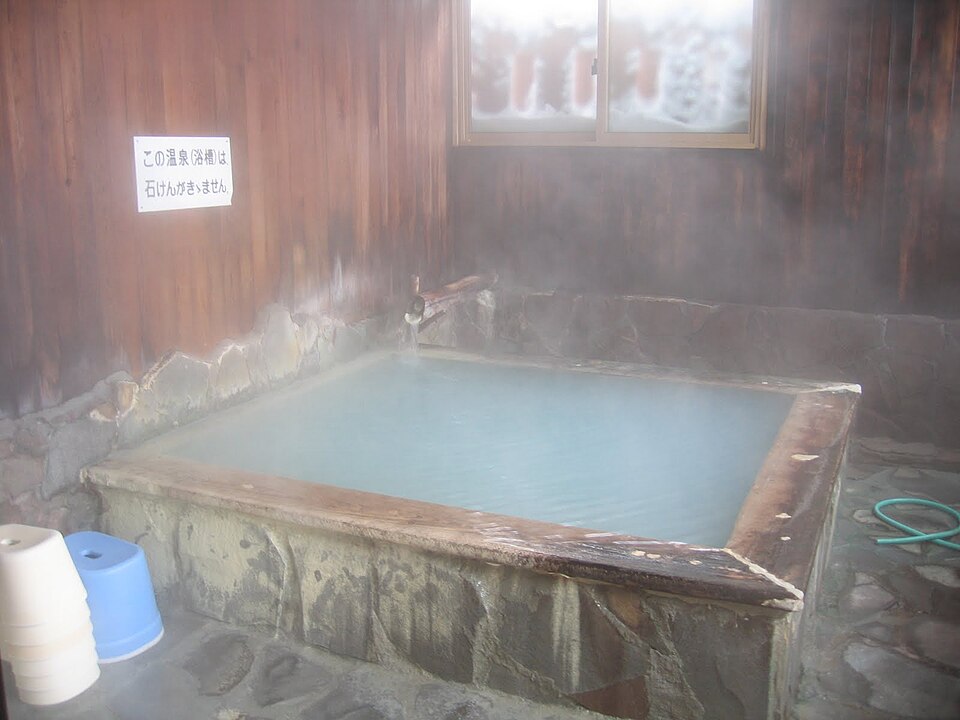
Set deep in the Hakkoda Mountains of Aomori Prefecture, Sukayu Onsen is a historic bathhouse best known for its cavernous mixed-bathing hall, the Sen-nin-buro, which translates as the Bath of a Thousand Bathers. The waters are strongly acidic, the setting is rustic and unhurried, and winter brings extraordinary snowfall to the surrounding mountains.
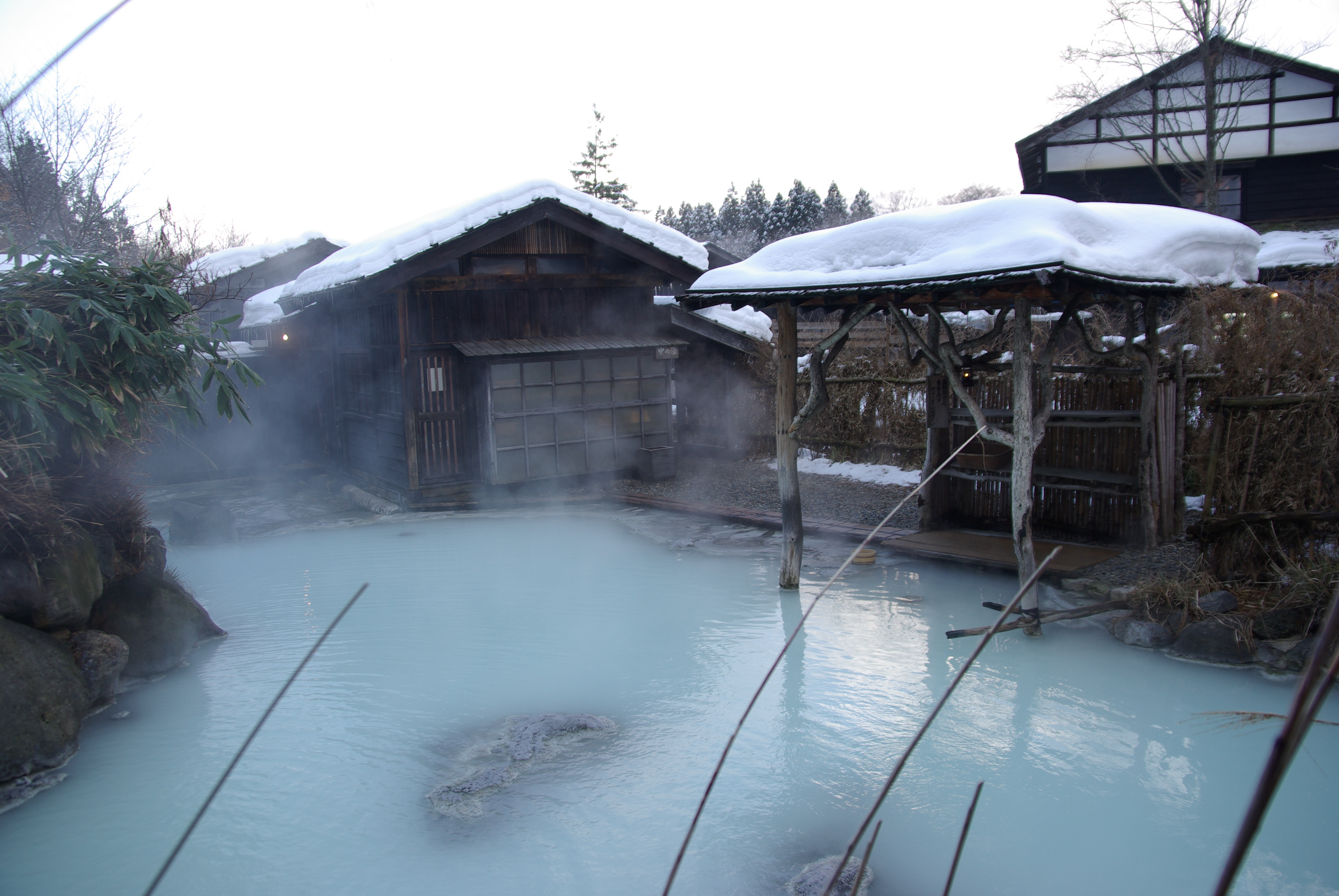
Tsuru-no-yu is the oldest of the seven inns at Nyuto, set deep in a beech forest in Akita Prefecture. The main draw is a large outdoor mixed-bathing pool fed by opaque, milky-white sulfurous water. Many regard it as the most beautiful onsen setting in Japan. People come here to put some distance between themselves and the rest of the world for a while.
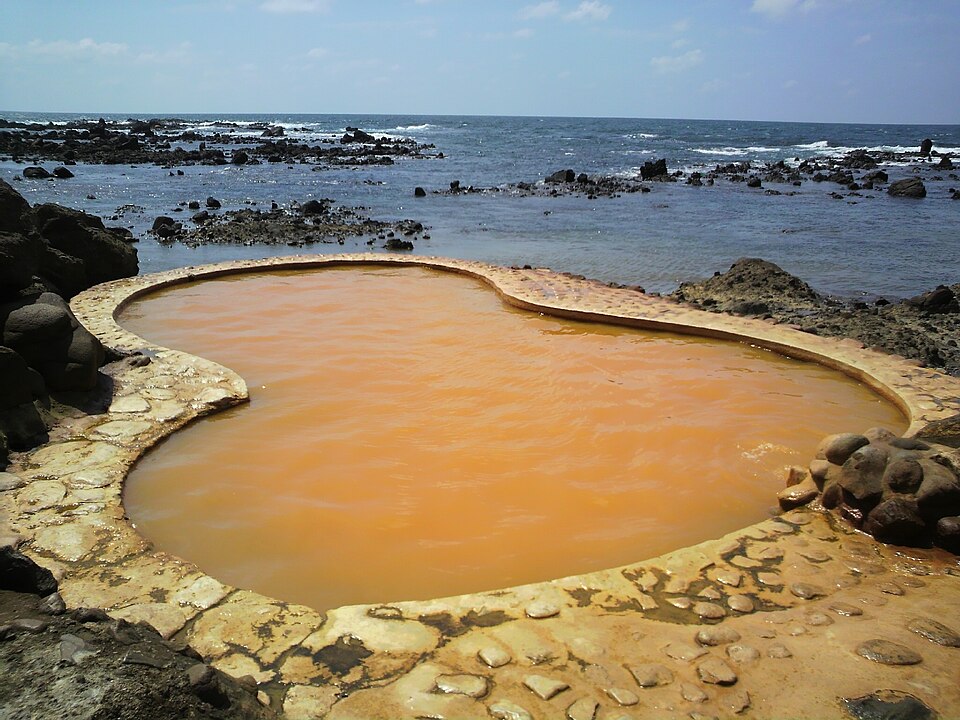
Furofushi Onsen occupies a rocky cape in Fukaura, Aomori Prefecture, with outdoor bathing pools positioned at the edge of the Sea of Japan cliffs. The spring water runs a deep reddish-brown from its high iron and sodium chloride content. The main open-air bath and a dedicated women's pool both use fully undiluted water drawn straight from the source. Sunsets over the water are a particular draw. Once day visitors depart in the late afternoon, overnight guests have the pools to themselves.
Common questions
What is the water temperature at Ofuka Onsen?▾
The water temperature at Ofuka Onsen ranges up to 77°C (minimum around 77°C).
Is Ofuka Onsen free to visit?▾
Ofuka Onsen charges an entrance fee in JPY.
Is Ofuka Onsen a public or private bath?▾
Ofuka Onsen is a public bathing spring.
Are tattoos allowed at Ofuka Onsen?▾
No, Ofuka Onsen does not permit visible tattoos.
What is the nearest station to Ofuka Onsen?▾
The nearest station to Ofuka Onsen is Tamagawa-onsen, about 0km away.