
Tsuchiyu Onsen
土湯温泉
Tsuchiyu Onsen
sulfur · Tohoku
Hotter than 63% of Japan springs (n=122).
More acidic than 19% of Japan springs (n=121).
Mineral profile
Bar width reflects listing order, not measured concentration.
Suitability
At a glance
Getting there
Easy — under 1km from a station
Cost
Moderate
About this spring
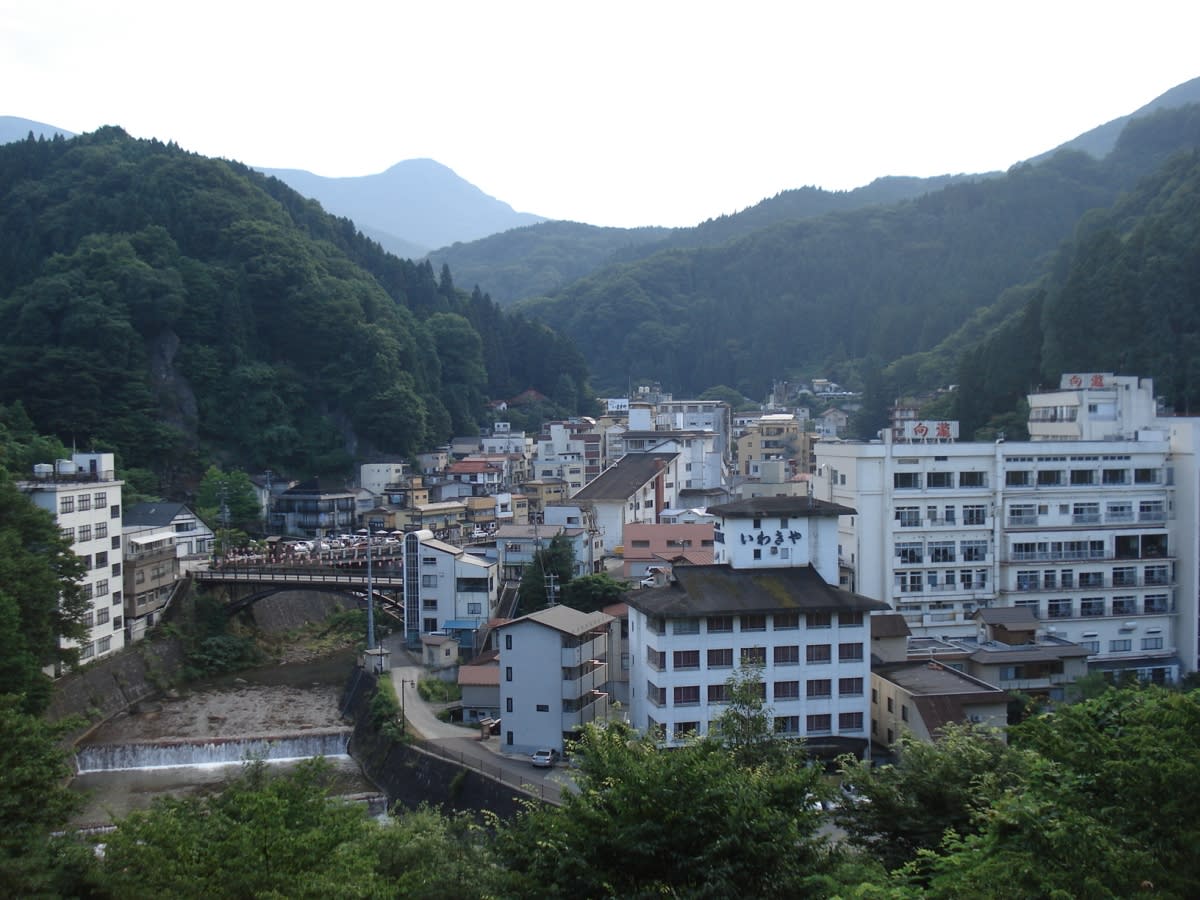
Tsuchiyu Onsen sits in the mountains roughly 16 kilometers west of Fukushima city, where the Arakawa River runs along the foot of Mount Azuma. The spring water comes up clear and colorless, carrying only a faint hint of sulfur. The town has a well-regarded kokeshi tradition, producing dolls with proportionally smaller heads and distinctive painted details that developed out of the winter craft work particular to this isolated valley.
Highlights
History
The kokeshi tradition here took shape during the nineteenth century, when deep winter snow cut local woodworkers off from outside work for months at a stretch.
Woodturning became a supplementary trade, and the specific character of this valley gave rise to a doll style clearly distinct from those produced elsewhere in the Tohoku region. The hot springs themselves have been drawing visitors for centuries, serving travellers moving along the mountain road that runs west from Fukushima.
Local guide
From Fukushima Station you take the Ban'etsu West Line west through tunnels and along river terraces until you arrive at a small mountain town where the valley closes in on both sides. Tsuchiyu Onsen sits at the base of Mount Azuma along the Arakawa River gorge, about sixteen kilometers from the city center, and its narrow main street is lined with inns so old their wooden facades have gone almost black with age. Steam pipes run underneath some of the roads here, and on cold mornings you can see wisps rising from the pavement.
The water at Tsuchiyu emerges from the ground as superheated steam at roughly 150 degrees Celsius, which is then piped and cooled before reaching the baths. The bathing water itself is colorless and completely clear, with only a faint trace of sulfur smell that reminds you something geological is happening beneath your feet. Some sources run slightly carbonated, giving a soft, almost fizzy feeling against your skin, and the pH of around 6.5 makes it close to neutral, gentle enough that you can stay in longer than you might expect. The temperature in the finished bath ranges from the mid-forties into the sixties at the hotter inns.
Tsuchiyu has a second tradition that has nothing to do with water. In the mid-1800s, when heavy winter snowfall blocked the mountain routes for months at a time, local craftsmen started carving wooden kokeshi dolls to earn income through the quiet season. Tsuchiyu Kokeshi became one of the most distinctive regional styles in Japan: they have slender, striped bodies painted while spinning on a lathe, small rounded eyes, a thin nose, and a distinctive black fringe across the forehead. You can watch a carver at work in the village today, and the dolls sold here are made in exactly the same tradition as those from two centuries ago.
There are four free foot baths scattered along the main street, which means you can arrive without paying a thing and still get the water on your skin. But the real reason to come is the gorge itself. A short walk from the town center brings you to a viewpoint over the Arakawa River where the cliffs drop sharply and the water is a deep jade green below. It is a straightforward place with no grand resort energy, and that is exactly why it works.
Mineral chemistry
Sulfuric hot springs are among the most studied in balneology worldwide. The sulfur compounds, primarily hydrogen sulfide and thiosulfate, have documented antimicrobial and anti-inflammatory properties. Regular bathing is associated with relief from chronic skin conditions including eczema and psoriasis, as well as joint inflammation and muscle soreness. Sulfuric waters have been used therapeutically across Asia and Europe for centuries.
The distinctive rotten-egg smell dissipates quickly after leaving the bath. Avoid if you have a sulfur allergy, very sensitive skin, or respiratory conditions. Remove silver jewellery before entering — sulfur will blacken it permanently.
Carbonated hot springs are genuinely rare. The dissolved carbon dioxide creates micro-bubbles that cling to the skin, dilating capillaries and boosting local circulation — sometimes called "heart baths."
Carbonated springs are typically cooler than other spring types. Those with cardiovascular conditions should soak for shorter periods (10–15 minutes max) and exit slowly to avoid lightheadedness.
Similar springs
 FREE
FREEThe valley occupies the center of Noboribetsu Onsen in Hokkaido. Jigokudani translates as Hell Valley. The crater covers 11 hectares and releases roughly 10,000 tonnes of hot spring water each day. Fumaroles vent steam across the floor of the valley, boiling pools bubble at the surface, and the surrounding cliffs carry heavy mineral staining. A walking path winds through the area in about 20 minutes and is open to all visitors at no cost. It ranks among the most striking landscapes accessible on foot anywhere in Japan.

Set deep in the Hakkoda Mountains of Aomori Prefecture, Sukayu Onsen is a historic bathhouse best known for its cavernous mixed-bathing hall, the Sen-nin-buro, which translates as the Bath of a Thousand Bathers. The waters are strongly acidic, the setting is rustic and unhurried, and winter brings extraordinary snowfall to the surrounding mountains.
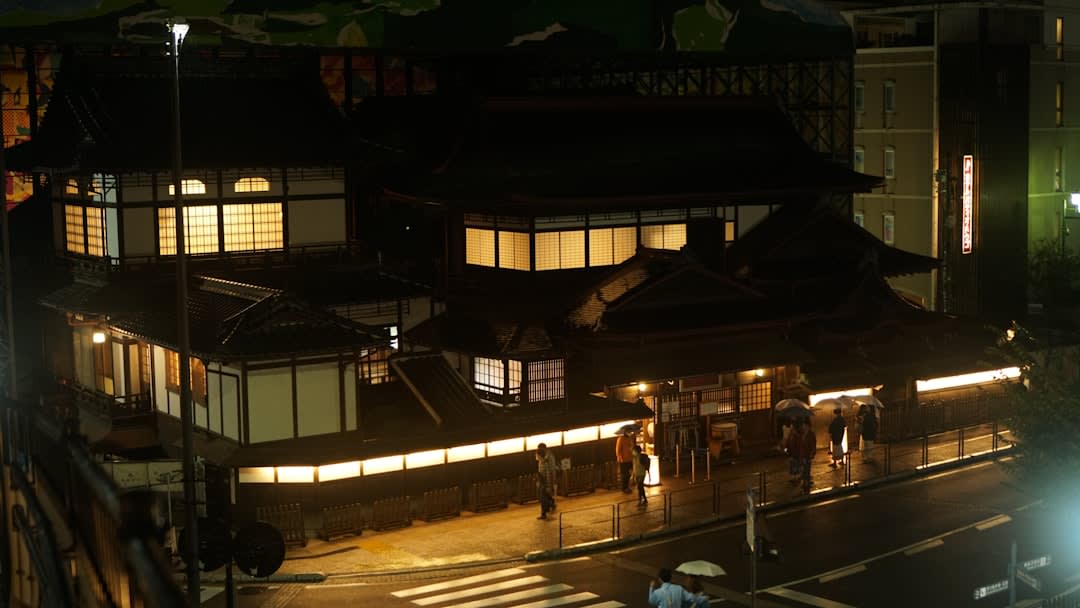
Dogo Onsen ranks among the oldest hot springs in Japan, with written records documenting its use for more than 1,300 years and oral traditions pointing back considerably further. The landmark Dogo Onsen Honkan is a three-storey wooden bathhouse finished in 1894, widely credited as the inspiration for the bathhouse depicted in Studio Ghibli's Spirited Away. The spring water is mildly alkaline and has long been valued for its ability to soften and smooth the skin.

Beppu is the most geothermally active city in Japan, with more than 2,900 hot spring vents located within the city limits and eight distinct thermal spring zones collectively known as the Beppu Hatto. The variety on offer is wide, ranging from grand hotel bathhouses to modest neighborhood public facilities to the celebrated Hells, a collection of brilliantly colored boiling pools scattered across the city. The Hells run far too hot for bathing, but they draw visitors who come to walk among them and take in the spectacle.
Amenities
Getting there
Take the Tohoku Shinkansen to Fukushima Station, then take a local bus toward Tsuchiyu Onsen. The journey takes about 30 minutes.
Location & nearby
Tsuchiyu Onsen, Tsuchiyuonsenmachi, Fukushima, 960-2157
Make a day of it
Pair your soak with these nearby spots.
Attraction
Sansukaitsuchiyu
0.2km away
Attraction
Supakurinikkudoyu
0.3km away
Attraction
Takinotsuribashi
0.3km away
Attraction
Ashiyudoyukko
0.3km away
Attraction
Tsuchiyu Onsen
0.3km away
Attraction
Onsentamagonomoriyama
0.4km away
More springs in Tohoku
Set deep in the Hakkoda Mountains of Aomori Prefecture, Sukayu Onsen is a historic bathhouse best known for its cavernous mixed-bathing hall, the Sen-nin-buro, which translates as the Bath of a Thousand Bathers. The waters are strongly acidic, the setting is rustic and unhurried, and winter brings extraordinary snowfall to the surrounding mountains.

Tsuru-no-yu is the oldest of the seven inns at Nyuto, set deep in a beech forest in Akita Prefecture. The main draw is a large outdoor mixed-bathing pool fed by opaque, milky-white sulfurous water. Many regard it as the most beautiful onsen setting in Japan. People come here to put some distance between themselves and the rest of the world for a while.
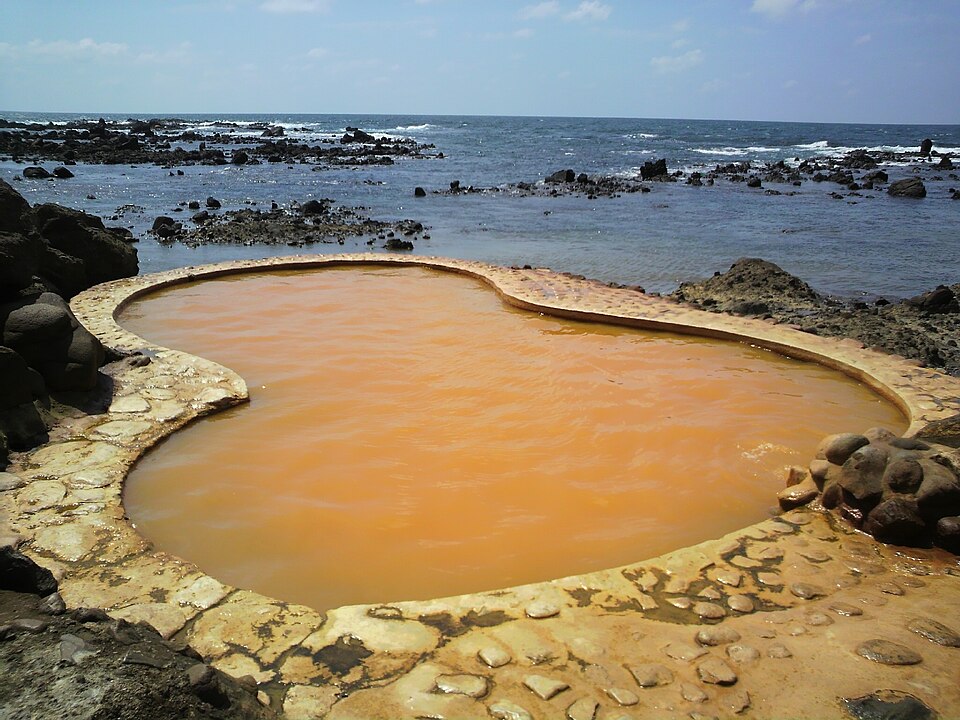
Furofushi Onsen occupies a rocky cape in Fukaura, Aomori Prefecture, with outdoor bathing pools positioned at the edge of the Sea of Japan cliffs. The spring water runs a deep reddish-brown from its high iron and sodium chloride content. The main open-air bath and a dedicated women's pool both use fully undiluted water drawn straight from the source. Sunsets over the water are a particular draw. Once day visitors depart in the late afternoon, overnight guests have the pools to themselves.
Common questions
What is the water temperature at Tsuchiyu Onsen?▾
The water temperature at Tsuchiyu Onsen ranges up to 68°C (minimum around 44°C).
Is Tsuchiyu Onsen free to visit?▾
Tsuchiyu Onsen charges an entrance fee in JPY.
Is Tsuchiyu Onsen a public or private bath?▾
Tsuchiyu Onsen is a public bathing spring.
Are tattoos allowed at Tsuchiyu Onsen?▾
Tattoo policy varies at Tsuchiyu Onsen. Check ahead of your visit.
What is the nearest station to Tsuchiyu Onsen?▾
The nearest station to Tsuchiyu Onsen is Tsuchiyu-Mitsuke, about 0km away.