
Gero Onsen
下呂温泉
Gero Onsen
alkaline · Chubu
Hotter than 79% of Japan springs (n=122).
More acidic than 93% of Japan springs (n=121).
Mineral profile
Bar width reflects listing order, not measured concentration.
Suitability
At a glance
Getting there
Easy — under 1km from a station
Cost
Moderate
About this spring
Gero Onsen sits along the Hida River in Gifu Prefecture and holds a place among Japan's three great hot springs, sharing that distinction with Arima and Kusatsu. The ranking traces back to the Muromachi-period monk Banri Shukyu, whose writings first established it, and Edo-period scholars later affirmed the designation. The spring is a sodium bicarbonate source with a pH of 9.2, and bathers commonly describe the water as smooth and silky against the skin.
Highlights
History
Written records mentioning the spring date to the Heian period, approximately 901 to 957 AD.
A local legend holds that the waters were first discovered when an injured egret waded into the warm river and its wounds healed. A catastrophic flood in 1859 collapsed the underground water veins and shut off the spring entirely for a generation. Residents worked through the Meiji and Taisho eras to drill for new sources and gradually restore the flow. The town's modern trajectory changed in 1931, when the Takayama Main Line extended to Gero and put it within two hours of Nagoya by rail.
Local guide
The Limited Express Hida from Nagoya takes about ninety minutes to reach Gero, following the Hida River upstream through increasingly steep canyon walls. By the time the train pulls into Gero Station, the valley has narrowed down to almost nothing, with forested ridges rising directly from the town's edge on both sides. Walk out of the station, cross the main road, and you can hear the river before you see it. Gero Onsen spreads along both banks of the Hida, and the water is everywhere: steaming from cracks in the stone steps, rising from public foot-soaking benches, flowing through channels cut into the pavement along the shopping street.
Gero sits alongside Arima and Kusatsu as one of Japan's three most celebrated hot spring towns, a designation that has been claimed since the medieval period. The water is a strongly alkaline simple spring, pushing pH 9.2 and surfacing at temperatures between 55 and 84 degrees. It is colorless and odorless, which can make it easy to underestimate. But the alkalinity does something distinctive on skin: it dissolves the faint layer of dead cells on the surface, leaving the skin soft and slightly warm long after you step out. Locals call it bijin no yu, the beautiful-skin water.
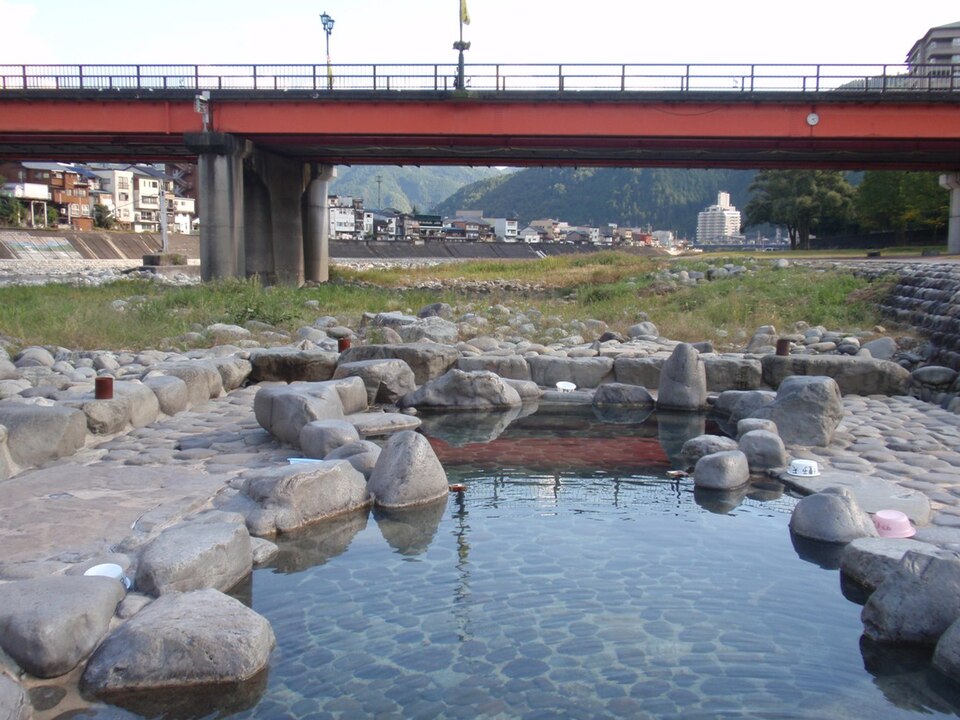
The most accessible starting point is Funsenchi, a free public bath right on the riverbank beside the main bridge. It has been here since 1983, mixed-gender, open from early morning until late evening, and requires nothing more than removing your shoes at the edge. Day visitors can also buy a Yumeguri Tegata pass for around 1,300 yen, which covers entry to three participating ryokan bathhouses around town. Each facility draws from the same alkaline source but the architecture and atmosphere differ considerably, from cedar-paneled rooms with garden views to open platforms hanging directly above the rushing Hida River below.
The best way to understand the town's scale is to walk the riverside path after dark. The ryokan lights reflect across the water, and steam rises from the drainage channels in the road in a way that makes the whole place feel slightly unreal. The surrounding hills still have patches of old cedar forest, and on clear days the ridgeline above town catches clouds that stream between the peaks all afternoon. It is a practical, well-maintained onsen town without pretension, and the free bath by the river means you can spend very little money here and still come away with the thing you came for.
Mineral chemistry
Water character inferred from mineral type — verify on site.
Alkaline springs (pH above 8) are known for their skin-softening effect, sometimes called "beauty water" in bathing cultures across Asia. The high pH saponifies skin oils, producing a characteristic silky feel on the skin surface.
The slippery feeling underfoot in highly alkaline springs is normal — take care when standing and walking in the bath. Avoid prolonged soaking if you have dry or sensitive skin.
Similar springs
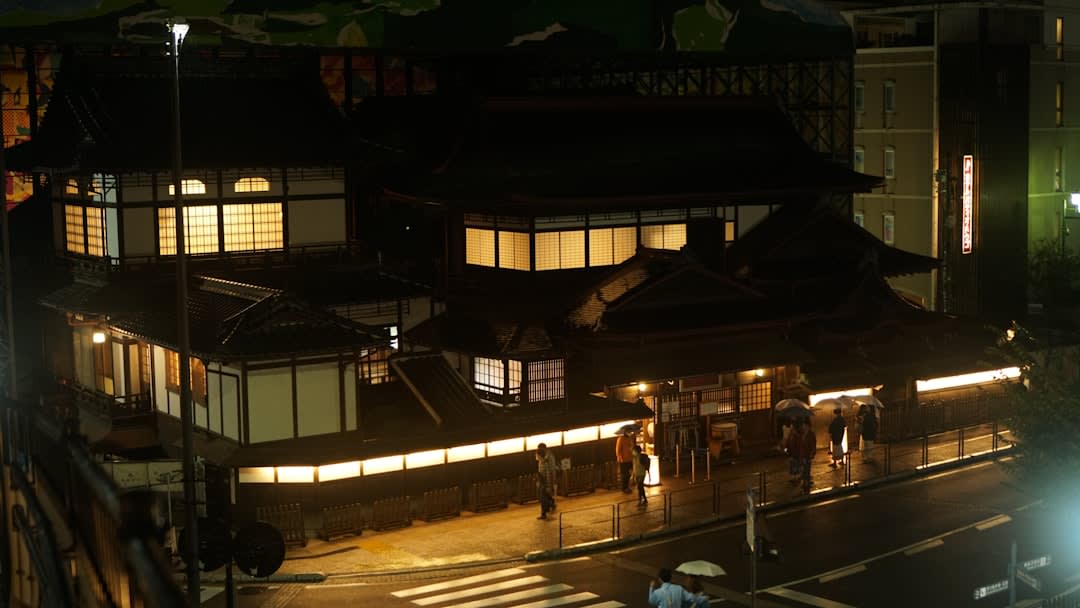
Dogo Onsen ranks among the oldest hot springs in Japan, with written records documenting its use for more than 1,300 years and oral traditions pointing back considerably further. The landmark Dogo Onsen Honkan is a three-storey wooden bathhouse finished in 1894, widely credited as the inspiration for the bathhouse depicted in Studio Ghibli's Spirited Away. The spring water is mildly alkaline and has long been valued for its ability to soften and smooth the skin.
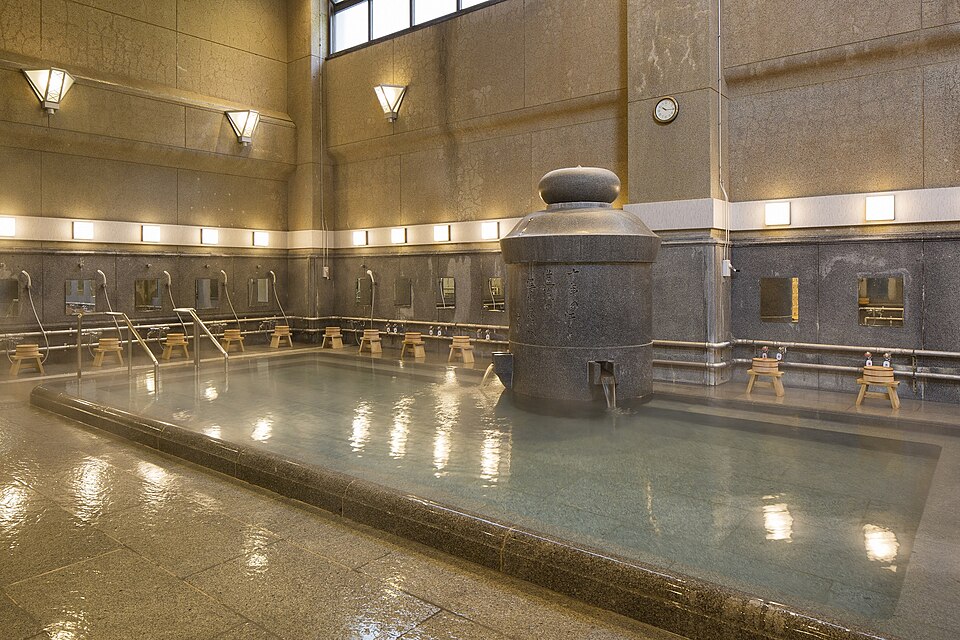
Tsubaki Onsen occupies a single large bathhouse on the Kii Peninsula in Wakayama Prefecture, surrounded by forest and roughly 2.5 hours from Osaka by train. The spring registers pH 9.9, placing it among the most alkaline waters in Japan. The facility is straightforward and well-maintained, attracting visitors from the Kumano region as well as day-trippers traveling in from the coast.
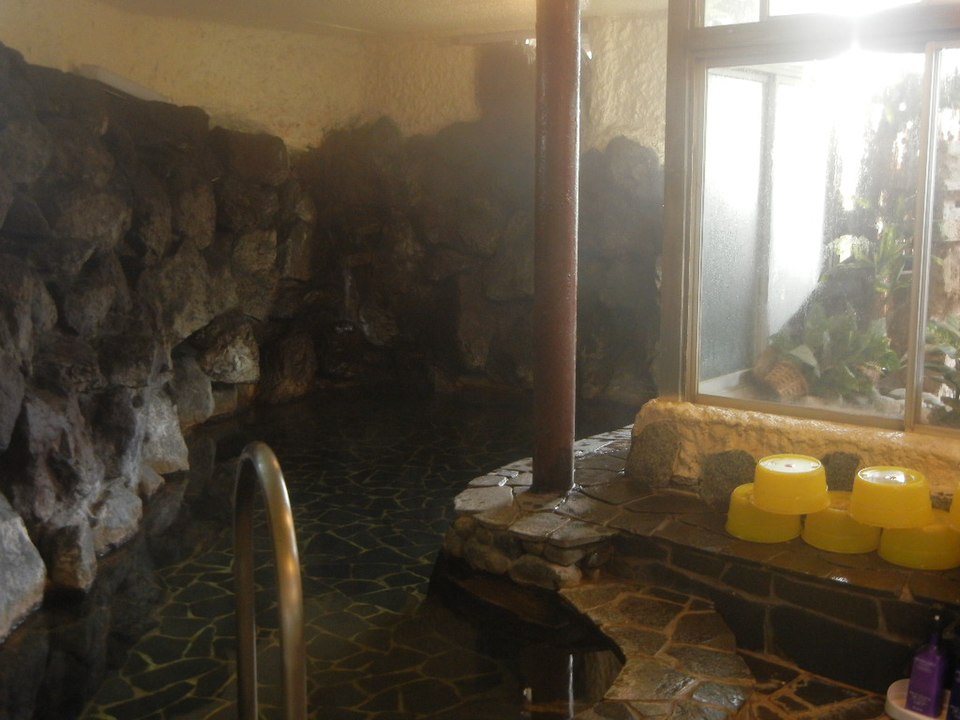
Iiyama Onsen sits in northern Nagano Prefecture near the Nozawa Onsen highlands and produces water with a pH of 11.3, placing it among the most alkaline natural hot springs anywhere in Japan. The soft, high-alkaline water has long been sought out as a beauty spring, widely praised for the way it smooths and softens the skin. The Hokuriku Shinkansen now stops at Iiyama Station, cutting travel time from Tokyo considerably.
 FREE
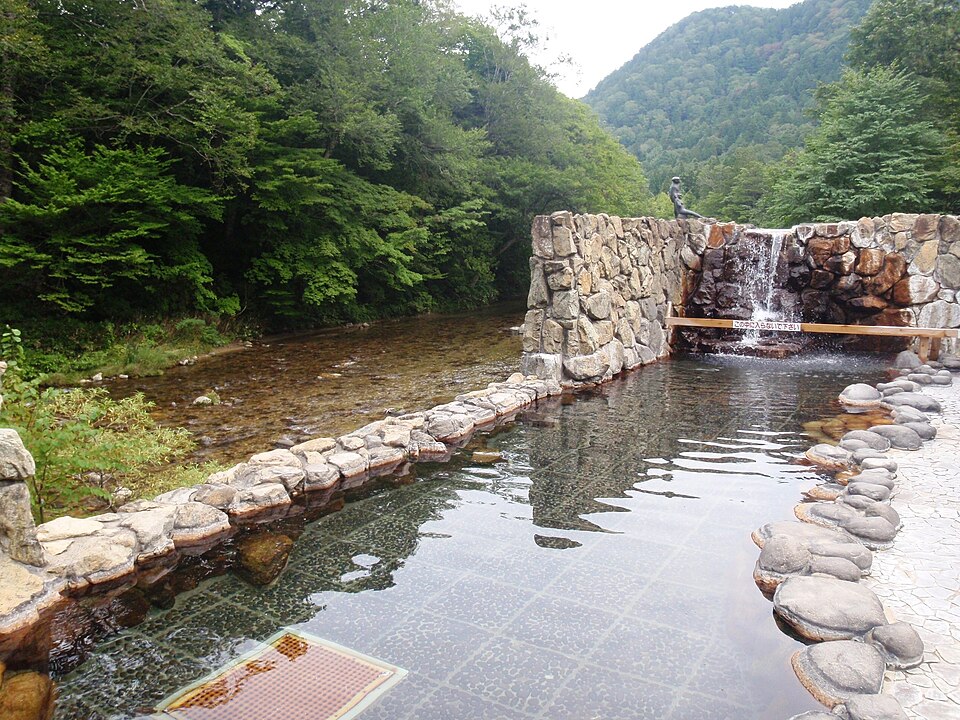
FREEKappa-no-yu is a free, open-air bathing spot tucked into Yagen Valley on the Shimokita Peninsula in Aomori Prefecture, roughly 2 kilometers up the slope from the central Yagen Onsen cluster. Two separate baths rest beside a clear mountain stream, surrounded by old-growth beech and cypress trees. The water temperature holds at 46 degrees Celsius. Visitors are not permitted to bring soap or shampoo. The baths are open from April through November and charge no entry fee.
Amenities
Getting there
Take the Wide View Hida limited express from Nagoya Station directly to Gero Station. The journey takes about 75 minutes. Trains depart every one to two hours. The main riverside hot spring street is a 5-minute walk from the station exit.
Location & nearby
Gero Onsen, Gero, Gifu
Make a day of it
Pair your soak with these nearby spots.
Attraction
Gero Onsen
0.2km away
Attraction
Yukai Resort Gero Onsen Gero Saichoraku Honkan
0.2km away
Attraction
Gero Onsen Ryokan Kyo Gumi
0.4km away
Attraction
Gerokanko Kurabu
0.4km away
Attraction
Gero-onsen
0.5km away
Attraction
Onsenji Temple (Hot-spring Temple)
0.5km away
More springs in Chubu
 FREE
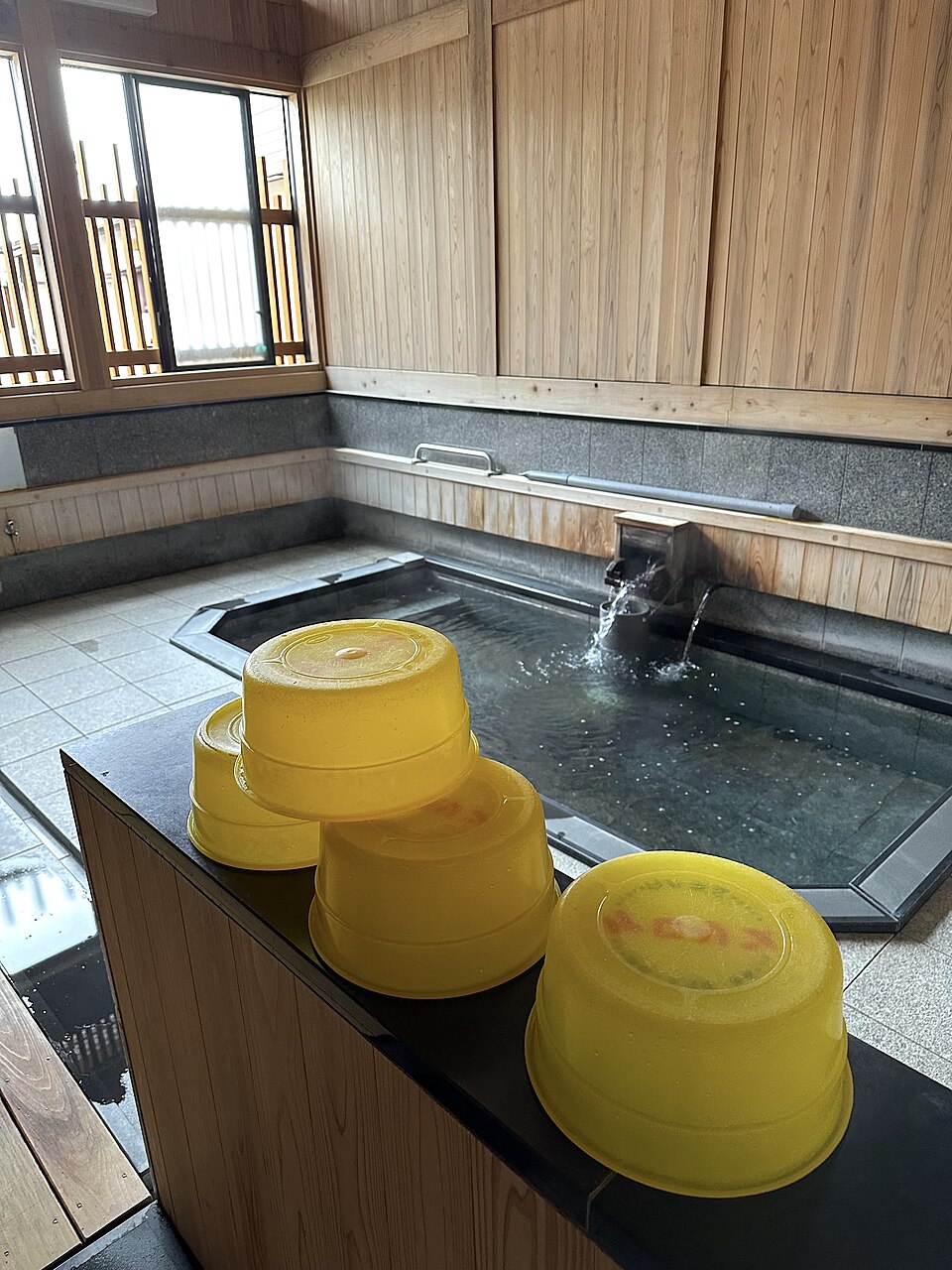
FREENozawa Onsen is a traditional village in Nagano Prefecture that maintains 13 free public bathhouses open to visitors and residents alike. These bathhouses, known as soto-yu, have been overseen by neighborhood cooperatives called yunakama for close to four centuries. The village also contains world-class ski slopes, a pairing that is genuinely uncommon anywhere in the world.
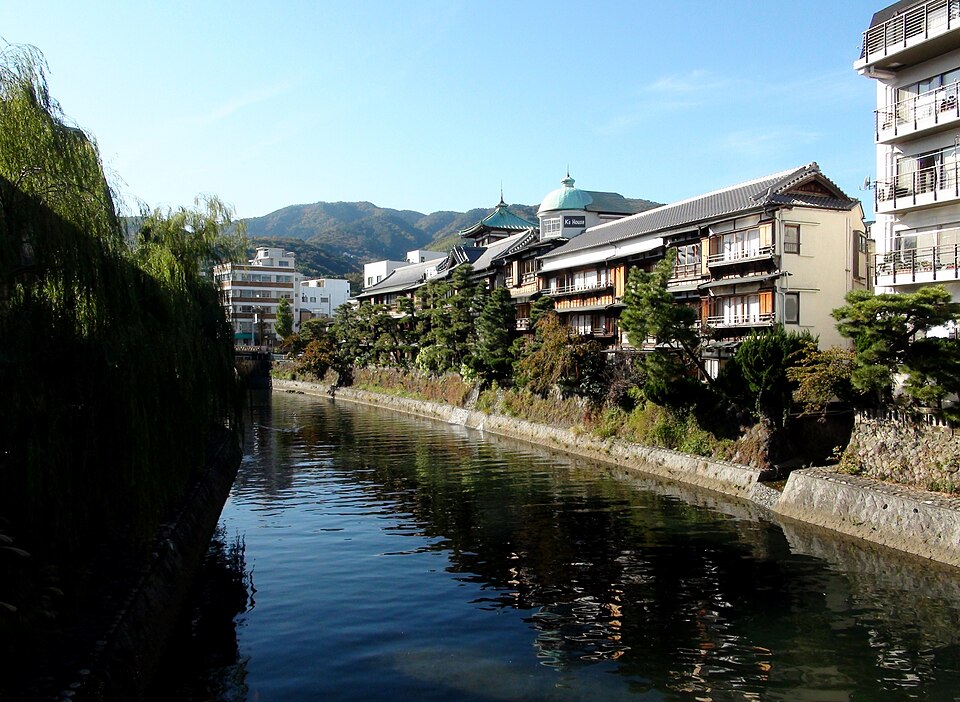
Ito sits along the eastern shore of the Izu Peninsula, facing the ocean and ranking among Japan's most productive hot spring districts by volume. More than 1,500 individual springs feed the town's supply, together pushing out around 30,000 kiloliters of water each day. Palm-lined avenues, tropical parks, and botanical gardens set the tone here, giving Ito a resort atmosphere that reads as distinctly its own compared to inland onsen destinations.
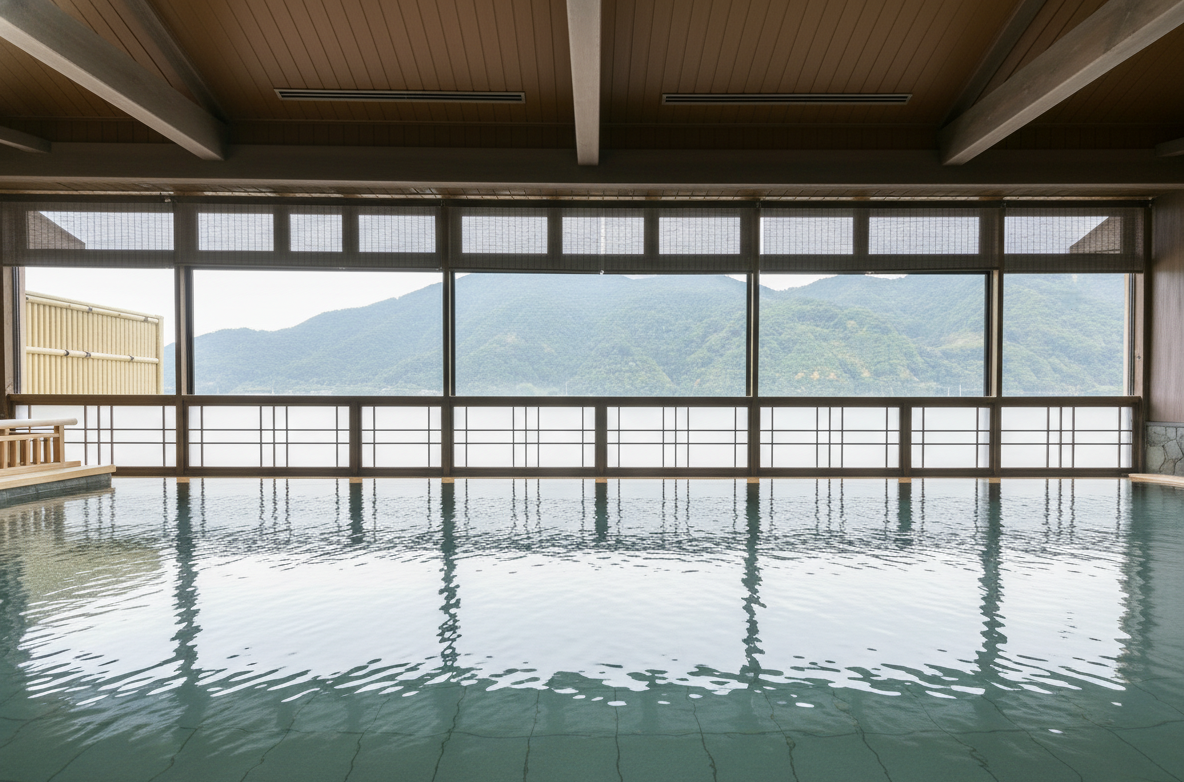
A mountain town in Niigata Prefecture famous for heavy snowfall and a unique sake-infused bath. After a day on the ski slopes, visitors soak in outdoor baths while snow falls silently around them. The town is also the setting of one of Japan's greatest novels.
Common questions
What is the water temperature at Gero Onsen?▾
The water temperature at Gero Onsen ranges up to 84°C (minimum around 55°C).
Is Gero Onsen free to visit?▾
Gero Onsen charges an entrance fee in JPY.
Is Gero Onsen a public or private bath?▾
Gero Onsen is a public bathing spring.
Are tattoos allowed at Gero Onsen?▾
Tattoo policy varies at Gero Onsen. Check ahead of your visit.
What is the nearest station to Gero Onsen?▾
The nearest station to Gero Onsen is Kyu Gero Onsen Byoin Guchi, about 0.1km away.