
Tsubaki Onsen
椿温泉
3.8 · 1097 reviews · via Google
Tsubaki Onsen
simple-alkaline · Kansai
Hotter than 1% of Japan springs (n=122).
More acidic than 96% of Japan springs (n=121).
Mineral profile
Bar width reflects listing order, not measured concentration.
Suitability
At a glance
Getting there
Easy — under 1km from a station
Cost
Moderate
Crowd level
Moderate
About this spring
Tsubaki Onsen occupies a single large bathhouse on the Kii Peninsula in Wakayama Prefecture, surrounded by forest and roughly 2.5 hours from Osaka by train. The spring registers pH 9.9, placing it among the most alkaline waters in Japan. The facility is straightforward and well-maintained, attracting visitors from the Kumano region as well as day-trippers traveling in from the coast.
Highlights
History
The name Tsubaki comes from the camellia blossoms that appear on the surrounding hills each spring.
The bathhouse grew from a community facility serving the inland villages of the Kii Peninsula. Bathers have long noted that the water's high pH and soft mineral composition leave the skin notably smooth after a soak.
Local guide
Shirahama gets most of the attention on the Wakayama coast, with its famous white sand beach and ocean-floor bathhouses carved from the cliffs. But if you take the Kisei Main Line south from Shirahama Station for about seven minutes to Tsubaki Station, and then walk twenty minutes down a narrow road toward the coast, the tourist economy thins out quickly and you arrive at a different kind of hot spring entirely. Tsubaki Onsen sits in a relatively wild section of coastline where the Kii Peninsula's dense subtropical forest comes down close to the sea and the road through the area feels like it was built mainly for the small number of people who live here rather than for anyone passing through.
The main public bath at Tsubaki is the Shirasuna-no-Yu, and the thing you notice first is the temperature. The spring source here emerges at 31 degrees Celsius, which in practical terms means the bath is body temperature or just below. You lower yourself into water that does not initially feel hot. It feels temperate, almost neutral, and your brain takes a moment to register that you are in a hot spring at all. The water is a simple alkaline type, rated at pH 9.9, and it is completely clear. The high alkalinity creates the same slippery, smooth sensation you find at stronger alkaline springs further north, but here it arrives without any heat shock, which makes it easy to stay in for a very long time. Your skin emerges looking clean and faintly luminous in the way that high-alkaline water tends to produce.
The public bath is housed in a modest wooden structure with an outdoor section open to the surrounding garden and the sound of the sea wind in the trees. There are indoor and outdoor pools, both at the same gentle temperature, and the outdoor area has the kind of unmanicured quality that comes from being genuinely in the landscape rather than designed to suggest it. The pine and subtropical undergrowth grows right up to the fence line, and in the late afternoon the birds in the forest above the bath are audible over the soft sounds of water.
Tsubaki Onsen's appeal is precisely what it does not have. It does not have a famous history, a spectacular view, or a dramatic water color. What it has is a free footbath operated by the local community at the roadside station nearby, the genuine feeling of a coastal Wakayama village that continues to run a public bath the way coastal villages have always run public baths, and spring water that is easy on the body in a way that scalding volcanic springs simply cannot be. For travelers who have been covering ground along the Kumano Kodo pilgrimage routes, or simply moving too fast through the Kii Peninsula, the warm, unremarkable, quietly alkaline water here is a specific kind of correction.
Mineral chemistry
Water character inferred from mineral type — verify on site.
Alkaline springs (pH above 8) are known for their skin-softening effect, sometimes called "beauty water" in bathing cultures across Asia. The high pH saponifies skin oils, producing a characteristic silky feel on the skin surface.
The slippery feeling underfoot in highly alkaline springs is normal — take care when standing and walking in the bath. Avoid prolonged soaking if you have dry or sensitive skin.
Similar springs
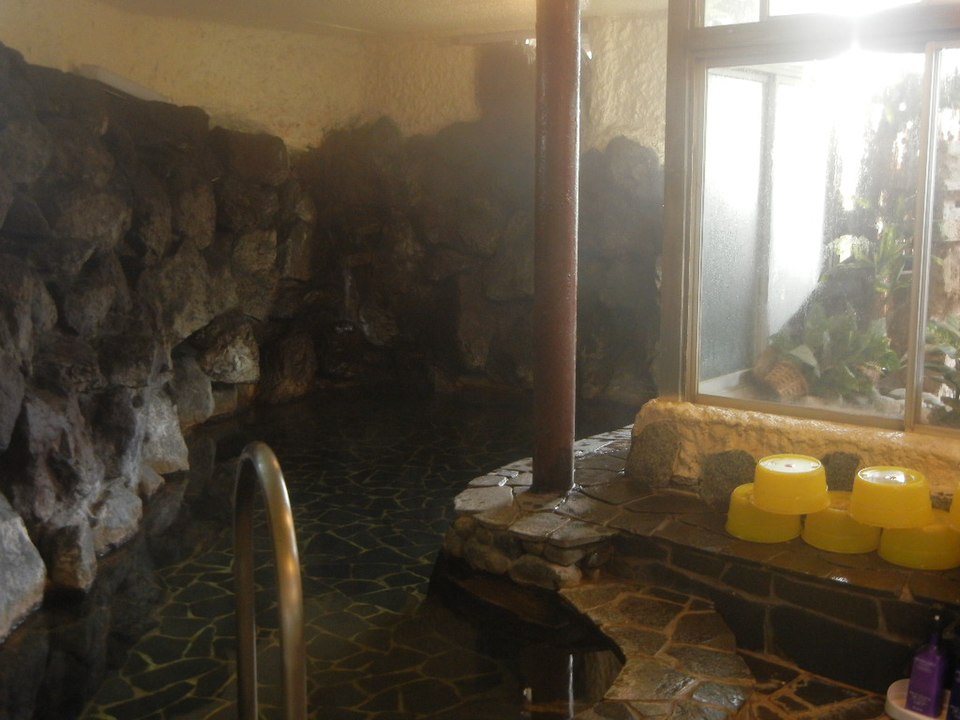
Iiyama Onsen sits in northern Nagano Prefecture near the Nozawa Onsen highlands and produces water with a pH of 11.3, placing it among the most alkaline natural hot springs anywhere in Japan. The soft, high-alkaline water has long been sought out as a beauty spring, widely praised for the way it smooths and softens the skin. The Hokuriku Shinkansen now stops at Iiyama Station, cutting travel time from Tokyo considerably.
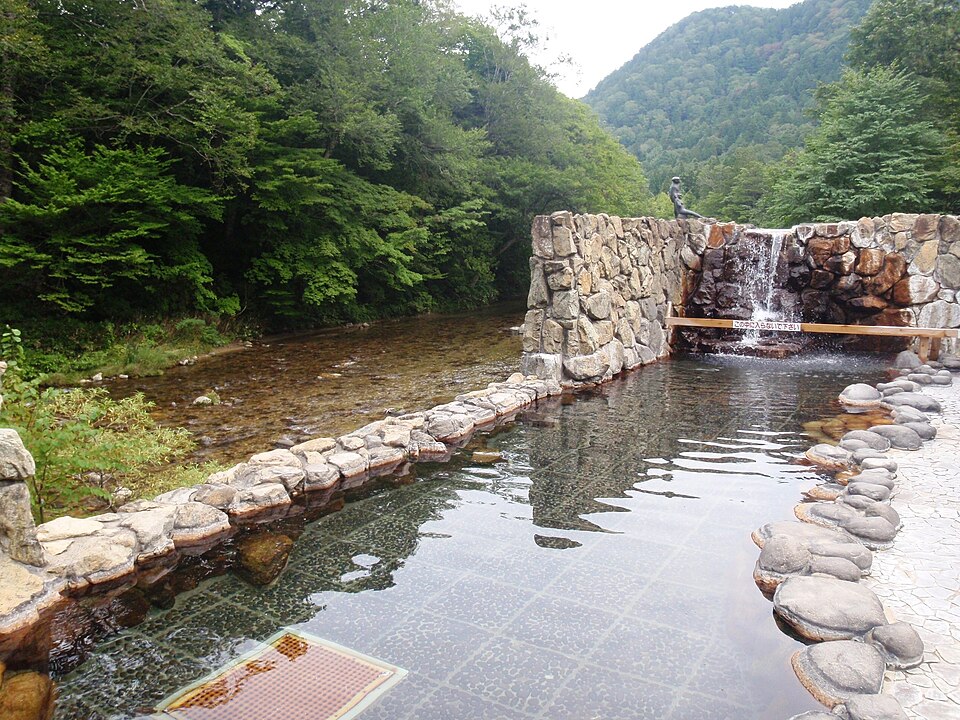 FREE
FREEKappa-no-yu is a free, open-air bathing spot tucked into Yagen Valley on the Shimokita Peninsula in Aomori Prefecture, roughly 2 kilometers up the slope from the central Yagen Onsen cluster. Two separate baths rest beside a clear mountain stream, surrounded by old-growth beech and cypress trees. The water temperature holds at 46 degrees Celsius. Visitors are not permitted to bring soap or shampoo. The baths are open from April through November and charge no entry fee.
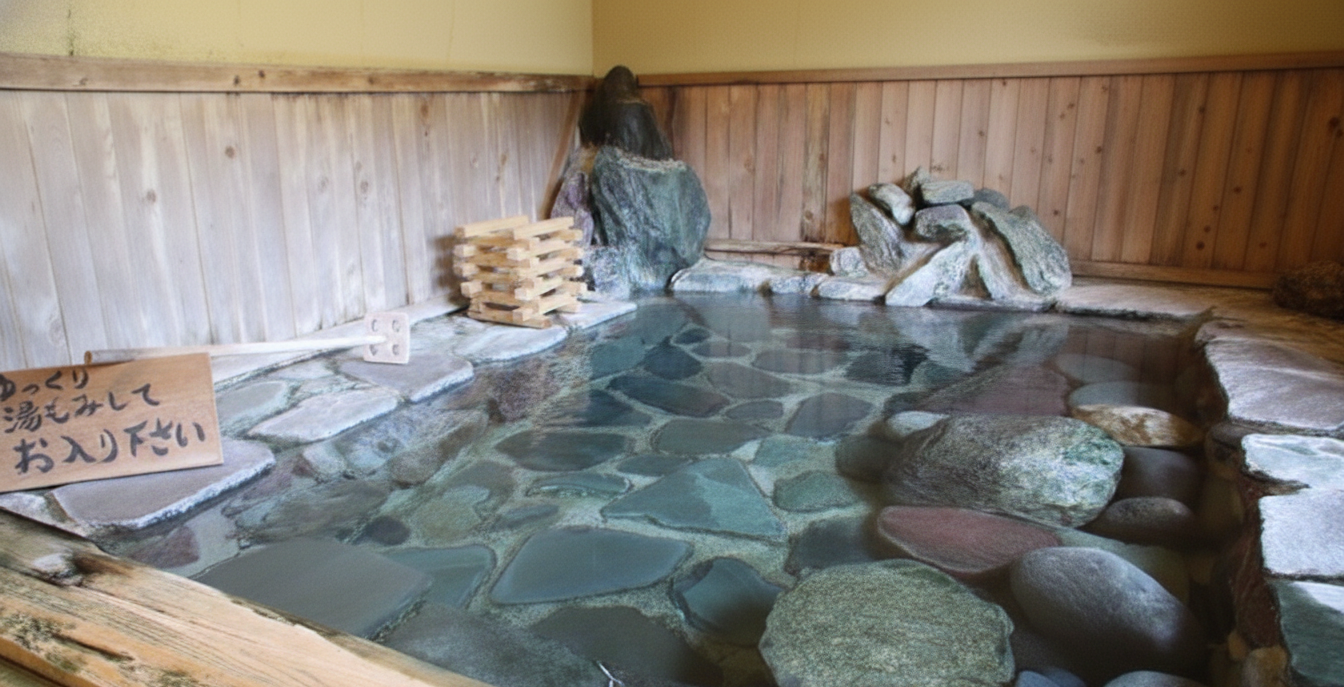
Tokigawa Onsen sits in Hiki District, Saitama Prefecture, roughly 90 minutes from central Tokyo. The water rises from Chichibu Paleozoic strata at a depth of 1,700 meters and registers pH 10, placing it firmly in the highly alkaline range. Bathers consistently note the silky feel it leaves on the skin. The facility has held onto its Showa-era bathhouse character rather than updating it.
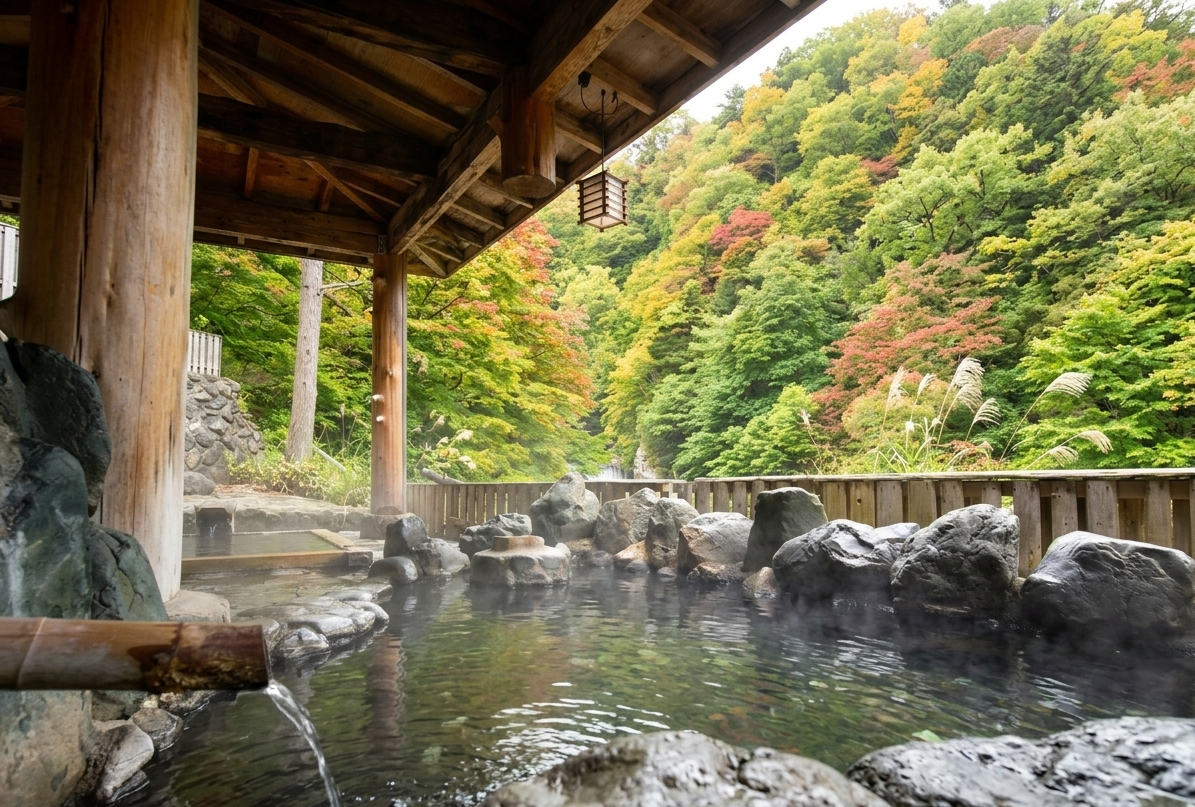
Akinomiya Hot Springs is a cluster of mountain springs situated along the Yakunai River at the western foot of Mount Kurikoma in Akita Prefecture, widely regarded as the prefecture's oldest spring resort. The geothermal area has been catalogued as containing more than 50 individual springs and fumaroles. The innermost of these, Takanoyu, is both the most remote and the most celebrated.
Amenities
Getting there
Take the JR Kuroshio limited express from Shin-Osaka along the Kisei Main Line and alight at Tsubaki Station. The journey takes about 2 hours 40 minutes. The onsen facility is a 3-minute walk from the station exit. From Tokyo, take the Tokaido Shinkansen to Shin-Osaka first, then transfer to the Kuroshio.
Location & nearby
1058番地の1 Tsubaki, Shirahama, Nishimuro District, Wakayama 649-2326
More springs in Kansai

Arima Onsen sits in the hills above Kobe, close to Mount Rokko, and ranks among the oldest hot spring towns in Japan. The town draws visitors for two entirely different spring types that coexist within its compact footprint. Kinsen is the iron-rich golden water that stains surrounding rocks a rusty orange, while ginsen runs clear and carries both carbonation and mild radioactivity. Few other onsen destinations in Japan bring together two such distinct water types within a single small town.
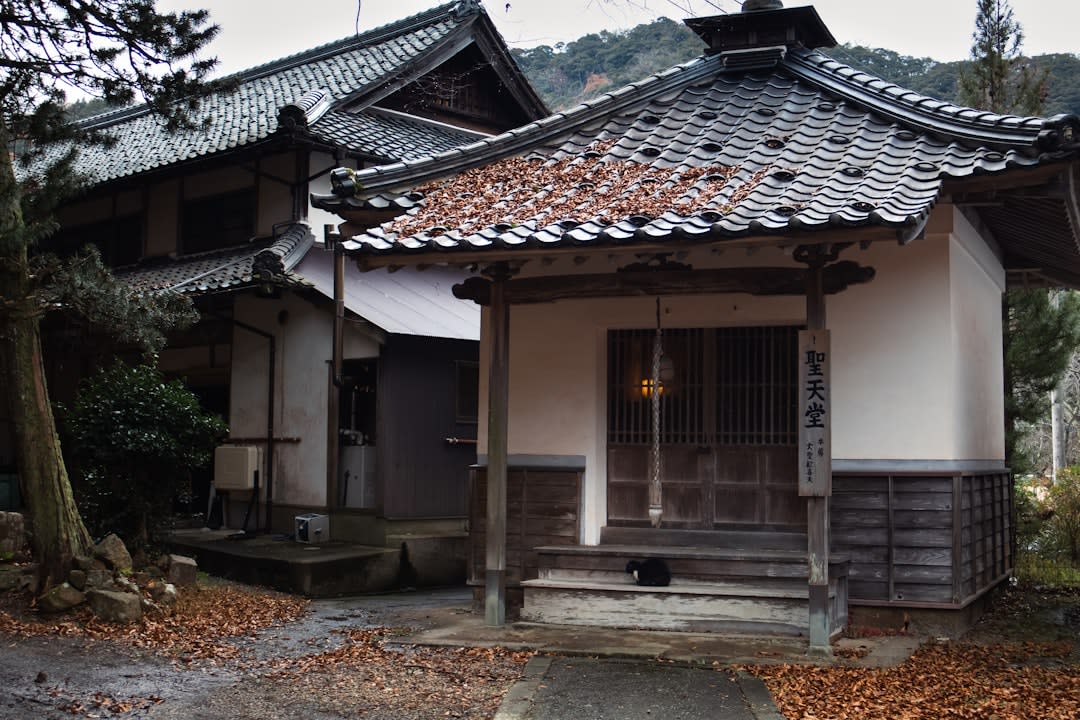
One of Japan's most beloved onsen towns. Visitors put on a yukata and wooden sandals and stroll between seven public bathhouses along a willow-lined canal. The wooden bridges, stone walkways, and traditional inn facades have barely changed in a century. The town is built for wandering.
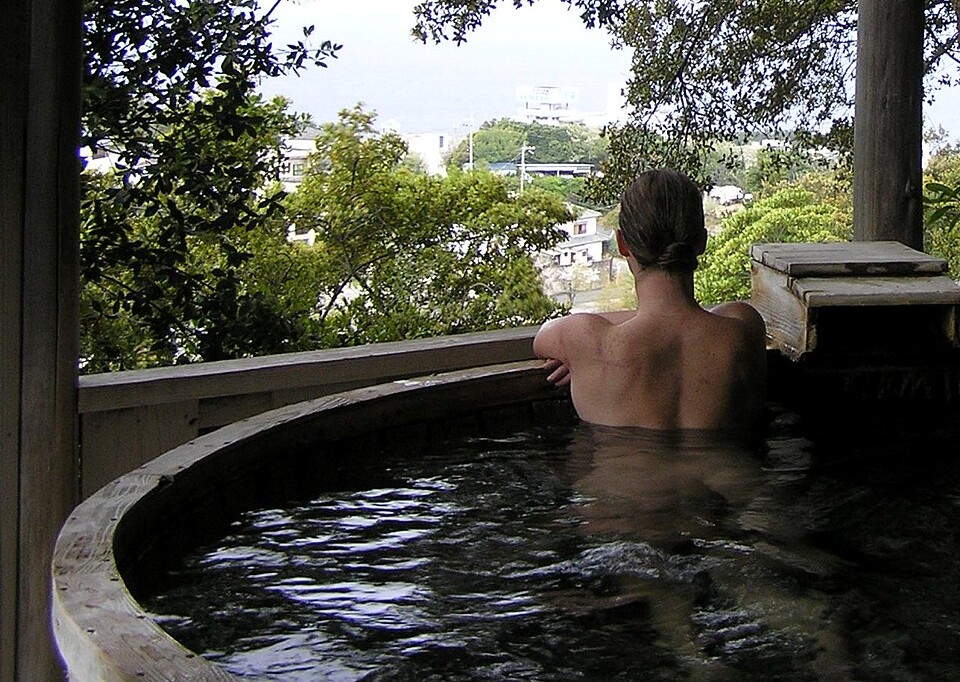
An old coastal resort town where hot springs meet the Pacific. The white-sand beach and dramatic rock formations create a setting unlike most onsen destinations. The ancient outdoor baths of Saki-no-Yu sit directly above the ocean. You soak while watching the waves crash below you.
Common questions
What is the water temperature at Tsubaki Onsen?▾
The water temperature at Tsubaki Onsen ranges up to 31°C (minimum around 31°C).
Is Tsubaki Onsen free to visit?▾
Tsubaki Onsen charges an entrance fee in JPY.
Is Tsubaki Onsen a public or private bath?▾
Tsubaki Onsen is a mixed bathing spring.
Are tattoos allowed at Tsubaki Onsen?▾
No, Tsubaki Onsen does not permit visible tattoos.
What is the nearest station to Tsubaki Onsen?▾
The nearest station to Tsubaki Onsen is Tsubaki Onsen, about 0.2km away.