
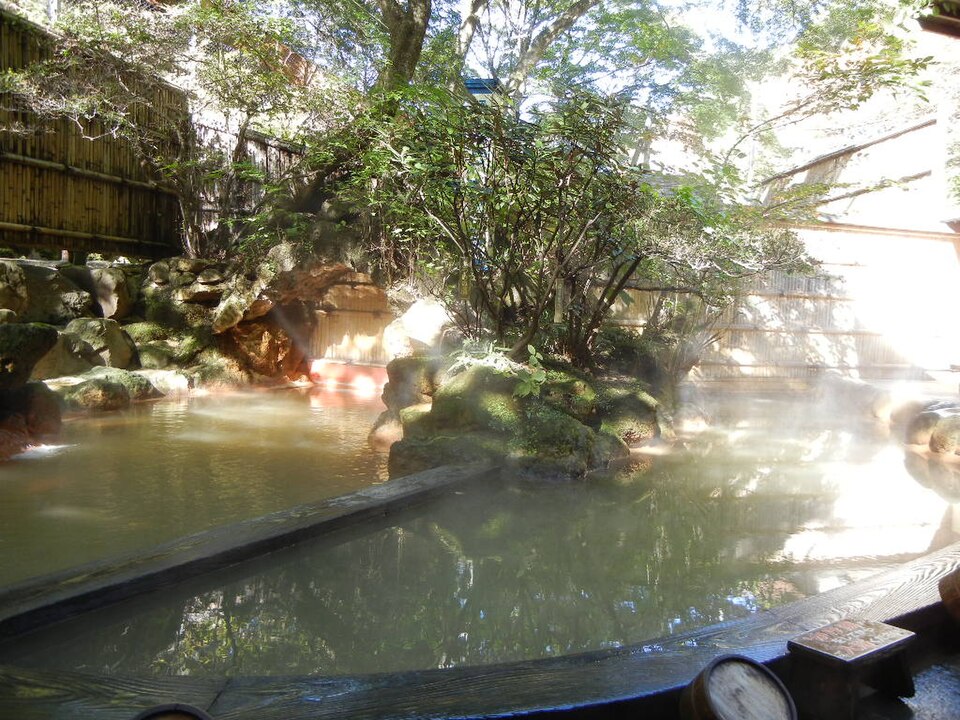
Ikaho Onsen
伊香保温泉
4.1 · 1900 reviews · via Google
Ikaho Onsen
iron · Kanto
Hotter than 42% of Japan springs (n=122).
More acidic than 17% of Japan springs (n=121).
Mineral profile
Bar width reflects listing order, not measured concentration.
Suitability
At a glance
Getting there
Easy — under 1km from a station
Cost
Low
Crowd level
Moderate
About this spring
Ikaho Onsen sits on a hillside in Gunma Prefecture, its layout defined by 365 stone steps that rise through a narrow valley flanked by ryokan and traditional shops. The waters are iron-rich and run a characteristic golden-brown, a color reflecting the mineral content that has drawn visitors since the Nara period. The staircase serves as the town's central axis, with nearly all activity concentrated along its length or on the side streets branching from it.
Highlights
History
The springs at Ikaho appear in the Man'yoshu, a poetry anthology compiled around 759 AD, indicating the waters were already in regular use during the Nara period.
The stone staircase itself has a military origin. Following the defeat of Takeda Katsuyori at the Battle of Nagashino in 1575, the warlord commissioned his general Sanada Masayuki to construct the steps as infrastructure for routing spring water to the bathhouses positioned along the slope. The arrangement gave wounded soldiers both a reliable water supply and access to the therapeutic baths. Through the Edo period, Ikaho attracted domain lords and travelers coming to the mountains for rest and recovery. The Meiji and Taisho eras drew a different kind of visitor. Writers including Natsume Soseki, Tokutomi Roka, Takehisa Yumeji, and Hagiwara Sakutaro all spent time here during those years.
Local guide
From Shibukawa Station, the bus climbs the lower slopes of Mount Haruna and deposits you at the base of a stone staircase that runs three hundred meters straight up the center of the town. The steps are granite, there are three hundred and sixty-five of them, and the number is intentional: the town's wish that it stay busy year-round, every day of the year, pressed into the very architecture. On either side of the staircase, old inns and small restaurants have been here for the better part of four hundred years, and a narrow channel runs alongside the steps carrying water that looks nothing like water.
Ikaho's signature bath, Kogane no Yu, carries the highest iron content of any hot spring in Gunma Prefecture. The water comes out of the earth already loaded with dissolved iron, and when it hits oxygen it turns. By the time it reaches the tub it is a deep amber-brown, the color of weak tea darkened to opacity, sitting warm and faintly metallic at a pH of 6.2. At 38 to 55 degrees, the range covers everything from a slow, comfortable soak to something that requires you to lower yourself in slowly. On your skin the iron water feels heavier than plain water, not slimy but substantial, and it leaves the faintest mineral residue when you dry off.
There is a second spring in Ikaho, Shirogane no Yu, discovered more recently, which is clear and colorless. Both waters flow in separate pipes through the town, and the better bathhouses offer both. But the brown water is what people come for, and it runs openly through a channel visible right beside the stone steps so that even before you reach the bath you can smell the faint iron on the air and watch the rust-colored water moving down through the heart of the town.
Natsume Soseki spent time here in the Meiji period, along with several other writers of that era who found something useful in Ikaho's combination of mild mountain air and unusual water. The literary connection is mentioned on plaques near the top of the stairs, but the place does not make too much of it. On a weekday morning in autumn, when you climb to the top of the stone steps and look back down at the brown-water channel flanked by old wooden inn fronts and the forested slopes of Haruna framing everything behind, it earns itself on its own terms.
Mineral chemistry
Iron-bearing springs are recognised by their characteristic rust-red or amber colour and metallic taste. The iron content is associated with stimulation of red blood cell production and is traditionally recommended for anaemia and fatigue recovery.
Iron springs will stain light-coloured swimwear and towels a persistent brownish-orange. Those with haemochromatosis (iron overload condition) should seek medical advice before bathing.
Sulfate springs contain dissolved calcium, sodium, or magnesium sulfate. Calcium sulfate springs are traditionally associated with wound healing and post-surgical recovery.
Sodium sulfate springs can have a mild laxative effect in sensitive individuals — stay well hydrated.
Similar springs
 FREE
FREEThe valley occupies the center of Noboribetsu Onsen in Hokkaido. Jigokudani translates as Hell Valley. The crater covers 11 hectares and releases roughly 10,000 tonnes of hot spring water each day. Fumaroles vent steam across the floor of the valley, boiling pools bubble at the surface, and the surrounding cliffs carry heavy mineral staining. A walking path winds through the area in about 20 minutes and is open to all visitors at no cost. It ranks among the most striking landscapes accessible on foot anywhere in Japan.

Set deep in the Hakkoda Mountains of Aomori Prefecture, Sukayu Onsen is a historic bathhouse best known for its cavernous mixed-bathing hall, the Sen-nin-buro, which translates as the Bath of a Thousand Bathers. The waters are strongly acidic, the setting is rustic and unhurried, and winter brings extraordinary snowfall to the surrounding mountains.

Beppu is the most geothermally active city in Japan, with more than 2,900 hot spring vents located within the city limits and eight distinct thermal spring zones collectively known as the Beppu Hatto. The variety on offer is wide, ranging from grand hotel bathhouses to modest neighborhood public facilities to the celebrated Hells, a collection of brilliantly colored boiling pools scattered across the city. The Hells run far too hot for bathing, but they draw visitors who come to walk among them and take in the spectacle.

Arima Onsen sits in the hills above Kobe, close to Mount Rokko, and ranks among the oldest hot spring towns in Japan. The town draws visitors for two entirely different spring types that coexist within its compact footprint. Kinsen is the iron-rich golden water that stains surrounding rocks a rusty orange, while ginsen runs clear and carries both carbonation and mild radioactivity. Few other onsen destinations in Japan bring together two such distinct water types within a single small town.
Amenities
Getting there
From Tokyo: JR Takasaki Line
Gateway: Shibukawa (75 min)
Bus to Ikaho Onsen (~25 min)
Total journey: 105 min
From Shibukawa Station, take the bus to Ikaho Onsen. The ride takes about 25 minutes.
Location & nearby
Ikaho-machi, Shibukawa City, Gunma 377-0102
More springs in Kanto
 FREE
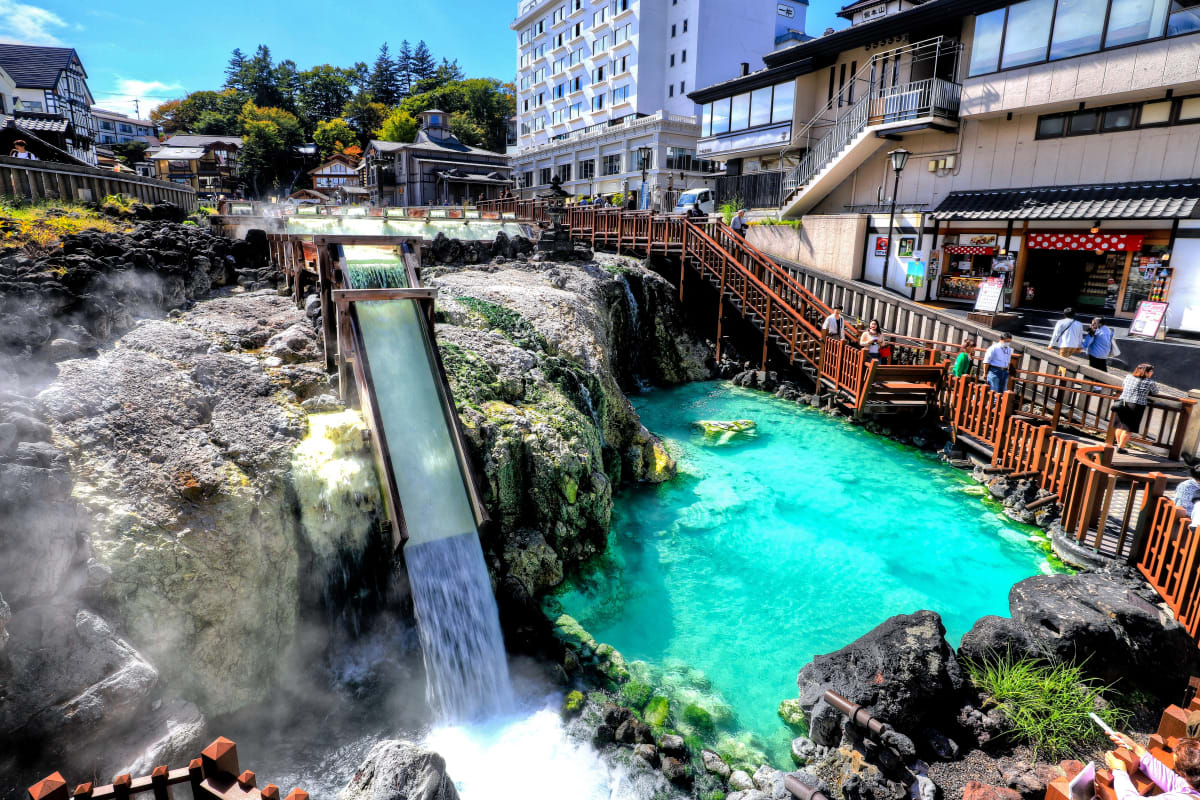
FREEKusatsu Onsen sits at 1,200 meters in the mountains of Gunma Prefecture and ranks among the most celebrated hot spring towns in Japan. The springs here produce more than 32,000 liters of water per minute, a volume unmatched anywhere else in the country. The water is strongly acidic and sulfurous, and its skin-healing properties have long made it legendary among visitors. Twice each day in the central town square, workers cool the scalding water by pulling long wooden paddles through it in unison while singing traditional songs. This practice is called yumomi.
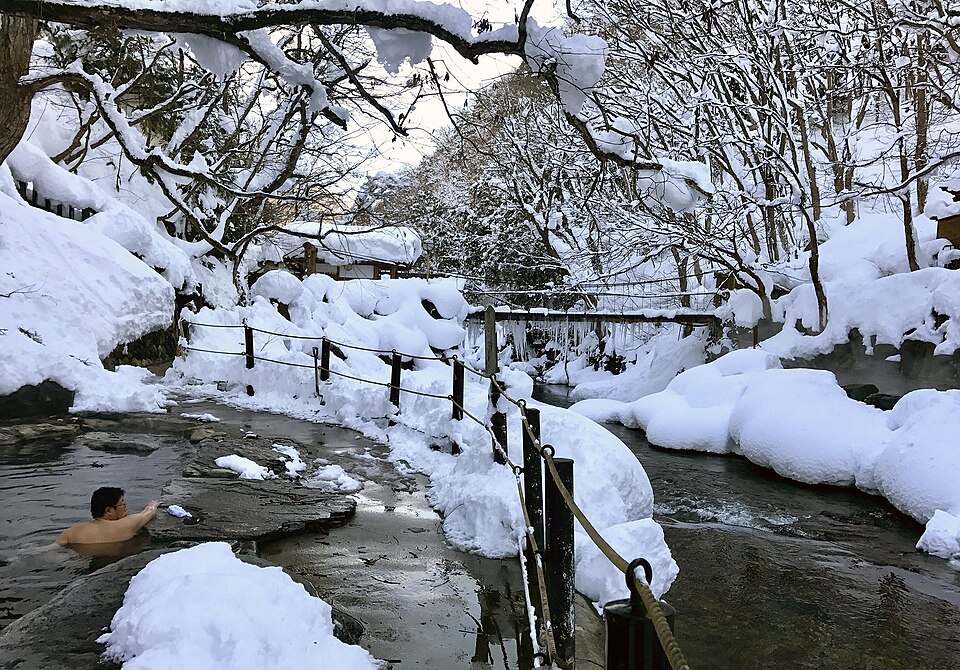
A mountain hot spring resort in Gunma Prefecture, positioned along the Takara River roughly 100 kilometers outside Tokyo. The centerpiece is a large outdoor bath built right at the river's edge, with dense forest climbing the slopes on either side. One portion of the bathing area accommodates mixed-gender soaking. The draw here is the pairing of untamed river scenery with open-air thermal pools.
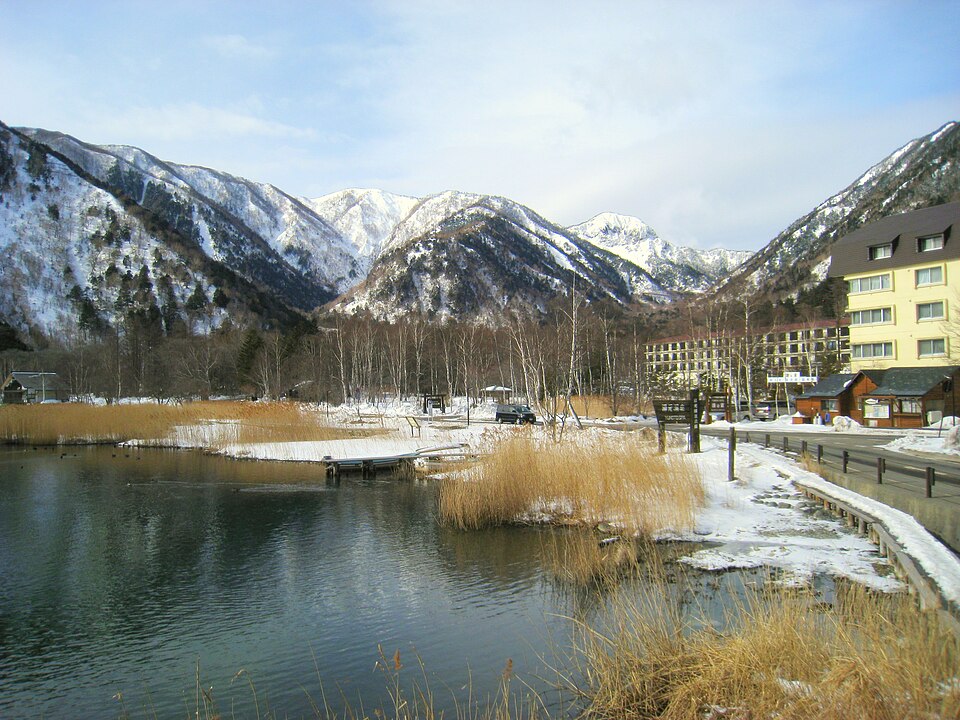
Nikko Yumoto Onsen sits at the edge of Lake Yunoko inside Nikko National Park, high in the mountains. The waters are milky and sulfurous, and travelers have been coming here for hundreds of years. The park surrounds the onsen with sacred forests and waterfalls, making a long day of hiking through them a natural prelude to a long soak.
Common questions
What is the water temperature at Ikaho Onsen?▾
The water temperature at Ikaho Onsen ranges up to 55°C (minimum around 38°C).
Is Ikaho Onsen free to visit?▾
Ikaho Onsen charges an entrance fee in JPY.
Is Ikaho Onsen a public or private bath?▾
Ikaho Onsen is a public bathing spring.
Are tattoos allowed at Ikaho Onsen?▾
Tattoo policy varies at Ikaho Onsen. Check ahead of your visit.
What is the nearest station to Ikaho Onsen?▾
The nearest station to Ikaho Onsen is Kamikanaihara kouminkanmae, about 0.1km away.