Takaragawa Onsen
宝川温泉
4.1 · 2963 reviews · via Google
Takaragawa Onsen
sulfur · Kanto
Hotter than 8% of Japan springs (n=122).
More acidic than 56% of Japan springs (n=121).
Mineral profile
Bar width reflects listing order, not measured concentration.
Suitability
At a glance
Getting there
Easy — under 1km from a station
Cost
High
Crowd level
Popular
About this spring
A mountain hot spring resort in Gunma Prefecture, positioned along the Takara River roughly 100 kilometers outside Tokyo. The centerpiece is a large outdoor bath built right at the river's edge, with dense forest climbing the slopes on either side. One portion of the bathing area accommodates mixed-gender soaking. The draw here is the pairing of untamed river scenery with open-air thermal pools.
Highlights
History
Takaragawa Onsen opened in 1899 and has been tended by successive generations of the founding family ever since.
The sprawling riverside rotenburo that gives the facility its character took shape across the twentieth century and is now regarded as one of the most visually striking outdoor baths in the Kanto region.
Local guide
From Minakami town, the road follows the Tone River upstream for about thirty kilometers, climbing into the mountains of northern Gunma before the valley narrows and the asphalt begins to feel borrowed from somewhere else. There is a final bridge, the river is very loud beneath it, and then you are in the car park of Takaragawa Onsen Osenkaku, surrounded by cedar forest with the sound of water coming from multiple directions at once. The inn sits directly on the Takaragawa, which means the Treasure River, and the outdoor baths are not near the river so much as built into its bank.
The four rotenburo here are enormous. The largest, called Kodokara, can take 200 bathers at once across its 300-plus square meters of open-air pool, built from river boulders stacked into low walls that separate the bathing areas from the actual river channel without blocking the view. Three of the four pools are konyoku, open to all genders, which is uncommon enough in contemporary Japan that it draws visitors specifically for that reason. You step down from a wooden changing area directly into hot water surrounded by real rock, with the Takaragawa running clear and fast just meters away and the forest rising on both sides of the valley.
The water is a sodium-chloride and sulfur type, running 40 to 42 degrees Celsius, clear and without strong odor, with a warmth that settles into your muscles rather than just heating the surface of your skin. The saltiness is barely detectable as a taste if you get any on your lips, but you can feel it as a slight weight on your skin, particularly your hands and forearms, after a long soak. The longer you stay in, the heavier that feeling becomes, and it takes a while to fully rinse off under the showers afterward.
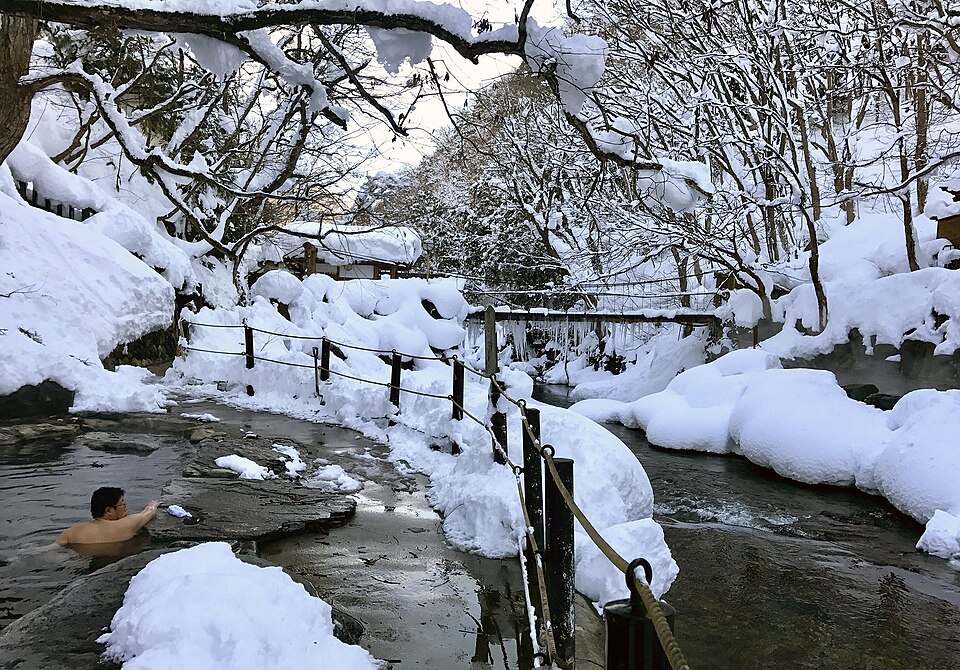
The visual moment that Takaragawa is known for is winter, and specifically the image of the outdoor pools under heavy snowfall. Snow collects on the boulder walls and piles up on the wooden walkways while the water steams in the below-zero air, and the river alongside runs black against the white riverbanks. You can sit in the hot water and watch snow fall into the river downstream. It is a scene that appears in every guide to Japanese onsen, and it earns its reputation. But the less-photographed version of Takaragawa, in late autumn when the maples on the valley walls turn and shed into the river current, is just as striking and significantly less crowded. The boulders hold the fallen leaves in eddies just outside the pool walls, and the water picks up a faint orange cast from the tannins.
Mineral chemistry
Water character inferred from mineral type — verify on site.
Sulfuric hot springs are among the most studied in balneology worldwide. The sulfur compounds, primarily hydrogen sulfide and thiosulfate, have documented antimicrobial and anti-inflammatory properties. Regular bathing is associated with relief from chronic skin conditions including eczema and psoriasis, as well as joint inflammation and muscle soreness. Sulfuric waters have been used therapeutically across Asia and Europe for centuries.
The distinctive rotten-egg smell dissipates quickly after leaving the bath. Avoid if you have a sulfur allergy, very sensitive skin, or respiratory conditions. Remove silver jewellery before entering — sulfur will blacken it permanently.
Sodium chloride springs, essentially natural saltwater baths, are celebrated for their warming and moisturising effects. The salt forms a thin film on the skin that slows moisture evaporation, keeping skin hydrated longer than a freshwater bath.
Those with high blood pressure or heart conditions should consult a doctor before bathing, as the warming effect increases circulation. Avoid immersing open wounds.
Similar springs
 FREE
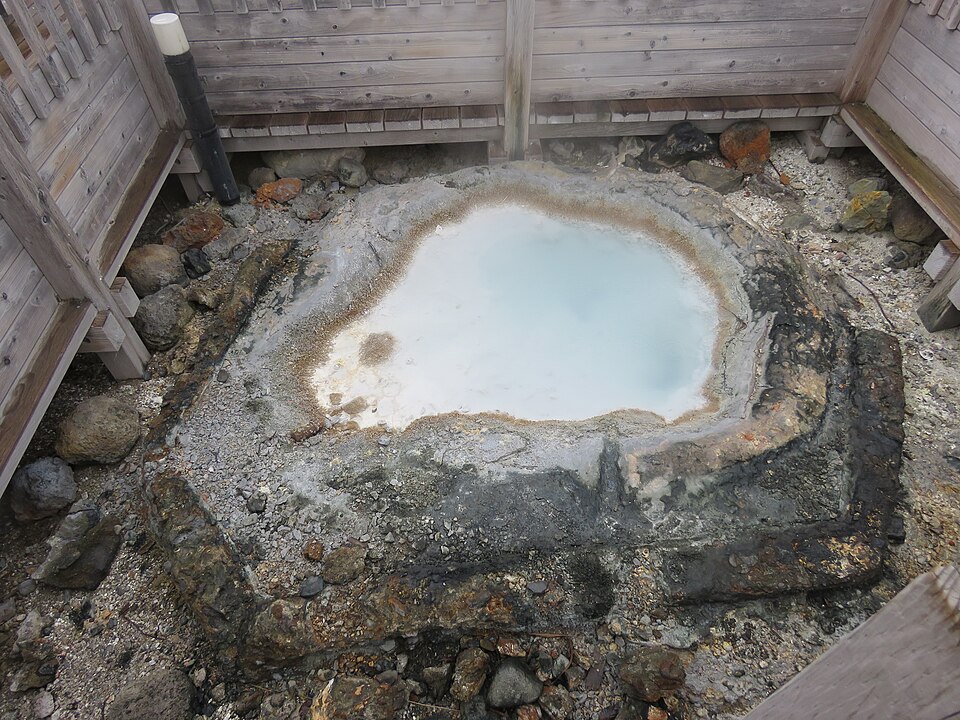
FREEThe valley occupies the center of Noboribetsu Onsen in Hokkaido. Jigokudani translates as Hell Valley. The crater covers 11 hectares and releases roughly 10,000 tonnes of hot spring water each day. Fumaroles vent steam across the floor of the valley, boiling pools bubble at the surface, and the surrounding cliffs carry heavy mineral staining. A walking path winds through the area in about 20 minutes and is open to all visitors at no cost. It ranks among the most striking landscapes accessible on foot anywhere in Japan.
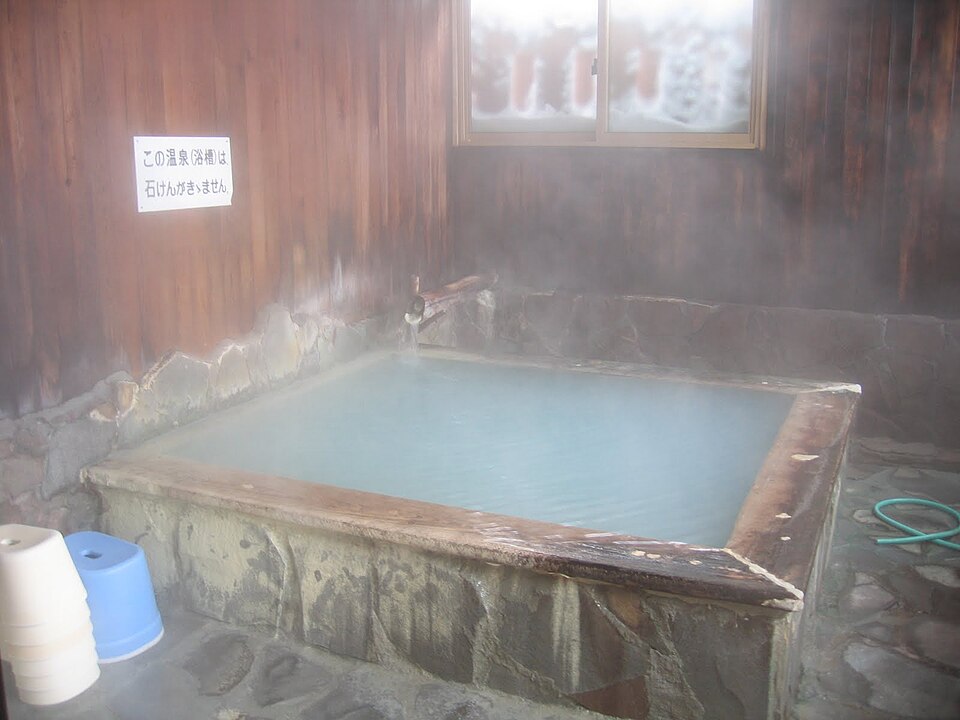
Set deep in the Hakkoda Mountains of Aomori Prefecture, Sukayu Onsen is a historic bathhouse best known for its cavernous mixed-bathing hall, the Sen-nin-buro, which translates as the Bath of a Thousand Bathers. The waters are strongly acidic, the setting is rustic and unhurried, and winter brings extraordinary snowfall to the surrounding mountains.
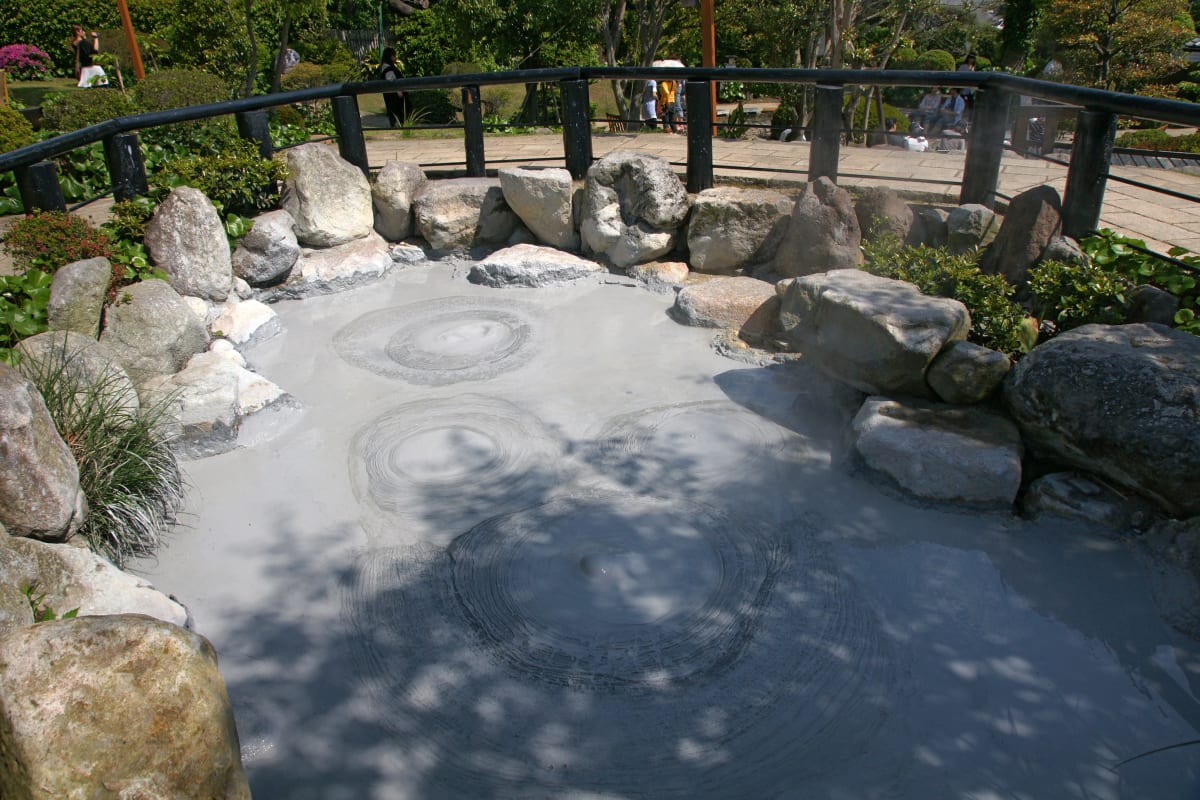
Beppu is the most geothermally active city in Japan, with more than 2,900 hot spring vents located within the city limits and eight distinct thermal spring zones collectively known as the Beppu Hatto. The variety on offer is wide, ranging from grand hotel bathhouses to modest neighborhood public facilities to the celebrated Hells, a collection of brilliantly colored boiling pools scattered across the city. The Hells run far too hot for bathing, but they draw visitors who come to walk among them and take in the spectacle.
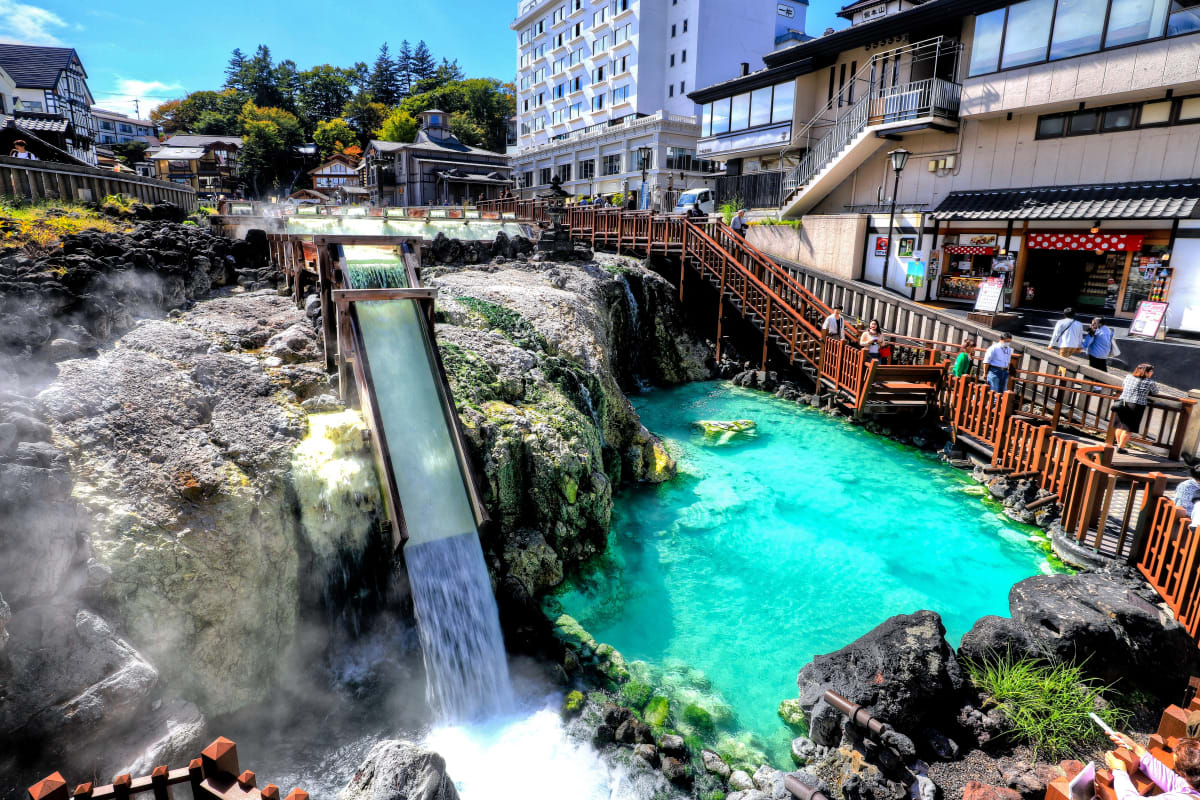 FREE
FREEKusatsu Onsen sits at 1,200 meters in the mountains of Gunma Prefecture and ranks among the most celebrated hot spring towns in Japan. The springs here produce more than 32,000 liters of water per minute, a volume unmatched anywhere else in the country. The water is strongly acidic and sulfurous, and its skin-healing properties have long made it legendary among visitors. Twice each day in the central town square, workers cool the scalding water by pulling long wooden paddles through it in unison while singing traditional songs. This practice is called yumomi.
Amenities
Getting there
Take the Joetsu Shinkansen from Tokyo to Jomo-Kogen Station. The journey takes about 70 minutes. From there, take a bus or taxi toward Minakami and onward to the Takaragawa Iriguchi stop. The onsen runs a free shuttle from Jomo-Kogen Station for overnight guests with advance reservation.
Location & nearby
1899 Fujiwara, Minakami, Tone District, Gunma 379-1721
Make a day of it
Pair your soak with these nearby spots.
Attraction
Takaragawa Onsen
0.1km away
Attraction
Takaragawaonsenhiroshiizumi閣
0.1km away
Attraction
Takaragawaonsenma訶Noyu
0.2km away
Attraction
Fujiwaramizuumionsen
1.3km away
Park
Fujiwaramizuumi
1.5km away
Attraction
OkutoneminzokushūFurutate
1.9km away
More springs in Kanto
FREEKusatsu Onsen sits at 1,200 meters in the mountains of Gunma Prefecture and ranks among the most celebrated hot spring towns in Japan. The springs here produce more than 32,000 liters of water per minute, a volume unmatched anywhere else in the country. The water is strongly acidic and sulfurous, and its skin-healing properties have long made it legendary among visitors. Twice each day in the central town square, workers cool the scalding water by pulling long wooden paddles through it in unison while singing traditional songs. This practice is called yumomi.
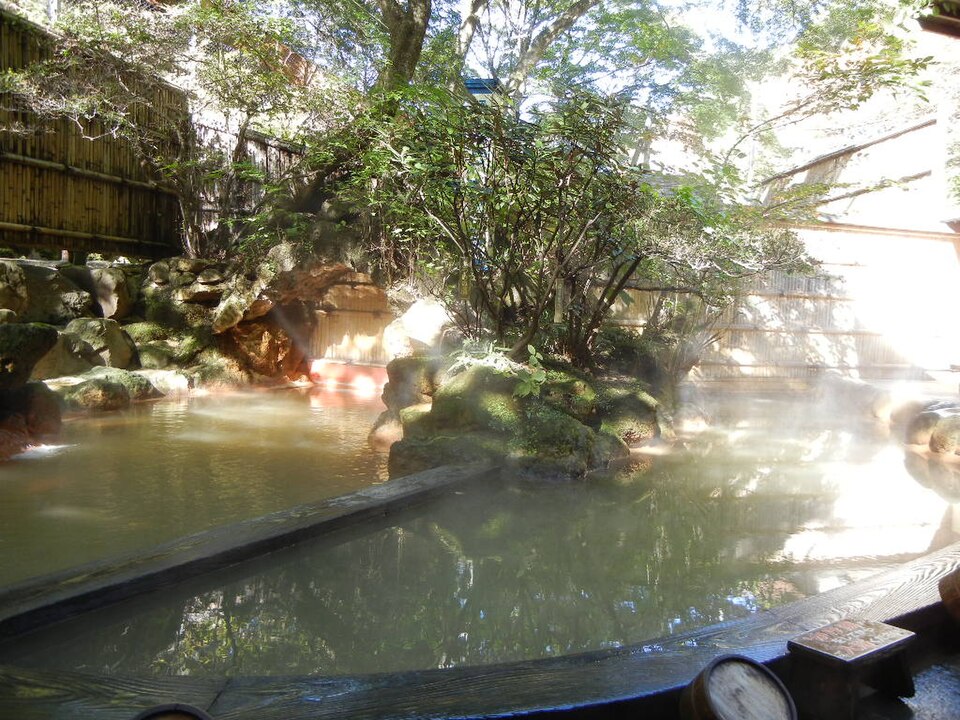
Ikaho Onsen sits on a hillside in Gunma Prefecture, its layout defined by 365 stone steps that rise through a narrow valley flanked by ryokan and traditional shops. The waters are iron-rich and run a characteristic golden-brown, a color reflecting the mineral content that has drawn visitors since the Nara period. The staircase serves as the town's central axis, with nearly all activity concentrated along its length or on the side streets branching from it.
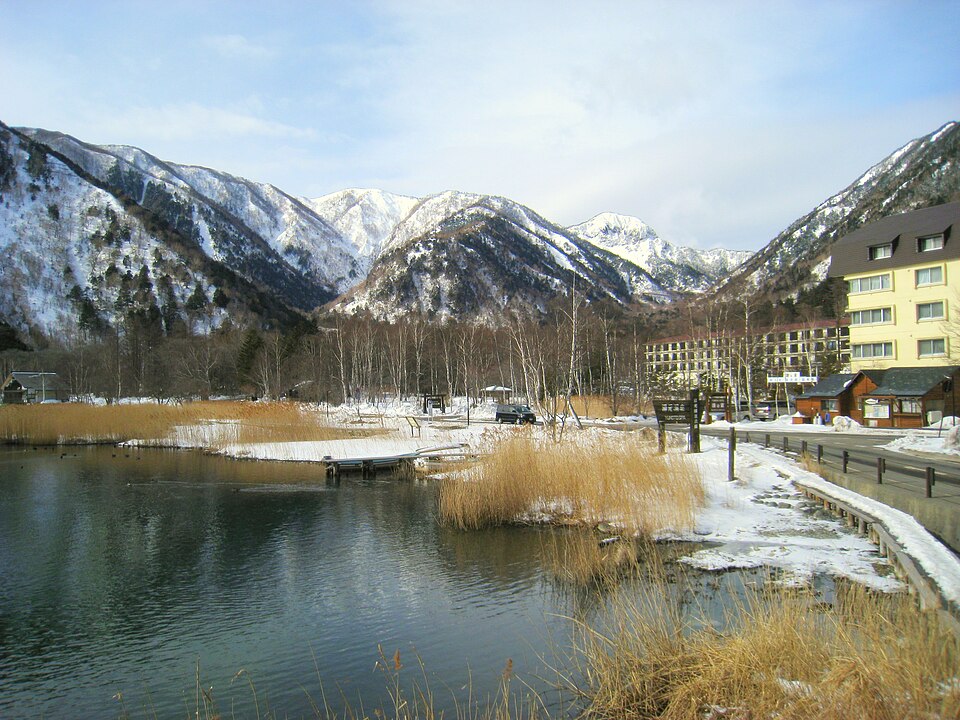
Nikko Yumoto Onsen sits at the edge of Lake Yunoko inside Nikko National Park, high in the mountains. The waters are milky and sulfurous, and travelers have been coming here for hundreds of years. The park surrounds the onsen with sacred forests and waterfalls, making a long day of hiking through them a natural prelude to a long soak.
Common questions
What is the water temperature at Takaragawa Onsen?▾
The water temperature at Takaragawa Onsen ranges up to 42°C (minimum around 40°C).
Is Takaragawa Onsen free to visit?▾
Takaragawa Onsen charges an entrance fee in JPY.
Is Takaragawa Onsen a public or private bath?▾
Takaragawa Onsen is a mixed bathing spring.
Are tattoos allowed at Takaragawa Onsen?▾
Yes, Takaragawa Onsen welcomes visitors with tattoos.
What is the nearest station to Takaragawa Onsen?▾
The nearest station to Takaragawa Onsen is Gakko Iriguchi, about 1km away.