
Shiobara Onsen
塩原温泉
3.9 · 231 reviews · via Google
Shiobara Onsen
sodium-chloride · Kanto
Hotter than 34% of Japan springs (n=122).
More acidic than 36% of Japan springs (n=121).
Mineral profile
Bar width reflects listing order, not measured concentration.
Suitability
At a glance
Getting there
Easy — under 1km from a station
Cost
Low
Crowd level
Quiet
About this spring
Shiobara Onsen occupies a river gorge in northern Tochigi Prefecture, where 11 separate spring zones produce water in six distinct mineral types and seven different colors. The range of water chemistry combined with mountain river scenery drew visitors from across Japan during the Meiji era, earning Shiobara a reputation as one of the country's most notable hot spring retreats. More than 50 stone monuments stand throughout the valley marking the visits of notable writers.
Highlights
History
A monk named Jokkassen is credited with discovering the springs around 806 AD, near a location known today as Motoyu.
During the Edo period, the valley served travelers moving along the northern routes. In 1886, rail service reached nearby Nishinasuno Station, putting Shiobara within practical reach of Tokyo. The imperial villa that had belonged to the Governor of Tochigi was transferred to the Imperial Household in 1904, and Emperors Meiji, Taisho, and Showa each visited the area. Writers including Natsume Soseki, Tanizaki Junichiro, and Ozaki Koyo made the journey as well. Ozaki Koyo wrote his novel Konjikiyasha during his time at Shiobara.
Local guide
The bus from Nasushiobara Station follows the Houki River upstream for about an hour, and the gorge deepens as you go. By the time you reach the heart of Shiobara Onsen, the canyon walls are high enough on both sides that the road feels more like a corridor than an open highway. Eleven separate hot spring areas are distributed along this gorge, spread across several kilometers of river, each one slightly different in mineral character and setting. The whole district sits within Nikko National Park, and the combination of forested gorge walls, suspension bridges, and periodic waterfalls gives it a more rugged feel than most spa towns in the Kanto region.
The water at Shiobara is genuinely varied, which is unusual for a single onsen area. Six distinct spring types have been identified across the eleven zones, producing what the district calls seven different water colors. In practice, what you notice moving from one bath to another is a real difference in feel and smell. The sulfate springs are dry and mineralic, leaving a light powdery coating on the skin. The sodium chloride baths are heavier and warming. The hydrogen carbonate types run softer and slightly alkaline. The pH sits at a neutral 7.1 across most sources, which means none of the waters are harsh, and all of them sit comfortably in the 38 to 52 degree range.
Shiobara has been in use since the early ninth century, making it over 1,200 years old. The area gained attention during the Meiji era when writers and intellectuals discovered it, and several literary monuments are scattered through the gorge dedicated to authors who visited or set work here. There are around 150 spring vents across the district and about fifty inns, ranging from large resort hotels to small traditional ryokan that seat only a handful of guests at dinner.
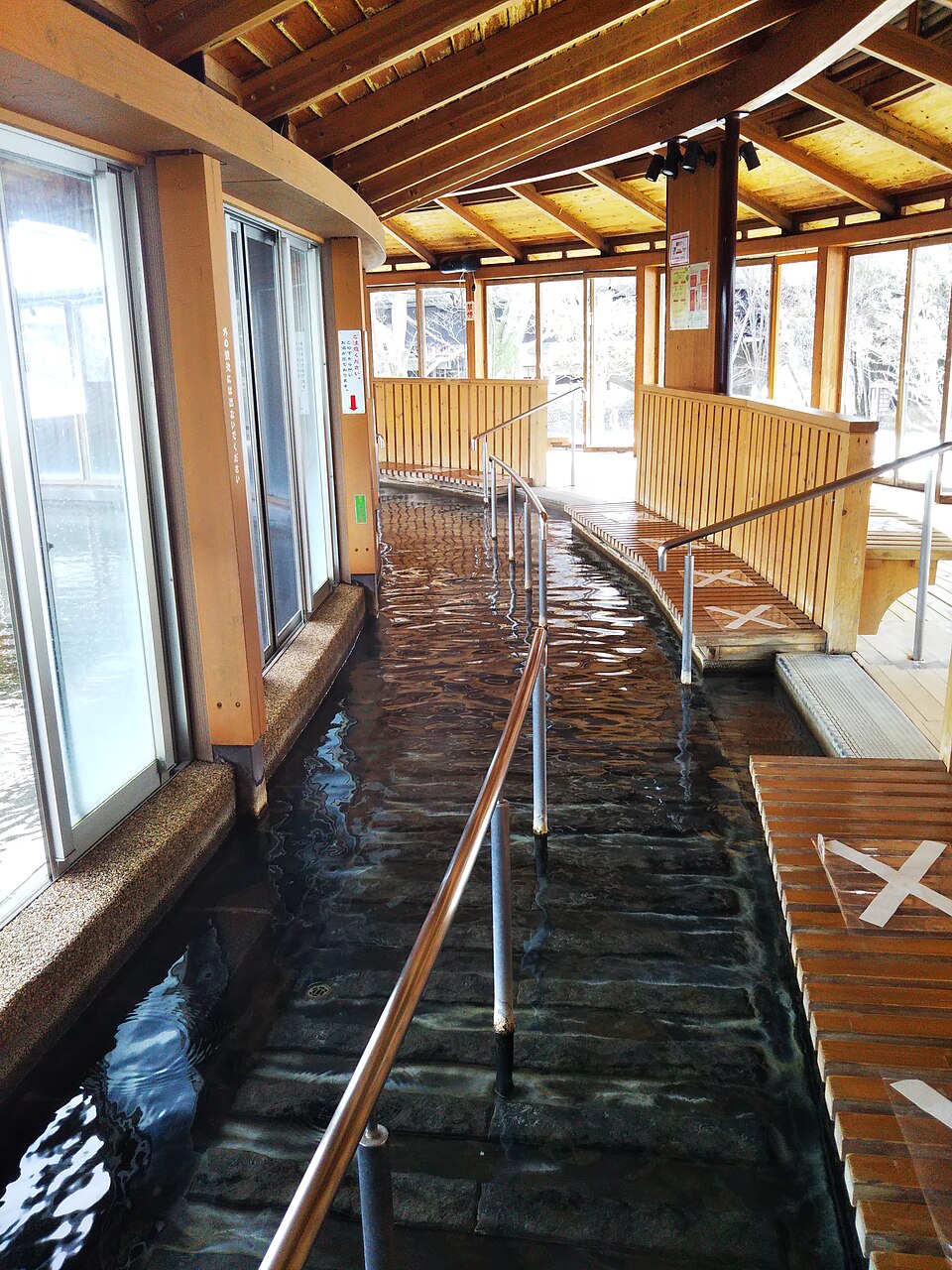
The detail that makes Shiobara different from other gorge onsen is the density of things to walk between. The Houki River path connects the main areas, and along it you pass suspension bridges swaying above the water, short hiking trails to viewpoints, day-use facilities where you can soak without a reservation, and foot baths beside the road that are simply open and free. It is a place that rewards slow movement, arriving with no fixed schedule, following the water upstream.
Mineral chemistry
Water character inferred from mineral type — verify on site.
Sodium chloride springs, essentially natural saltwater baths, are celebrated for their warming and moisturising effects. The salt forms a thin film on the skin that slows moisture evaporation, keeping skin hydrated longer than a freshwater bath.
Those with high blood pressure or heart conditions should consult a doctor before bathing, as the warming effect increases circulation. Avoid immersing open wounds.
Sulfate springs contain dissolved calcium, sodium, or magnesium sulfate. Calcium sulfate springs are traditionally associated with wound healing and post-surgical recovery.
Sodium sulfate springs can have a mild laxative effect in sensitive individuals — stay well hydrated.
Bicarbonate springs cleanse and soften the skin surface, removing excess sebum without stripping the skin's acid mantle. Traditionally recommended for acne-prone skin and sensitive skin types.
Bicarbonate springs are generally among the most gentle and well-tolerated onsen types.
Sulfuric hot springs are among the most studied in balneology worldwide. The sulfur compounds, primarily hydrogen sulfide and thiosulfate, have documented antimicrobial and anti-inflammatory properties. Regular bathing is associated with relief from chronic skin conditions including eczema and psoriasis, as well as joint inflammation and muscle soreness. Sulfuric waters have been used therapeutically across Asia and Europe for centuries.
The distinctive rotten-egg smell dissipates quickly after leaving the bath. Avoid if you have a sulfur allergy, very sensitive skin, or respiratory conditions. Remove silver jewellery before entering — sulfur will blacken it permanently.
Similar springs
 FREE
FREEThe valley occupies the center of Noboribetsu Onsen in Hokkaido. Jigokudani translates as Hell Valley. The crater covers 11 hectares and releases roughly 10,000 tonnes of hot spring water each day. Fumaroles vent steam across the floor of the valley, boiling pools bubble at the surface, and the surrounding cliffs carry heavy mineral staining. A walking path winds through the area in about 20 minutes and is open to all visitors at no cost. It ranks among the most striking landscapes accessible on foot anywhere in Japan.

Set deep in the Hakkoda Mountains of Aomori Prefecture, Sukayu Onsen is a historic bathhouse best known for its cavernous mixed-bathing hall, the Sen-nin-buro, which translates as the Bath of a Thousand Bathers. The waters are strongly acidic, the setting is rustic and unhurried, and winter brings extraordinary snowfall to the surrounding mountains.

Beppu is the most geothermally active city in Japan, with more than 2,900 hot spring vents located within the city limits and eight distinct thermal spring zones collectively known as the Beppu Hatto. The variety on offer is wide, ranging from grand hotel bathhouses to modest neighborhood public facilities to the celebrated Hells, a collection of brilliantly colored boiling pools scattered across the city. The Hells run far too hot for bathing, but they draw visitors who come to walk among them and take in the spectacle.
 FREE
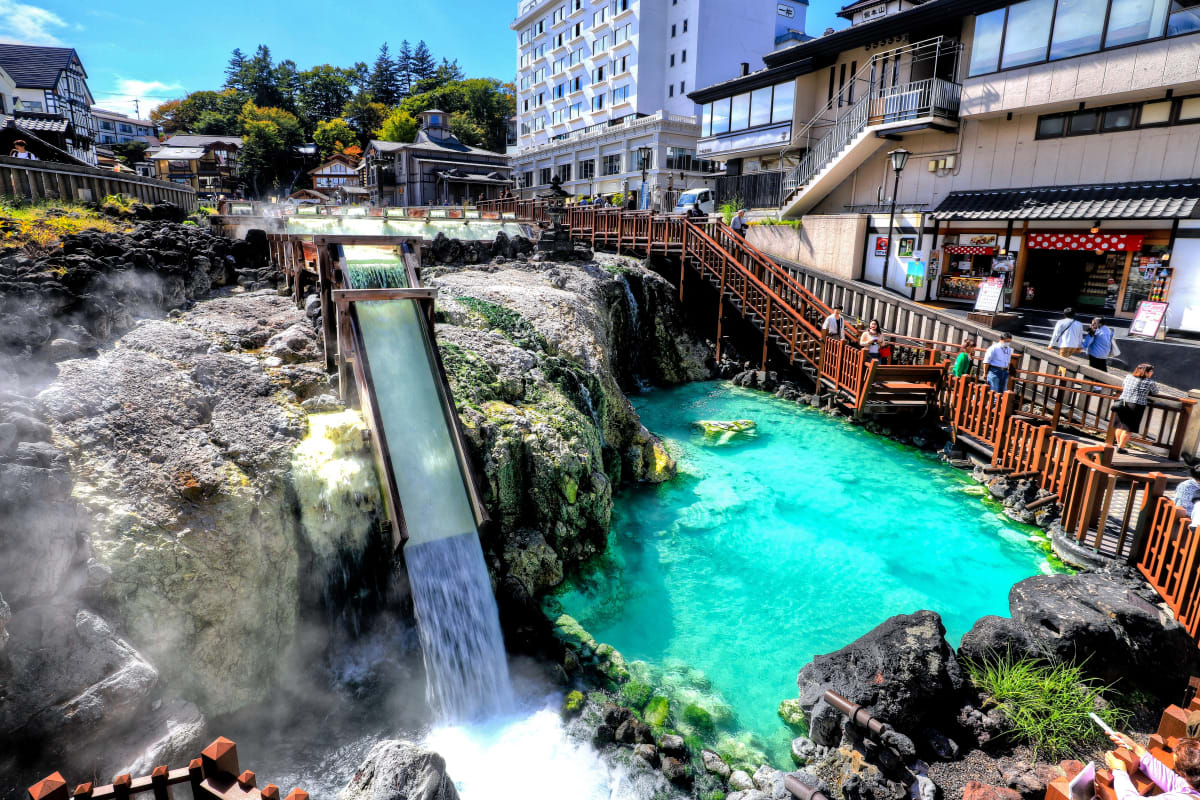
FREEKusatsu Onsen sits at 1,200 meters in the mountains of Gunma Prefecture and ranks among the most celebrated hot spring towns in Japan. The springs here produce more than 32,000 liters of water per minute, a volume unmatched anywhere else in the country. The water is strongly acidic and sulfurous, and its skin-healing properties have long made it legendary among visitors. Twice each day in the central town square, workers cool the scalding water by pulling long wooden paddles through it in unison while singing traditional songs. This practice is called yumomi.
Amenities
Getting there
Take the Tohoku Shinkansen to Nasu-Shiobara Station, then board the Tobu Bus toward Shiobara Onsen. The ride takes about 35-40 minutes through the Hoki River canyon.
Location & nearby
〒329-2921 Tochigi, Nasushiobara, Shiobara, 前山国有林
Make a day of it
Pair your soak with these nearby spots.
Attraction
ShiobaraonsenbijitāSentā
0.1km away
Park
TennōNomakinenkōEn
0.2km away
Attraction
Shiogamaonsen
0.2km away
Attraction
Nodachiiwa
0.3km away
Attraction
Shiobaraonsenkyō
0.6km away
Attraction
Shiobaraonsen
0.6km away
More springs in Kanto
FREEKusatsu Onsen sits at 1,200 meters in the mountains of Gunma Prefecture and ranks among the most celebrated hot spring towns in Japan. The springs here produce more than 32,000 liters of water per minute, a volume unmatched anywhere else in the country. The water is strongly acidic and sulfurous, and its skin-healing properties have long made it legendary among visitors. Twice each day in the central town square, workers cool the scalding water by pulling long wooden paddles through it in unison while singing traditional songs. This practice is called yumomi.
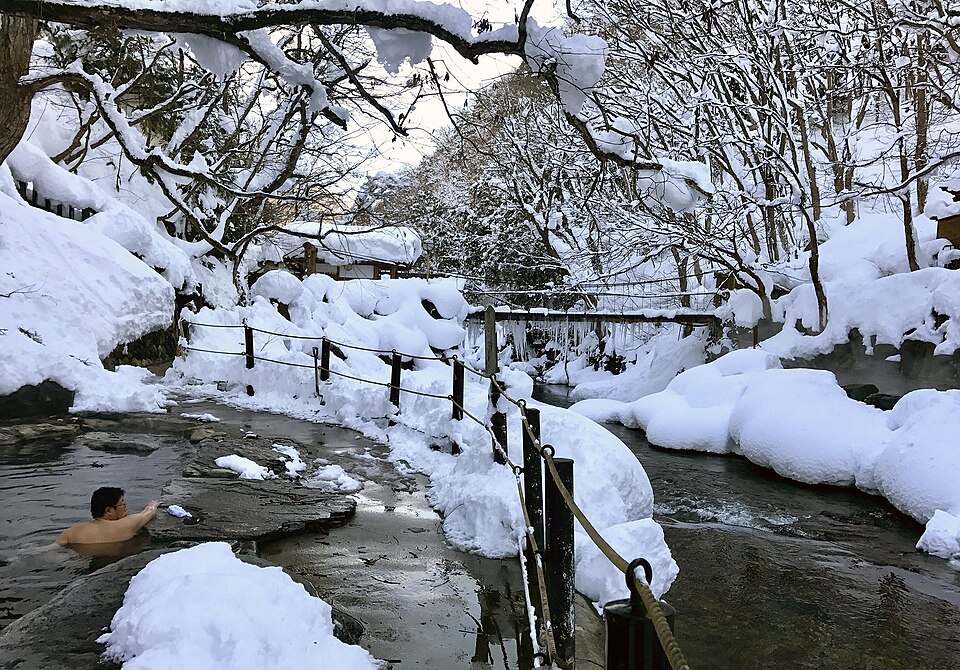
A mountain hot spring resort in Gunma Prefecture, positioned along the Takara River roughly 100 kilometers outside Tokyo. The centerpiece is a large outdoor bath built right at the river's edge, with dense forest climbing the slopes on either side. One portion of the bathing area accommodates mixed-gender soaking. The draw here is the pairing of untamed river scenery with open-air thermal pools.
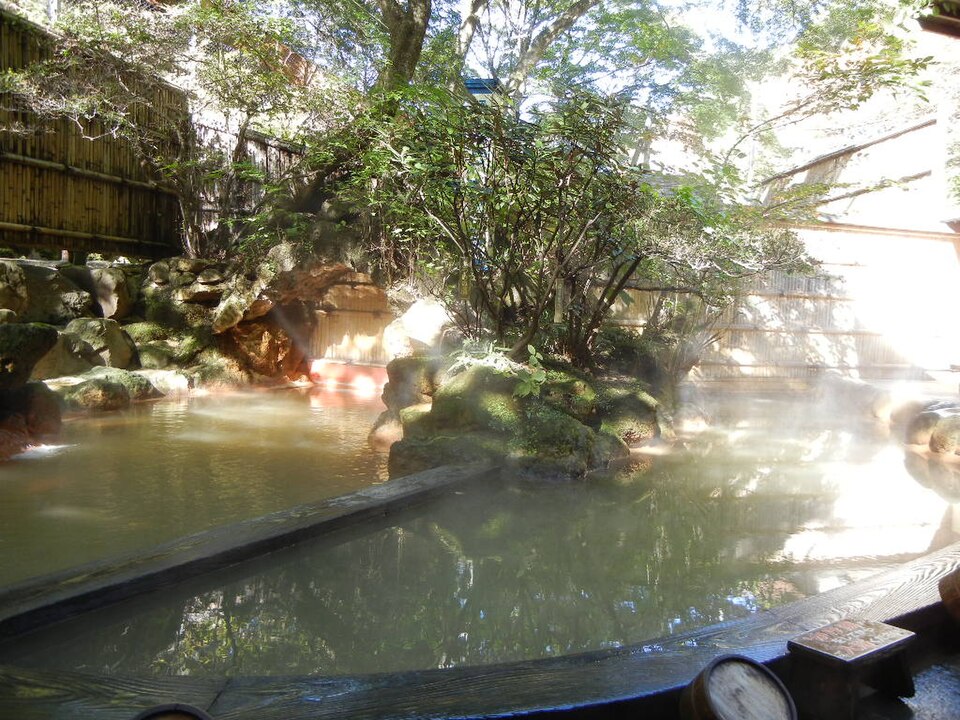
Ikaho Onsen sits on a hillside in Gunma Prefecture, its layout defined by 365 stone steps that rise through a narrow valley flanked by ryokan and traditional shops. The waters are iron-rich and run a characteristic golden-brown, a color reflecting the mineral content that has drawn visitors since the Nara period. The staircase serves as the town's central axis, with nearly all activity concentrated along its length or on the side streets branching from it.
Common questions
What is the water temperature at Shiobara Onsen?▾
The water temperature at Shiobara Onsen ranges up to 52°C (minimum around 38°C).
Is Shiobara Onsen free to visit?▾
Shiobara Onsen charges an entrance fee in JPY.
Is Shiobara Onsen a public or private bath?▾
Shiobara Onsen is a public bathing spring.
Are tattoos allowed at Shiobara Onsen?▾
Tattoo policy varies at Shiobara Onsen. Check ahead of your visit.