
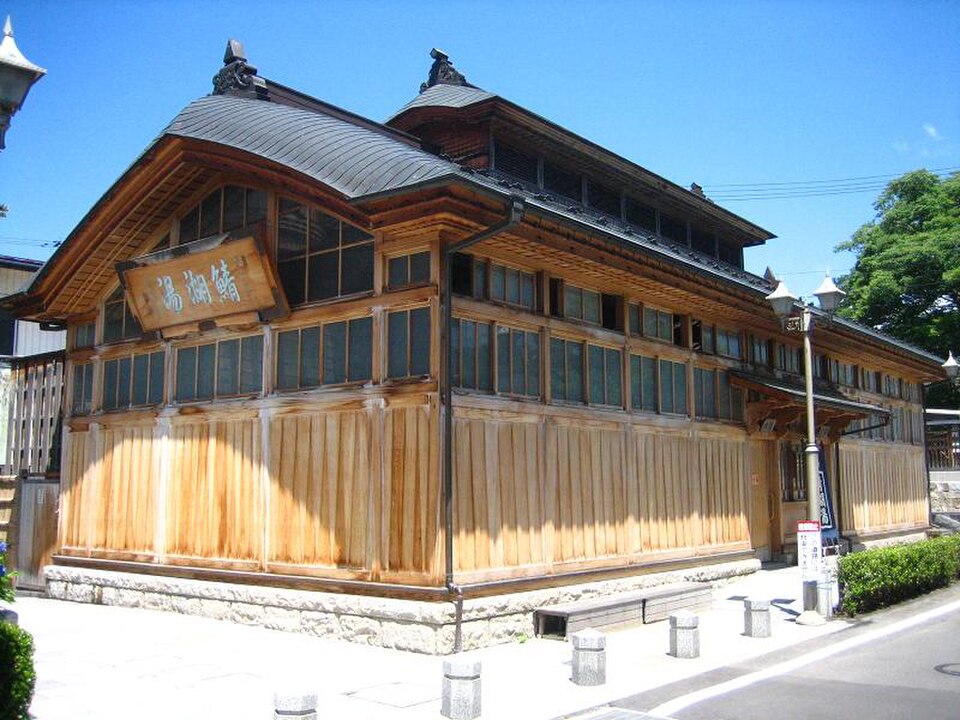
Sabakoyu Onsen
鯖湖湯
4.0 · 1126 reviews · via Google
Sabakoyu Onsen
アルカリ性単純温泉 · Tohoku
Hotter than 16% of Japan springs (n=122).
More acidic than 90% of Japan springs (n=121).
Mineral profile
Bar width reflects listing order, not measured concentration.
Suitability
At a glance
Getting there
Easy — under 1km from a station
Cost
Low
Crowd level
Moderate
About this spring
Sabakoyu stands among the oldest communal bathhouses in Japan, situated in the Iizaka district of Fukushima. The structure traces its origins to the seventeenth century. In 1689, the Edo-period poet Matsuo Basho passed through and recorded a visit to the bath in his travel writing. The spring water is a sodium bicarbonate type, clear and without color, and bathers commonly note that it leaves the skin unusually smooth.
Highlights
History
Sabakoyu holds the distinction of being the oldest among the nine public baths in the Iizaka onsen district.
Its origin legend ties the bathhouse to Yamato Takeru, the prince-hero of ancient Japanese mythology, who according to tradition regained his health by bathing in these waters. When Matsuo Basho documented his 1689 visit in Oku no Hosomichi, the bathhouse earned a lasting connection to Japan's literary history.
Local guide
From Fukushima Station, the Fukushima Kotsu Iizaka Line tram runs northeast for about thirty minutes, rattling through the city's outer neighborhoods before settling into the rhythm of a proper rural line. Iizaka-Yumachi Station deposits you directly into the onsen town, and the first thing you notice is how the streets still feel like the Taisho era, old wooden facade buildings and stone lanterns along the main path, even though everything around it has been through decades of ordinary Japanese development. The town did not give up on its bones.
Sabakoyu is Japan's oldest remaining community bathhouse by wooden structure, and it sits at the center of the town in a compact building that has been rebuilt and renovated over the centuries but retains the general form and function of a neighborhood bath that has been used continuously since before anyone still living can remember. The name translates literally as Mackerel Lake Baths, which is a strange name for an inland spring. The characters for mackerel and lake were assigned to the name in a later era, replacing an older phonetic spelling, and the mackerel connection is largely ornamental at this point rather than historical.
The water at Sabakoyu is a simple alkaline spring, pH neutral and soft, running at about 42 to 44 degrees. It is clear and odorless, the kind of water that does not announce itself through chemistry but instead through comfort. The bath room is plain and warm, and the public nature of it means you enter as a stranger and sit a few feet from people who have been coming here their whole lives. Matsuo Basho stopped at Iizaka Onsen in 1689 during the journey he later wrote about in Oku no Hosomichi. He wrote that the village was somewhat rough and the bath house was basic. The bath house is no longer basic, but the village's lack of pretension is still intact.
The town's connection to history sits lightly on it. The inns along the main street number over forty, and on weekend evenings the izakayas fill up with people who drove from Fukushima City for the bath and the meal rather than the cultural significance. The tram back runs until late and the platform is small enough that you will recognize faces from the bathhouse waiting beside you. That easy scale, the kind where a town has not outgrown its own community, is the actual reason people keep returning.
Mineral chemistry
Amenities
Getting there
Take the Tohoku Shinkansen to Fukushima Station, then transfer to the Fukushima Electric Railway Iizaka Line to Iizaka-Yumachi Station. The journey takes about 25 minutes. Sabakoyu bathhouse is a short walk from the station.
Location & nearby
Yuzawa-32のイ Iizakamachi, Fukushima, 960-0201
Make a day of it
Pair your soak with these nearby spots.
Attraction
īZakaonsenkankōKyōKai
0.0km away
Park
FurutachikōEn
0.1km away
Park
FukushimashiīZakamachimoniwasurikamigawadamu
0.1km away
Attraction
Namiraiyu
0.1km away
Attraction
Chankochankonoyu
0.1km away
Attraction
Setsuyu
0.2km away
More springs in Tohoku
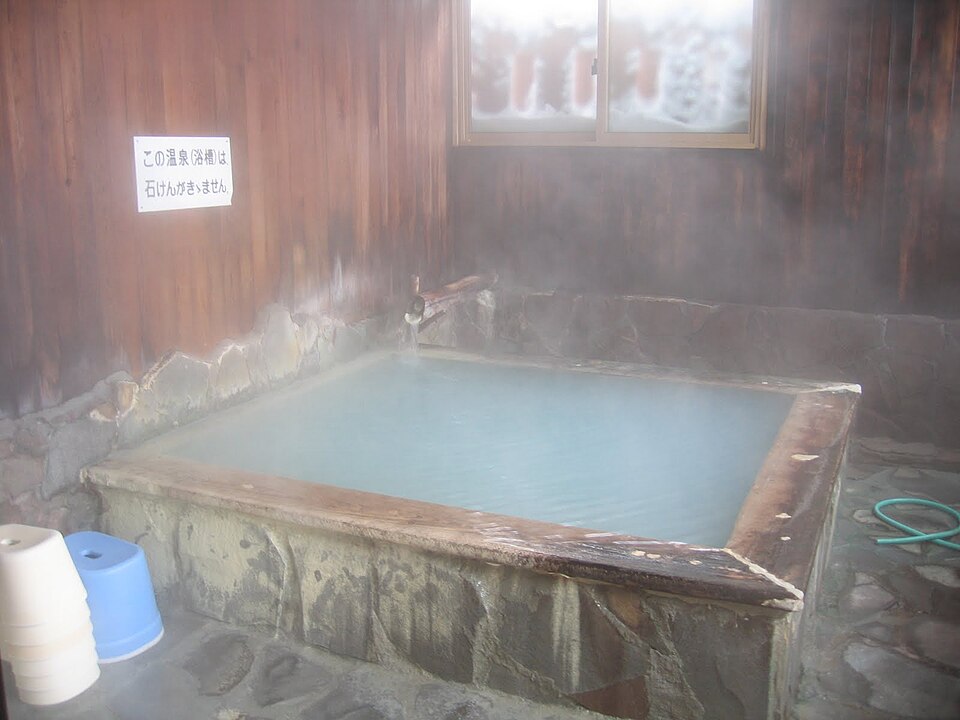
Set deep in the Hakkoda Mountains of Aomori Prefecture, Sukayu Onsen is a historic bathhouse best known for its cavernous mixed-bathing hall, the Sen-nin-buro, which translates as the Bath of a Thousand Bathers. The waters are strongly acidic, the setting is rustic and unhurried, and winter brings extraordinary snowfall to the surrounding mountains.
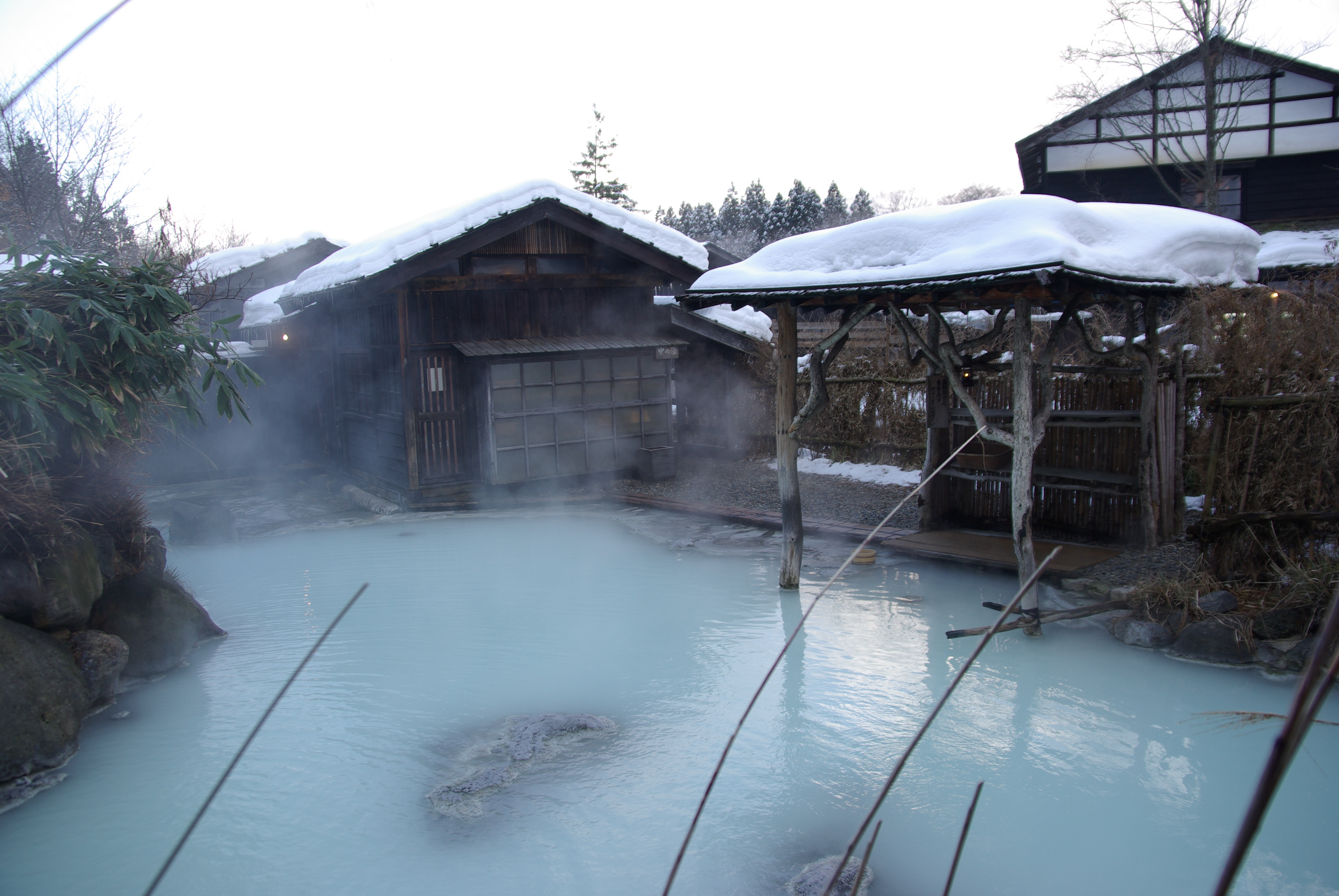
Tsuru-no-yu is the oldest of the seven inns at Nyuto, set deep in a beech forest in Akita Prefecture. The main draw is a large outdoor mixed-bathing pool fed by opaque, milky-white sulfurous water. Many regard it as the most beautiful onsen setting in Japan. People come here to put some distance between themselves and the rest of the world for a while.
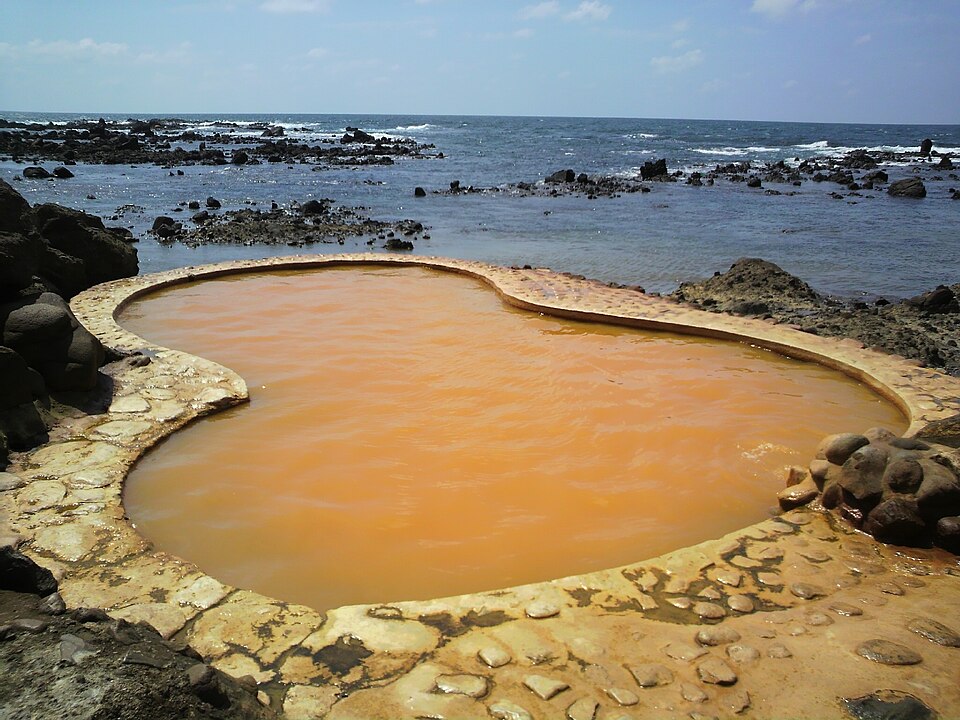
Furofushi Onsen occupies a rocky cape in Fukaura, Aomori Prefecture, with outdoor bathing pools positioned at the edge of the Sea of Japan cliffs. The spring water runs a deep reddish-brown from its high iron and sodium chloride content. The main open-air bath and a dedicated women's pool both use fully undiluted water drawn straight from the source. Sunsets over the water are a particular draw. Once day visitors depart in the late afternoon, overnight guests have the pools to themselves.
Common questions
What is the water temperature at Sabakoyu Onsen?▾
The water temperature at Sabakoyu Onsen ranges up to 44°C (minimum around 42°C).
Is Sabakoyu Onsen free to visit?▾
Sabakoyu Onsen charges an entrance fee in JPY.
Is Sabakoyu Onsen a public or private bath?▾
Sabakoyu Onsen is a public bathing spring.
Are tattoos allowed at Sabakoyu Onsen?▾
Yes, Sabakoyu Onsen welcomes visitors with tattoos.
What is the nearest station to Sabakoyu Onsen?▾
The nearest station to Sabakoyu Onsen is Iizaka-Yumachi, about 0.1km away.