
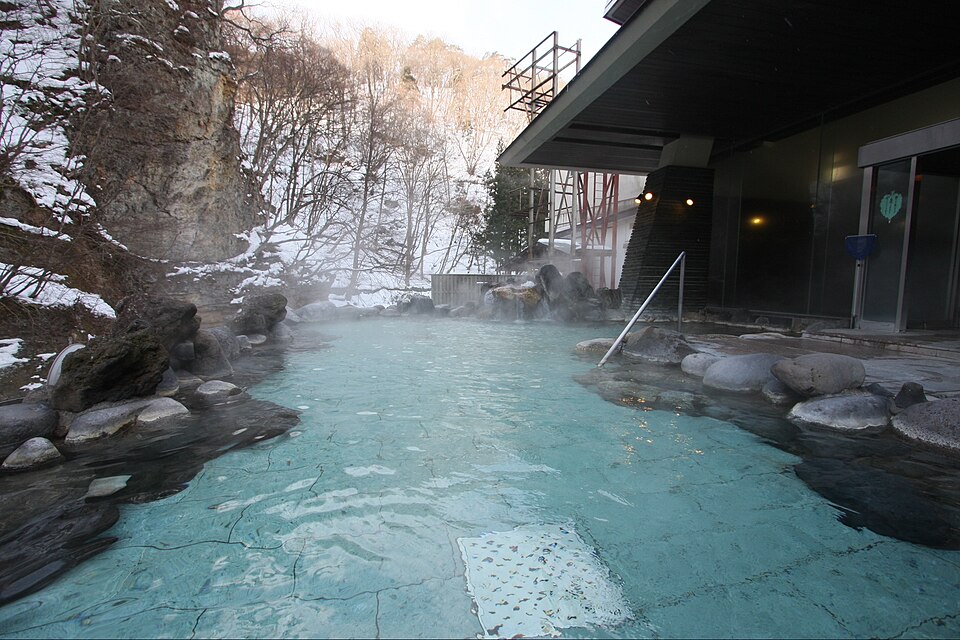
Hanamaki Onsen
花巻温泉
Hanamaki Onsen
simple-alkaline · Tohoku
Hotter than 42% of Japan springs (n=122).
More acidic than 93% of Japan springs (n=121).
Mineral profile
Bar width reflects listing order, not measured concentration.
Suitability
At a glance
Getting there
Remote — over 5km from the nearest station
Cost
High
About this spring
Hanamaki Onsen is a hot spring district in Iwate Prefecture organized into eight separate zones spread through the hills above the Kitakami River valley. The area is the hometown of author and poet Kenji Miyazawa. A narrow-gauge line called the Hanamaki Electric Railway once ran between the spring zones, earning the nickname the matchbox train, and it is widely credited as the inspiration for the celestial train journey at the center of Miyazawa's most celebrated work, Night on the Galactic Railroad.
Highlights
History
The district's oldest spring, Dai Onsen, is said to trace its origins to the ninth century, when the general Sakanoue no Tamuramaro reportedly came upon it.
Development of the modern resort began in 1890, when the Tohoku Line extended to Hanamaki Station. The Hanamaki Electric Railway opened in 1915, sending its small narrow-gauge cars winding up into the mountain spring villages. Kenji Miyazawa was born in Hanamaki in 1896, and Osawa Onsen is particularly remembered as the spring he held dearest. The healing waters near his hometown surface repeatedly throughout his writing. The formal resort complex opened in 1923.
Local guide
Shin-Hanamaki Station sits on the Tohoku Shinkansen line about two and a half hours north of Tokyo, and from the platform you can already see the low, forested hills that signal you are at the edge of Hanamaki's hot spring country. The town of Hanamaki stretches across the southern Kitakami Basin in Iwate Prefecture, and its hot springs are not one concentrated district but a loose cluster of separate areas spread through the surrounding hills: Hanamaki Onsen proper, Osawa, Yamano, and Shin-Hanamaki among them. Each has a different character, and the alkaline pH-9 water that connects them all surfaces clear and soft from the ground.
The water at the main Hanamaki Onsen area flows from a simple alkaline source. In the bath it is odorless and transparent, but the pH reading tells the story. Highly alkaline spring water behaves differently from neutral water at the same temperature. It feels slippery in a way that is hard to describe accurately: not oily, not soapy, just smooth in a way that ordinary hot water does not manage. The skin stays warm and soft after you step out, and the effect is noticeable for hours. The water at Osawa Onsen, a short drive further into the hills, is classified as a sodium sulfate and chloride spring and runs slightly warmer.
The poet and scientist Miyazawa Kenji, who grew up in Hanamaki and is buried here, was a frequent visitor to Osawa Onsen. His writing about the Iwate landscape, its cold winters and short, sharp summers, is woven into how the region understands itself. The Miyazawa Kenji Memorial Museum sits on a hill above town, and many visitors pair the museum with an afternoon in one of the hill baths before heading back to the Shinkansen. Kenji designed a sundial flowerbed in the Hanamaki Onsen Rose Garden, which sits on a managed slope above the main hotel district with good views across the Kitakami plain.
The Shinkansen stops at Shin-Hanamaki, but the various spring areas require either a taxi or a car to reach from the station. The Kamaishi Line connects Shin-Hanamaki and Hanamaki Station, but it runs infrequently and the transfers add time rather than save it. Most visitors either rent a car at the station or book accommodation that includes a shuttle. Outside of summer and autumn leaf season, the hills around Hanamaki are genuinely quiet, and the combination of alkaline baths, cedar forest, and the particular flat-light quality of Tohoku in late October makes the effort of getting here feel straightforward in hindsight.
Mineral chemistry
Water character inferred from mineral type — verify on site.
Alkaline springs (pH above 8) are known for their skin-softening effect, sometimes called "beauty water" in bathing cultures across Asia. The high pH saponifies skin oils, producing a characteristic silky feel on the skin surface.
The slippery feeling underfoot in highly alkaline springs is normal — take care when standing and walking in the bath. Avoid prolonged soaking if you have dry or sensitive skin.
Similar springs
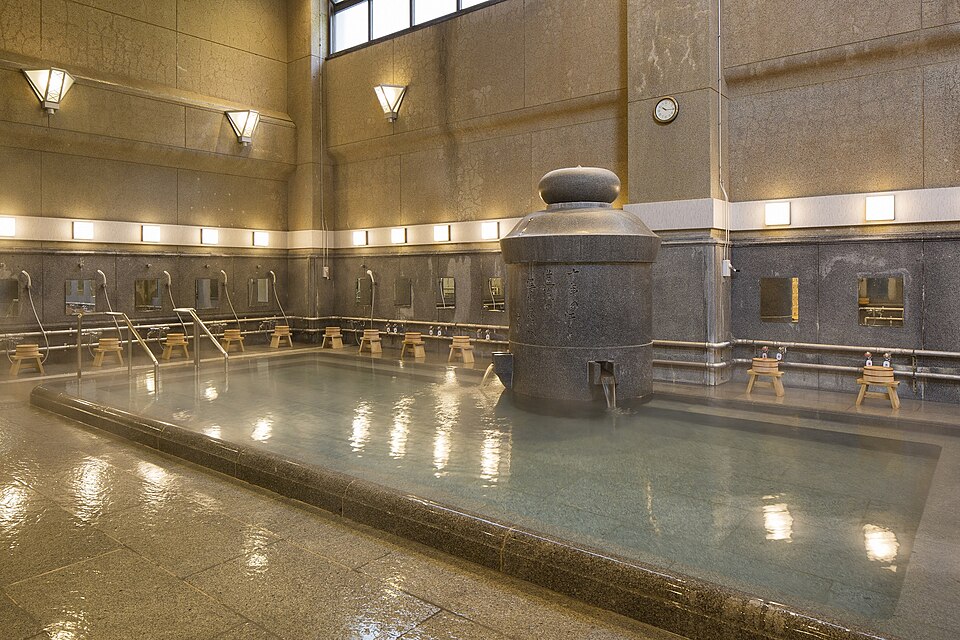
Tsubaki Onsen occupies a single large bathhouse on the Kii Peninsula in Wakayama Prefecture, surrounded by forest and roughly 2.5 hours from Osaka by train. The spring registers pH 9.9, placing it among the most alkaline waters in Japan. The facility is straightforward and well-maintained, attracting visitors from the Kumano region as well as day-trippers traveling in from the coast.
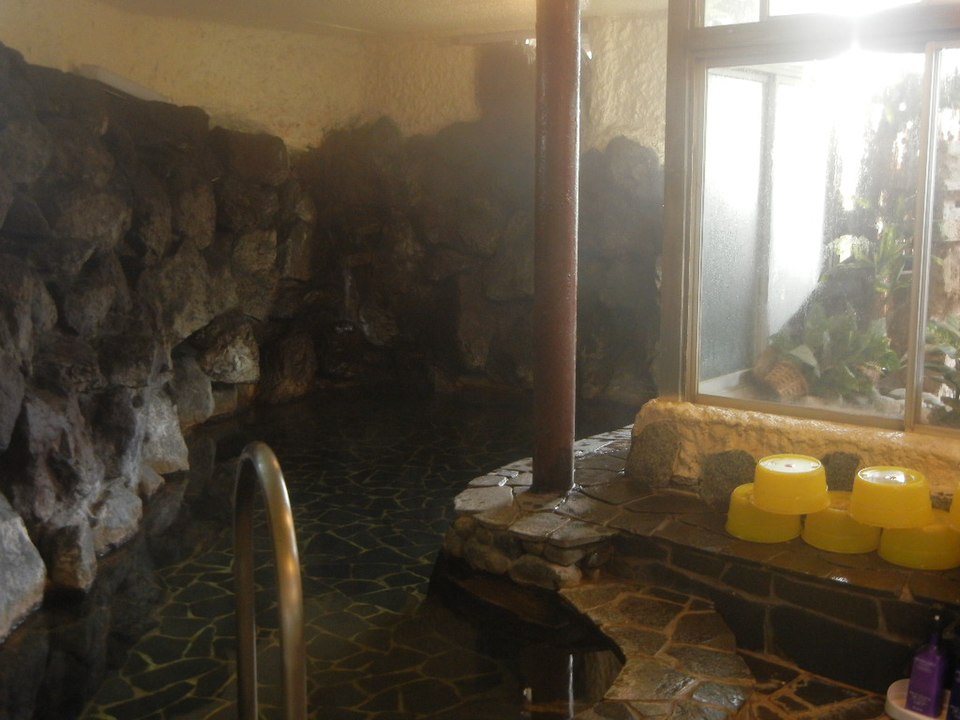
Iiyama Onsen sits in northern Nagano Prefecture near the Nozawa Onsen highlands and produces water with a pH of 11.3, placing it among the most alkaline natural hot springs anywhere in Japan. The soft, high-alkaline water has long been sought out as a beauty spring, widely praised for the way it smooths and softens the skin. The Hokuriku Shinkansen now stops at Iiyama Station, cutting travel time from Tokyo considerably.
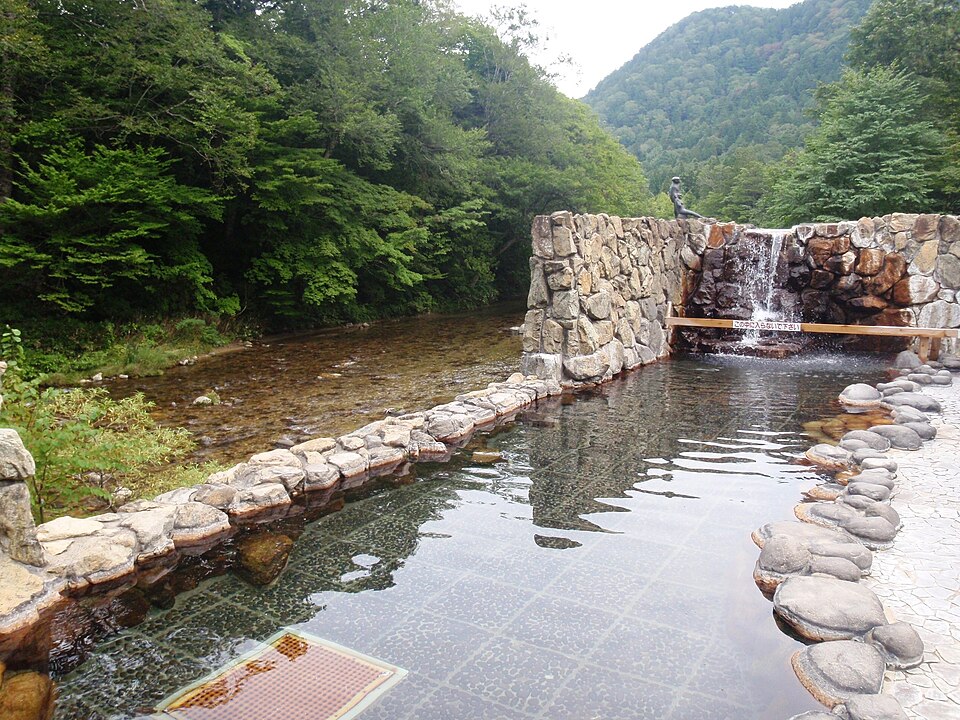 FREE
FREEKappa-no-yu is a free, open-air bathing spot tucked into Yagen Valley on the Shimokita Peninsula in Aomori Prefecture, roughly 2 kilometers up the slope from the central Yagen Onsen cluster. Two separate baths rest beside a clear mountain stream, surrounded by old-growth beech and cypress trees. The water temperature holds at 46 degrees Celsius. Visitors are not permitted to bring soap or shampoo. The baths are open from April through November and charge no entry fee.
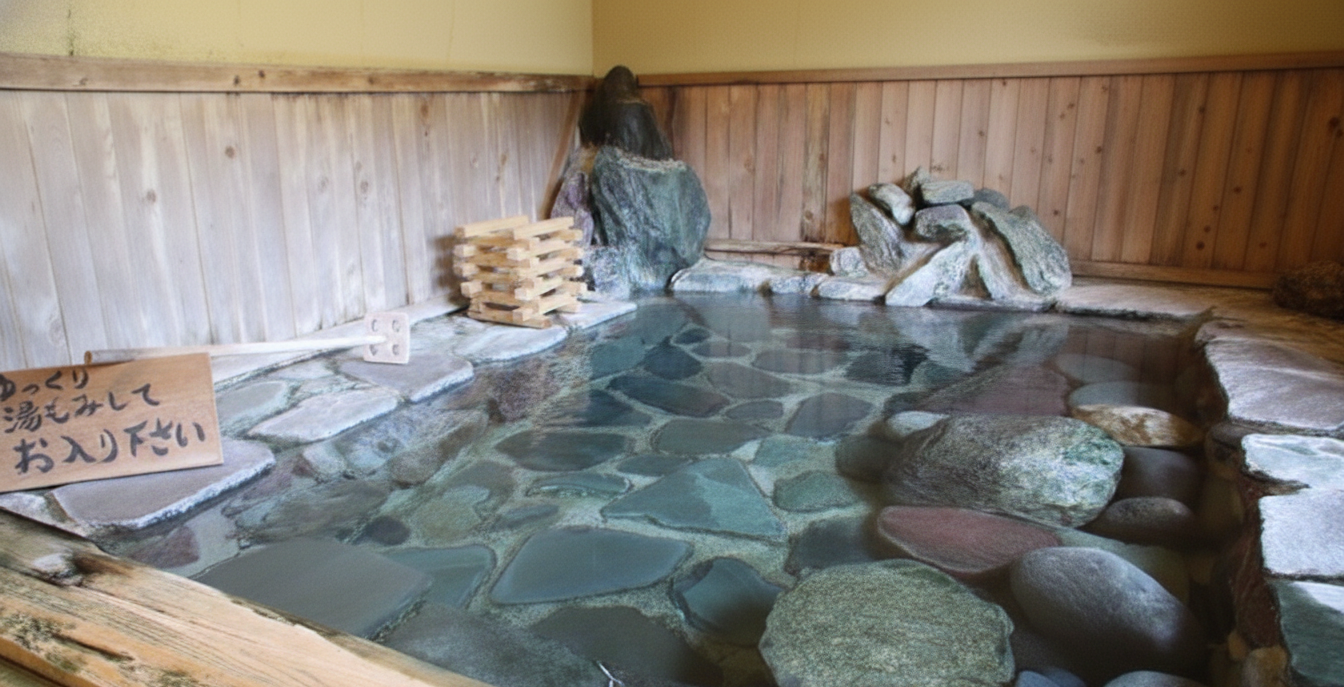
Tokigawa Onsen sits in Hiki District, Saitama Prefecture, roughly 90 minutes from central Tokyo. The water rises from Chichibu Paleozoic strata at a depth of 1,700 meters and registers pH 10, placing it firmly in the highly alkaline range. Bathers consistently note the silky feel it leaves on the skin. The facility has held onto its Showa-era bathhouse character rather than updating it.
Amenities
Getting there
Take the Tohoku Shinkansen to Shin-Hanamaki Station, then a local taxi or shuttle bus to the onsen zone. The journey takes about 20 minutes. Iwate Hanamaki Airport also connects directly to Tokyo Haneda and is just 7.5 kilometers from the onsen area.
Location & nearby
Hanamaki Onsen, Hanamaki, Iwate
Make a day of it
Pair your soak with these nearby spots.
Attraction
Takimikyō
0.3km away
Attraction
Kamabuchinotaki
0.3km away
Attraction
Yomatsuzono
0.4km away
Park
KamabuchikōEn
0.4km away
Attraction
Taionsenryokankumiaiannaisho
0.4km away
Attraction
Hanamaki Onsen Kashoen
0.5km away
More springs in Tohoku

Set deep in the Hakkoda Mountains of Aomori Prefecture, Sukayu Onsen is a historic bathhouse best known for its cavernous mixed-bathing hall, the Sen-nin-buro, which translates as the Bath of a Thousand Bathers. The waters are strongly acidic, the setting is rustic and unhurried, and winter brings extraordinary snowfall to the surrounding mountains.

Tsuru-no-yu is the oldest of the seven inns at Nyuto, set deep in a beech forest in Akita Prefecture. The main draw is a large outdoor mixed-bathing pool fed by opaque, milky-white sulfurous water. Many regard it as the most beautiful onsen setting in Japan. People come here to put some distance between themselves and the rest of the world for a while.
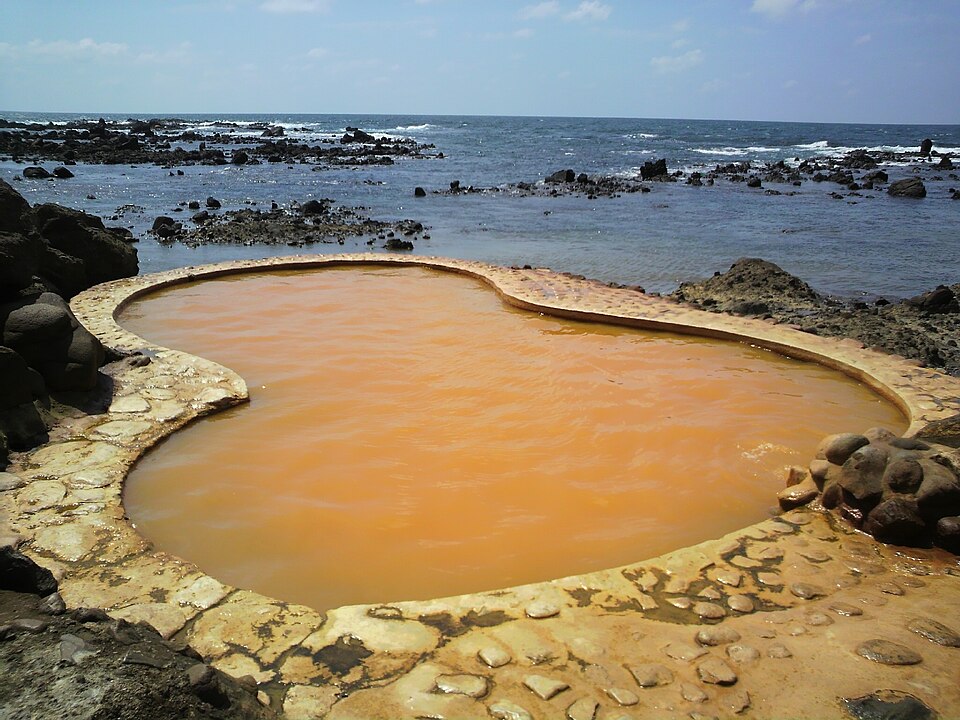
Furofushi Onsen occupies a rocky cape in Fukaura, Aomori Prefecture, with outdoor bathing pools positioned at the edge of the Sea of Japan cliffs. The spring water runs a deep reddish-brown from its high iron and sodium chloride content. The main open-air bath and a dedicated women's pool both use fully undiluted water drawn straight from the source. Sunsets over the water are a particular draw. Once day visitors depart in the late afternoon, overnight guests have the pools to themselves.
Common questions
What is the water temperature at Hanamaki Onsen?▾
The water temperature at Hanamaki Onsen ranges up to 55°C (minimum around 42°C).
Is Hanamaki Onsen free to visit?▾
Hanamaki Onsen charges an entrance fee in JPY.
Is Hanamaki Onsen a public or private bath?▾
Hanamaki Onsen is a public bathing spring.
Are tattoos allowed at Hanamaki Onsen?▾
No, Hanamaki Onsen does not permit visible tattoos.
What is the nearest station to Hanamaki Onsen?▾
The nearest station to Hanamaki Onsen is Hanamaki Station, about 10km away.