
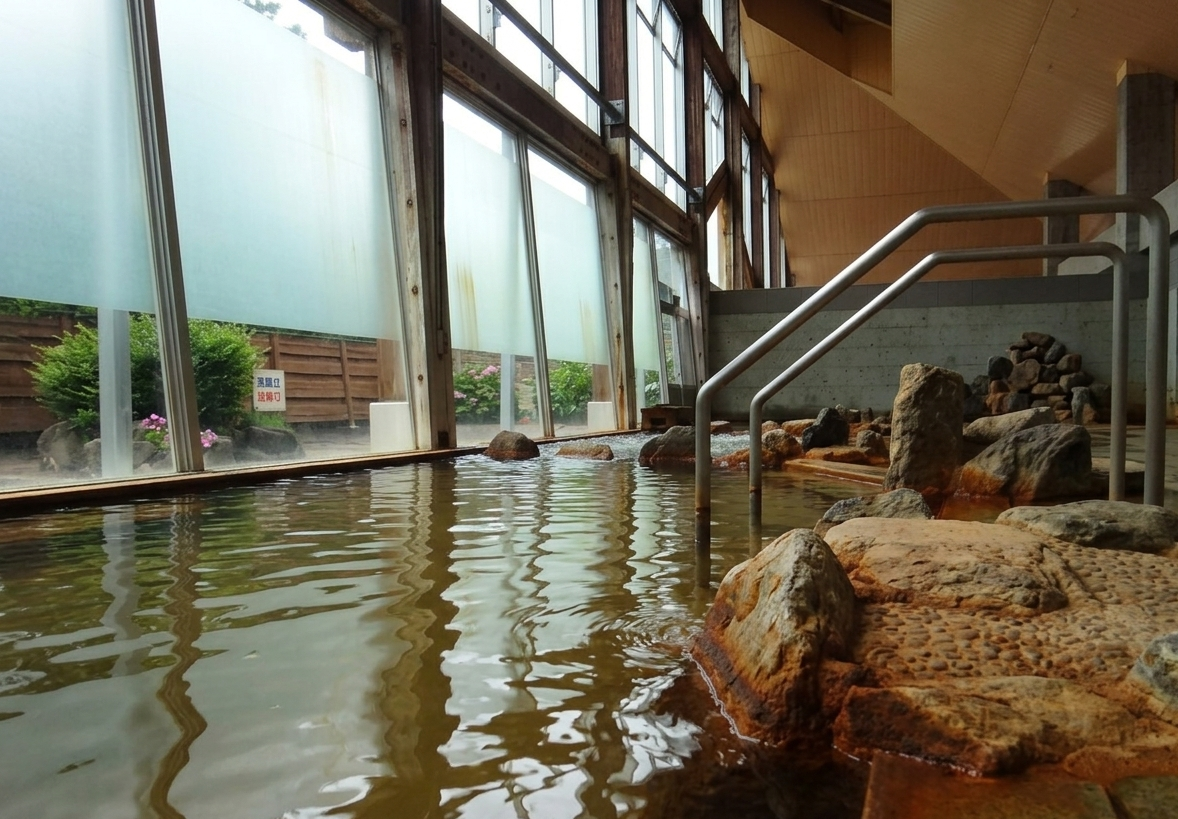
Kindaichi Onsen
金田一温泉
Kindaichi Onsen
alkaline · Tohoku
Hotter than 4% of Japan springs (n=122).
More acidic than 74% of Japan springs (n=121).
Mineral profile
Bar width reflects listing order, not measured concentration.
Suitability
At a glance
Getting there
Easy — under 1km from a station
Cost
Moderate
About this spring
Seven ryokan line the banks of the Mabechi River in Ninohe, Iwate Prefecture, forming the compact resort area of Kindaichi Onsen. The alkaline waters carry a National Public Health Spa designation from the Ministry of the Environment. The settlement is unhurried and small, with a quiet character shaped by the traditional hospitality of the Tohoku region.
Highlights
History
The springs were first put to use in 1626, in the early years of the Edo period, to serve samurai in the employ of the Nanbu clan of Morioka Domain.
The Ministry of the Environment granted the waters a formal National Public Health Spa designation in 1994. Among the inns, Ryokufuso became known across Japan for reportedly sheltering a zashiki-warashi, a kindly household spirit from Tohoku folk tradition. That inn was destroyed by fire in 2009, an event that drew widespread attention throughout the country.
Local guide
From Ninohe Station on the Tohoku Shinkansen, the local road drops south through farmland and then follows the Mabechi River upstream into a quiet valley. The river here is geologically unusual. The rounded stones on its bed are fossilized nodules, some containing imprints of ancient marine animals, and researchers have apparently been collecting them for years. Kindaichi Onsen sits on the banks of this fossil river, a cluster of seven traditional inns that have been drawing bathers since 1626, when the site was developed as a recovery retreat for samurai serving the Nanbu clan of Morioka Domain.
The water is alkaline, drawn from a simple spring that emerges warm and odorless and very clear. There is none of the sulfur sharpness you find further south in the volcanic zones. What you get instead is silk. The high alkalinity gives the water that characteristic slippery smoothness that feels like it is stripping something from your skin, and when you towel off and step outside into the cold Tohoku air, your skin holds warmth in a way it usually does not. The Ministry of the Environment designated Kindaichi a National Public Health Spa in 1994, which is a formal recognition of water quality standards that not many onsen achieve.
The most famous story attached to Kindaichi Onsen concerns a spirit called Kamemaro, a zashiki-warashi, which in Japanese folklore is a child-shaped house spirit that brings good fortune to wherever it lives. Kamemaro was said to inhabit one of the inns, Ryokufu-so, and the stories of guests encountering it and subsequently experiencing good luck stretched back generations. Then in October 2009, Ryokufu-so burned down in a fire that destroyed the building entirely. A small shrine called Kamemaro Shrine was built in the backyard of the rebuilt property, and it still stands.
The seven inns at Kindaichi are arranged along the riverbank in a row, close enough together that you can walk from one end to the other in ten minutes. Most allow day visitors to use the baths for a modest fee. The outdoor pools face the Mabechi River and the forest on the far bank, and in autumn the hillsides above the valley go a solid yellow-orange that reflects down into the current. This far north in Tohoku the light gets low early in September and the evenings cool off fast, which makes an outdoor pool beside a slow-moving fossil river one of the more pleasant ways to spend an afternoon.
Mineral chemistry
Alkaline springs (pH above 8) are known for their skin-softening effect, sometimes called "beauty water" in bathing cultures across Asia. The high pH saponifies skin oils, producing a characteristic silky feel on the skin surface.
The slippery feeling underfoot in highly alkaline springs is normal — take care when standing and walking in the bath. Avoid prolonged soaking if you have dry or sensitive skin.
Similar springs
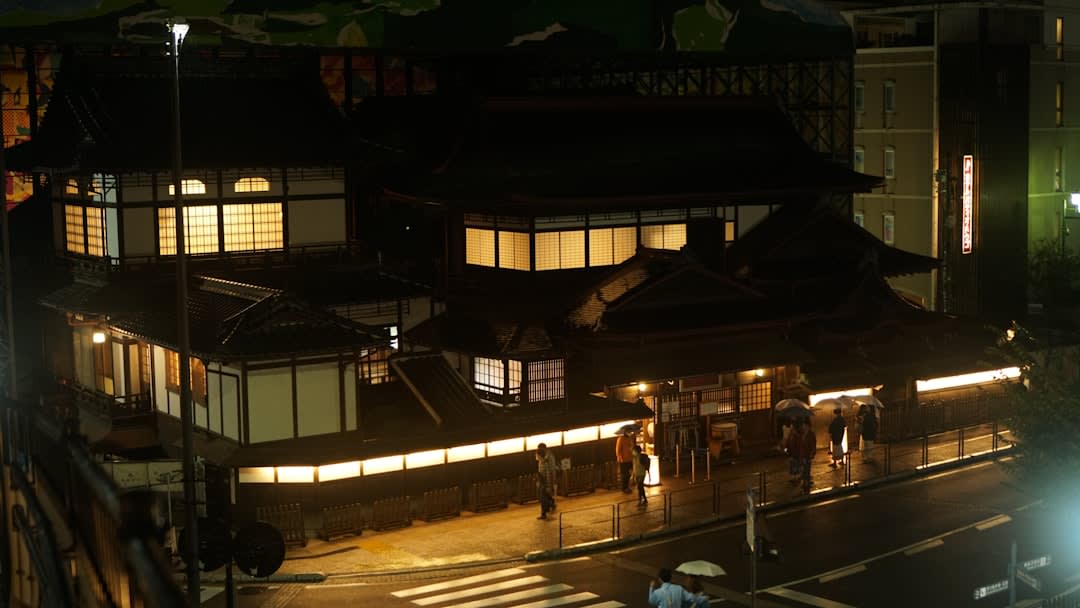
Dogo Onsen ranks among the oldest hot springs in Japan, with written records documenting its use for more than 1,300 years and oral traditions pointing back considerably further. The landmark Dogo Onsen Honkan is a three-storey wooden bathhouse finished in 1894, widely credited as the inspiration for the bathhouse depicted in Studio Ghibli's Spirited Away. The spring water is mildly alkaline and has long been valued for its ability to soften and smooth the skin.
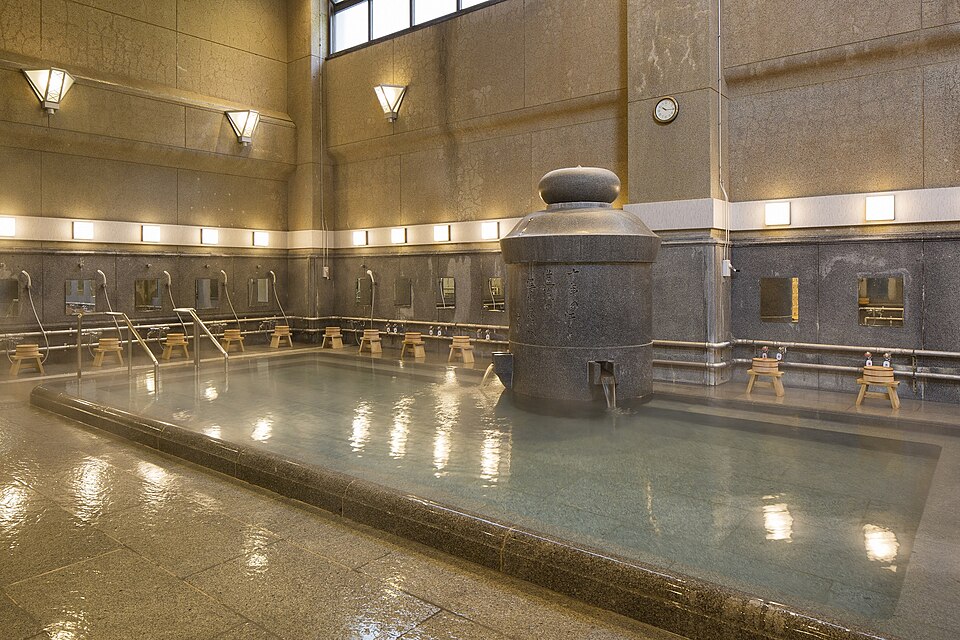
Tsubaki Onsen occupies a single large bathhouse on the Kii Peninsula in Wakayama Prefecture, surrounded by forest and roughly 2.5 hours from Osaka by train. The spring registers pH 9.9, placing it among the most alkaline waters in Japan. The facility is straightforward and well-maintained, attracting visitors from the Kumano region as well as day-trippers traveling in from the coast.
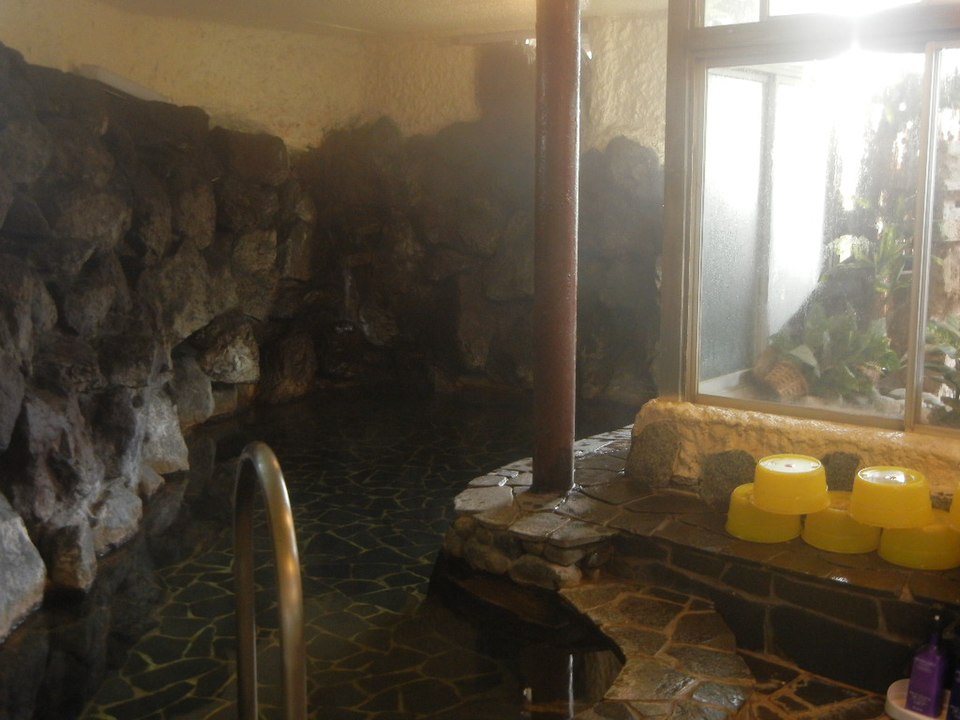
Iiyama Onsen sits in northern Nagano Prefecture near the Nozawa Onsen highlands and produces water with a pH of 11.3, placing it among the most alkaline natural hot springs anywhere in Japan. The soft, high-alkaline water has long been sought out as a beauty spring, widely praised for the way it smooths and softens the skin. The Hokuriku Shinkansen now stops at Iiyama Station, cutting travel time from Tokyo considerably.
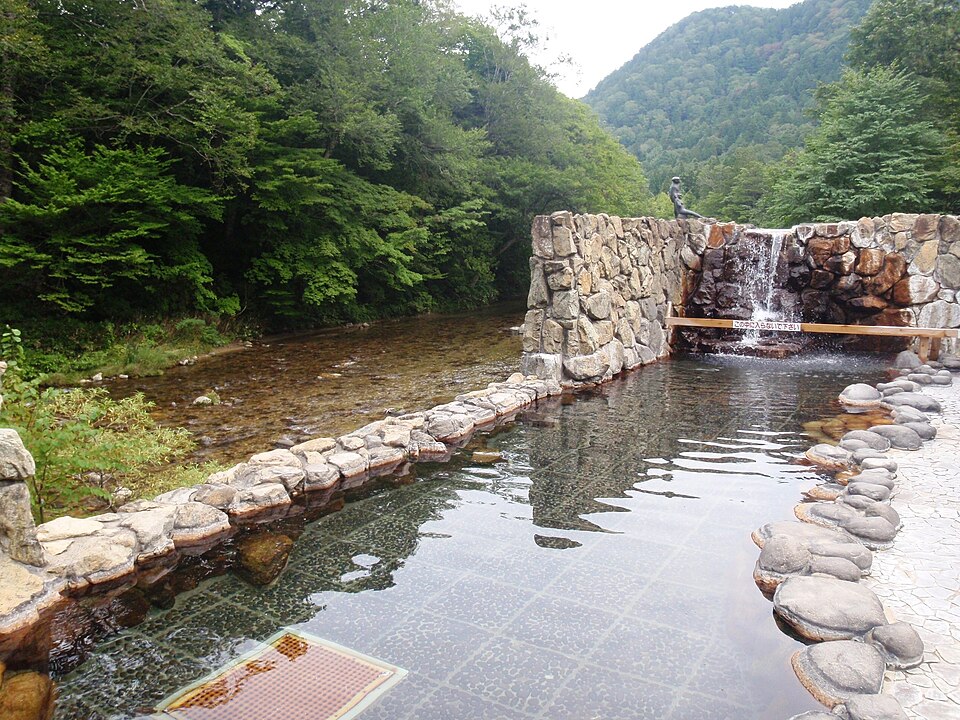 FREE
FREEKappa-no-yu is a free, open-air bathing spot tucked into Yagen Valley on the Shimokita Peninsula in Aomori Prefecture, roughly 2 kilometers up the slope from the central Yagen Onsen cluster. Two separate baths rest beside a clear mountain stream, surrounded by old-growth beech and cypress trees. The water temperature holds at 46 degrees Celsius. Visitors are not permitted to bring soap or shampoo. The baths are open from April through November and charge no entry fee.
Amenities
Getting there
Take the Tohoku Shinkansen to Ichinohe Station, then a local bus to Ninohe. From Ninohe, take a taxi or bus to Kindaichi Onsen. Alternatively, take the Shinkansen to Morioka and then a local train to Ninohe Station.
Location & nearby
Kintaichi Onsen, Kintaichi, Ninohe, Iwate 028-5711
Make a day of it
Pair your soak with these nearby spots.
Attraction
Kindaichi Onsen
0.2km away
Attraction
Supermarket Do Mu
0.3km away
More springs in Tohoku

Set deep in the Hakkoda Mountains of Aomori Prefecture, Sukayu Onsen is a historic bathhouse best known for its cavernous mixed-bathing hall, the Sen-nin-buro, which translates as the Bath of a Thousand Bathers. The waters are strongly acidic, the setting is rustic and unhurried, and winter brings extraordinary snowfall to the surrounding mountains.

Tsuru-no-yu is the oldest of the seven inns at Nyuto, set deep in a beech forest in Akita Prefecture. The main draw is a large outdoor mixed-bathing pool fed by opaque, milky-white sulfurous water. Many regard it as the most beautiful onsen setting in Japan. People come here to put some distance between themselves and the rest of the world for a while.
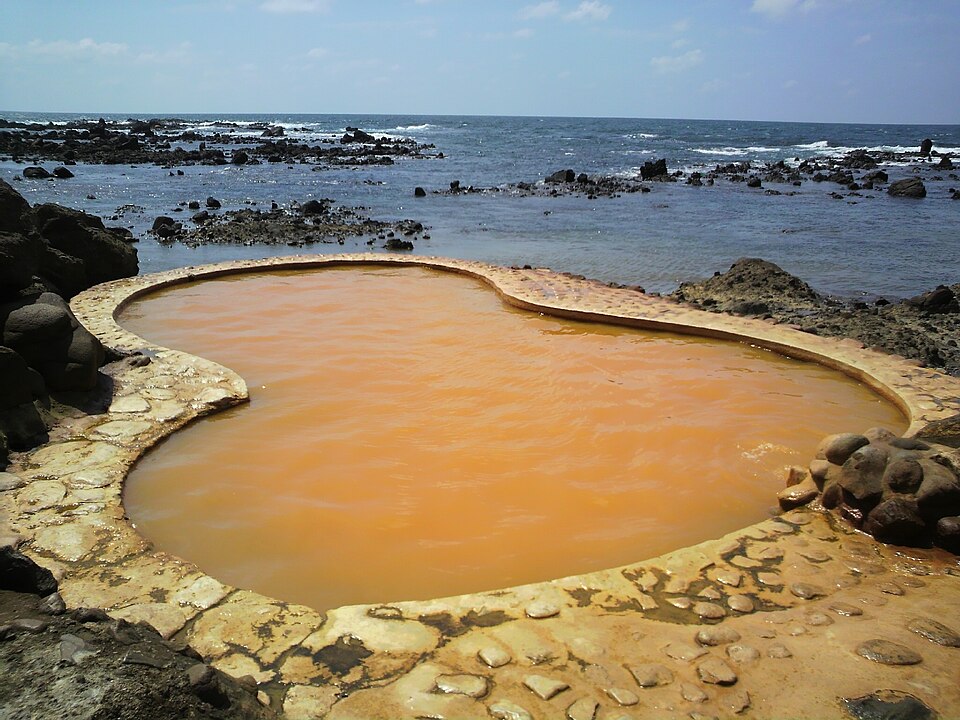
Furofushi Onsen occupies a rocky cape in Fukaura, Aomori Prefecture, with outdoor bathing pools positioned at the edge of the Sea of Japan cliffs. The spring water runs a deep reddish-brown from its high iron and sodium chloride content. The main open-air bath and a dedicated women's pool both use fully undiluted water drawn straight from the source. Sunsets over the water are a particular draw. Once day visitors depart in the late afternoon, overnight guests have the pools to themselves.
Common questions
What is the water temperature at Kindaichi Onsen?▾
The water temperature at Kindaichi Onsen ranges up to 34°C (minimum around 30°C).
Is Kindaichi Onsen free to visit?▾
Kindaichi Onsen charges an entrance fee in JPY.
Is Kindaichi Onsen a public or private bath?▾
Kindaichi Onsen is a public bathing spring.
Are tattoos allowed at Kindaichi Onsen?▾
No, Kindaichi Onsen does not permit visible tattoos.