
Takayu Onsen
高湯温泉
Takayu Onsen
sulfur · Tohoku
Hotter than 30% of Japan springs (n=122).
More acidic than 3% of Japan springs (n=121).
Mineral profile
Bar width reflects listing order, not measured concentration.
Suitability
At a glance
Getting there
Easy — under 1km from a station
Cost
Low
About this spring
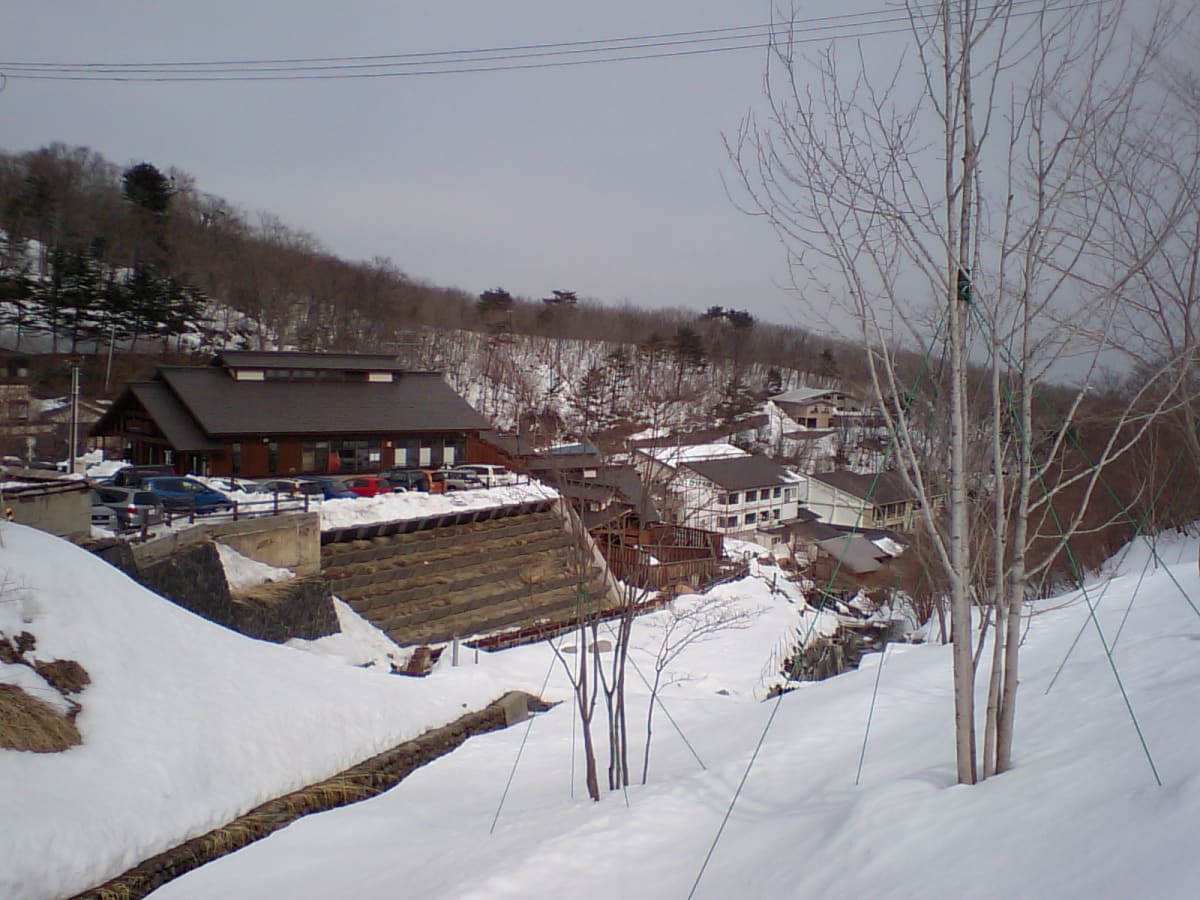
Takayu Onsen sits at high elevation on the flanks of Mount Azuma in Fukushima Prefecture, roughly 50 minutes from Fukushima city by bus. The springs rank among the most acidic in Tohoku, producing milky white water with a sharp sulfurous smell. The village is recognized as one of the Three Takayu hot springs of the Oshu region, a distinction that has drawn visitors for centuries. Around twelve ryokan are gathered near ten spring sources in surroundings that have seen little change since the Edo period.
Highlights
History
The springs at Takayu were first recorded in 1607, during the early Edo period.
The volcanic waters of Mount Azuma are strongly acidic and rich in hydrogen sulfide, and they gained early recognition as a remedy for skin ailments and respiratory conditions. Alongside Zao Takayu in Yamagata and Shirabu Takayu in the highlands, Takayu was counted as one of the Three Takayu of the Oshu Region, a grouping of celebrated mountain springs. The village never expanded into a large commercial resort over the following centuries, and its qualities as a quiet mountain retreat have carried through more than 400 years.
Local guide
The bus from Fukushima Station climbs for about an hour through cedar plantations and secondary forest before reaching the cluster of twelve ryokan that sit halfway up the southern slope of the Azuma massif. The name Takayu is direct: taka means high, yu means hot water. At roughly 750 meters altitude, the air at the bus stop smells different from the city below, carrying a distinct sulfur note that sharpens as you walk toward the main strip. This is the smell of active volcanic chemistry working close to the surface, and it signals something specific about the water waiting inside.
Takayu has ten distinct spring sources feeding the town, and the ryokan draw from them in varying combinations. The most historically significant bathhouse is the Tamagoyu, a small, dark wooden building that has been operating for roughly 400 years and keeps one pool per gender, fed by a source that runs at 50.5 degrees Celsius and must be tempered down before use. The water across all sources here shares a common character: it comes out milky white, somewhere between opaque and translucent, with a strong hydrogen sulfide smell that catches in the back of your throat. The color is not quite the brilliant snow-white of heavily sulfuric springs elsewhere. It is more of an off-white, sometimes shifting toward pale blue in deeper pools, like diluted skim milk.
The feel of the water on your skin is distinctive. There is a persistent tingle, faint but noticeable, that bathers describe as the bite of the water, and it comes from the strong acidity working against your skin's surface. After ten or fifteen minutes, your skin flushes and takes on a slight smoothness that you can feel by rubbing your fingers together. The public bathhouse called Attaka no Yu, which is the most accessible option for day visitors, keeps the water at a manageable temperature and allows you to soak long enough to actually notice this effect.
In the center of town, there is a free outdoor foot bath that operates year-round, and in winter it becomes the social center of the small community. The Azuma-Bandai plateau above the town is a national park, and the hiking trails that pass through Takayu on their way to the volcanic peaks make the onsen a natural stopping point. Hikers who have spent a day on the rocky slopes above come down into town in late afternoon smelling of exertion and cold mountain air, and the contrast between that and what the milky, biting water offers inside the old wooden bathhouses is about as direct as restorative experiences get. There is nothing elaborate here. The twelve inns are functional and traditional, the meals run to Fukushima river fish and mountain vegetables, and the volcanic spring chemistry does the work that no design or amenity could replicate.
Mineral chemistry
Sulfuric hot springs are among the most studied in balneology worldwide. The sulfur compounds, primarily hydrogen sulfide and thiosulfate, have documented antimicrobial and anti-inflammatory properties. Regular bathing is associated with relief from chronic skin conditions including eczema and psoriasis, as well as joint inflammation and muscle soreness. Sulfuric waters have been used therapeutically across Asia and Europe for centuries.
The distinctive rotten-egg smell dissipates quickly after leaving the bath. Avoid if you have a sulfur allergy, very sensitive skin, or respiratory conditions. Remove silver jewellery before entering — sulfur will blacken it permanently.
Similar springs
 FREE
FREEThe valley occupies the center of Noboribetsu Onsen in Hokkaido. Jigokudani translates as Hell Valley. The crater covers 11 hectares and releases roughly 10,000 tonnes of hot spring water each day. Fumaroles vent steam across the floor of the valley, boiling pools bubble at the surface, and the surrounding cliffs carry heavy mineral staining. A walking path winds through the area in about 20 minutes and is open to all visitors at no cost. It ranks among the most striking landscapes accessible on foot anywhere in Japan.

Set deep in the Hakkoda Mountains of Aomori Prefecture, Sukayu Onsen is a historic bathhouse best known for its cavernous mixed-bathing hall, the Sen-nin-buro, which translates as the Bath of a Thousand Bathers. The waters are strongly acidic, the setting is rustic and unhurried, and winter brings extraordinary snowfall to the surrounding mountains.

Beppu is the most geothermally active city in Japan, with more than 2,900 hot spring vents located within the city limits and eight distinct thermal spring zones collectively known as the Beppu Hatto. The variety on offer is wide, ranging from grand hotel bathhouses to modest neighborhood public facilities to the celebrated Hells, a collection of brilliantly colored boiling pools scattered across the city. The Hells run far too hot for bathing, but they draw visitors who come to walk among them and take in the spectacle.
 FREE
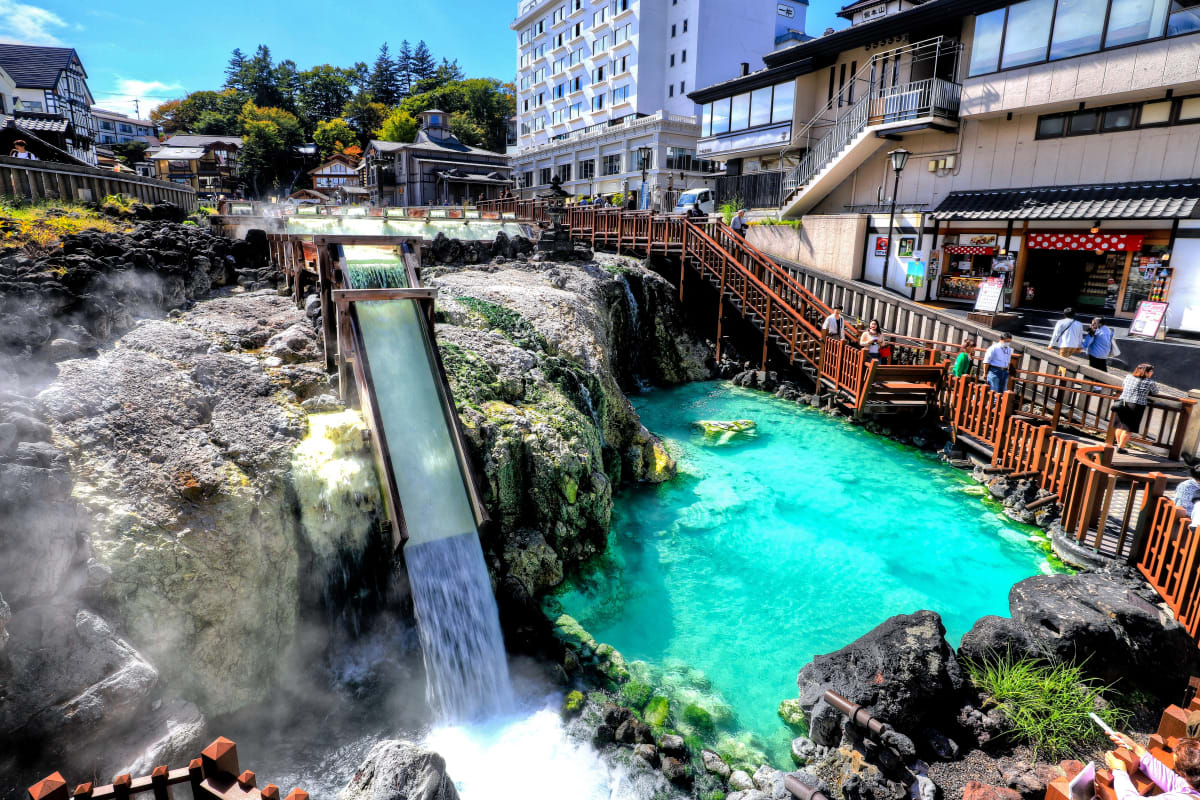
FREEKusatsu Onsen sits at 1,200 meters in the mountains of Gunma Prefecture and ranks among the most celebrated hot spring towns in Japan. The springs here produce more than 32,000 liters of water per minute, a volume unmatched anywhere else in the country. The water is strongly acidic and sulfurous, and its skin-healing properties have long made it legendary among visitors. Twice each day in the central town square, workers cool the scalding water by pulling long wooden paddles through it in unison while singing traditional songs. This practice is called yumomi.
Amenities
Getting there
Take the Tohoku Shinkansen to Fukushima Station, then take the Fukushima Kotsu bus bound for Takayu Onsen from the bus terminal outside the station. The ride takes about 50 minutes. Departures are limited, so check the timetable in advance.
Location & nearby
Takayu Onsen, Machiniwasaka, Fukushima, 960-2261
Make a day of it
Pair your soak with these nearby spots.
Attraction
Attakayu
0.0km away
Attraction
Takayu Onsen Attaka-Yu
0.0km away
Attraction
KōYuonsen
0.1km away
Attraction
KōYuonsennombirikan
0.2km away
Attraction
Ryokantamagoyu
0.4km away
Attraction
FudōDaki
1.1km away
More springs in Tohoku
Set deep in the Hakkoda Mountains of Aomori Prefecture, Sukayu Onsen is a historic bathhouse best known for its cavernous mixed-bathing hall, the Sen-nin-buro, which translates as the Bath of a Thousand Bathers. The waters are strongly acidic, the setting is rustic and unhurried, and winter brings extraordinary snowfall to the surrounding mountains.

Tsuru-no-yu is the oldest of the seven inns at Nyuto, set deep in a beech forest in Akita Prefecture. The main draw is a large outdoor mixed-bathing pool fed by opaque, milky-white sulfurous water. Many regard it as the most beautiful onsen setting in Japan. People come here to put some distance between themselves and the rest of the world for a while.
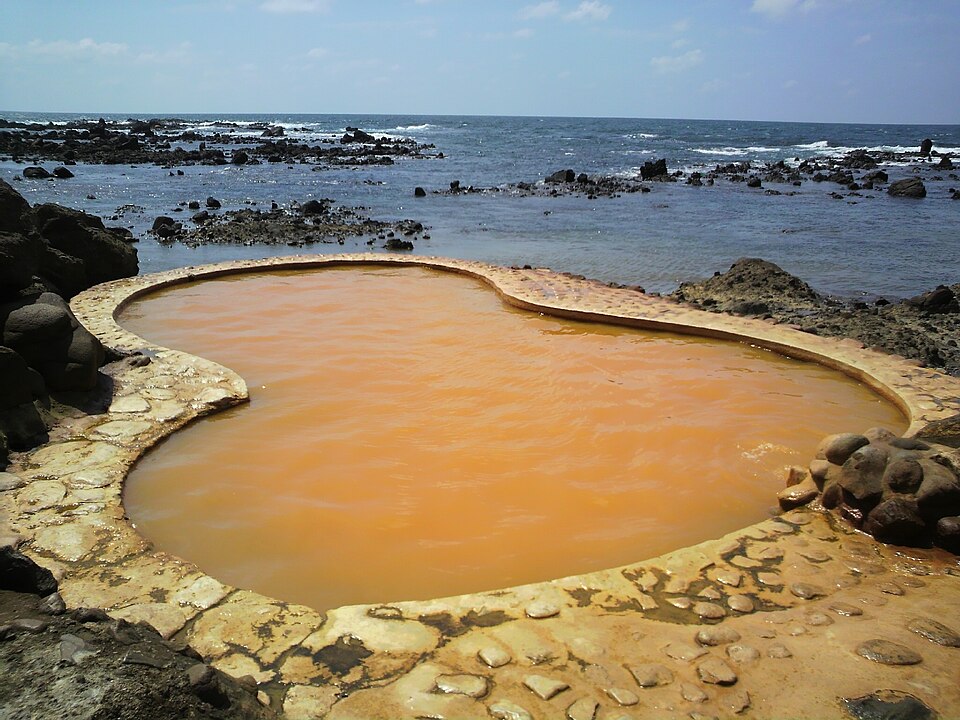
Furofushi Onsen occupies a rocky cape in Fukaura, Aomori Prefecture, with outdoor bathing pools positioned at the edge of the Sea of Japan cliffs. The spring water runs a deep reddish-brown from its high iron and sodium chloride content. The main open-air bath and a dedicated women's pool both use fully undiluted water drawn straight from the source. Sunsets over the water are a particular draw. Once day visitors depart in the late afternoon, overnight guests have the pools to themselves.
Common questions
What is the water temperature at Takayu Onsen?▾
The water temperature at Takayu Onsen ranges up to 51°C (minimum around 50.5°C).
Is Takayu Onsen free to visit?▾
Takayu Onsen charges an entrance fee in JPY.
Is Takayu Onsen a public or private bath?▾
Takayu Onsen is a mixed bathing spring.
Are tattoos allowed at Takayu Onsen?▾
Yes, Takayu Onsen welcomes visitors with tattoos.
What is the nearest station to Takayu Onsen?▾
The nearest station to Takayu Onsen is Takayu, about 0km away.