
Sakunami Onsen
作並温泉
Sakunami Onsen
sodium-bicarbonate · Tohoku
Hotter than 48% of Japan springs (n=122).
More acidic than 64% of Japan springs (n=121).
Mineral profile
Bar width reflects listing order, not measured concentration.
Suitability
At a glance
Getting there
Easy — under 1km from a station
Cost
High
About this spring
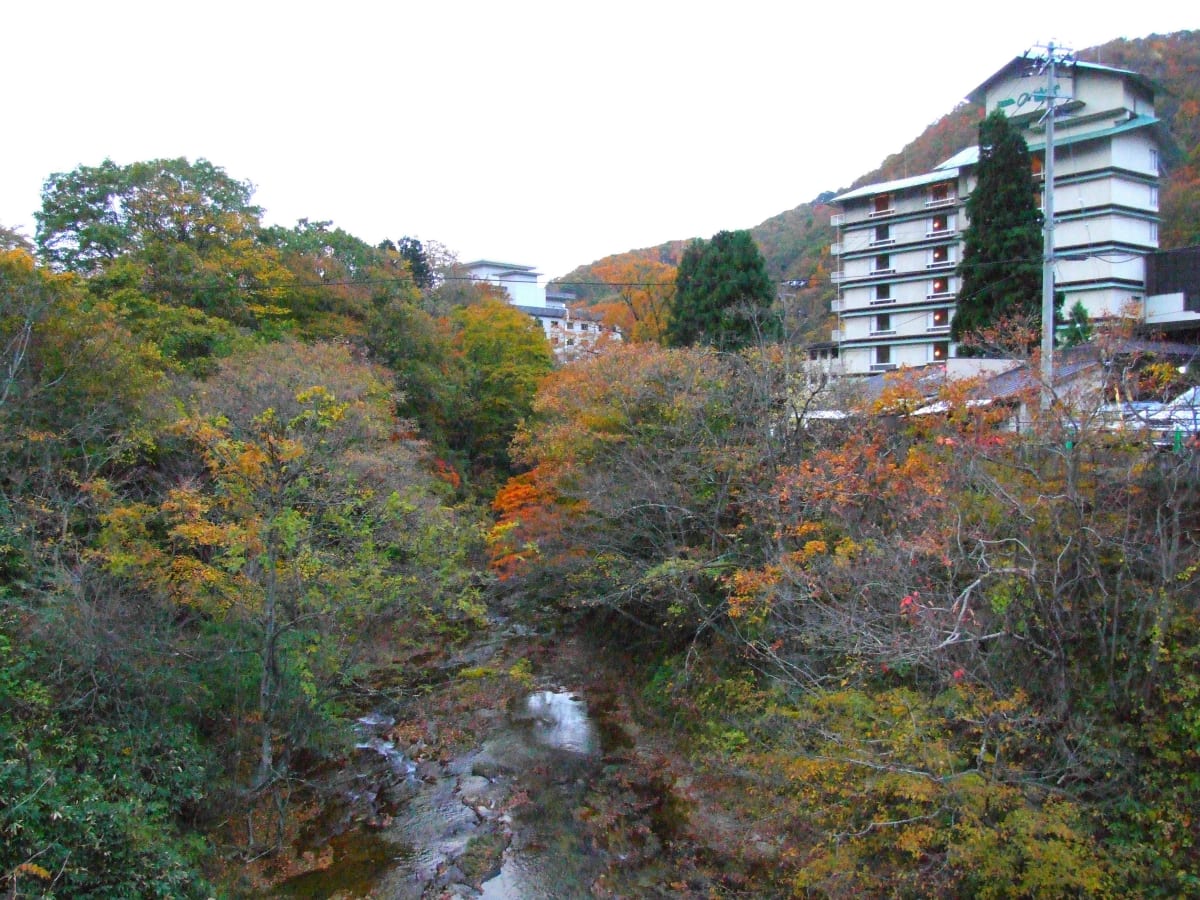
Sakunami Onsen is a modest hot spring destination tucked into a wooded river valley along the Hirosegawa River, roughly 25 kilometers northwest of Sendai. The Senzan Line connects the city directly to the area, making access straightforward. A handful of ryokan and communal baths line the valley floor, and the surroundings are predominantly forest and river, with a calm that defines the overall character of the place.
Highlights
History
According to local tradition, the springs were first found by the Buddhist priest Gyoki in 721 AD.
The site drew notable visitors in later centuries, including Minamoto no Yoritomo, who is said to have stopped here during the Kamakura period while conducting a military campaign against the Northern Fujiwara. The area grew into a proper resort during the Edo period, when the Sendai Domain oversaw development and a number of ryokan were built along the riverbank to serve travelers coming from Sendai.
Local guide
From Sendai Station, the Senzan Line train climbs gradually away from the city, and within forty minutes the urban landscape is completely behind you. You step off at Sakunami Station into a different kind of quiet. The Hirose River cuts through a steep gorge here, and the handful of ryokan that make up the onsen district cling to the cliffs directly above the water. When the river is running high in spring, the sound of it reaches every room in every building. The gorge walls rise sharply on both sides, and in autumn they turn the color of copper and flame.
The water at Sakunami is a sodium bicarbonate and sodium chloride blend, coming out of the ground at sixty degrees and cooled slightly before it reaches the baths. It is completely clear, with no color and no smell, but you notice it immediately when you slide in because it has a slick, slightly silky quality against your skin. That softness comes from the bicarbonate content. Locals call it bijin-no-yu, which translates roughly as beauty water, and while that sounds like a sales pitch, the feel of it is genuinely different from plain hot water. Your skin absorbs something and does not want to rinse it off.
The outdoor rock baths built directly alongside the Hirose River are what make Sakunami worth the trip from the city. The oldest sections of the riverside bath structure date back roughly 180 years, with later additions built in the same style of heavy stone and timber. You sit in the hot water and the cold river rushes past a few meters below, close enough that the spray occasionally reaches you when the current hits a boulder at the right angle. Some of the baths vary in depth, including a standing bath that forces you to stay upright and actually feel the full weight of the hot water from shoulders to feet.
Sakunami has never tried to become a destination in the Kyoto sense. There are no souvenir arcades, no illuminated garden walks built for tour groups. The poet Masaoka Shiki passed through here, and a few other cultural figures have left their names in the guestbooks over the centuries, but the town moves at the same pace it always has. If you come from Sendai on a weekday afternoon and stay the night, you will probably have the riverside bath mostly to yourself by evening. That is the version of Sakunami worth making the effort for.
Mineral chemistry
Bicarbonate springs cleanse and soften the skin surface, removing excess sebum without stripping the skin's acid mantle. Traditionally recommended for acne-prone skin and sensitive skin types.
Bicarbonate springs are generally among the most gentle and well-tolerated onsen types.
Sodium chloride springs, essentially natural saltwater baths, are celebrated for their warming and moisturising effects. The salt forms a thin film on the skin that slows moisture evaporation, keeping skin hydrated longer than a freshwater bath.
Those with high blood pressure or heart conditions should consult a doctor before bathing, as the warming effect increases circulation. Avoid immersing open wounds.
Similar springs
 FREE
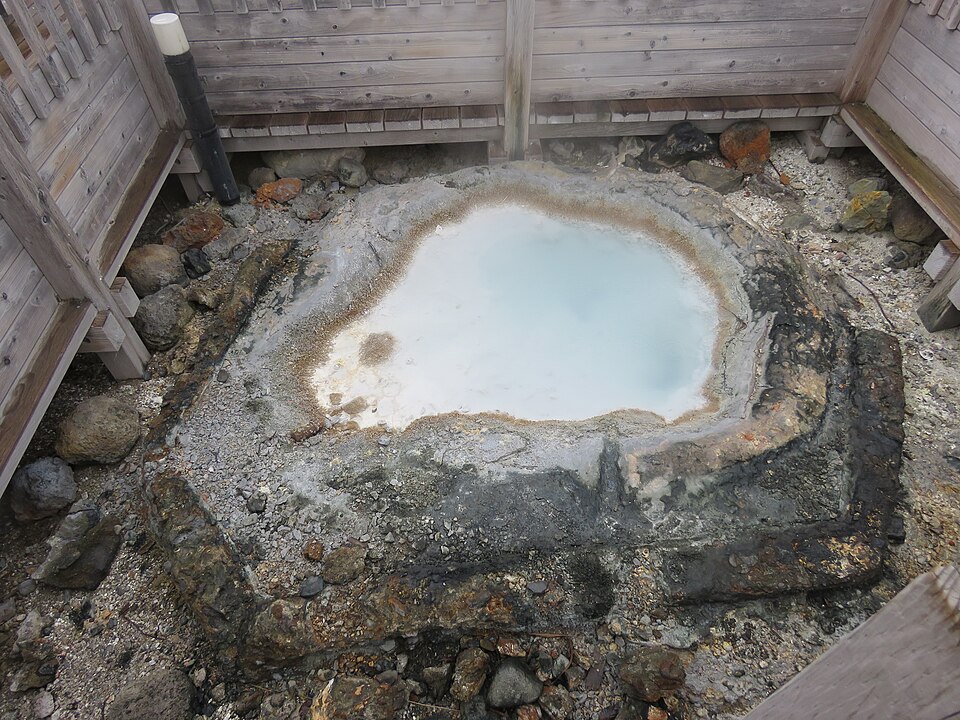
FREEThe valley occupies the center of Noboribetsu Onsen in Hokkaido. Jigokudani translates as Hell Valley. The crater covers 11 hectares and releases roughly 10,000 tonnes of hot spring water each day. Fumaroles vent steam across the floor of the valley, boiling pools bubble at the surface, and the surrounding cliffs carry heavy mineral staining. A walking path winds through the area in about 20 minutes and is open to all visitors at no cost. It ranks among the most striking landscapes accessible on foot anywhere in Japan.
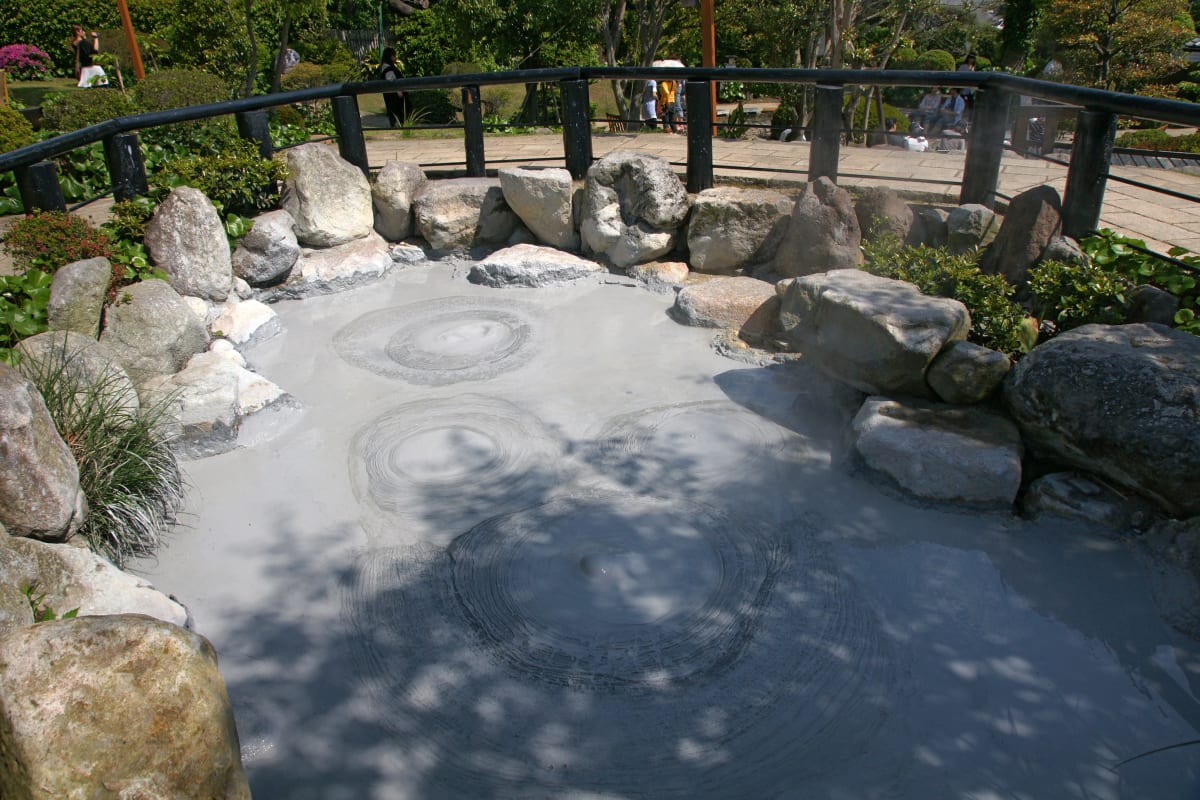
Beppu is the most geothermally active city in Japan, with more than 2,900 hot spring vents located within the city limits and eight distinct thermal spring zones collectively known as the Beppu Hatto. The variety on offer is wide, ranging from grand hotel bathhouses to modest neighborhood public facilities to the celebrated Hells, a collection of brilliantly colored boiling pools scattered across the city. The Hells run far too hot for bathing, but they draw visitors who come to walk among them and take in the spectacle.
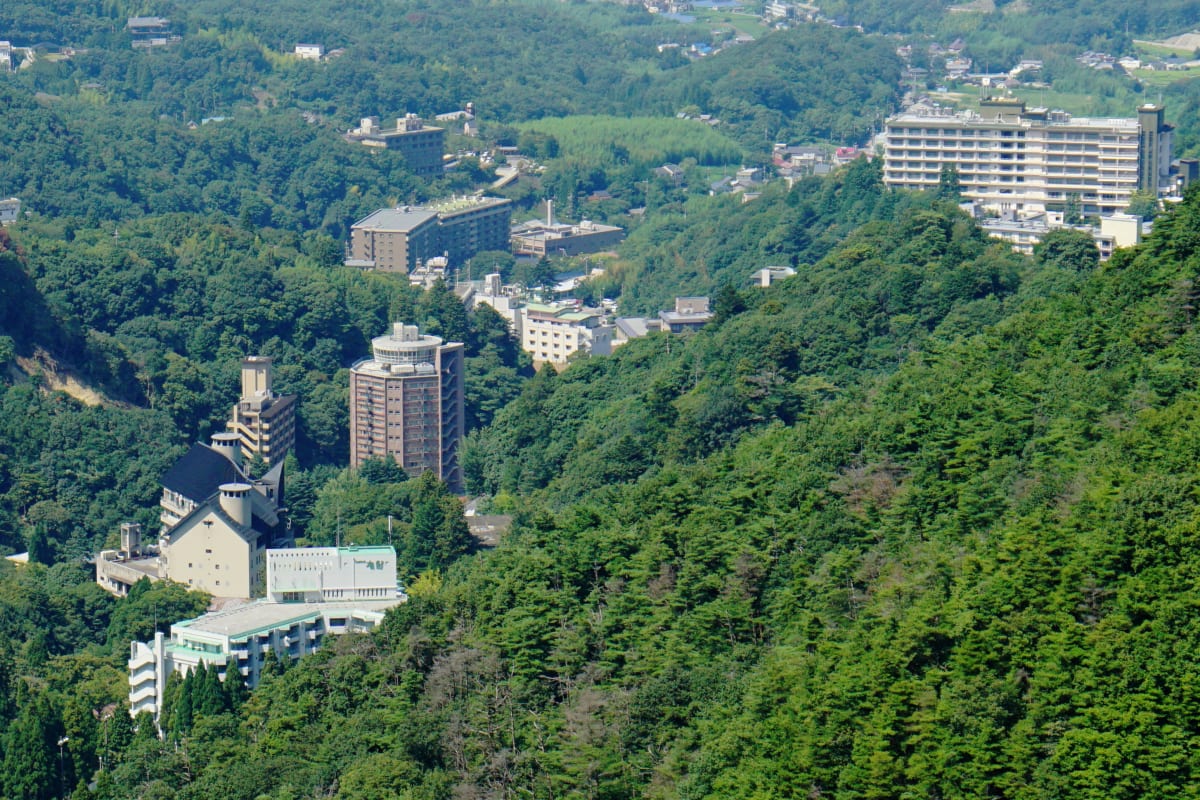
Arima Onsen sits in the hills above Kobe, close to Mount Rokko, and ranks among the oldest hot spring towns in Japan. The town draws visitors for two entirely different spring types that coexist within its compact footprint. Kinsen is the iron-rich golden water that stains surrounding rocks a rusty orange, while ginsen runs clear and carries both carbonation and mild radioactivity. Few other onsen destinations in Japan bring together two such distinct water types within a single small town.
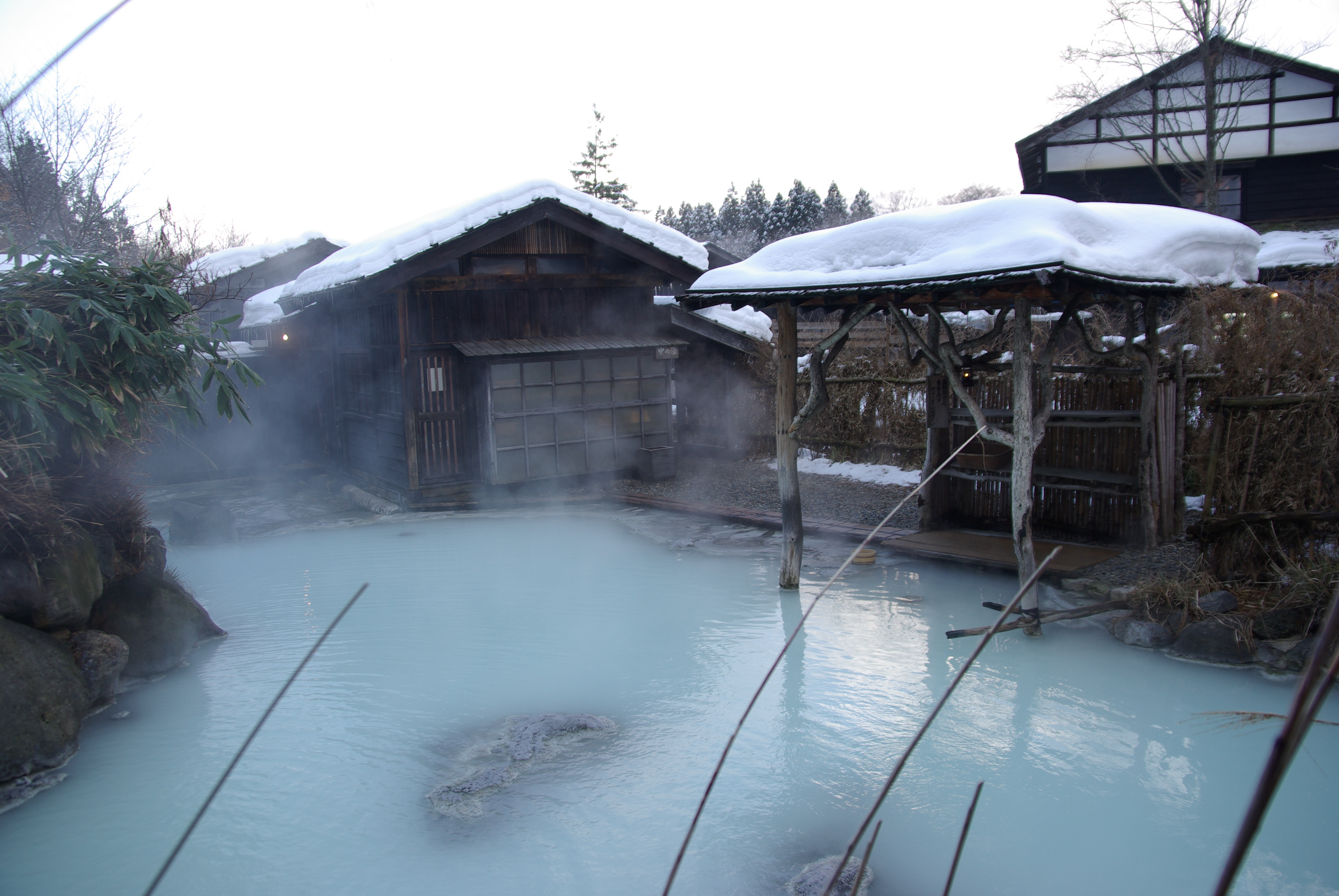
Tsuru-no-yu is the oldest of the seven inns at Nyuto, set deep in a beech forest in Akita Prefecture. The main draw is a large outdoor mixed-bathing pool fed by opaque, milky-white sulfurous water. Many regard it as the most beautiful onsen setting in Japan. People come here to put some distance between themselves and the rest of the world for a while.
Amenities
Getting there
From Sendai Station, take the JR Senzan Line train toward Yamadera. Alight at Sakunami Station. The journey takes about 20 minutes.
Location & nearby
Sakunami Onsen, Sendai, Miyagi
Make a day of it
Pair your soak with these nearby spots.
Attraction
Higaeri Onsen Miyako No Yu
1.8km away
Attraction
Higaerionsentonoyu
1.8km away
Attraction
Tonoyu
1.9km away
More springs in Tohoku
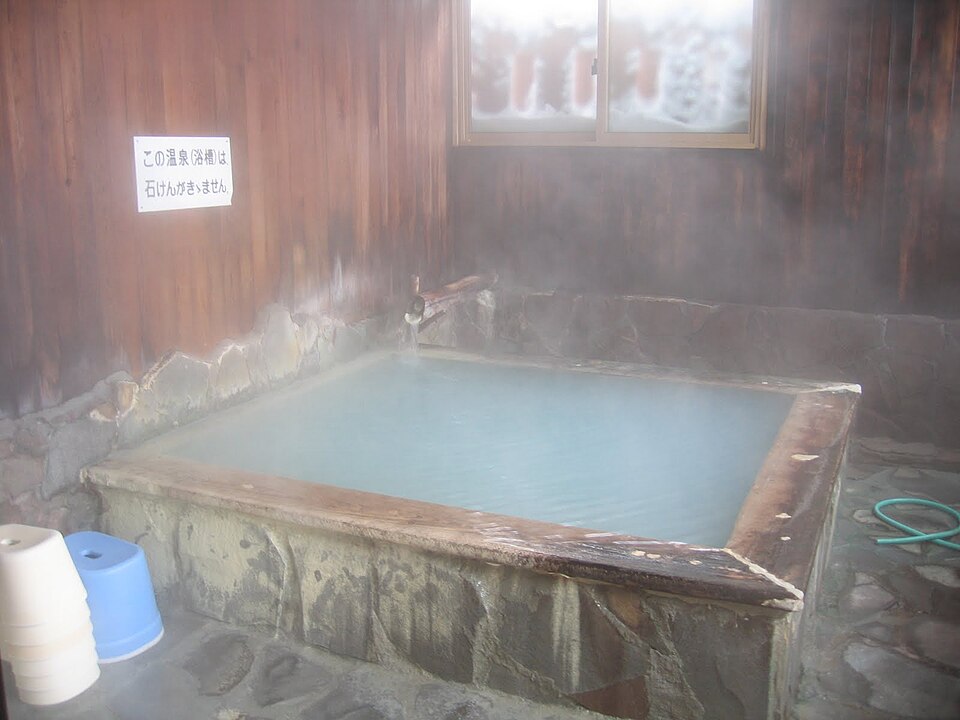
Set deep in the Hakkoda Mountains of Aomori Prefecture, Sukayu Onsen is a historic bathhouse best known for its cavernous mixed-bathing hall, the Sen-nin-buro, which translates as the Bath of a Thousand Bathers. The waters are strongly acidic, the setting is rustic and unhurried, and winter brings extraordinary snowfall to the surrounding mountains.
Tsuru-no-yu is the oldest of the seven inns at Nyuto, set deep in a beech forest in Akita Prefecture. The main draw is a large outdoor mixed-bathing pool fed by opaque, milky-white sulfurous water. Many regard it as the most beautiful onsen setting in Japan. People come here to put some distance between themselves and the rest of the world for a while.
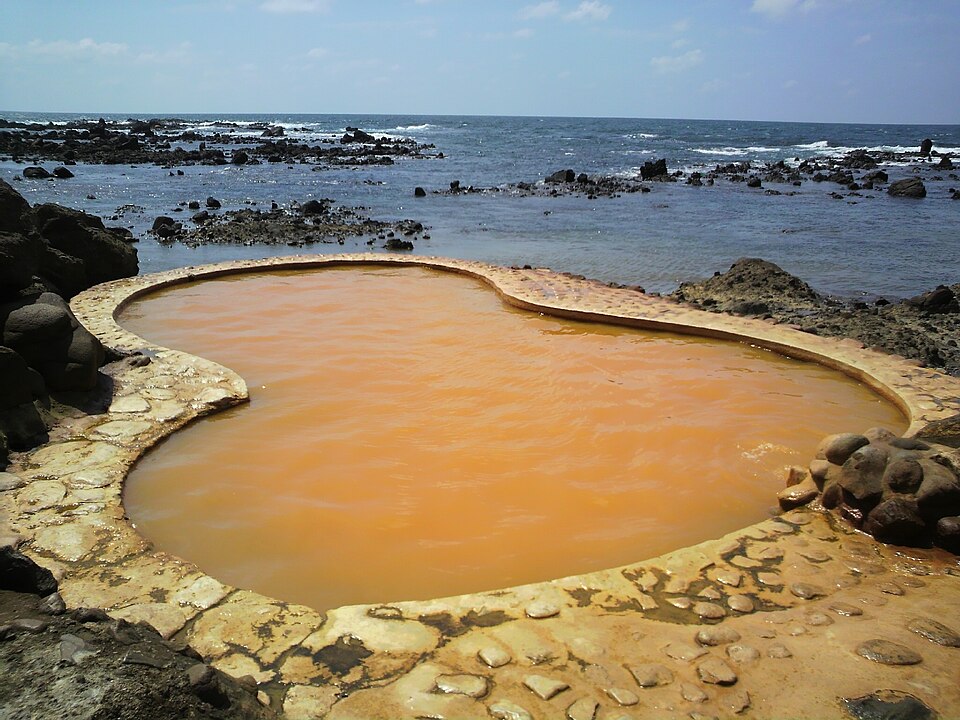
Furofushi Onsen occupies a rocky cape in Fukaura, Aomori Prefecture, with outdoor bathing pools positioned at the edge of the Sea of Japan cliffs. The spring water runs a deep reddish-brown from its high iron and sodium chloride content. The main open-air bath and a dedicated women's pool both use fully undiluted water drawn straight from the source. Sunsets over the water are a particular draw. Once day visitors depart in the late afternoon, overnight guests have the pools to themselves.
Common questions
What is the water temperature at Sakunami Onsen?▾
The water temperature at Sakunami Onsen ranges up to 60°C (minimum around 60°C).
Is Sakunami Onsen free to visit?▾
Sakunami Onsen charges an entrance fee in JPY.
Is Sakunami Onsen a public or private bath?▾
Sakunami Onsen is a public bathing spring.
Are tattoos allowed at Sakunami Onsen?▾
No, Sakunami Onsen does not permit visible tattoos.
What is the nearest station to Sakunami Onsen?▾
The nearest station to Sakunami Onsen is Sakunami Station, about 0km away.