
Geto Onsen
夏油温泉
Geto Onsen
simple-alkaline · Tohoku
Hotter than 57% of Japan springs (n=122).
More acidic than 28% of Japan springs (n=121).
Mineral profile
Bar width reflects listing order, not measured concentration.
Suitability
At a glance
Getting there
Remote — over 5km from the nearest station
Cost
Moderate
About this spring
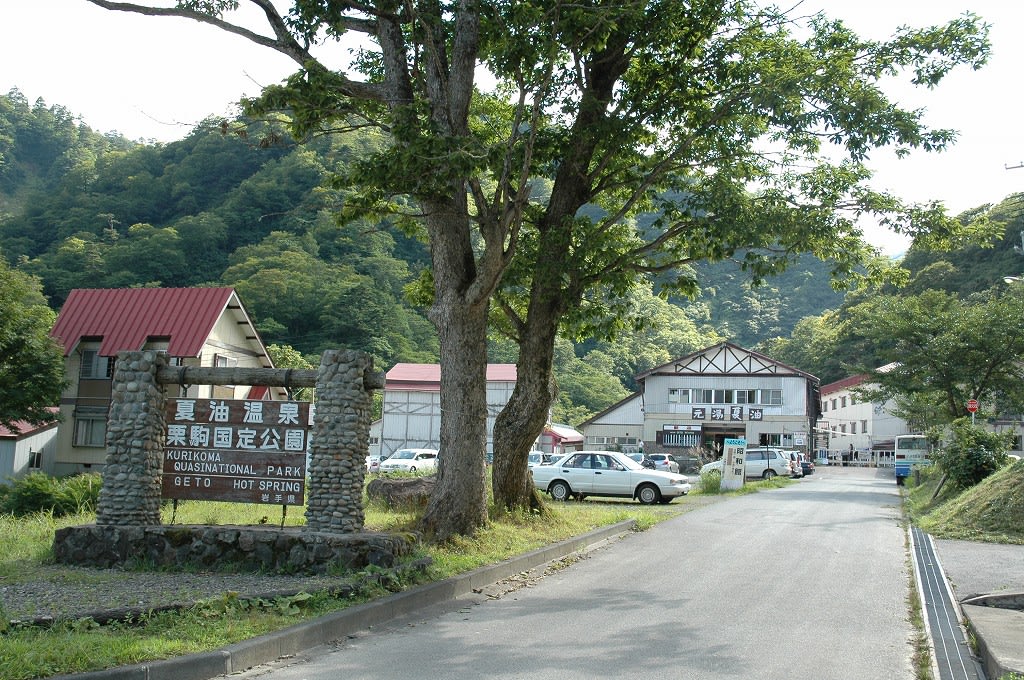
Geto Onsen sits deep inside Kurikoma Quasi-National Park in Iwate Prefecture, a mountain hot spring established in 1134 and still very much in its natural state. Seven open-air pools line a rocky riverbed with no enclosing walls, so bathers look straight out into the surrounding forest. The hot water rises directly from the riverbed and its banks. The mountain road is snowed in from mid-November through early May, and the site closes for the season during that period.
Highlights
History
Geto dates to 1134, placing it among the oldest hot spring destinations in the Tohoku region.
The founding legend centers on a warrior whose descendants came upon the springs after following a giant white ape. During the Edo period, the spring was formally classified as the eastern ozeki in Japan's official rankings of hot springs, a position second only to the top rank, which put Geto among the most respected bathing sites in eastern Japan. It is now counted among Japan's Top 100 Famous Hot Springs.
Local guide
To reach Geto Onsen from Kitakami, you drive north on a road that climbs steadily into Kurikoma Quasi-National Park, passing through tunnels of beech trees until you cross a small bridge and arrive at a cluster of low wooden buildings beside a mountain stream. The access road closes in November and does not reopen until May, which means the entire place hibernates under snow for half the year. If you arrive in late spring, just after the road reopens, the beech leaves are still a bright yellow-green, and snowfields remain on the upper ridges above the valley.
Geto Onsen was founded in 1134, which makes it one of the older operating hot springs in the country, though the buildings themselves are modest and functional rather than grand. The spring complex draws from seven separate sources, all of them simple alkaline water that surfaces clear and clean with no strong sulfur smell. The outdoor pools sit along the stream bank, built from rough stone, and the water flows continuously through them at a natural pace. In the higher pools, the temperature is close to what comes out of the earth. In the lower pools, where river water mixes in slightly, it eases down to something more manageable on a hot afternoon. You choose your pool based on how much heat you can take.
What makes Geto unusual is the cooking arrangement. Several of the inn rooms here come equipped with a small stove and basic provisions, so guests can prepare their own food in the evening. There is no elaborate restaurant service, no kaiseki performance. You eat what you brought or what you cooked, and then you walk outside to the pools in the dark. The stream runs close enough to the outdoor baths that you can hear it clearly from the water, and the beech forest comes right to the edge of the bathing area. In summer, fireflies appear above the stream after ten at night.
The nearest train station is Motoyashiki on the Kitakami Line, about seven kilometers back toward the valley floor. Getting here without a car requires planning, and the limited access hours mean this is not a place you drift into on a whim. That is also why it stays quiet. Geto draws people who specifically want the isolation, the unattended outdoor pools, the simple alkaline water, and the sound of a Tohoku mountain stream with no other noise competing with it.
Mineral chemistry
Water character inferred from mineral type — verify on site.
Alkaline springs (pH above 8) are known for their skin-softening effect, sometimes called "beauty water" in bathing cultures across Asia. The high pH saponifies skin oils, producing a characteristic silky feel on the skin surface.
The slippery feeling underfoot in highly alkaline springs is normal — take care when standing and walking in the bath. Avoid prolonged soaking if you have dry or sensitive skin.
Similar springs
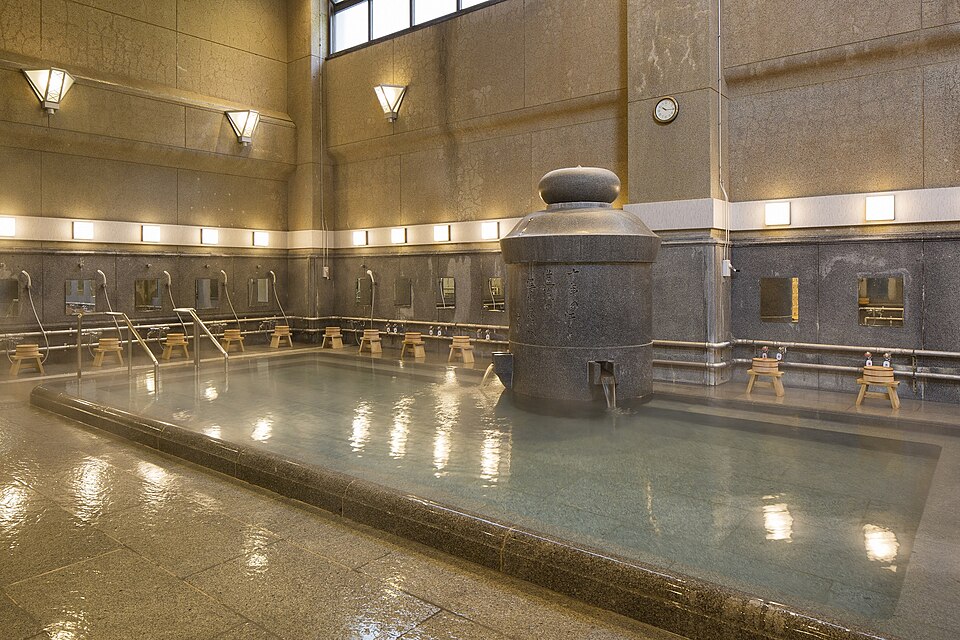
Tsubaki Onsen occupies a single large bathhouse on the Kii Peninsula in Wakayama Prefecture, surrounded by forest and roughly 2.5 hours from Osaka by train. The spring registers pH 9.9, placing it among the most alkaline waters in Japan. The facility is straightforward and well-maintained, attracting visitors from the Kumano region as well as day-trippers traveling in from the coast.
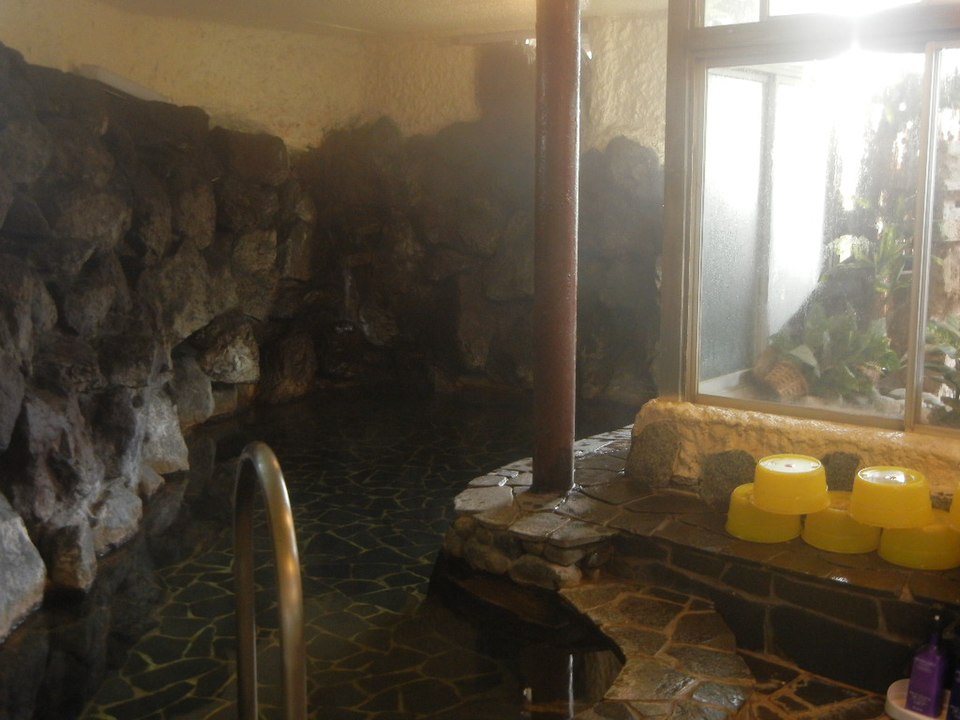
Iiyama Onsen sits in northern Nagano Prefecture near the Nozawa Onsen highlands and produces water with a pH of 11.3, placing it among the most alkaline natural hot springs anywhere in Japan. The soft, high-alkaline water has long been sought out as a beauty spring, widely praised for the way it smooths and softens the skin. The Hokuriku Shinkansen now stops at Iiyama Station, cutting travel time from Tokyo considerably.
 FREE
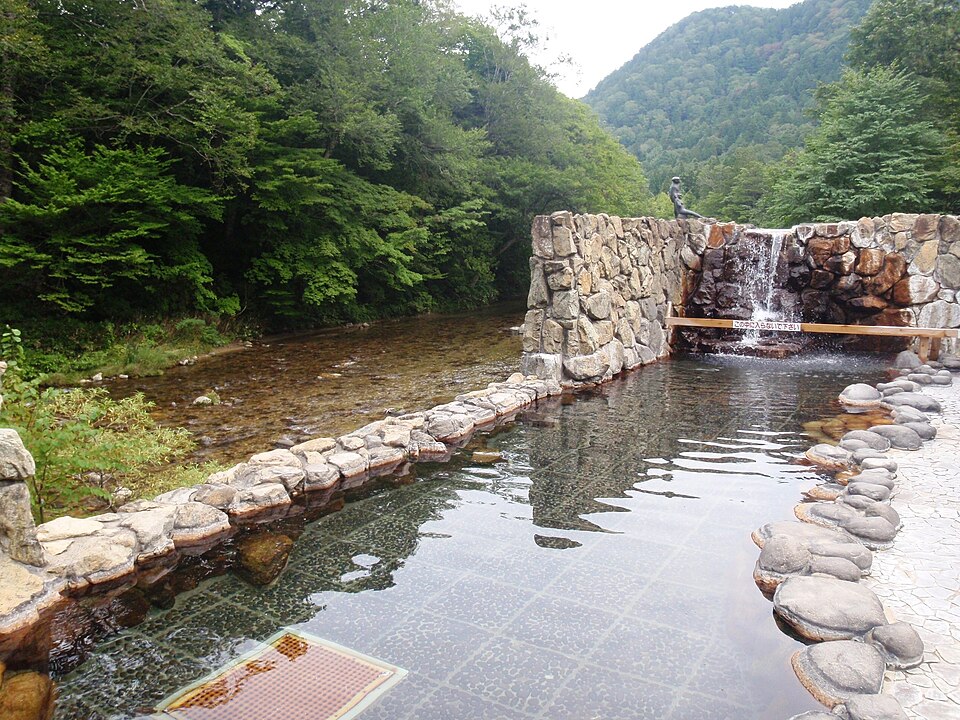
FREEKappa-no-yu is a free, open-air bathing spot tucked into Yagen Valley on the Shimokita Peninsula in Aomori Prefecture, roughly 2 kilometers up the slope from the central Yagen Onsen cluster. Two separate baths rest beside a clear mountain stream, surrounded by old-growth beech and cypress trees. The water temperature holds at 46 degrees Celsius. Visitors are not permitted to bring soap or shampoo. The baths are open from April through November and charge no entry fee.
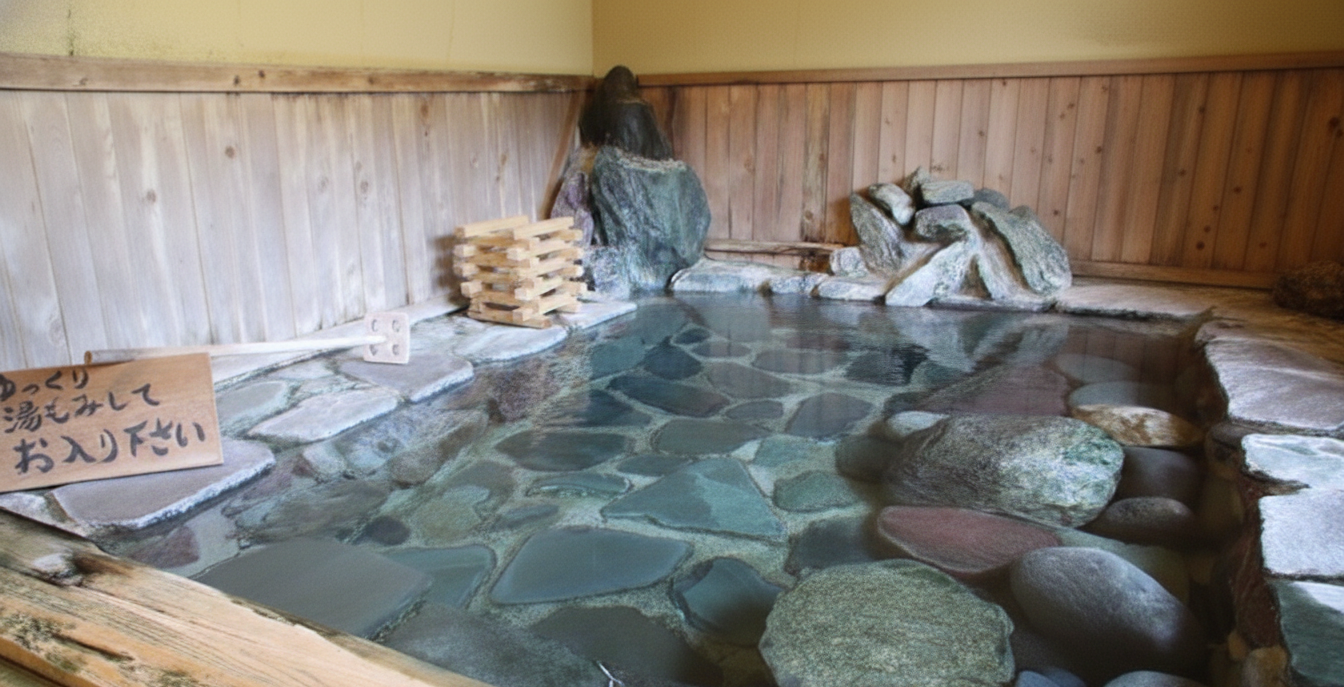
Tokigawa Onsen sits in Hiki District, Saitama Prefecture, roughly 90 minutes from central Tokyo. The water rises from Chichibu Paleozoic strata at a depth of 1,700 meters and registers pH 10, placing it firmly in the highly alkaline range. Bathers consistently note the silky feel it leaves on the skin. The facility has held onto its Showa-era bathhouse character rather than updating it.
Amenities
Getting there
Take the Tohoku Shinkansen to Kitakami Station, then transfer to the local bus on the Susumago line. The journey to Geto Onsen takes about 60 minutes. The onsen is open from early May through mid-November only. In ski season, a free resort shuttle runs from Kitakami Station East Exit.
Location & nearby
Geto Onsen, 1 Chiwari Wagacho Iwasaki Shinden, Kitakami, Iwate 024-0322
More springs in Tohoku

Set deep in the Hakkoda Mountains of Aomori Prefecture, Sukayu Onsen is a historic bathhouse best known for its cavernous mixed-bathing hall, the Sen-nin-buro, which translates as the Bath of a Thousand Bathers. The waters are strongly acidic, the setting is rustic and unhurried, and winter brings extraordinary snowfall to the surrounding mountains.

Tsuru-no-yu is the oldest of the seven inns at Nyuto, set deep in a beech forest in Akita Prefecture. The main draw is a large outdoor mixed-bathing pool fed by opaque, milky-white sulfurous water. Many regard it as the most beautiful onsen setting in Japan. People come here to put some distance between themselves and the rest of the world for a while.
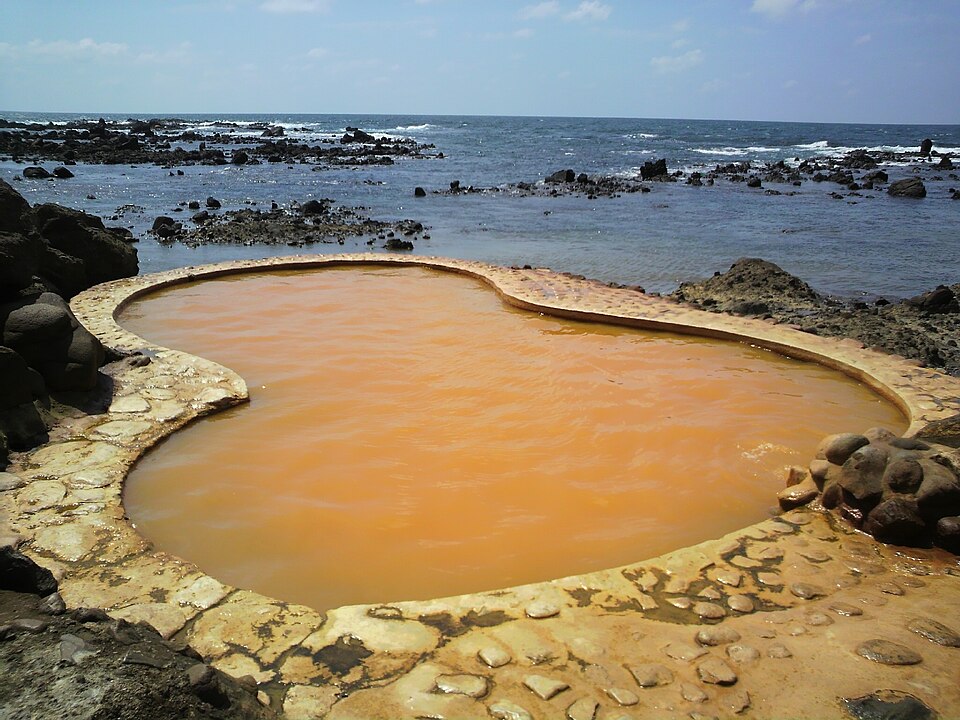
Furofushi Onsen occupies a rocky cape in Fukaura, Aomori Prefecture, with outdoor bathing pools positioned at the edge of the Sea of Japan cliffs. The spring water runs a deep reddish-brown from its high iron and sodium chloride content. The main open-air bath and a dedicated women's pool both use fully undiluted water drawn straight from the source. Sunsets over the water are a particular draw. Once day visitors depart in the late afternoon, overnight guests have the pools to themselves.
Common questions
What is the water temperature at Geto Onsen?▾
The water temperature at Geto Onsen ranges up to 65°C (minimum around 48°C).
Is Geto Onsen free to visit?▾
Geto Onsen charges an entrance fee in JPY.
Is Geto Onsen a public or private bath?▾
Geto Onsen is a public bathing spring.
Are tattoos allowed at Geto Onsen?▾
No, Geto Onsen does not permit visible tattoos.
What is the nearest station to Geto Onsen?▾
The nearest station to Geto Onsen is Motoyashiki, about 6.8km away.